

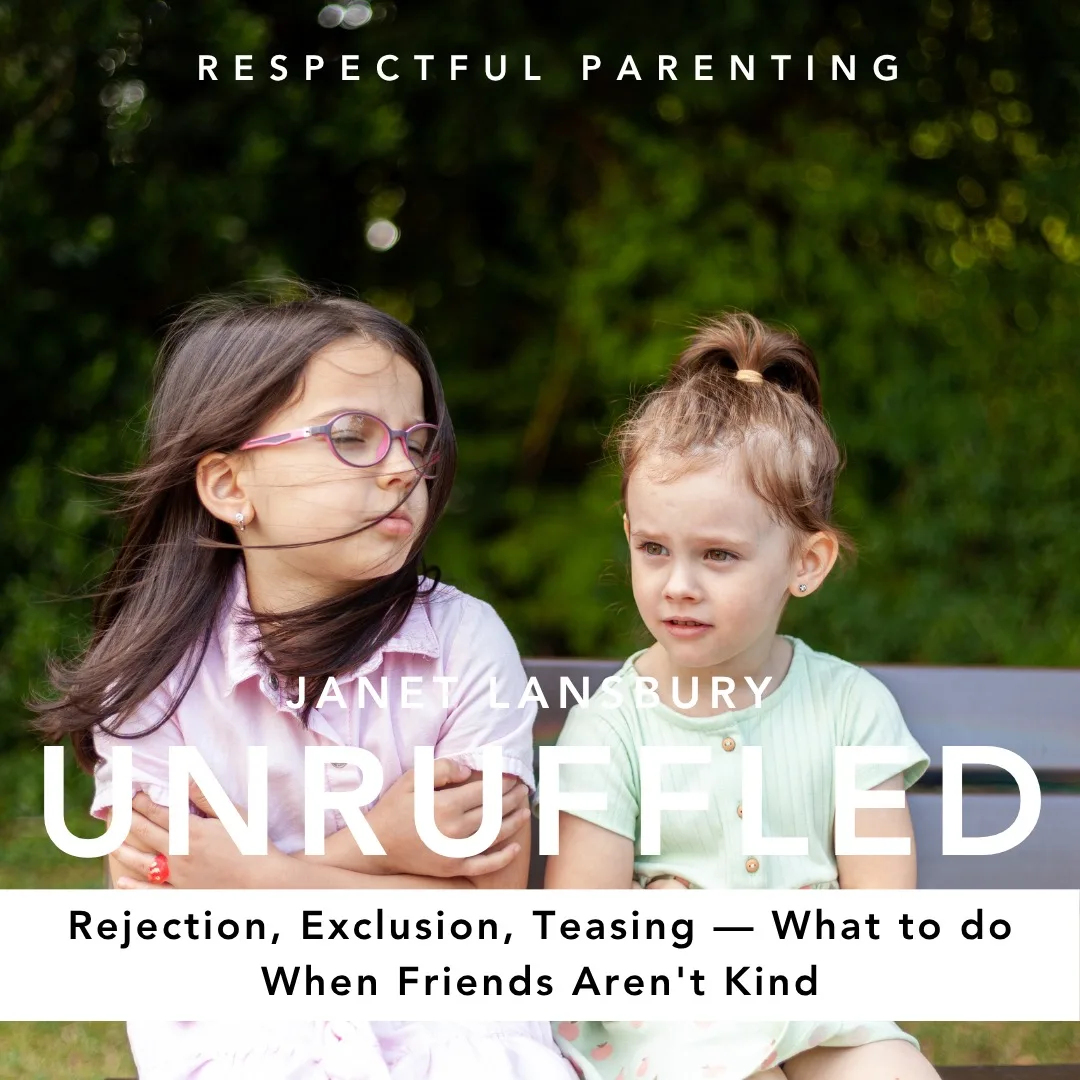
The landscape of childhood friendships, often envisioned as a realm of shared laughter and unwavering support, can frequently present a more complex and challenging reality. For parents observing their children navigate the intricate social dynamics of peer interactions, witnessing instances of rejection, exclusion, or teasing can be deeply distressing. These experiences, while common, can leave young children feeling hurt, confused, and isolated, prompting critical questions for caregivers about the appropriate level of intervention and effective support strategies. Janet Lansbury, a respected voice in early childhood development, offers a perspective that emphasizes empowering children to understand and manage these social challenges, a philosophy she elaborates on through several real-world case studies.
Understanding the Dynamics of Childhood Social Conflict
The core of Lansbury’s approach centers on a fundamental principle: "People only have power over us when we give it to them." This adage, she argues, is particularly crucial in an era marked by increased social comparison and the pervasive influence of digital media, which can amplify feelings of inadequacy and the fear of missing out (FOMO). While acknowledging the existence of power structures in adult life, Lansbury asserts that in most interpersonal relationships, individuals possess the agency to control the influence others wield over them. This concept is not about dismissing the pain of unkindness but about reframing the child’s perception of the situation to foster resilience and self-efficacy.
Lansbury’s insights stem from numerous parent inquiries, a recent cluster of which focused on girls around the age of five experiencing difficulties with their peers. These situations, though varied in their specifics, share a common thread of children employing tactics such as ultimatums, social exclusion, and emotional manipulation within their friendships. The challenge for parents lies in finding the delicate balance between offering support and allowing children the space to develop their own conflict-resolution skills, thereby preventing the unintended reinforcement of negative behaviors.
Case Study 1: The Power of Withholding
One parent described a recurring scenario with her five-and-a-half-year-old daughter’s friend. The friendship, initially positive, began to involve relational aggression. When disagreements arose, the friend would issue ultimatums like, "If you don’t do X, then I won’t be your friend anymore," or resort to silent treatment and abrupt departures from playdates. The parent noted the friend seemed to "feel the power in withholding," refusing goodbyes or hugs as a means of control. This dynamic led to frequent tears for her own daughter, prompting the parent to question whether to intervene by proposing agreements on communication or by facilitating problem-solving.
Lansbury highlights the parent’s accurate observation of the friend’s perceived power through "withholding." She cautions against parental intervention that might inadvertently amplify the situation. Instead, she advocates for a supportive, observational role, validating the child’s feelings without imposing solutions or judgments. Acknowledging the hurt ("Yes, I saw that. That hurt your feelings.") while refraining from over-involvement is key. The goal is to help the child recognize the dynamics at play as immature behavior that they do not have to engage with. This perspective aims to equip the child with the understanding that they can choose not to give power to such actions, fostering an internal locus of control.
Case Study 2: Navigating Neighborhood Exclusion
Another parent shared the experience of her nearly six-year-old daughter, who, after moving to a new country, quickly made friends in her new neighborhood. However, two sisters began to systematically exclude her, discouraging other children from playing with her and even yelling at their younger siblings to avoid her. The situation escalated to the point where the children would invite the daughter to play only to abandon her. The parent sought guidance on how much to intervene, wanting her daughter to handle situations independently yet feel supported, and struggled with how to interact with the children exhibiting bullying behavior while maintaining neighborly relations.
Lansbury commends the parent’s desire for her daughter to manage situations autonomously, recognizing this as a belief in her child’s inherent capabilities. She identifies the exclusionary behavior as a manifestation of insecurity and a weak attempt to assert power. The advice here is to trust the daughter to navigate these social challenges, with parental support available upon request. Lansbury suggests encouraging the daughter to cultivate friendships with children who are kind and supportive, rather than investing energy in resolving the conflict with the exclusionary group. The parent’s struggle with being pleasant to the children engaging in bullying is acknowledged, with Lansbury advising against validating such behavior through excessive inclusion. The focus remains on empowering the daughter by reminding her that the exclusionary behavior is a reflection of the other children’s weakness, not her own.
Case Study 3: The Fear of Kindness Being Perceived as Weakness
A parent expressed deep concern for her five-year-old daughter, who shares her own past experiences of being overly kind and consequently allowing others to "walk all over her." The daughter, described as naive, sweet, and kind, has faced exclusion and rejection, accepting these situations with sadness. The parent fears that her daughter’s inherent kindness will be misconstrued as weakness in kindergarten, leading to a repeat of her own negative experiences with bullying. She grapples with how to teach her daughter to stand her ground without encouraging aggression.
Lansbury addresses the parent’s fear by reframing the daughter’s kindness not as weakness, but as a powerful attribute. She emphasizes that true strength lies in compassion, not in meanness or aggression, which are characteristics of the less powerful. The parent’s own past experiences, while valid, should not dictate her daughter’s future. The key, Lansbury suggests, is to nurture the daughter’s strengths and reinforce her inherent power. This involves encouraging her to seek out friendships with those who appreciate her kindness and to understand that she has the choice not to give power to those who treat her unkindly. The parent’s self-awareness of her own fears is seen as a significant step, allowing her to support her daughter without projecting her own anxieties.
Case Study 4: Managing Sibling-Like Bickering
The final case involves a parent of a five-year-old only child whose behavior with her best friend mirrors sibling-like bickering, often involving teasing and attempts to annoy each other. The parent finds this dynamic triggering, particularly when she is responsible for their care, often finding herself reprimanding her own daughter more frequently. She recognizes her discomfort stems partly from being unaccustomed to sibling conflict as an only child and questions why her daughter engages in such behavior.
Lansbury notes the parent’s insightful self-reflection, acknowledging that her own triggers and experiences as an only child might be influencing her reactions. She identifies the bickering as a form of power play, common between children who are very comfortable with each other. The advice here is for the parent to step back and support both children without trying to "fix" the situation or assign blame. When the friend becomes upset, the parent should respond with empathy and validation, reflecting the child’s feelings rather than scolding her own daughter. The core message is to allow the children to navigate their own conflicts, with parental support available, thereby removing the power the parent’s reaction might be inadvertently giving to the behavior.
Broader Implications and Parental Empowerment
The consistent theme across these cases is the critical role of parental perspective and non-intervention in empowering children to navigate social challenges. Lansbury’s philosophy suggests that by refraining from over-involvement and instead focusing on validating children’s feelings, reinforcing their inherent strengths, and modeling healthy emotional regulation, parents can equip their children with the resilience needed to thrive in their social environments.
The data on childhood social development indicates that children who are supported in understanding their own emotions and agency are more likely to develop healthy coping mechanisms. Research from organizations like the American Academy of Pediatrics consistently highlights the importance of social-emotional learning in building resilience against bullying and fostering positive peer relationships. Lansbury’s approach aligns with these findings by advocating for a parent’s role as a supportive observer and guide, rather than an active intervener who might inadvertently disempower the child.
The implication for parents is a shift in focus from trying to control or eliminate negative social interactions to fostering a child’s internal capacity to manage them. This involves trusting the child’s ability to learn from their experiences, make choices about their friendships, and understand that unkind behavior from peers is not a reflection of their own worth. By consistently reinforcing the idea that children hold the power to grant influence to others, parents can help them build a strong foundation of self-esteem and social competence that will serve them throughout their lives. The journey of childhood friendships is rarely without its bumps, but with the right parental support, children can learn to navigate these complexities with confidence and grace.
