

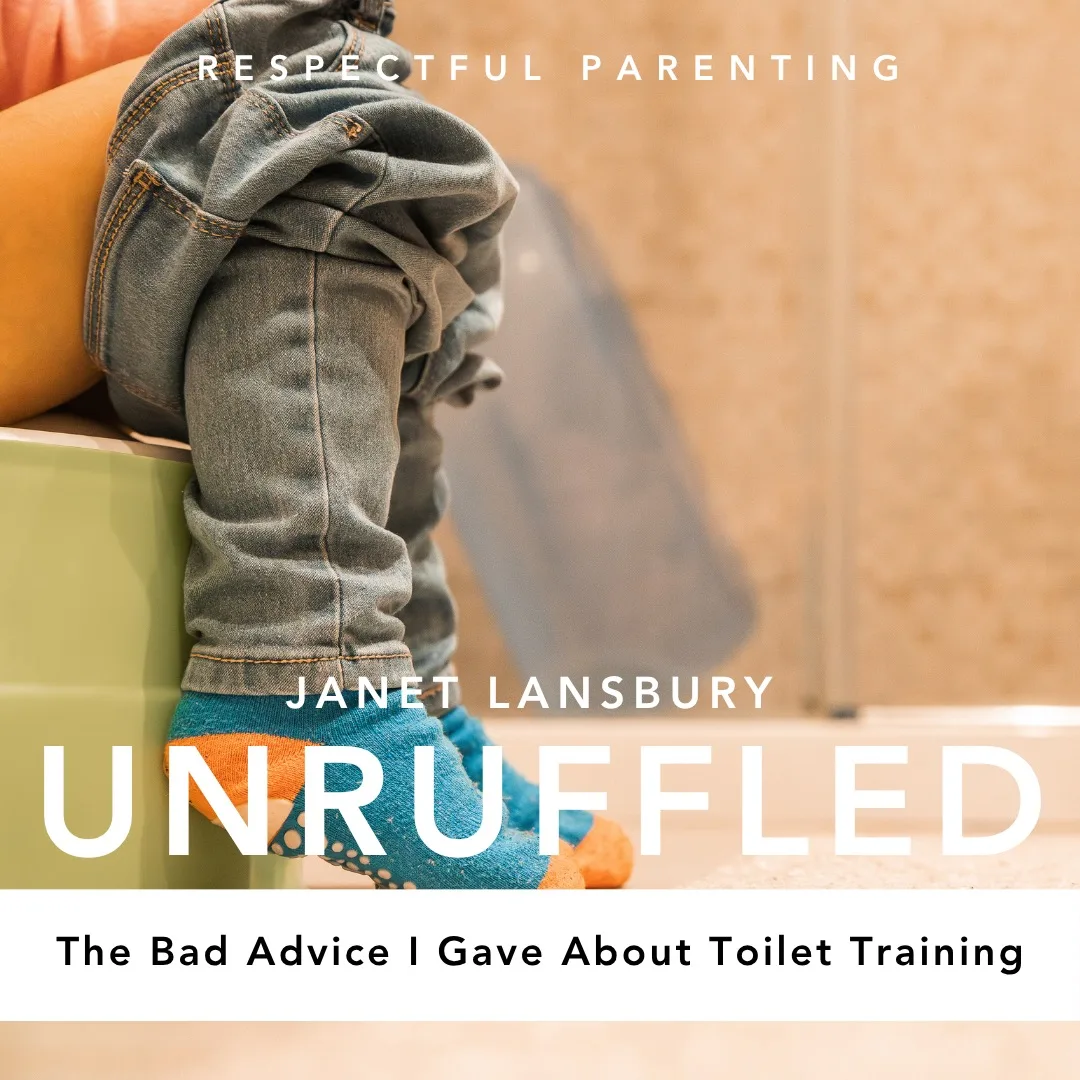
In a candid self-reflection, renowned parenting advisor Janet Lansbury has revisited a past recommendation on toilet training, acknowledging that her guidance to a struggling parent proved to be counterproductive. The episode, originally aired on her podcast "Unruffled," centered on a family’s four-year ordeal with toilet training their daughter. The parent’s subsequent update revealed that success was achieved not by following Lansbury’s advice, but by adopting an entirely different approach. This has prompted Lansbury to re-examine her own methodology and the specific context of this case.
Background: The "Unruffled" Philosophy and a Parent’s Dilemma
Janet Lansbury’s "Unruffled" podcast often champions a child-led approach to developmental milestones, including toilet learning. Her core philosophy emphasizes trusting a child’s innate abilities and allowing them to initiate and progress at their own pace, with parental support rather than direct instruction. This approach, she posits, fosters autonomy and a sense of accomplishment for the child.
However, the case in question highlighted a significant divergence between Lansbury’s advice and the lived experience of the parent. The parent, whose daughter was around three-and-a-half years old at the time of the original podcast, expressed deep concern that her child’s resistance to toilet training was not a matter of motivation but a manifestation of fear and avoidance. Despite extensive efforts to create a pressure-free environment and convey acceptance, the child remained firmly entrenched in diapers, exhibiting significant distress when the topic of the potty was even broached.
The parent’s initial communication detailed a four-year journey marked by various attempts and retreats. Following an early, distressing experience with a popular, parent-led toilet training method around the child’s second birthday, the family adopted a more hands-off approach. This involved occasional, gentle mentions of the potty as an option, coupled with an explicit stance of "you do you." Yet, the parent’s observations of her daughter’s broader personality—described as "fearful and avoidant" in other contexts, where gentle guidance and encouragement were necessary to navigate new experiences—led her to question whether a purely child-led approach was sufficient for toilet training. She felt her daughter, despite appearing developmentally ready, was trapped in a cycle of avoidance that required a more assertive parental intervention, akin to guiding a child through a necessary medical procedure rather than a natural developmental unfolding.
Lansbury’s Initial Advice: Trust, Boundaries, and Feelings
In the original "Unruffled" episode, titled "When Kids Don’t Seem Motivated (to Potty, Crawl, or Create)," Lansbury addressed the parent’s concerns by offering three key remedies for children who appear "stuck":
- Trust: A fundamental belief in the child’s natural abilities and inner drive. This involves providing ample opportunities for practice without overt pressure.
- Reasonable Boundaries: Establishing clear, consistent limits that, while supportive, do not accommodate avoidance that hinders development.
- Welcoming Feelings: Allowing children to express and process uncomfortable emotions like frustration, uncertainty, or fear without the parent feeling compelled to immediately fix or eliminate these feelings.
Lansbury’s advice to the parent in this specific case leaned heavily towards the "trust" aspect, encouraging the parent to fully embrace a child-led approach, believing that the child’s innate motivation would eventually surface. She suggested that the child’s resistance, such as declaring she would be in diapers "forever," was a reaction to perceived parental pressure or mixed messaging, and that a clear, unwavering stance of trust from the parent would help the child overcome any internal barriers. Lansbury also touched upon the potential for parental anxiety to inadvertently create mixed messages for the child and advised against the parent’s inclination to "remind" the child, advocating instead for allowing the child’s own play and exploration around the topic to unfold naturally.
The Parent’s Update: A Shift in Perspective and Unforeseen Success
Months later, the parent provided an update that fundamentally shifted the narrative. Approaching her daughter’s fourth birthday, and unwilling to have a child with developmental disabilities in diapers, the parent made a decisive choice to transition to underwear, irrespective of the child’s expressed interest or willingness. This marked a significant departure from the child-led philosophy.
The initial days were described as "grueling," characterized by intense fear and resistance from the child. However, the parent persevered, maintaining a firm conviction that the transition was necessary and achievable. Crucially, she described this as a period of "pushing really hard through that" and emphasized the parents’ "hundred percent certainty that it was time despite no interest on her part."
The outcome was remarkable: the daughter achieved dryness within a week and began using the toilet willingly. The parent reflected that her daughter, while initially resistant, was now "proud of herself" and "acting her age in a lot of other ways too." This experience led the parent to question the universal applicability of the child-led model for toilet training, suggesting that for her daughter, it was more akin to a phobia that required external intervention rather than an innate developmental milestone that would naturally emerge. She expressed regret for not trusting her own initial instincts sooner, believing her daughter had been "stuck" and needed her parents to "see through that."
Lansbury’s Re-evaluation: Acknowledging "Bad Advice"
Upon receiving this update, Janet Lansbury expressed her sincere congratulations and acknowledged the unintended consequences of her previous advice. She stated, "I’m genuinely thrilled for you and your daughter that you got this result… I’m sincerely sorry if my advice led you astray and away from your instincts."
Lansbury’s self-critique centers on a key point: while she advocates for a clear choice between approaches, her previous advice leaned heavily towards promoting the child-led "trust" model, which did not resonate with the parent’s core feelings or observations about her child. Lansbury recognized that suggesting a parent adopt a belief system they do not inherently hold can lead to mixed messaging, undermining the very trust she aimed to foster.
"Even though I said all I believed was that she should go fully either way and believe in it fully, which is what she eventually did, I feel bad that then I recommended her to trust her child," Lansbury admitted. She explained that while she champions the child-led approach for the developmental opportunities it provides, it must align with the parent’s internal conviction. In this instance, the parent’s underlying belief was that her daughter was experiencing a phobia and needed a firm push, a perspective Lansbury had not fully integrated into her advice.
Implications of the Case Study
This case study offers several critical insights into the complexities of parenting advice and child development:
- The Nuance of "Child-Led": While child-led approaches can be highly effective, they are not universally applicable in every situation or for every child. Parental intuition and a deep understanding of a child’s individual temperament and emotional landscape are paramount.
- The Role of Parental Conviction: Parenting advice, to be effective, must resonate with a parent’s core beliefs and instincts. When advice pushes against a parent’s deeply held feelings or observations, it can create internal conflict and mixed messaging, hindering progress.
- The Spectrum of Developmental Milestones: Toilet training, unlike walking or talking, can sometimes involve psychological barriers or learned avoidance patterns that may require a more directive approach than other developmental milestones. The parent’s analogy to receiving vaccinations highlights this distinction.
- The Importance of Self-Correction in Expert Advice: Lansbury’s willingness to acknowledge her misstep and re-evaluate her advice underscores a crucial aspect of expert guidance: the capacity for learning and adaptation based on real-world outcomes. This self-awareness strengthens her credibility.
- The Interplay of Parental and Child Anxiety: The case illustrated how parental anxiety can inadvertently fuel a child’s fear and avoidance, creating a cyclical dynamic. Conversely, a parent’s unwavering confidence, even when challenging, can empower a child to overcome obstacles.
Broader Impact: Trusting Parental Instincts
Lansbury concluded by emphasizing that the most effective parenting advice is that which aligns with a parent’s instincts. She urged parents to trust their gut feelings, even when they diverge from expert recommendations, particularly when those recommendations do not "feel right." The incident served as a potent reminder that while external input can be valuable, the ultimate arbiter of what works for a specific child and family is the parent themselves.
The parent’s journey, though protracted and challenging, ultimately led to a positive outcome for her daughter and a valuable learning experience for Janet Lansbury. It highlights the dynamic nature of parenting advice, where adaptability, self-reflection, and a profound respect for individual family circumstances are essential for genuine support and successful guidance.
