


The complexities of childhood friendships, particularly when they involve unkindness, exclusion, or teasing, are a significant concern for parents. A recent discussion by parenting expert Janet Lansbury, featured on her platform Unruffled, delves into strategies for supporting children navigating these challenging social dynamics. Lansbury’s perspective emphasizes empowering children by teaching them that they control the power they give to others, a principle she illustrates through several case studies of parents seeking guidance for their five-year-old daughters.
The Growing Challenge of Peer Interactions
Childhood friendships are foundational to a child’s social and emotional development. However, the landscape of peer interaction is not always harmonious. Parents often find themselves grappling with how to respond when their children experience rejection, exclusion, or teasing from friends. The instinct to intervene is strong, yet the consensus among child development experts, including Lansbury, is that excessive adult interference can undermine a child’s ability to develop crucial social skills and resilience. The core question for parents becomes: how to support their child effectively without overstepping, and what does meaningful support look like in practice?
Lansbury’s recent focus on this issue stems from a series of inquiries from parents, all concerning five-year-old daughters experiencing difficulties with peers. This convergence of similar concerns prompted her to explore the underlying principles that can help children navigate these social minefields.
Case Study 1: The Ultimatum and the Silent Treatment
One parent described a recurring pattern with her daughter’s close friend. The dynamic often involved the friend issuing ultimatums, such as "If you don’t do X, then I won’t be your friend anymore," or employing the silent treatment, refusing to acknowledge the daughter until the parent intervened or they departed. This behavior, characterized by relational aggression, left the child in tears after nearly every playdate. The other parent attributed these incidents to "only child syndrome," a diagnosis the concerned parent found insufficient.
The parent questioned whether to advocate for a mutual agreement that children must respond even with a "no," rather than resorting to ignoring, or to employ more subtle guidance like, "It sounds like you want to do X, but your friend wants to do Y. What are some ideas that would work for both of you?" This reflects a common parental struggle: balancing the desire for resolution with the need to foster independent problem-solving in children.
Lansbury’s central thesis for addressing such situations is: "People only have power over us when we give it to them." She posits that while external authorities hold power, in most social interactions, individuals choose how much influence others wield. This principle, she argues, is especially critical in today’s world, where social media and constant comparison can amplify insecurities and the fear of missing out (FOMO).
In this case, Lansbury suggests that the parent’s worry and desire for resolution, while understandable, might inadvertently be giving more power to the friend’s behavior. Instead of attempting to orchestrate solutions or enforce communication protocols, Lansbury advocates for a step-back approach. This involves acknowledging the child’s feelings ("Yes, I saw that," or "That must have hurt your feelings") without projecting adult anxieties or dictating how the children should interact. The aim is to support the child’s emotional processing and empower them to decide how to engage with the friend in the future, or if they wish to engage at all. The parent’s observation that the friend "feels the power in withholding" is a key insight, and Lansbury’s approach seeks to diminish that perceived power by de-escalating the parental response.
Case Study 2: Neighborhood Exclusion and Social Dynamics
Another parent detailed a more pervasive form of exclusion involving two sisters in their new neighborhood. These sisters began telling other children not to play with the parent’s nearly six-year-old daughter and even instructed their younger siblings to avoid her. The exclusion escalated to the point where the sisters would invite the daughter to play, only to abandon her. The parent had already spoken to the other mothers, who were receptive and had addressed the behavior with their children.
The parent sought guidance on how much to intervene versus letting her daughter navigate the situation independently, while also feeling supported at home. A significant challenge was how to interact with the children exhibiting bullying behavior, given the desire to maintain neighborly relations and the natural inclination to be inclusive. The parent found herself struggling to be pleasant to the children she perceived as "bullying" her daughter, contemplating excluding them from neighborhood activities.
Lansbury’s advice for this scenario centers on trusting the child’s capacity to handle social challenges, with parental support as a backdrop. She emphasizes that the parent’s belief in her daughter’s ability to manage these situations is paramount. Lansbury suggests encouraging the daughter to invite friends who are kind and supportive, while allowing the exclusionary behavior of the other girls to play out without direct parental intervention. The parent’s instinct to support her daughter by withholding pleasantries from the exclusionary children is understandable, but Lansbury advises against validating negative behavior by over-engaging with it. Instead, she encourages focusing on nurturing positive friendships for the daughter and reminding her that the exclusionary behavior is a reflection of the other children’s insecurity, not her own worth.
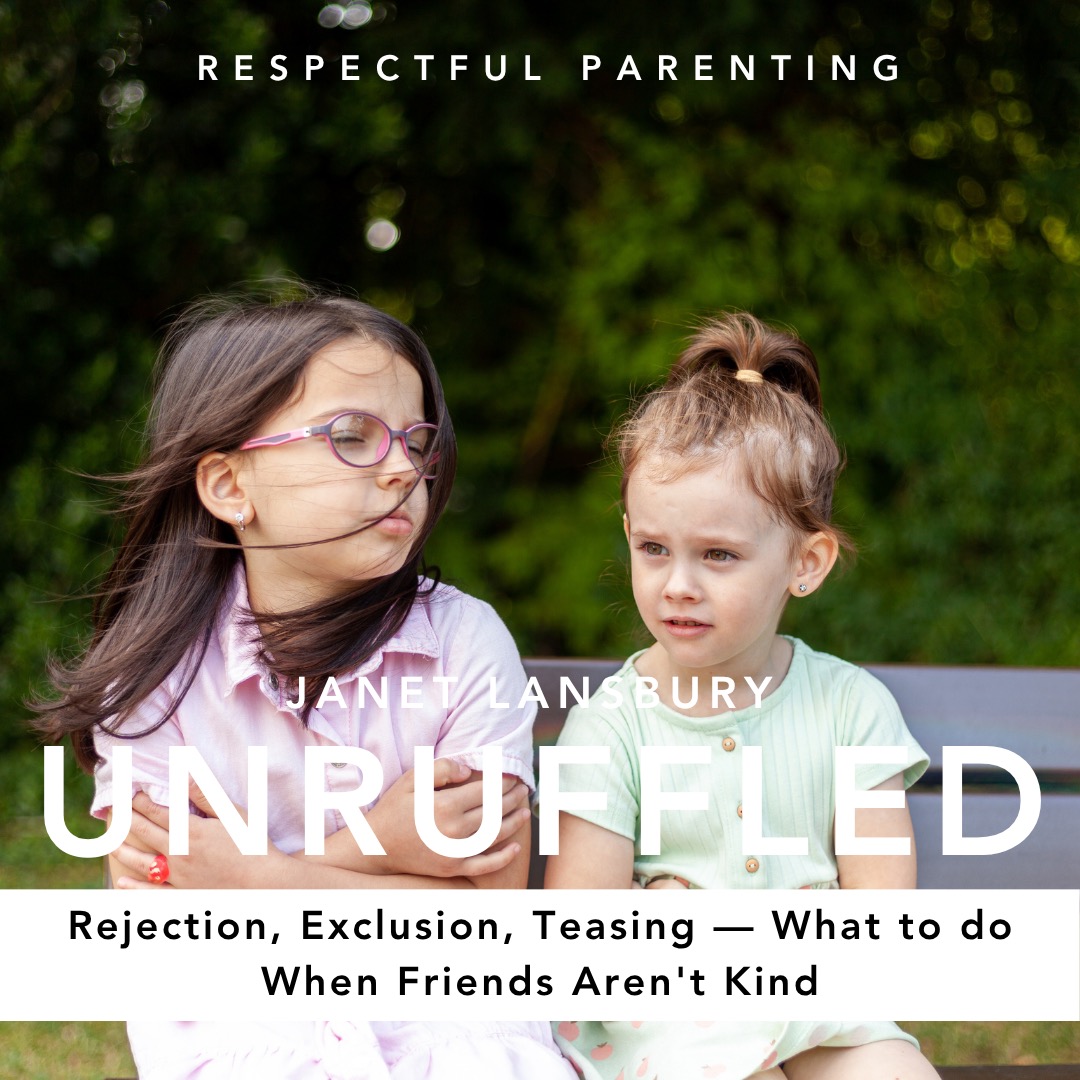
The parent’s observation that her younger daughter recognized the exclusionary group as the "bad group" and chose to stand by her sister highlights children’s innate understanding of social dynamics. Lansbury reiterates that attempts to "mend bridges" or force resolutions by adults can inadvertently amplify the negative power dynamics. The focus should remain on the child’s agency and resilience.
Case Study 3: The "Too Nice" Child and Parental Fears
A third parent expressed deep-seated concerns about her five-year-old daughter, whom she described as naive, sweet, thoughtful, smart, and kind to everyone, mirroring her own childhood experiences. The parent worried that her daughter’s inherent kindness would be perceived as weakness, leading to the same bullying and self-doubt she experienced until college. She had witnessed instances of her daughter being told "You can’t play with us!" and accepting it, or being deliberately excluded by neighbors.
The parent admitted that her fear was significantly influencing her perspective, leading her to question what she might be missing. She grappled with the impulse to teach her daughter to be "mean back" or to "get people on her side"—strategies she recognized as inappropriate for a five-year-old.
Lansbury’s response emphasizes that kindness and empathy are strengths, not weaknesses. She explains that the children exhibiting exclusionary behavior are often the ones demonstrating the least power, driven by insecurity. The daughter’s act of accepting exclusion, while sad, can be seen as a strong choice in itself, a refusal to engage in negativity. The critical element, Lansbury argues, is distinguishing between kindness and allowing oneself to be walked over. She suggests that the parent’s own past experiences and fears are coloring her perception of her daughter’s current situation.
Instead of advocating for aggressive tactics, Lansbury encourages the parent to reinforce her daughter’s inherent strengths. This includes nurturing friendships with children who reciprocate kindness and support. The parent’s self-awareness about her fears is a crucial asset, enabling her to separate her own anxieties from her daughter’s experiences. Lansbury suggests focusing on building her daughter’s self-esteem and supporting her choices, whether that involves walking away from negative interactions or navigating them with developing social skills. The key is to trust the child’s capacity and to ensure that parental fears do not overshadow the child’s own journey of self-discovery and social learning.
Case Study 4: Bickering Siblings and Parental Triggers
The final case involved a parent of a five-year-old only child who, due to the close family friendship with her best friend’s family, frequently cared for both girls. The parent found the girls’ bickering, which she described as sibling-like, to be "triggering." She admitted to noticing her own daughter’s behavior more and often scolding her, even resorting to shouting on occasion, which she immediately regretted. She observed that her daughter, being more strong-willed, would tease her friend ("You’re shy," or "I’m better at X than you") to elicit a response and get her friend upset.
The parent recognized that her own discomfort stemmed from her unfamiliarity with sibling conflict as an only child and her daughter’s awareness of her annoyance. She noted that her daughter behaved well when visiting other people’s homes with friends, suggesting the dynamic was amplified in her own care.
Lansbury highlights the parent’s insightful self-assessment, particularly her concluding statement that it’s likely her own need for help to accept and support the situation correctly. Lansbury reinforces that the bickering, while triggering for the parent, is a normal part of childhood, often involving attempts to gain attention or exert influence. She explains that parents of children who exhibit more assertive behaviors (like taking a toy or pushing) often feel more discomfort than parents of the child who is the recipient of such actions.
In this scenario, Lansbury advocates for a supportive, non-interventionist role. Instead of scolding her daughter, the parent should focus on supporting whichever child is upset. When the friend runs to her, the parent can reflect the child’s feelings ("Oh, you didn’t like that," or "That doesn’t feel good") and inquire about the interaction. The goal is to validate the child’s emotions without making a parental judgment or taking sides. By stepping back and allowing the children to navigate their own conflicts, the parent relinquishes the power she is inadvertently giving to the situation. This approach allows the children to learn from their interactions and develop their own conflict-resolution skills, while the parent acts as a calm, supportive presence.
Empowering Children Through Parental Trust
Janet Lansbury’s overarching message across these case studies is one of empowering children by fostering their inherent resilience and self-belief. The core principle—that individuals control the power they cede to others—serves as a guiding light for parents. By modeling this principle through their own responses to their children’s social challenges, parents can equip their children with the tools to navigate complex peer relationships effectively. This involves observing, validating feelings, and offering support without dictating outcomes, thereby allowing children the space to learn, grow, and ultimately, to own their power. The implication is that by trusting children’s capacity to manage these situations, parents not only help their children develop crucial life skills but also model a healthy, self-assured approach to social interactions.
