

Published November 2025. Reviewed by Craig Canapari, MD.
The upcoming holiday season, a time typically associated with family gatherings and cherished traditions, often brings with it a significant source of parental apprehension: the impact of travel on a child’s established sleep schedule. For many parents who have diligently worked to implement consistent bedtime routines and sleep training, the prospect of navigating unfamiliar environments, disrupted schedules, and shared sleeping spaces can feel like an insurmountable challenge, potentially leading to sleepless nights and heightened anxiety. However, emerging perspectives from pediatric sleep medicine suggest that children possess a remarkable resilience to short-term disruptions, and that parental anxiety itself can be a more significant impediment to restful sleep than the external circumstances. This comprehensive analysis delves into the common concerns surrounding holiday travel and sleep, offering evidence-based strategies and expert insights to help families navigate these periods with greater ease and confidence.
The Foundation of Sleep Resilience: Routine Over Rigidity
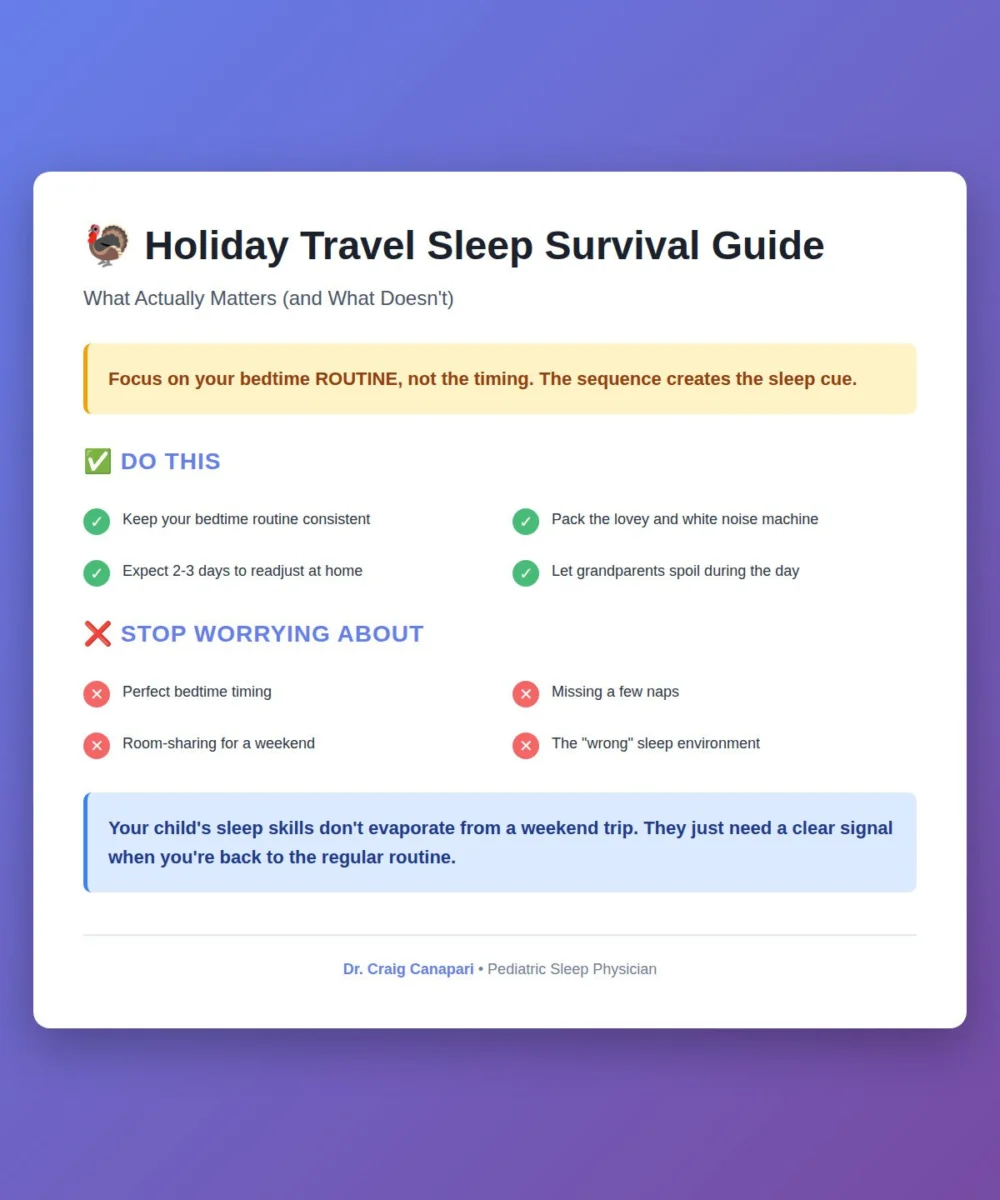
The core principle emphasized by Dr. Craig Canapari, a seasoned pediatric sleep medicine specialist with over two decades of experience, is the paramount importance of maintaining the bedtime routine rather than rigidly adhering to exact timing. He posits that the sequence of activities—such as a bath, followed by reading a book, and then lights out—serves as a crucial sleep cue for children. Even if this routine occurs later than usual, such as 9 PM instead of a typical 7:30 PM, the consistent order of events provides a predictable signal to the child’s brain, facilitating the transition to sleep. This approach acknowledges that during transitional periods like holidays, flexibility in timing is often more beneficial than strict adherence, which can inadvertently increase parental stress and negatively impact the child’s experience.
Addressing Common Parental Concerns: Expert Q&A
To address the most prevalent anxieties surrounding holiday travel and sleep, Dr. Canapari has synthesized common questions received from parents, offering practical advice grounded in his extensive clinical and personal experience.
Shared Sleeping Arrangements: Navigating the New Environment
One of the most frequently cited concerns involves shared sleeping spaces, particularly when multiple children who have not previously shared a room are involved. Christina, a parent of a baby and a toddler, expresses her worry: "I’m concerned about room sharing with both kids; we currently share a room with the baby, but the baby and the toddler have never slept in the same room together. The toddler likes to ‘play’ with the baby and we need to really keep an eye on him."
Dr. Canapari offers a "staged bedtime approach" to manage this challenge. This involves putting the younger child to bed first, ensuring they are settled before the older child begins their bedtime routine. If the older child’s presence is disruptive, a temporary barrier, such as a playpen or a separate, dimly lit area within the room, can be utilized to create a visual separation. He advises against practicing these arrangements at home beforehand, suggesting that such attempts could create unnecessary stress over a hypothetical problem. The focus should remain on managing the situation in real-time, adapting as needed.
Sleep Training and Travel: Maintaining Hard-Earned Skills
For parents who have recently completed sleep training, the prospect of travel can trigger fears of regression. Lashay, whose 9-month-old was sleep-trained using the Ferber method, asks: "We just sleep trained our 9-month-old using Ferber last month. We’re staying at Grandma and Grandpa’s for 2 weeks. What if she wakes up every hour crying? What do I say to my parents who are hearing their granddaughter cry?"
Dr. Canapari reassures parents that sleep-trained infants often retain their learned skills in new environments. The key is to recognize that disruptions are temporary. He anticipates that a sleep-trained baby might experience brief periods of crying as they adjust to the new surroundings, but this is typically a sign of adjustment rather than distress. He emphasizes the importance of communicating with grandparents beforehand, setting clear expectations about potential crying spells and the parents’ commitment to their established routine. A pre-emptive conversation, explaining that brief crying is normal and part of the adjustment process, can help manage their concerns. Utilizing a sleep expert’s recommendation can also provide an objective rationale for maintaining the sleep plan.
Navigating Bedtime During Transit
The scenario of driving home at bedtime presents another common dilemma. Sarah, a parent of two young children who typically sleep before 9 PM, asks: "We’re leaving at 7:30 PM and won’t be home until 10 PM. Both kids go to sleep before 9 PM every night. Should I do a modified routine before we get in the car, or wait until we get home?"
The recommended strategy involves a modified routine before leaving, which might include pajamas and a quick story. In the car, the goal is to facilitate sleep as much as possible, potentially by dimming lights and playing calming music. Upon arrival home, a minimal routine, such as a brief cuddle and tuck-in, is advised, rather than attempting a full routine that could further delay sleep. The following morning, Dr. Canapari suggests allowing children to sleep in slightly to compensate for the disrupted night, prioritizing parental rest as well.
Extended Vacations and Sleep Disruption
Longer trips, such as Lisa’s planned 2.5-week vacation to Hawaii, introduce the need for more structured sleep management beyond simple survival tactics. Lisa notes: "My kids (4 & 7) get really hyper and excited on trips and usually share a room/bed. They stay up really late. It’s fun for a few days but when we travel for longer than 5-6 days it gets exhausting."
For extended stays, a "vacation sleep schedule" is recommended, which may involve a slightly later bedtime than usual but still adheres to a consistent routine. The key phrase for enforcing this boundary is: "Vacation bedtime starts now. You don’t have to sleep, but you do have to stay in your bed quietly." Dr. Canapari highlights that time zone differences, such as those in Hawaii, can actually be advantageous, as the body clock will naturally align with the new schedule over time. He elaborates on time zone travel in a subsequent section, detailing strategies for managing the shift.
The Drive Home Nap "Disaster"
Evan raises a concern about the impact of travel on naps during a Thanksgiving visit: "Our Thanksgiving is 1.5 hours away and starts at 12:30 PM. We’ll be home for bedtime but naps will be a mess. Early bedtimes when they skip naps only make our early wake-ups worse."
Dr. Canapari acknowledges the validity of this concern, noting that disrupted naps can indeed lead to overtiredness and subsequent early waking. His proposed solution involves prioritizing a nap before the drive home, even if it’s a shortened one. If a nap is missed, he advises against an overly early bedtime, as this can paradoxically trigger even earlier morning awakenings. Instead, he suggests a slightly later bedtime, accepting a potentially "crabby evening" in exchange for avoiding multiple difficult mornings.
Time Zone Challenges: A Deeper Dive
Time zone changes, especially those involving significant shifts like red-eye flights or a 3-hour difference, are acknowledged as more challenging than local travel. Jamie and Christina’s shared concern about time zones highlights this.
For flights departing after bedtime, Dr. Canapari suggests initiating the bedtime routine before boarding, aiming to have children asleep or drowsy by the time the plane is airborne. Onboard, creating a dark and quiet environment is crucial. For more substantial time zone shifts (3+ hours), a gradual adjustment period of 3-5 days is recommended both upon arrival and upon return. Traveling east is generally easier for children, as it encourages earlier bedtimes. Traveling west can be more challenging, as it encourages later wake times. He provides specific strategies for using light exposure to help regulate the circadian rhythm in each direction. He also notes that persistent sleep issues after time zone travel, lasting beyond a week or two, may indicate an underlying problem beyond the immediate adjustment.
Theme Park Sleep Strategies
Theme parks, with their inherent stimulation, present a unique set of sleep challenges. Sonya’s question about "Disney/Theme Parks: Total Sleep Chaos?" reflects this widespread concern.
Dr. Canapari’s "Disney survival strategy" emphasizes embracing the chaos for short trips. This includes allowing for naps in strollers or during transport, acknowledging that these naps may be less restorative. He advises against forcing a rigid schedule, instead focusing on consistency with the bedtime routine upon returning to the hotel. For longer theme park trips, he recommends establishing a slightly later bedtime than usual to accommodate the excitement and sensory input.
Essential Packing List for Travel Sleep
Based on common parental concerns, a curated packing list emerges as crucial for supporting sleep during travel:
- Essentials: Blackout curtains (portable or hotel-provided), white noise machine, familiar comfort items (stuffed animal, blanket).
- Helpful: Travel crib or familiar sleep surface, sleep sack or familiar pajamas, snacks for pre-bedtime.
- Skip: Overly stimulating toys for bedtime, excessive changes of clothes for nighttime.
Three Areas Where Parents Can Reduce Anxiety
Dr. Canapari identifies three specific areas where parental anxiety can be significantly reduced:
- Room-sharing for a weekend: While disruptive, short-term room-sharing is manageable and unlikely to cause lasting sleep problems.
- Missing naps: A few missed or shortened naps will not permanently derail a child’s sleep patterns. The focus should be on an earlier bedtime that night.
- The "wrong" sleep environment: While ideal conditions are beneficial, children are adaptable. Bringing a sound machine and blackout curtains can mitigate concerns about light and noise.
Pre-Travel, During Travel, and Post-Travel Strategies
A structured approach to managing sleep during holidays involves proactive planning and consistent execution:
- Before you leave: Pack essential sleep items, discuss sleep expectations with children, and establish a clear bedtime routine plan.
- While you’re there: Prioritize the bedtime routine, be flexible with timing, and utilize comfort items.
- When you get home: Immediately re-establish the normal bedtime routine and schedule.
The Real Survival Strategy: Re-establishing Normality
The ultimate goal of holiday travel sleep management is not to achieve perfect sleep during the trip, but to maintain sufficient structure that allows for a swift return to the established routine upon returning home. Dr. Canapari uses the analogy of diet: consuming pie for a few days doesn’t erase the knowledge of eating vegetables; it simply requires a brief period of readjustment. Similarly, a child’s sleep skills remain intact, requiring a clear signal to return to the regular schedule.
When to Seek Professional Guidance
While most travel-related sleep disruptions are temporary, certain situations warrant professional consultation. Parents should contact their pediatrician or a sleep specialist if:
- Sleep problems persist for more than two weeks after returning home.
- A child experiences significant changes in appetite or hydration.
- There are concerns about a child’s overall health or well-being.
A Final Word on Parental Well-being
Dr. Canapari concludes by emphasizing that a child’s adaptation to new sleep environments is not a reflection of parental success or failure. Some children naturally adapt more easily than others, and both are normal. He shares a personal reflection, noting that the chaotic and sometimes challenging sleep arrangements of childhood holidays are often fondly remembered in retrospect. The focus, he advises, should be on enjoying the present moment and the company of loved ones, as sleep patterns will eventually stabilize. The holiday season is a time for connection and celebration, and with a balanced approach to sleep management, families can navigate these periods with greater peace of mind and more restful nights.
Related Articles:
- The Science of Sleep: Understanding Circadian Rhythms in Children
- Navigating Time Zone Changes: Strategies for Family Travel
- Creating a Sleep-Friendly Environment: Tips for Home and Away
- Sleep Training Methods: A Comparative Analysis for Parents
- The Impact of Screen Time on Children’s Sleep Patterns
Need more help? Sign up for my Sleep Training Mini-Kit in the box below.
Wave Goodbye to Sleepless Nights
Struggling with your child’s sleep? My FREE Sleep Training Mini Course is your lifeline. Learn actionable steps to improve your family’s sleep quality. Subscribe today and say hello to better nights!
[Subscription Form Placeholder]
