

When parents grapple with their child’s sleep challenges, the term "sleep training" often conjures images of more intensive methods, such as extinction or "cry it out" (CIO). While these approaches can be effective for infants and younger toddlers, pediatric sleep expert Dr. Craig Canapari advocates for more gradual and supportive techniques for older toddlers and preschoolers, particularly those exhibiting anxiety around sleep. These methods, collectively termed "progressive break" techniques in his book, "It’s Never Too Late To Sleep Train," offer a structured yet gentle path toward independent sleep for children aged two and older who have developed a reliance on parental presence to fall asleep.
These progressive break techniques are specifically designed for children who have transitioned from cribs to beds and are generally considered suitable for ages three and up, although the "Excuse Me Drill" has demonstrated efficacy in children as young as two. A key prerequisite for employing these methods is that the child must be able to remain in their bed while the parent is temporarily absent. This implies a certain level of cognitive understanding and cooperation from the child. The underlying principle of both techniques is that the parent remains present with the child until they fall asleep, gradually increasing the duration of parental absence.
The foundational steps for both the "Excuse Me Drill" and "Taking a Break" involve establishing a consistent bedtime routine and dimming the lights approximately 30 minutes before the child is expected to fall asleep. Within this established timeframe, the core difference between the two techniques lies in the frequency and duration of the parent’s departures from the room. Crucially, in both scenarios, the parent returns to the child’s room before the child becomes distressed, offering calm but enthusiastic praise for remaining in bed and exhibiting bravery. This positive reinforcement, drawing on the powerful impact of parental attention, is central to the success of these methods. The ultimate goal is for the child to drift off to sleep independently during one of these parental absences, a milestone that signifies successful progress without the need for crying or overt distress.
The "Excuse Me Drill": Frequent, Short Intervals of Reinforcement
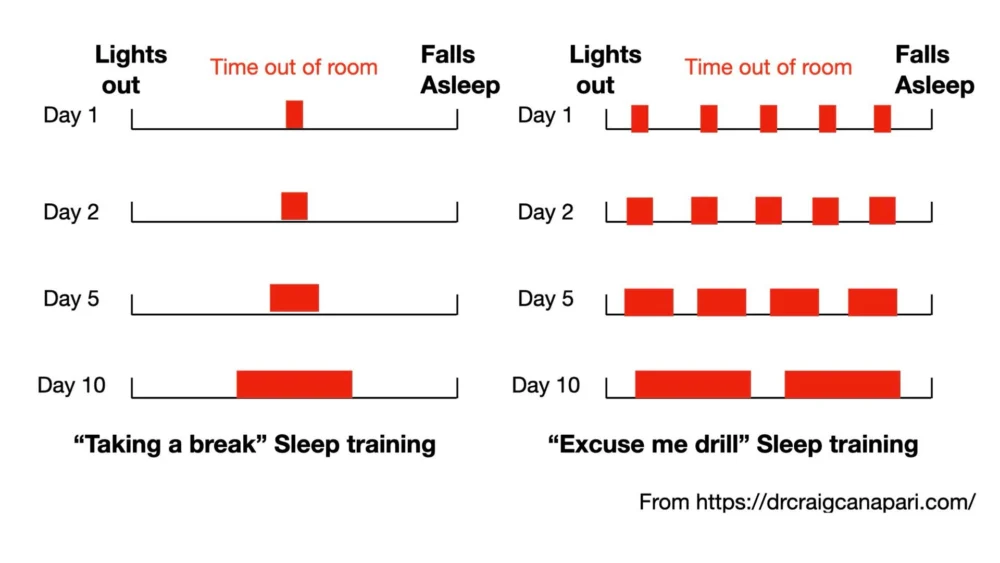
The "Excuse Me Drill," developed by sleep behaviorist Dr. Brett Kuhn, is characterized by very short, frequent departures from the child’s room. The parent steps out for brief periods multiple times between lights out and the child’s sleep onset. The progression of this technique involves gradually increasing the duration of each absence. This approach is particularly beneficial for children who struggle with prolonged periods of parental absence and may benefit from more frequent opportunities for positive reinforcement.
For instance, if a child’s target sleep onset is 8:30 p.m. following an 8:00 p.m. lights-out, the "Excuse Me Drill" might begin on the first night with five to fifteen repetitions of leaving the room for less than a minute. Each return is met with praise for the child’s composure and bravery. This dense schedule of reinforcement is designed to build confidence and reduce anxiety associated with parental separation. On subsequent nights, the duration of these breaks is incrementally extended. This method has been studied in children with developmental disorders, including Angelman Syndrome, a condition often associated with significant sleep difficulties, highlighting its potential applicability for children with complex behavioral or developmental needs. The frequent checks provide consistent opportunities for positive feedback, which can be crucial for children who have very low tolerance for parental absence.
The execution of these breaks involves a simple, pre-determined phrase such as, "Excuse me, I need to step out and [provide a brief, plausible reason] for a second. I’ll be right back!" The specific excuse is less important than the consistent return and the positive interaction that follows. Examples of plausible reasons include checking on a sibling, getting a drink of water, or briefly attending to a household task. Upon returning, parents are encouraged to offer calm praise, acknowledging the child’s efforts to stay in bed, appear cozy, or act bravely. Gentle physical contact is permissible, but the overall demeanor should remain serene to avoid overstimulating the child.

"Taking a Break": A Single, Progressively Longer Interval
In contrast, the "Taking a Break" technique involves a single, longer departure from the child’s room. This break typically occurs around the midpoint of the interval between lights out and the child’s expected sleep onset. The progression here involves increasing the duration of this single absence each night. This method is generally considered simpler for parents to implement and may be less demanding on their energy levels.
Using the same 8:00 p.m. lights-out and 8:30 p.m. sleep onset example, a parent employing "Taking a Break" might, on the first night, leave the room for approximately 15 minutes when the child is settled. The duration of this break would then gradually increase by about one minute each subsequent night. The underlying principle remains the same: the parent returns before the child experiences significant distress, offering praise for their positive behavior. This method is often recommended for children who can tolerate at least a minute of parental absence without becoming overly upset.
The "Taking a Break" technique also utilizes the "excuse me" phrasing for departures, followed by a calm return and positive reinforcement. The primary difference lies in the singular, extended nature of the absence, which allows the child to practice self-soothing for a more substantial period. This method is often preferred by parents due to its streamlined approach, requiring fewer transitions and less frequent interventions.
Choosing the Right Technique for Your Child
Dr. Canapari generally favors the "Taking a Break" method due to its relative simplicity and reduced parental effort. However, he acknowledges the specific strengths of the "Excuse Me Drill" for certain children. The "Excuse Me Drill’s" frequent reinforcement schedule makes it a strong contender for children who exhibit significant anxiety or have developmental challenges that impact their ability to tolerate longer periods of separation. The consistent, brief check-ins can provide a more secure framework for these children, building their confidence incrementally.
The decision between these two techniques hinges on an individual child’s temperament, anxiety levels, and their capacity to tolerate parental absence. For parents seeking a less demanding approach, "Taking a Break" offers a streamlined path. For children who require more frequent reassurance and positive reinforcement due to heightened anxiety or developmental considerations, the "Excuse Me Drill" provides a structured, supportive framework.
Troubleshooting Common Sleep Training Challenges
When implementing either of these techniques, parents may encounter common obstacles. If a child follows the parent out of the room or becomes significantly upset, it often indicates that the duration of the parental absence is too long for their current comfort level. In such cases, it is advisable to regress to shorter intervals, allowing the child to build tolerance more gradually. Practicing brief departures during the day, perhaps during playtime, can also help demystify the process and reduce associated anxiety.
Another frequent concern arises when a child begins falling asleep independently at bedtime but continues to experience night wakings. This phenomenon, often referred to as sleep onset association disorder, occurs when a child has become accustomed to a specific set of conditions (including parental presence) to fall asleep and seeks those same conditions during natural awakenings throughout the night. Typically, these night wakings resolve within a month as the child adjusts to their new independent sleep patterns. However, for parents seeking a more immediate solution, the same gentle sleep training techniques can be applied to night wakings. For example, if "Taking a Break" is being used at bedtime, a parent would return to the child’s room, offer reassurance, and then implement the established break duration before returning again.

Background and Expert Endorsement
The "Excuse Me Drill" technique has roots in behavioral sleep medicine protocols. Dr. Brett Kuhn, a recognized sleep behaviorist, is credited with its development, and its application has been further discussed and disseminated by professionals like Dr. Sarah Honaker. Dr. Canapari himself, in his book "It’s Never Too Late To Sleep Train," details these "progressive break" techniques, underscoring their value for parents seeking alternatives to more intensive sleep training methods. The inclusion of research, such as the study on Angelman Syndrome, adds a layer of scientific validation to the efficacy of these approaches for specific populations.
Broader Implications for Child Development and Family Well-being
The successful implementation of gentle sleep training techniques like the "Excuse Me Drill" and "Taking a Break" has significant implications beyond simply achieving a full night’s sleep. For children, developing independent sleep skills can foster a greater sense of security and self-reliance. Overcoming sleep challenges can reduce daytime irritability, improve mood regulation, and enhance cognitive functions such as attention and learning.
For parents, achieving better sleep for their children translates into improved parental well-being. Chronic sleep deprivation can negatively impact mental and physical health, strain relationships, and diminish overall quality of life. By adopting effective and supportive sleep training strategies, families can move towards a more harmonious and rested existence, creating a foundation for healthier development and stronger family bonds. The availability of these gentle, evidence-based approaches empowers parents to address sleep issues with confidence and compassion, ultimately benefiting the entire family unit.
Resources for Further Exploration
For parents seeking more in-depth information and structured guidance, several resources are available. The original research and protocols developed by sleep behaviorists like Dr. Brett Kuhn offer a comprehensive understanding of the theoretical underpinnings of these methods. Additionally, Dr. Canapari’s book, "It’s Never Too Late To Sleep Train," provides practical advice and detailed strategies for implementing various sleep training approaches. For those who benefit from visual learning, supplementary video resources may offer step-by-step demonstrations.
As parents navigate the complexities of childhood sleep, understanding the range of available techniques and their respective benefits is crucial. The "Excuse Me Drill" and "Taking a Break" represent valuable tools in the parental toolkit, offering gentle yet effective pathways to independent sleep for children who may be hesitant or anxious about sleeping alone. By embracing these progressive methods, families can foster healthier sleep habits and contribute to the overall well-being of their children.
