


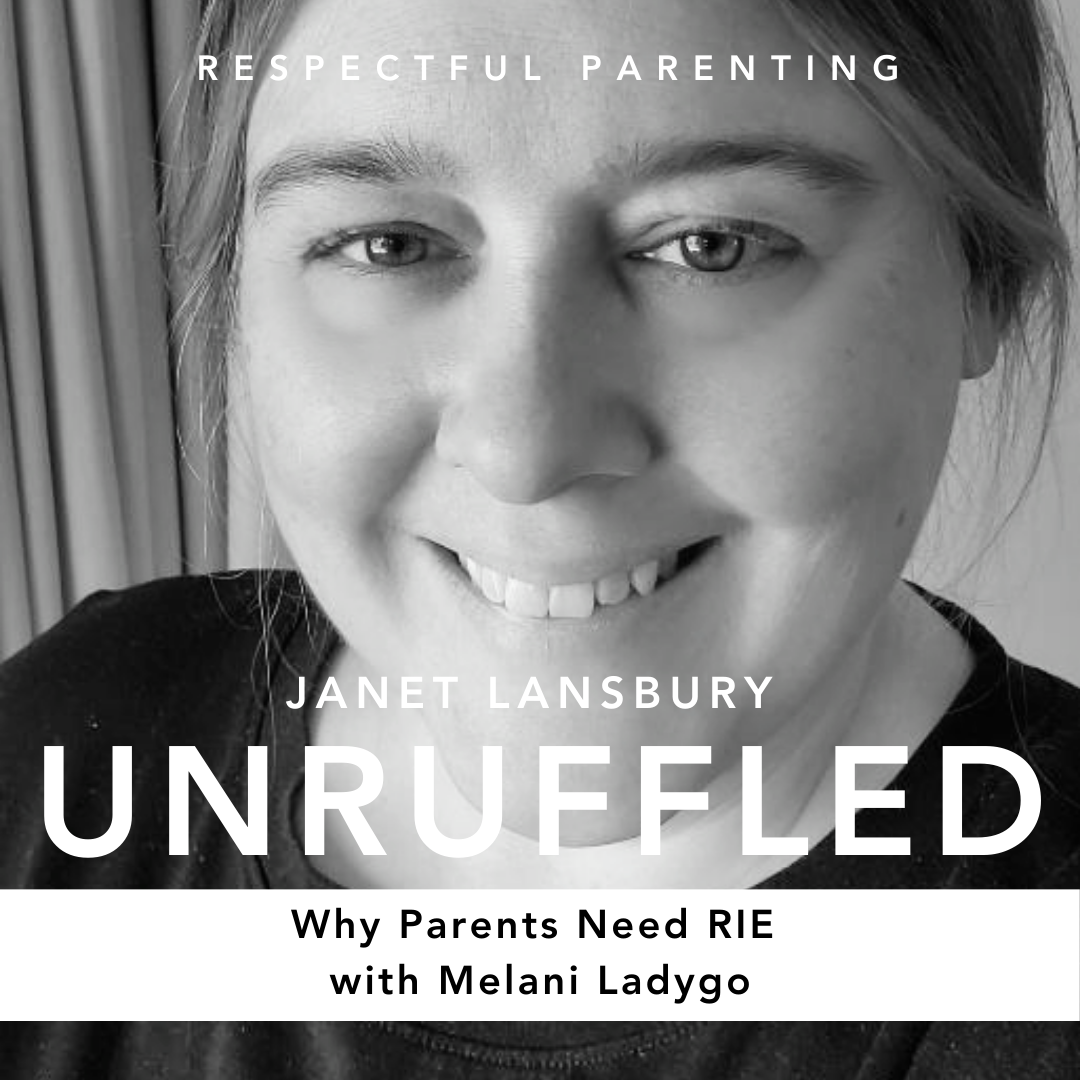
A recent discussion between prominent early childhood advocate Janet Lansbury and RIE Executive Director Melani Ladygo has shed light on the profound impact of the RIE (Resources for Infant Educarers) approach on parenting and early childhood education. The conversation, hosted on Lansbury’s "Unruffled" podcast, delved into the core principles of RIE, its benefits for both children and parents, and its relevance in contemporary child-rearing. This article aims to expand upon their insights, providing a comprehensive overview of RIE, its historical context, and its enduring significance.
The Genesis and Philosophy of RIE
The RIE approach, founded by infant expert Magda Gerber, emerged from a deep respect for infants as fully capable individuals from birth. Lansbury, a long-time proponent and former trainee of Gerber, shared her personal journey, emphasizing how RIE fundamentally shifted her perception of babies. "The RIE classes I attended over 30 years ago with my firstborn had a profound effect on my perceptions of babies, the art of childcare, and life, really," Lansbury stated, underscoring the transformative nature of the philosophy.
Melani Ladygo, as the current Executive Director of RIE, elaborated on the organization’s mission. "RIE is an organization that teaches parents and professionals how to have respectful, reciprocal relationships with babies and toddlers, children zero to two," she explained. The term "educarer," coined by Gerber, encapsulates the dual role of caring for and educating infants simultaneously. Ladygo highlighted that RIE aims to be a resource for those who embrace this "educaring" approach, fostering a connection built on mutual respect and curiosity.
The core tenet of RIE is the belief that infants possess their own unique thoughts, ideas, and inner lives, even before they can articulate them verbally. Lansbury vividly recalled her realization with her own three-month-old: "She had all these thoughts and all of these ideas and all this stuff going on inside her that I had not realized could possibly exist in a baby. And I wanted to know about that. I wanted to discover that person and get to know her and bond with her." This recognition of the infant as a distinct person, with an internal world to be discovered, is central to RIE.
Key Principles and Practical Application
The RIE approach is characterized by several key principles that guide interactions with infants and toddlers:
- Respectful Observation: RIE encourages parents and caregivers to observe children without judgment, allowing them to understand the child’s perspective and developmental stage. This practice fosters a deeper connection and reduces the urge to interfere unnecessarily.
- Trust in Competence: A fundamental belief in RIE is that infants are capable and resourceful. Caregivers are encouraged to allow children to attempt tasks independently, even if it involves struggle, rather than intervening to "help" prematurely. This builds self-confidence and problem-solving skills.
- Uninterrupted Play: RIE emphasizes the importance of free, self-directed play as a crucial avenue for learning and development. Caregivers create safe environments that allow children to explore and engage with their surroundings at their own pace.
- Authentic Communication: RIE advocates for honest and direct communication, even with very young children. This includes acknowledging their feelings, explaining what is happening, and respecting their autonomy.
- Acceptance of Feelings: All emotions, positive and negative, are seen as valid and are acknowledged without judgment. This allows children to develop emotional intelligence and learn to regulate their feelings.
Ladygo shared a powerful anecdote from her early experiences in a RIE-influenced childcare center. When she intervened to help a baby climb a slide, a colleague gently questioned her action: "How do you think she’s going to feel the next time she tries to go up that slide and you aren’t there? She didn’t know you were helping her, so she thought she did it by herself, but she really did it with you.” This moment highlighted the RIE principle of allowing children to experience their own successes and challenges, fostering genuine competence.
RIE’s Impact on Parents: Beyond Child-Rearing
While RIE focuses on the child’s development, its most profound impact is often on the parents themselves. Lansbury articulated this shift: "When we see the person in our baby, then we get to be seen by them as ourselves. We get to be ourselves. We don’t have to say the right things and do the right things and be this perfect parent that maybe we saw on Instagram or what we think we’re supposed to be."
The RIE approach liberates parents from the pressure of performing an idealized version of parenthood. Instead, it encourages authenticity, allowing parents to be present as their true selves, complete with their own needs and limitations. This fosters a more relaxed and genuine relationship with their child, reducing the burden of constant intervention and problem-solving.
Ladygo noted that this shift leads to a greater sense of peace and confidence for parents. She described observing parents in a RIE class who were "so relaxed," able to "just sit back and have confidence in their children’s abilities." This "muscle of trust," as she termed it, is developed through consistent observation and allowing children to navigate their own challenges.
Addressing Common Misconceptions and Controversies
The RIE approach, with its emphasis on allowing children to experience struggle and delayed gratification, can sometimes be misunderstood or viewed as controversial. Some may perceive it as permissive or neglectful. However, RIE is not about "hands-off" parenting but rather about "present and supportive" parenting.
"It’s not that we just suddenly landed here, it’s a process," Ladygo explained when discussing parent trust. "You’re still going to come close, but you’re going to let them do it." The focus is on being a secure base, offering support and safety without taking over the child’s experience.
The concept of allowing children to experience negative emotions, such as frustration or disappointment, is also central. RIE teaches that acknowledging these feelings, rather than trying to immediately "fix" them, is crucial for emotional development. As Lansbury stated, "To be able to see when a child is working on something, how positive that experience is. It’s not just positive that they got to the end and solved it, but that they’re able to be in the middle of it." This acceptance of struggle as a natural and valuable part of learning is a cornerstone of RIE.
The RIE Conference: A Hub for Learning and Community
For those seeking to deepen their understanding and practice of RIE, the annual RIE Conference offers a significant opportunity. Ladygo highlighted the upcoming conference, noting its theme of play and featuring keynote speaker Peter Gray, author of "Free to Learn."
"Unlike our courses, where we’re going to teach you exactly what the approach is, what happens at the conference is you get to really see all the many, many different ways that this work can be applied," Ladygo explained. The conference provides a "smorgasbord" of workshops and presentations showcasing RIE’s application in various settings, from classrooms to parent-child interactions.
Lansbury described the conference as a "banquet" for parents and professionals, emphasizing the value of connecting with like-minded individuals. In an era where community can be elusive, the RIE conference offers a vital space for shared learning and mutual support. The code "Unruffled" offers a $50 discount for registration.
Broader Implications and Enduring Relevance
The principles of RIE extend far beyond infancy, shaping how individuals navigate relationships throughout life. The ability to observe, trust in competence, and communicate authentically are skills that benefit individuals in all aspects of their lives.
"The number one question is, ‘How do I do this when I go to the park? How do I do this with my friend when they come over?’" Ladygo noted, underscoring the desire to apply RIE principles in everyday situations. Her advice to "try" and observe the outcomes, even when met with skepticism from others, encourages parents to gradually build confidence in their RIE-informed approach.
The RIE approach ultimately fosters children who are more confident, resilient, and socially intelligent. By recognizing children as capable individuals from birth and fostering respectful, reciprocal relationships, RIE equips them with the foundational skills needed to thrive in a complex world. As Ladygo concluded, "Children, when their brains are ready for those academics, they need to have the social pieces kind of worked out. And that’s what RIE really helps children do in those early years. But honestly, that’s what we all need in all of our lives, is the social pieces worked out so that we can survive and thrive." The enduring legacy of Magda Gerber’s RIE approach lies in its profound understanding of human development and its capacity to transform the parent-child relationship into one of deep respect, trust, and mutual growth.
