

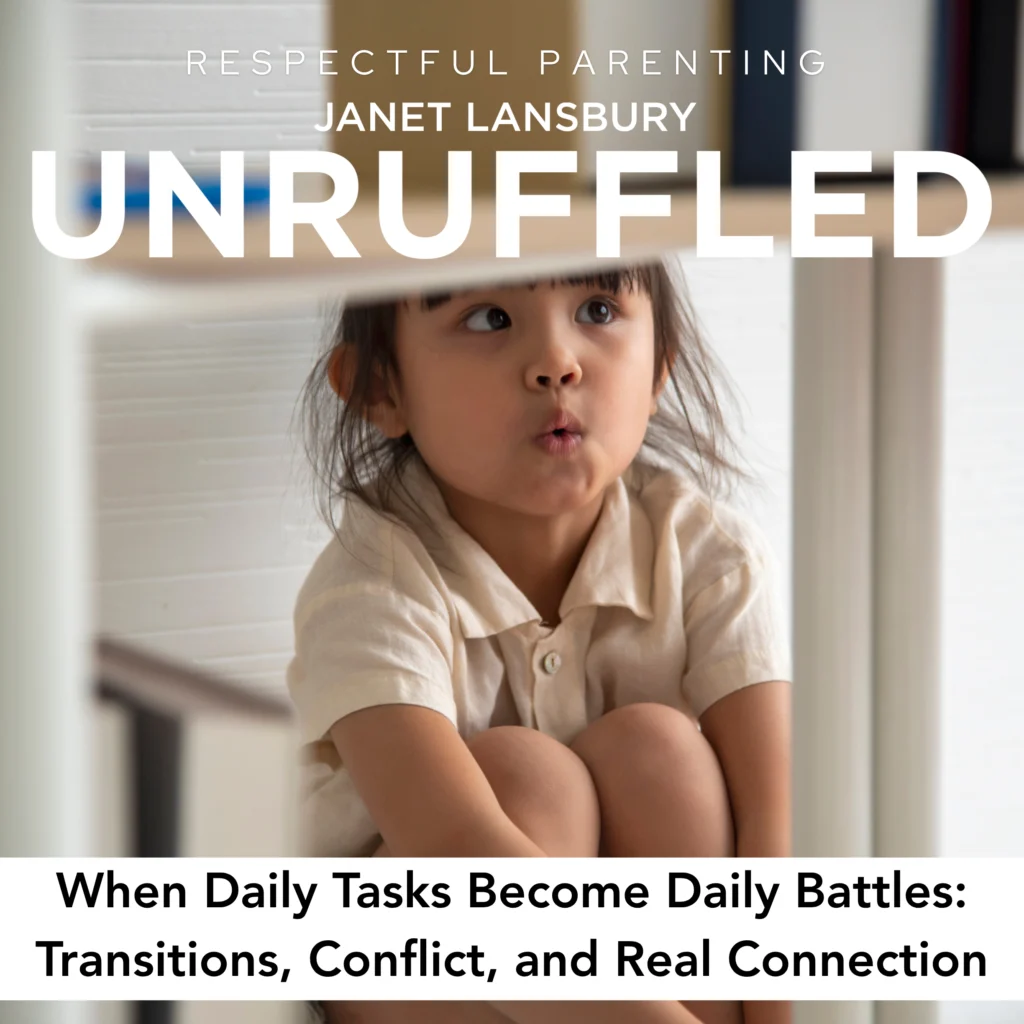
A concerned parent’s candid account of daily struggles with her five-year-old daughter’s resistance to essential routines like dressing, hair brushing, bathing, and teeth brushing has illuminated a common challenge faced by many families. The parent, who wishes to remain anonymous, shared her frustration in a recent exchange with parenting expert Janet Lansbury, detailing how simple transitions often escalate into hour-long battles, leaving both mother and child overwhelmed and tasks unfinished. Despite employing various common strategies—timers, countdowns, reward charts, games, and even punishments—none have yielded lasting solutions. Lansbury, in her response, offers a profound reframing of these conflicts, emphasizing the importance of genuine connection over superficial fixes and providing a perspective that encourages parental confidence in navigating these difficult moments.
The Parent’s Dilemma: A Quest for Connection Amidst Daily Strife
The parent, a single mother working in a demanding nursing profession, described her daughter as a "sweet, affectionate, social butterfly, beautifully bossy" five-year-old preparing to enter first grade. This description paints a picture of a capable and outgoing child, making her persistent resistance to daily routines all the more perplexing for her mother. The family navigates an often "busy and demanding" reality, further complicated by inconsistent co-parenting arrangements that add an layer of unpredictability.
"While I always imagined a slower, more peaceful family life, our reality is often busy and demanding," the parent wrote. "She has to navigate many transitions that are often inconsistent, especially in terms of the co-parenting situation. I often do not know when or how that will go. Even so, I want us to move through these years feeling connected and secure if possible."
The core of her distress lies in the perceived erosion of her relationship with her daughter due to these recurring conflicts. Since the age of three, resistance to essential self-care tasks has been a consistent issue. The parent’s attempts to address this, rooted in principles of "less pressure, more connection, acceptance, and leadership," have, in her own words, not led to improvement. She expressed a deep-seated concern that she might be "inadvertently get stuck in a pattern that isn’t helping our child grow," questioning the balance between supporting her child’s discomfort and holding firm boundaries. This introspection highlights a common parental anxiety: the fear of misinterpreting a child’s behavior and unintentionally hindering their development or damaging the parent-child bond.
Lansbury’s Perspective: Reframing Conflict as Connection
Janet Lansbury, a respected voice in respectful parenting, addressed the parent’s concerns on her podcast "Unruffled." Lansbury’s approach centers on the idea that conflict and connection are not mutually exclusive but can, in fact, coexist and even strengthen the parent-child relationship. She posits that many commonly used parenting strategies, while well-intentioned, can inadvertently create distance rather than foster understanding.
"I have a lot of thoughts for this parent that I really hope will help her—and anyone listening—clarifying some really, really important things about what connection really means, about what respecting our child really means, and how conflict and connection can actually happen together," Lansbury stated. "And that’s a relief, right? We don’t have to choose one over the other. We can face conflicts with our child in a very connected, honest way."
Lansbury elaborated on how common tactics like timers, countdowns, and reward charts, while appearing to be effective solutions, can actually serve as "outside fixes" that prevent genuine, person-to-person connection. These strategies, she argues, often bypass the underlying emotional landscape of the child, which is the true driver of resistance.
The Underlying Dynamics of Transitional Resistance
Lansbury’s analysis delves into the developmental context of these daily struggles. She explains that transitions are inherently challenging for young children due to their ongoing internal process of growth and change. For children navigating parental separation or divorce, the added complexity of moving between two homes and two different lives can significantly amplify their feelings of disruption and insecurity. This is not a reflection of parental failure, but rather a natural response to significant life changes.
The parent’s description of her daughter as a "social butterfly" and "beautifully bossy" suggests a child with a strong sense of self and social adeptness. Lansbury interprets this as a testament to the parent’s effective nurturing, indicating that the child is already managing significant external transitions, such as the impending start of first grade, with apparent success. This suggests that the resistance to daily routines might not stem from an inability to cope, but rather from a deeper need to express overwhelming feelings that arise during these inevitable shifts.
Lansbury highlights a crucial point: a child’s resistance to tasks like brushing teeth or getting dressed is rarely about the task itself. Instead, it serves as an outlet for deeper feelings of overwhelm related to the transition. The child is, in essence, communicating, "I need to be a mess with transitions. This is where it’s coming out. Can you gather me through these overwhelmed feelings? Can you stay confident in the face of my overwhelmed feelings?" This perspective shifts the focus from the child’s "behavior" to the child’s underlying emotional needs.
Critiquing Conventional Strategies: The Limits of External Fixes
Lansbury offers a critical examination of the strategies the parent has employed. She argues that punishments are particularly detrimental, as they directly oppose the goal of connection. Reward charts, while appearing benign, can feel like a form of manipulation to the child, undermining authenticity in the relationship. Games, while potentially fun, are most effective when they stem from a place of parental confidence and ease, not from a desperate attempt to navigate a difficult situation.
"All of those things are kind of outside fixes rather than getting the practice that we need and that our child needs from us, really, that we’re being real right now together," Lansbury explained. She emphasizes the importance of acknowledging and validating the child’s feelings directly, stating, "Whatever you’re saying, again, the words don’t matter, but really, really allowing those feelings to be."
The parent’s own reflection on her upbringing and the prevailing parenting philosophies of her generation ("stuffing uncomfortable emotions and correcting behavior") provides a crucial insight into the origins of these patterns. Lansbury suggests that even well-intentioned modern approaches can inadvertently carry forward a similar message: that discomfort is to be avoided or corrected, rather than experienced and processed.
The Power of Authentic Connection: Embracing Messiness
Lansbury’s core message revolves around the concept of "messy connection"—the idea that true connection is not about avoiding conflict or discomfort, but about navigating it together with honesty and presence. She advocates for parents to embrace their own "real selves" and allow their children to be their "real, honest selves," even when it’s difficult.
"It can always be us as our real selves, relating to our child as their real, honest selves. Even when it’s hard, even when it’s overwhelming, that’s what works," she stated. This approach fosters a sense of safety and trust, enabling children to express their full range of emotions without fear of judgment or rejection.
Lansbury reframes the parent’s question about balancing support and boundaries. She argues that for transitional activities like getting dressed or bathing, a "firm boundary" in the traditional sense is not the most effective approach. Instead, these situations call for "finesse" and "give and take," where the parent is firm in the intention to complete the task but works with the child, not against them. This involves acknowledging the child’s resistance and discomfort while gently guiding them through the process.
"This is how it works," Lansbury explained, "and that’s why it’s such a time of connection, because we’re saying, ‘We’ve got to do this and I’m going to help make this happen,’ but at the same time we’re also saying, ‘You really don’t want to do this and this is not fun. It’s so hard on you to have to keep making these changes, move all your stuff and sleep in another place.’"
Data and Implications: Understanding the Broader Landscape
The challenges described by the parent are not isolated incidents. Research in child development consistently highlights the critical role of secure attachment and emotional regulation in a child’s overall well-being and ability to navigate life’s demands. Studies, such as those published in the Journal of Child Psychology and Psychiatry, indicate that children who experience consistent emotional validation during difficult transitions are more likely to develop healthy coping mechanisms and resilience.
The parent’s situation, exacerbated by the complexities of co-parenting, also touches upon broader societal trends. The rise in single-parent households and the increasing demands on working parents necessitate supportive frameworks for families. Data from the U.S. Census Bureau consistently shows a significant percentage of children living in single-parent families, underscoring the widespread need for effective parenting strategies that acknowledge these realities.
Lansbury’s advice offers a counter-narrative to the pressure often placed on parents to achieve seamless, conflict-free childhoods. By encouraging parents to embrace the "messy" aspects of connection, she provides a path towards deeper relationships and more resilient children. The implication is that by shifting focus from controlling behavior to understanding and supporting emotions, parents can transform everyday battles into opportunities for profound connection and growth.
The Path Forward: Confidence in Genuine Connection
The parent’s heartfelt closing statement, where she reflects on her own upbringing and desire to provide a different model for her daughter, reveals a profound commitment to breaking cycles and fostering a more compassionate internal voice for her child. Lansbury’s response aims to equip this parent with the confidence to trust her instincts and to see these challenging moments not as failures, but as opportunities for authentic connection.
"You are a wonderful mom," Lansbury reassured her. "I think/hope I can clear up some things for you to help guide your way. You already have everything else you need."
This advice encourages parents to:
- Embrace Honesty: Directly acknowledge the difficulty of the task for both parent and child.
- Validate Feelings: Allow children to express their frustration, anger, or sadness without trying to fix or dismiss it.
- Offer Leadership with Empathy: Maintain a calm, confident demeanor while acknowledging the child’s emotional experience.
- Prioritize Connection: Understand that genuine connection is built through navigating difficulties together, not by avoiding them.
Ultimately, Lansbury’s message is one of empowerment. By shifting the focus from external fixes to internal connection and by embracing the inherent messiness of parenting, families can transform daily struggles into opportunities for deeper understanding, trust, and lasting resilience. The parent’s journey, as shared and responded to, serves as a powerful reminder that the most effective parenting strategies are often the most human ones.
