

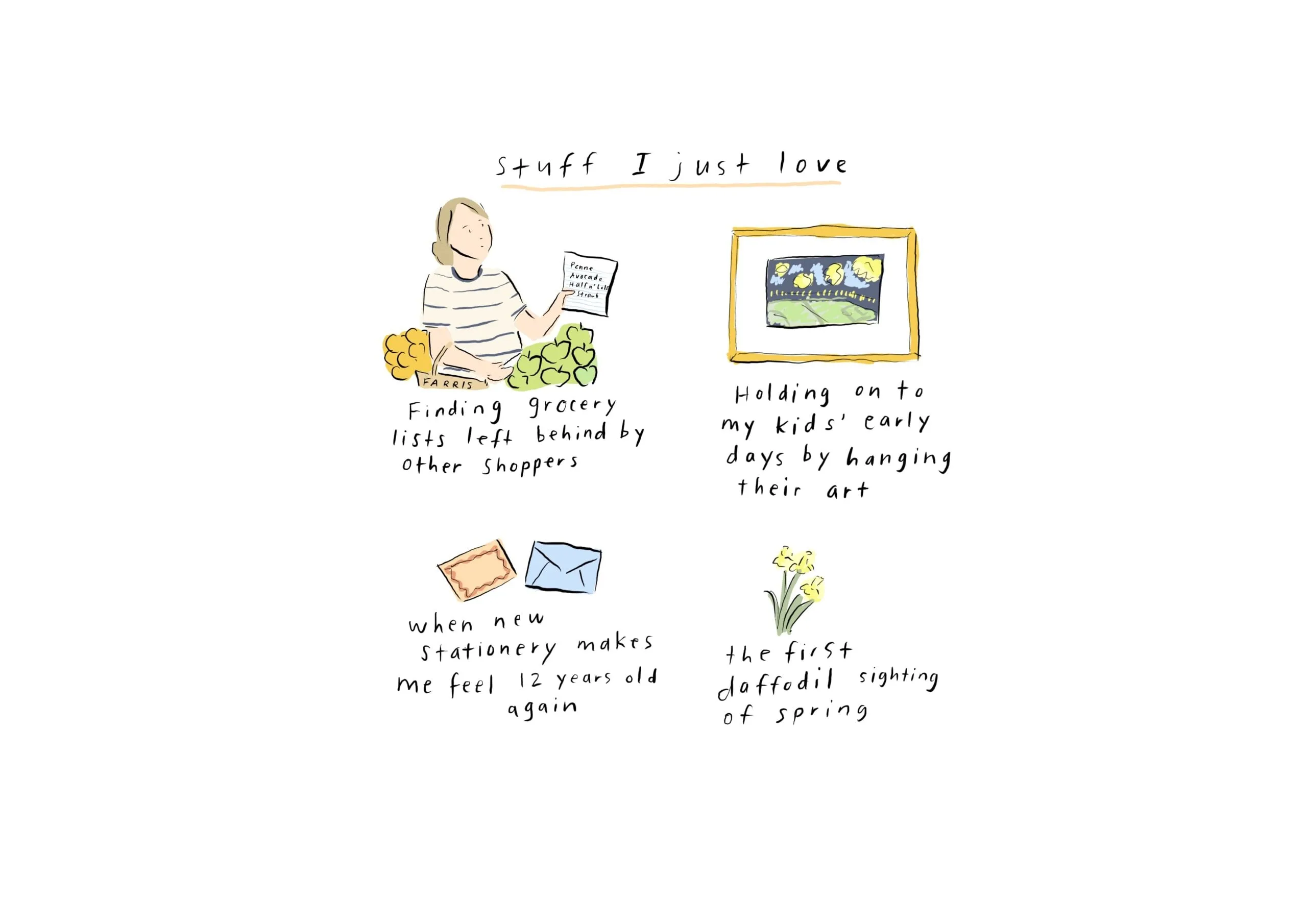
The growing public interest in "glimmers"—micro-moments of joy that act as the psychological opposite of triggers—is reshaping how individuals interact with their environments and each other in an increasingly digital world. From the discovery of handwritten grocery lists tucked into library books to the first sightings of daffodils in early April, these small, seemingly insignificant events are being recognized by experts and the public alike as vital tools for emotional regulation and social cohesion. This phenomenon was highlighted recently during a series of community discussions and upcoming literary events, including a book signing by author Grace Farris at Book People in Austin, Texas, scheduled for April 6.
The Anthropology of the Found Object
At the center of this cultural trend is a fascination with the mundane artifacts of daily life, particularly handwritten grocery lists. While the majority of modern consumers have transitioned to digital applications for household management, the physical grocery list remains a potent symbol of human intimacy. Anthropologists and social observers note that these discarded scraps of paper offer a voyeuristic yet empathetic window into the lives of strangers.
The popularity of this niche interest is evidenced by the enduring legacy of works such as Bill Keaggy’s Milk, Eggs, Vodka: Grocery Lists and What They Say About Us. The book, which catalogs hundreds of found lists, highlights how these items serve as accidental time capsules. For many, finding a list in a library book or a rented car provides a "ping" of human connection—a reminder of the shared necessity of sustenance and the individual quirks of handwriting.
In a professional context, librarians and bookstore employees have long served as the unofficial curators of these artifacts. Circulation desk workers frequently report finding not only shopping lists but also bookmarks, photographs, and pressed flowers within returned volumes. These items, while occasionally problematic for book maintenance, are increasingly viewed as valuable markers of the "secret life" of physical media. One library in Massachusetts even gained attention for creating a dedicated display of found bookmarks, allowing patrons to reconnect with the history of their local literary community.
The Psychology of Glimmers and Mental Health
The term "glimmer" was originally coined by licensed clinical social worker Deb Dana within the framework of Polyvagal Theory. Unlike triggers, which send the nervous system into a state of fight-or-flight, glimmers cue the body to feel safe and connected. The recent surge in public testimonials regarding these moments suggests a collective effort to combat the "loneliness epidemic" cited by the U.S. Surgeon General.
Psychological data indicates that the intentional practice of noticing small joys can significantly impact neurological health. By focusing on "micro-moments," such as the sound of geese returning in the spring or the sight of an elderly person enjoying an ice cream cone, individuals can stimulate the ventral vagal system, which promotes feelings of calm and social engagement.
This practice is particularly prevalent among parents. The emotional weight of children’s artwork, for instance, serves as a primary glimmer for many. Professional observers note that the preservation of a child’s kindergarten drawings or spontaneous signage—such as a hand-drawn notice for an Easter egg hunt—acts as a mechanism for "freezing time." This archival impulse is more than mere sentimentality; it is a way for parents to navigate the rapid developmental milestones of their children, creating a sense of stability through physical mementos.
Seasonal Transitions and Regional Identity
The arrival of spring serves as a universal catalyst for these positive psychological shifts. In the Northeastern United States, particularly New England, residents have identified specific regional markers that signal the change of season. While traditional symbols like crocuses and daffodils are widely celebrated, more utilitarian signs, such as "Frost Heaves" road warnings, have taken on a cult-like status as harbingers of the thaw.
These signs occur when ice beneath rural roads melts unevenly, causing the pavement to buckle. To the local population, these "weird buckles" are as much a sign of spring as the return of migratory birds. This regional specificity reinforces a sense of place and shared experience, which is a critical component of community resilience.
Furthermore, the integration of technology into nature-watching has amplified the reach of these seasonal glimmers. The Merlin Bird ID app, developed by the Cornell Lab of Ornithology, has seen a significant increase in usage as amateur naturalists track the return of species via birdsong. This intersection of digital tools and physical environmental observation allows for a more detailed and shared understanding of ecological shifts, turning a solitary walk into a data-driven community event.
The Impact of Spontaneous Social Encounters
Beyond physical objects and seasonal changes, the "joyful unexpected"—spontaneous encounters with celebrities or wildlife—plays a crucial role in urban well-being. Recent reports from Victoria, British Columbia, describe residents experiencing high levels of "civic delight" following random encounters with local wildlife, such as peacocks in public parks, or unexpected run-ins with public figures in mundane settings like coffee shops.
Sociologists refer to these interactions as "weak ties" or "micro-socialities." These brief, low-stakes interactions with the environment or strangers contribute to a sense of "belonging to the human race," as one observer noted. This is particularly true in the "post-pandemic" era, where the value of shared physical space has been recalibrated.
The Evolution of Personal Identity and Agency
The trend of finding joy in the small also extends to acts of self-reclamation and personal agency. An emerging theme in community discussions is the "adult treat"—the act of an adult engaging in a simple pleasure, such as eating ice cream alone or adopting a long-desired nickname, without the traditional justifications of childcare or social obligation.
Case studies in personal branding and identity shifts, such as an individual transitioning from "Harriet" to "Hattie" in their senior years, illustrate how small, symbolic changes can have profound effects on self-perception. The act of ordering personalized stationery or "officializing" a nickname serves as a declaration of autonomy. These narratives suggest that the pursuit of glimmers is not just a passive observation but an active participation in one’s own happiness.
Chronology of Modern Found-Object Interest
The timeline of the public’s obsession with found objects and glimmers can be traced through several key cultural milestones:
- 2006: The publication of Milk, Eggs, Vodka by Bill Keaggy, which popularized the "found list" as a genre of folk art.
- 2018: The formal introduction of "glimmers" into the mainstream mental health lexicon via Deb Dana’s work on Polyvagal Theory.
- 2020–2022: The COVID-19 pandemic accelerates the shift toward digital grocery shopping, paradoxically increasing the perceived value and rarity of handwritten lists.
- 2023–2024: A surge in "slow living" movements on social media platforms like TikTok and Instagram, where users document "mundane joys," leading to a resurgence in analog hobbies like scrapbooking and birdwatching.
- April 2026: Scheduled community events, such as the Grace Farris book signing in Austin, signify the institutionalization of these themes in the literary and arts sectors.
Broader Implications for Society
The transition toward valuing the "small and mundane" has broader implications for urban planning, environmental conservation, and the retail industry. As consumers increasingly value authenticity and human connection, businesses are finding success by leanings into these "glimmers." For example, independent bookstores like Book People in Austin have become vital community hubs by hosting events that celebrate local authors who focus on the nuances of daily life.
Furthermore, the "glimmer" movement provides a low-cost, accessible framework for mental health support. In an era where professional therapy can be prohibitively expensive, the practice of noticing daffodils, collecting discarded lists, or sharing a moment of "ice cream joy" offers a supplementary form of emotional regulation that is available to everyone, regardless of socioeconomic status.
As society continues to grapple with the complexities of the digital age, the humble grocery list and the first caterpillar of spring stand as reminders of the enduring power of the physical world. The collective focus on these micro-moments suggests a path forward that prioritizes human connection, environmental awareness, and a radical appreciation for the present moment.
