

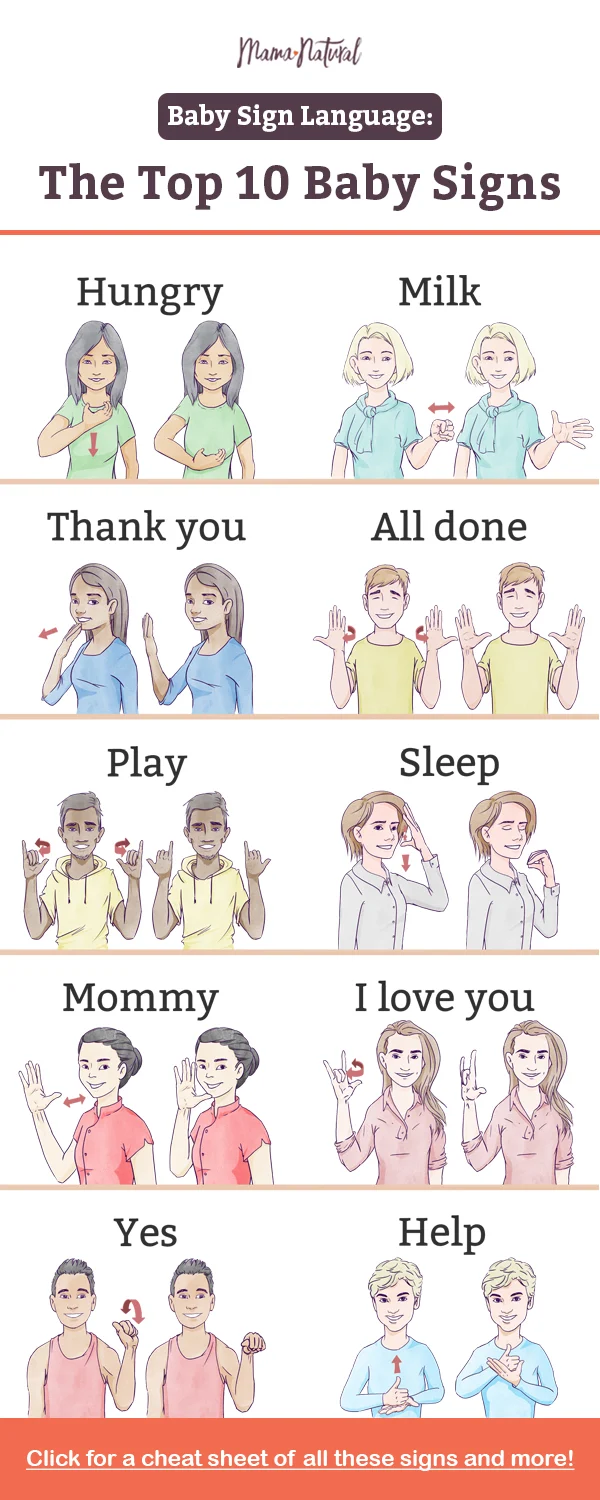
Baby sign language represents a specialized communication strategy designed to bridge the developmental gap between an infant’s desire to communicate and their physical ability to produce articulate speech. For decades, parents and child development experts have sought methods to mitigate the frustration inherent in the pre-verbal stage of infancy, where crying is often the only available tool for expressing complex needs. By utilizing a simplified version of American Sign Language (ASL), caregivers can establish a functional lexicon with infants as young as four to six months old. This methodology does not replace verbal language but serves as a precursor and supplement, facilitating a deeper connection between the child and their environment while fostering essential cognitive and motor skills.
The Developmental Framework of Early Gestural Communication
The concept of baby sign language gained significant academic traction in the 1980s and 1990s, spearheaded by researchers such as Dr. Linda Acredolo and Dr. Susan Goodwyn. Their longitudinal studies, funded by the National Institutes of Health (NIH), suggested that infants who used symbolic gestures demonstrated accelerated language development and higher IQ scores in later childhood compared to those who did not. The biological basis for this lies in the discrepancy between fine motor development and vocal tract maturation. While the complex coordination of the tongue, lips, and vocal cords required for speech typically does not mature until 12 to 18 months, the manual dexterity required for basic gesturing develops much earlier.
Chronologically, the introduction of baby sign language follows a predictable developmental arc. Most pediatric experts suggest that parents begin modeling signs when an infant reaches four months of age. At this stage, the infant’s eyesight has improved enough to focus on hand movements, and their cognitive faculties are beginning to recognize patterns in daily routines. However, there is a significant lag between reception and expression. While an infant may begin to understand the meaning of a sign around six months, they generally lack the motor control to "sign back" until seven to nine months of age.
Quantitative Benefits and Psychological Implications
The implementation of gestural communication offers several documented advantages that extend beyond mere convenience.
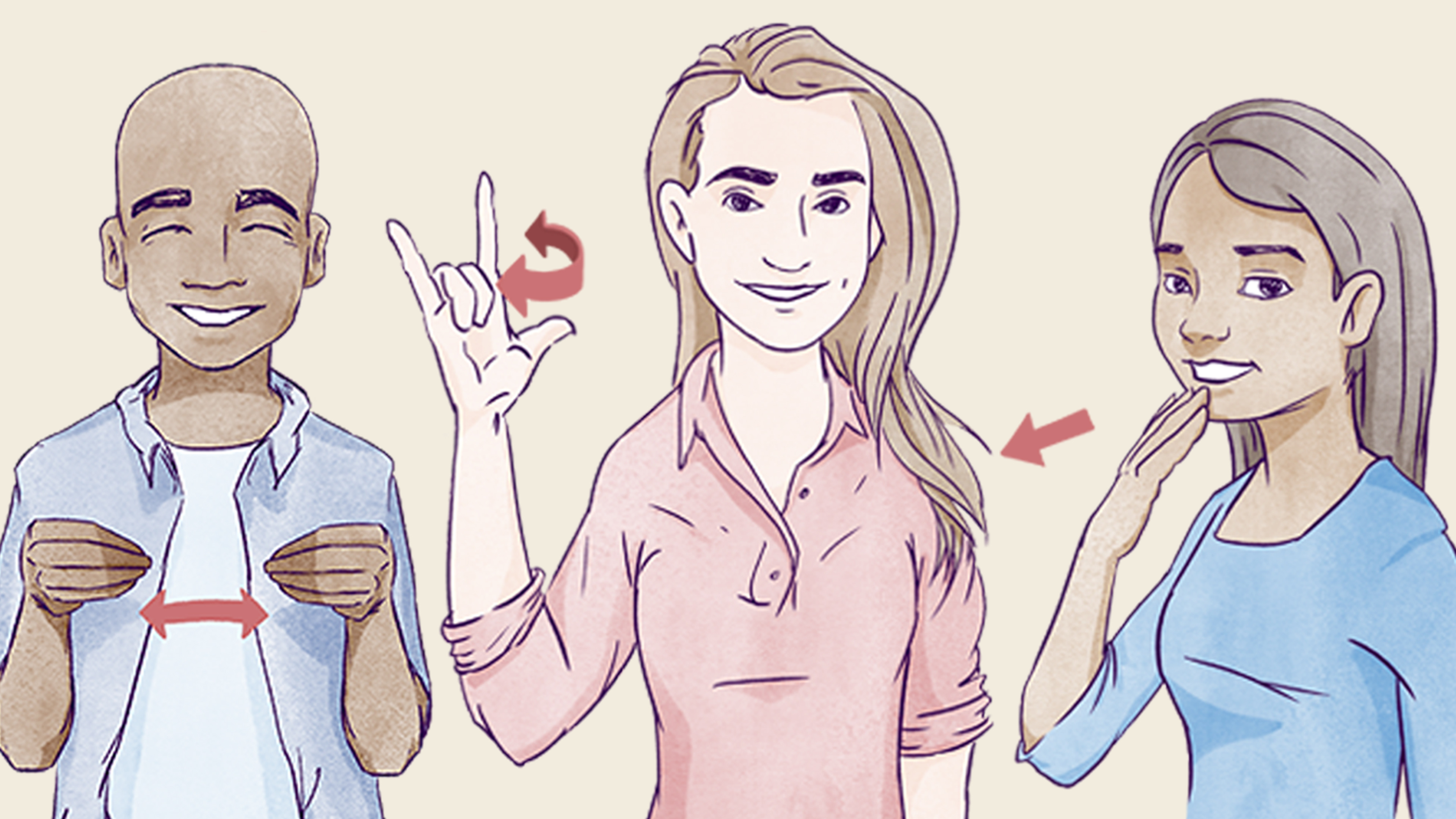
- Reduction in Emotional Volatility: Research indicates that a primary catalyst for "temper tantrums" in toddlers is the frustration of being misunderstood. When a child can clearly sign "milk" or "more" instead of crying, the immediate fulfillment of the need prevents the escalation of stress hormones. This creates a more harmonious domestic environment and reduces caregiver burnout.
- Enhanced Self-Esteem and Agency: By providing an infant with the tools to influence their environment, caregivers foster a sense of autonomy. When a child realizes that a specific hand movement results in a tangible outcome—such as receiving a favorite book—they develop a foundational understanding of cause and effect and social agency.
- Cognitive and Literacy Foundations: While some critics initially feared that signing would make infants "lazy" talkers, evidence suggests the opposite. The repetitive pairing of a physical gesture with a spoken word reinforces the neural pathways associated with language processing. A 2000 study by Acredolo and Goodwyn found that eight-year-olds who had signed as babies scored higher on standardized intelligence tests than their non-signing peers.
Instructional Methodology: The Systematic Approach to Signing
Teaching baby sign language requires a disciplined, three-pronged approach: relevance, repetition, and reinforcement.
Relevance: The initial vocabulary should consist of "high-motivation" words—objects or actions that the infant encounters daily and finds rewarding. Starting with abstract concepts is ineffective; instead, caregivers should focus on immediate needs such as "milk," "eat," or "mommy."
Repetition: Consistency is the cornerstone of gestural acquisition. Experts recommend that every time a caregiver says a target word, they must simultaneously perform the sign. This multisensory input—visual, auditory, and sometimes tactile—helps the infant categorize the information more efficiently.
Reinforcement: Positive feedback is essential. When an infant makes an approximation of a sign, caregivers should respond with enthusiasm and immediately provide the requested item or action. This "shaping" of the behavior encourages the child to refine their motor movements over time.
A Comprehensive Lexicon: The 20 Essential Signs
To assist caregivers in the practical application of this system, the following 20 signs constitute a foundational vocabulary for pre-verbal infants.
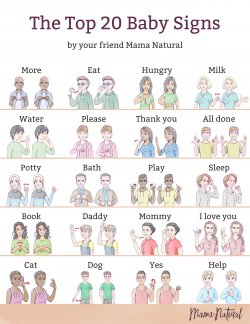
- More: Bring the tips of the fingers and thumbs together on each hand to form a "flattened O" shape, then tap the fingertips of both hands together repeatedly.
- Eat: Using the same "flattened O" hand shape, tap the fingertips against the lips multiple times, mimicking the motion of putting food into the mouth.
- Hungry: Place a flat hand against the chest below the chin and slide it down toward the stomach, symbolizing food traveling down the esophagus.
- Milk: Extend and close the fingers in a squeezing motion, similar to the action of milking a cow. This is often one of the first signs an infant masters.
- Water: Form a "W" shape with the three middle fingers extended and the thumb holding the pinky finger down. Tap the index finger against the chin.
- Please: Place the palm of the hand flat against the center of the chest and move it in a circular motion.
- Thank You: Start with the fingertips of a flat hand at the lips, then move the hand forward and down toward the person being thanked, similar to blowing a kiss.
- All Done: Hold both hands up with palms facing the chest, then quickly flip them outward so the palms face away. This is crucial for ending meal times.
- Change: Form both hands into fists with index fingers hooked. Cross the wrists and rotate the hands so the top hand moves to the bottom.
- Potty: Form a fist with the thumb tucked between the index and middle fingers (the letter "T" in ASL) and shake the hand back and forth.
- Bath: Form both hands into fists and rub them up and down the chest, mimicking the motion of scrubbing the body.
- Play: Extend the thumbs and pinky fingers of both hands while tucking the middle fingers into the palms. Twist the wrists back and forth.
- Sleep: Start with a flat hand over the forehead, palms facing the face. Draw the hand down to the chin while closing the fingers to touch the thumb, symbolizing eyes closing.
- Book: Place the palms together, then open them while keeping the bottom edges touching, mimicking the opening of a book spine.
- Daddy: Spread the fingers of one hand and tap the thumb against the forehead.
- Mommy: Use the same hand shape as "Daddy," but tap the thumb against the chin.
- Dog: Pat the thigh and then snap the fingers, or simply mimic a snapping motion with the thumb and middle finger.
- Cat: Use the thumb and index finger to "pull" imaginary whiskers away from the side of the mouth.
- I Love You: In this simplified version for infants, crossing the arms over the chest in a self-hug is the standard gesture for affection.
- Yes: Form a fist and tilt it up and down at the wrist, mimicking a nodding head.
- Help: Place a closed fist with the thumb extended (thumbs up) onto the flat palm of the opposite hand and lift both hands upward together.
Expert Analysis and Global Perspectives
The medical community generally supports the use of baby sign language, provided it is used as a supplement to verbal interaction. The American Academy of Pediatrics (AAP) notes that while research on long-term cognitive gains is mixed, the immediate benefits for parent-child bonding and frustration reduction are clear. Speech-language pathologists often utilize similar gestural systems for children with developmental delays, including those on the autism spectrum or with Down syndrome, as a way to jumpstart communication.
Critics of the practice often point to the "commercialization" of baby signing, where expensive kits and classes may put undue pressure on parents. However, analysts argue that the core of the practice requires no financial investment—only time and consistency. Furthermore, the global adoption of baby sign language has seen it integrated into daycare curricula across Europe and North America, reflecting a shift toward more responsive and child-centered caregiving models.
Future Implications and Conclusion
As our understanding of early childhood neurobiology expands, the role of gestural communication is likely to become even more prominent in standard pediatric advice. The transition from signs to speech is a natural progression; as a child’s vocal muscles strengthen, they will naturally opt for the efficiency of spoken words over manual signs.
In conclusion, baby sign language is more than a "parenting trend"; it is a functional tool that respects the cognitive capabilities of infants. By acknowledging that a child’s mind is often far ahead of their mouth, caregivers can reduce household stress, empower their children, and build a robust foundation for lifelong literacy and emotional intelligence. Success in this endeavor requires patience and a long-term perspective, but the reward—a window into the thoughts of a child before they can speak—is considered by many to be an invaluable milestone in the journey of parenthood.
