

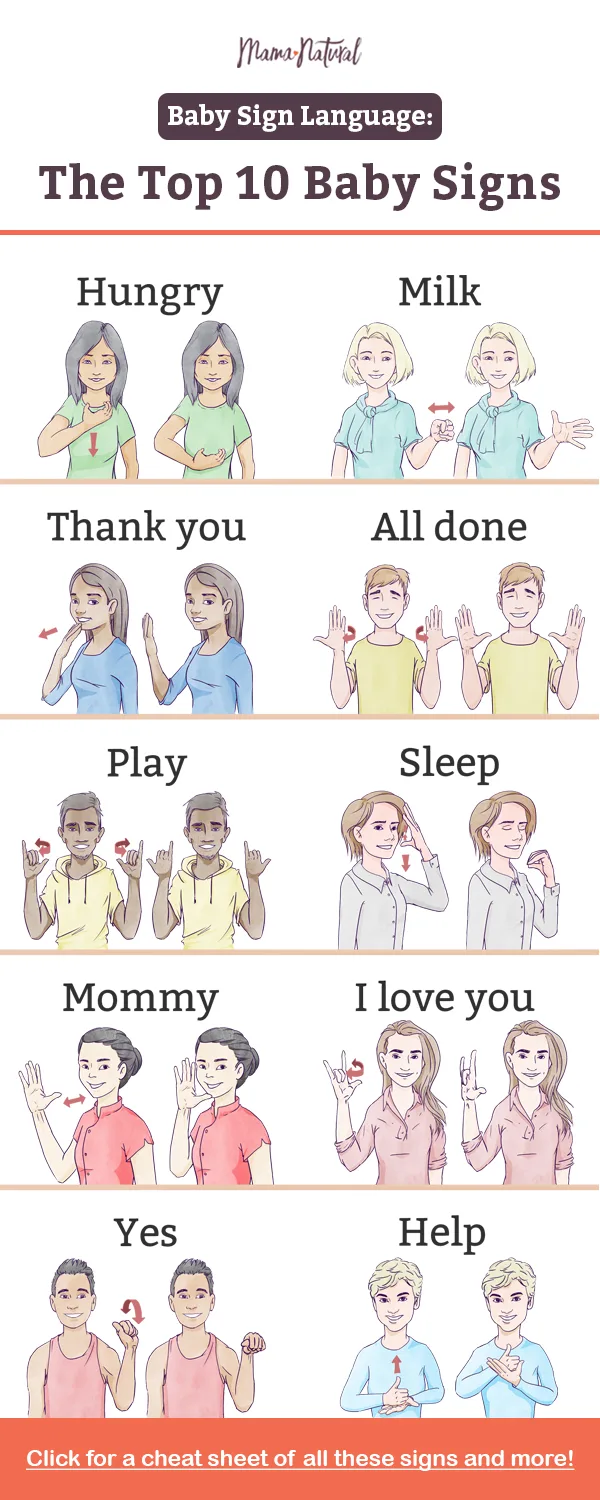
The practice of baby sign language has evolved from a niche pedagogical tool into a mainstream developmental strategy utilized by parents, educators, and pediatric specialists worldwide. At its core, baby sign language is a specialized system of modified gestures based on American Sign Language (ASL), designed to accommodate the limited fine motor skills of infants. By providing a symbolic bridge between cognitive awareness and physical speech, this method allows infants to communicate specific needs, desires, and observations months before their vocal apparatus is sufficiently developed for spoken language. This report examines the technical foundations, developmental timelines, and psychological benefits of implementing gestural communication in early childhood.
The Developmental Foundation of Gestural Communication
The biological imperative for communication precedes the physical ability to articulate words. While most infants do not master complex verbal syntax until 18 to 24 months of age, their cognitive capacity to understand language and desire to interact with their environment begins much earlier. Research indicates that the gross motor skills required for hand gestures develop significantly faster than the fine motor coordination needed for the tongue, lips, and vocal cords to produce intelligible speech.
Historically, the modern movement of baby sign language gained momentum in the 1980s and 1990s, spearheaded by researchers such as Dr. Joseph Garcia and developmental psychologists Dr. Linda Acredolo and Dr. Susan Goodwyn. Their longitudinal studies suggested that infants who used signs showed accelerated verbal development and higher emotional intelligence scores compared to non-signing peers. By simplifying ASL signs—reducing complex finger movements to broader hand gestures—caregivers can tap into this early motor readiness.
A Chronological Timeline for Implementation
The introduction of baby sign language follows a predictable developmental trajectory. While every child progresses at an individual pace, the following milestones represent the standard chronological progression observed by early childhood specialists:
Four to Six Months: The Observational Phase
At approximately four months of age, an infant’s eyesight and depth perception have improved enough to track hand movements reliably. During this window, caregivers are encouraged to begin modeling signs. While the infant will not yet have the muscle control to mimic the gestures, they begin the process of associative learning—linking a specific hand movement with a tangible outcome, such as the delivery of milk or the arrival of a parent.
Seven to Nine Months: The Emergent Phase
Between seven and nine months, infants typically gain the neurological maturity and muscular coordination required to sign back. This phase often begins with "proto-signs" or approximations. For instance, a baby might clap their hands together when they want "more," even if they cannot yet form the precise gesture.
Ten to Fourteen Months: The Mastery Phase
As the child approaches their first birthday, their signing vocabulary often expands rapidly. During this period, the infant begins to use signs spontaneously to initiate conversation rather than merely responding to prompts. This phase often overlaps with the emergence of first words, creating a multi-modal communication system.
Quantifiable Benefits and Psychological Impact
The implementation of baby sign language is supported by a variety of psychological and developmental data points. Proponents and researchers highlight three primary areas of impact:
1. Reduction in Cortisol and Frustration-Based Behaviors
The "terrible twos" often begin early due to the frustration of being misunderstood. When an infant can clearly signal a need for "water" or a "diaper change," the reliance on crying as a primary communication tool decreases. This leads to lower cortisol levels in both the infant and the caregiver, fostering a calmer domestic environment and potentially reducing the frequency of temper tantrums.
2. Enhancement of Self-Esteem and Agency
By successfully influencing their environment through symbolic communication, infants develop an early sense of agency. Data suggests that being "heard" and having their needs met accurately reinforces a secure attachment style. The child learns that their attempts at communication are valid and effective, which builds foundational confidence.
3. Cognitive and Linguistic Reinforcement
A common concern among parents is that signing might delay speech. However, a study funded by the National Institutes of Health (NIH) compared two groups of infants: one taught to sign and one given only verbal encouragement. The results demonstrated that the signing group not only spoke sooner but also maintained a larger verbal vocabulary through the second year of life. The process of signing provides a "double encoding" of information—both visual and auditory—which strengthens neural pathways related to language processing.
Technical Methodology: The Core Vocabulary
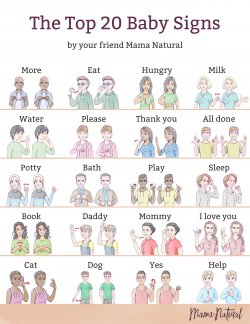
For a sign language program to be effective, caregivers must focus on a core set of signs that correspond to the infant’s daily routine. The following 20 signs represent the foundational vocabulary recommended by developmental experts:
Foundational Needs
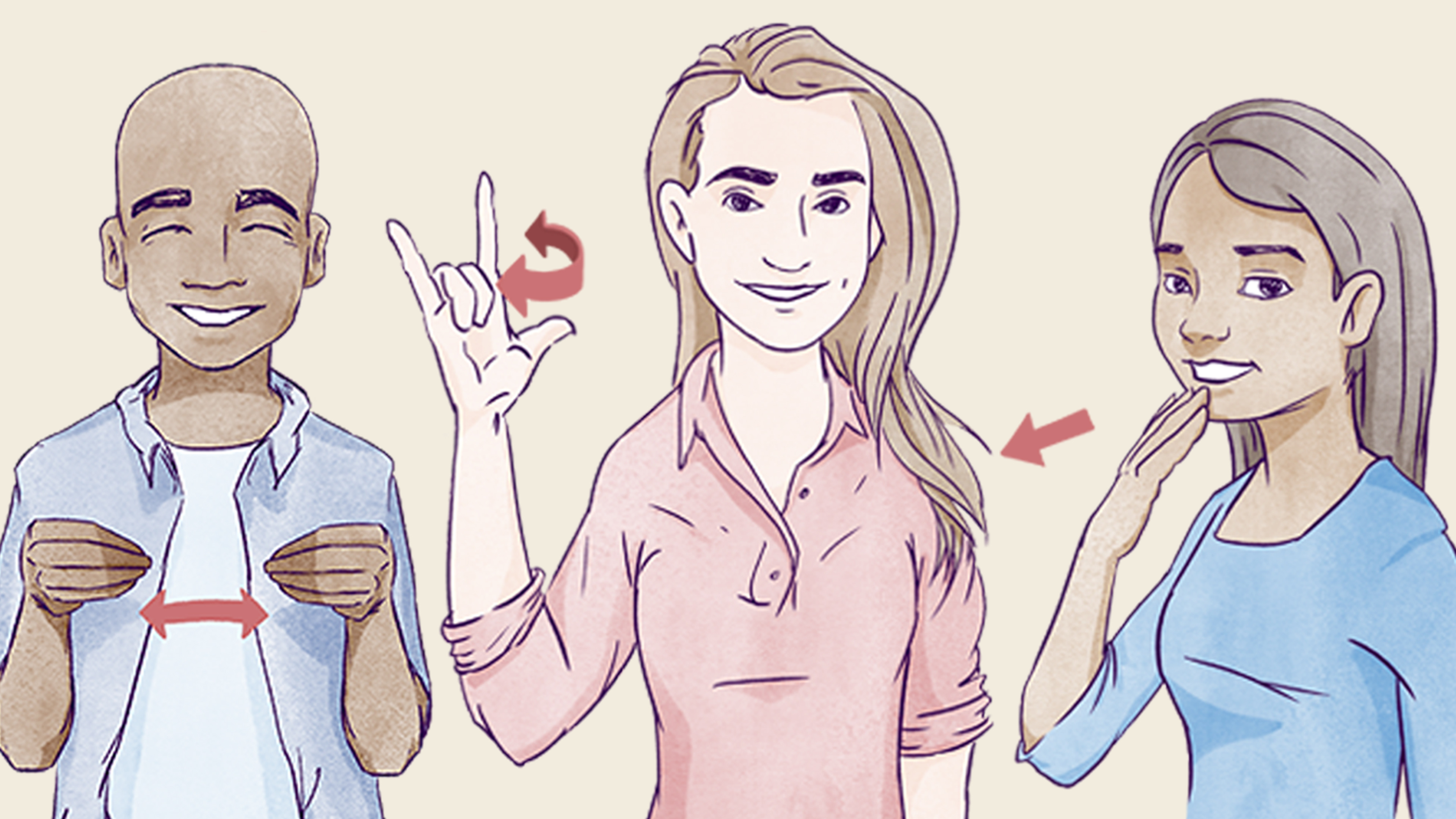
- Milk: Executed by making a fist and then opening and closing it, mimicking the motion of milking a cow. This is often the first sign learned due to its high motivational value.
- Eat: Bringing the tips of the fingers to the lips repeatedly.
- Hungry: Placing a flat hand on the chest and sliding it down toward the stomach, representing the path of food.
- Water: Forming a "W" with the three middle fingers and tapping the index finger against the chin.
- Potty: Tucking the thumb between the index and middle fingers (the "T" handshape in ASL) and shaking the hand.
- Change: Crossing the wrists with hands in a hooked shape and rotating them, symbolizing the transition of a diaper change.
Social and Behavioral Signs
- More: Bringing the fingertips of both hands together repeatedly. This is a versatile sign that allows the baby to request more food, play, or music.
- All Done: Holding both hands up with palms facing the chest, then twisting them outward. This is crucial for ending mealtime or activities without conflict.
- Please: Placing a flat palm on the chest and moving it in a circular motion.
- Thank You: Touching the fingers to the lips and then moving the hand forward and down, similar to blowing a kiss.
- Help: Placing a "thumbs up" hand on top of a flat palm and lifting both together. This is a vital safety and frustration-reduction sign.
- Yes: Making a fist and nodding it up and down, mimicking a head nod.
Environment and Relationships
- Mommy: Tapping the thumb of an open hand against the chin.
- Daddy: Tapping the thumb of an open hand against the forehead.
- Dog: Patting the thigh and snapping the fingers, or simply snapping if the child’s coordination allows.
- Cat: Using the thumb and index finger to "pull" imaginary whiskers away from the cheeks.
- I Love You: Crossing the arms over the chest in a self-hug. (Note: While the formal ASL sign for "I Love You" is different, the "hug" gesture is often used for infants due to its simplicity).
Routine and Activities
- Bath: Making two fists and rubbing them up and down the chest, as if scrubbing.
- Play: Extending the thumb and pinky finger while tucking the other fingers, then twisting the wrists.
- Sleep: Starting with an open hand over the face and drawing it down until the fingers close and the eyes mimic closing.
- Book: Placing the palms together and then opening them while keeping the bottom edges touching, like a hinge.
Pedagogical Strategies for Caregivers
Success in teaching baby sign language is contingent upon consistency and context. Journalistic analysis of successful implementation programs reveals several key strategies:
Verbal Reinforcement: Caregivers must always say the word clearly while performing the sign. This ensures the child associates the gesture with the spoken sound, facilitating the eventual transition to verbal-only communication.
Contextual Immersion: Signs should be introduced during the relevant activity. Signing "milk" is most effective when the bottle or breast is visible, but before it is given to the child. This creates a functional link between the sign and the reward.
Physical Guidance: If an infant struggles with a gesture, caregivers may gently move the baby’s hands to form the sign (hand-over-hand modeling). This provides tactile feedback and helps the child understand the physical requirements of the movement.
Professional Analysis of Long-Term Implications
The broader implications of baby sign language extend into the realm of early literacy and emotional regulation. By the time a signing child enters a formal educational setting, they have already mastered the concept of symbolic representation—the idea that a specific symbol (a sign, a sound, or later, a written letter) represents a real-world object or concept. This early abstract thinking can provide a significant advantage in reading readiness.
Furthermore, the increased interaction required for signing—eye contact, face-to-face engagement, and shared attention—strengthens the socio-emotional bond between parent and child. In an era increasingly dominated by digital distractions, the tactile and visual nature of signing requires a level of presence that benefits the child’s neurological development.
While some critics argue that the benefits of baby sign language are temporary and that non-signing children eventually catch up by age three or four, the consensus among early childhood educators is that the immediate benefits—reduced stress, enhanced communication, and early cognitive stimulation—make the practice a valuable component of modern parenting. As research continues to explore the intersection of gesture and thought, baby sign language remains a primary tool for unlocking the "silent" months of infancy and fostering a deeper connection between generations.
