

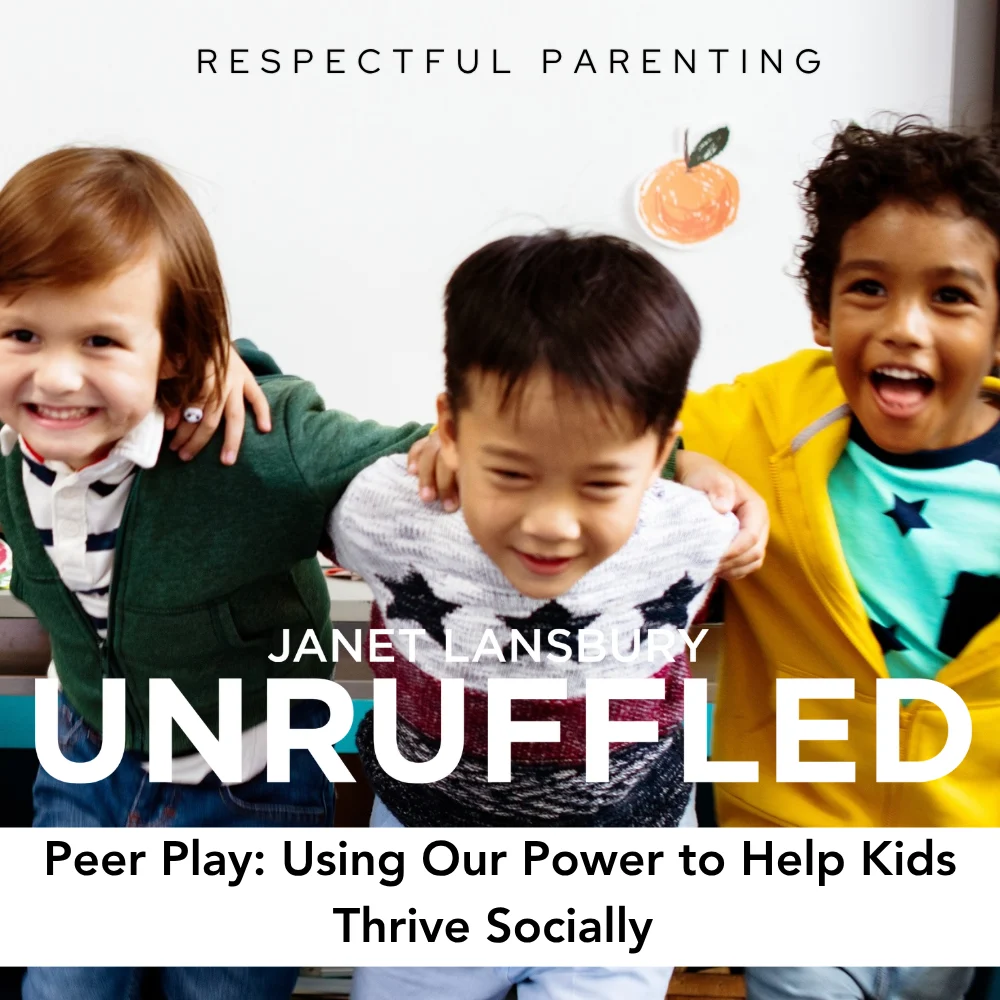
A recent discussion hosted by renowned parenting expert Janet Lansbury has illuminated crucial, yet often overlooked, strategies for fostering social development in young children. Lansbury’s insights, shared on her podcast “Unruffled,” address common parental concerns regarding children’s interactions, emphasizing the profound influence of parental boundaries and trust in a child’s journey towards social confidence and resilience. The discussion, stemming from three distinct parental queries, underscores a unified theme: empowering parents to effectively guide their children through the complexities of peer relationships.
Navigating the Nuances of Early Social Dynamics
The core of Lansbury’s message revolves around the idea that while modeling positive behavior is fundamental, it is not the sole determinant of a child’s social success. She posits that parental assertion of boundaries and a deep trust in the child’s developmental process are equally, if not more, impactful. This perspective challenges conventional wisdom that often leans towards direct instruction or intervention when children struggle socially.
Lansbury highlights that parenting is rarely a direct instruction manual. Instead, it involves navigating nuanced skills that children must learn experientially. The relationship parents cultivate with their children serves as a foundational model for all subsequent relationships. Kindness, generosity, and graciousness, when consistently demonstrated by parents, are absorbed by children. However, when children exhibit social challenges, the underlying causes are often more complex than a simple lack of modeling.
Case Study 1: The Overly Directed Pretend Play
One of the most detailed scenarios presented involved a four-year-old girl who deeply immersed herself in imaginative play, often dictating every aspect of the scenario to her playmates. When friends deviated even slightly from her script, she would halt the game, leading to frustration and tears. This pattern had persisted for a year, impacting her friendships.
Lansbury’s analysis of this situation points to a crucial parental role in setting boundaries, even when it might feel counterintuitive. The parent in this case expressed concern about her daughter’s inability to accept deviations from her play, noting that friends became annoyed and that the dynamic was not enjoyable for anyone. Lansbury suggests that the child’s exacting demands may not be a sign of a desire for parental participation in her elaborate play, but rather a subtle plea for parental boundaries.
Parental Over-Involvement and its Consequences:
In such instances, Lansbury argues, parents may inadvertently grant their children excessive power over the interaction. While encouraging a child’s imagination is vital, becoming overly involved in trying to satisfy every dictated element of their play can be detrimental. This can lead to the child expecting similar levels of control in peer interactions, setting them up for disappointment and conflict.
"The main thing I want to help this parent understand is how important her boundaries are in setting her child up for success with other children," Lansbury stated. She elaborated that while parents are encouraged to engage in play, there are times when a child’s specific demands signal a need for the adult to assert reasonable limits. This is not about rejecting the child, but about rejecting an offer to play in a way that is overwhelming or controlling for the adult.
The Role of Experiential Learning:
Lansbury emphasizes that children need to learn through experience that not everyone will conform to their wishes. When parents step in to enforce the child’s rigid rules, they inadvertently shield the child from the natural consequences of such behavior in peer settings. The child’s frustration and sadness, while difficult to witness, are opportunities for her to process underlying emotions. These emotions might stem from various sources, including sibling rivalry (the birth of a one-year-old sibling was noted in this case) or the natural drive for individuation common at age four.
"This is one we can help this child with. We don’t let her control us and the way we’re talking and the way we’re playing with her, if we’re nice enough to want to play with her," Lansbury explained. She advised parents to view their role not as constant playmates, but as providers of focused attention and a safe home environment. The child’s need for boundaries around her play, even if expressed through seemingly unreasonable demands, is a critical area where parents can exert positive influence.
Impact on Friendships:
The spillover effect into friendships is a direct consequence of the dynamic established at home. If parents are not setting boundaries, children may seek them from their peers, leading to conflict. Lansbury stressed that friends may not always want to play by the dictated rules, and this rejection, while hard, is an essential learning experience. By modeling self-care and reasonable boundaries, parents teach their children that other people have their own wishes and that not everyone will cater to their every demand. This self-advocacy and awareness of others’ needs are vital social skills.
Case Study 2: Navigating Group Exclusion and "Bullying"
The second parent query focused on a four-and-a-half-year-old daughter who was frequently excluded by her preschool peers at the playground. The exclusion involved being designated as a "monster" or simply left out of games, despite having positive one-on-one friendships with these same girls. The parent questioned how respectful parenting approaches such situations, particularly when other parents were beginning to intervene, sometimes with directives that, while effective in the short term, felt misaligned with respectful parenting principles.
Lansbury addressed the term "bullying," suggesting it might be misapplied to the observed behavior. She posited that for children of this age, exclusion in a group setting, especially when there’s a developmental age gap (the girls were a year ahead), is more likely a reflection of differing social-emotional development and play styles rather than malicious intent.
Understanding Developmental Differences:
"I would also look at that they’re in the grade ahead of her in preschool. As children get older that maybe isn’t such a huge difference, but in preschool, a spread of a year of age is a big difference," Lansbury noted. She emphasized that these older children might naturally operate on a different social wavelength, leading to unintentional exclusion.
Trusting the Child’s Process:
Lansbury advocated for a stance of trust in the child’s ability to navigate these social challenges. While allowing the child to vent feelings and offering general alternatives is helpful, she cautioned against actively trying to "fix" the situation for the child or overly sympathizing, which can inadvertently cast the child as a victim.
"This parent is doing this job of allowing her daughter to vent about how she’s feeling and to offer her alternatives when playing with these girls is not pleasant. But I think I would set this up more for her to understand… that these girls are older, so one-on-one it could work for them to play with you, but as a group that is going to be hard," Lansbury explained. She suggested that instead of finding alternative activities, parents should empower their child to navigate the situation independently, with the parent acting as a supportive, but not intervening, presence.
The Dangers of Projection and Pity:
Lansbury highlighted the parental tendency to project their own discomfort or past experiences onto their child’s situation, leading to pity. This can undermine the child’s inherent capacity to cope. The intervention of one parent directing their child to play with the excluded child, while well-intentioned, did not address the underlying dynamic or foster the excluded child’s independent social navigation skills.
Empowering Informed Choices:
A more aligned approach, Lansbury suggested, involves presenting the situation as a choice for the child. For example, asking, "Do you want to go there? I think it’s going to be all the girls there and they might not play with you today. Do you want to do it?" This allows the child to make an informed decision, fostering a sense of agency and strength. When children are allowed to experience natural rejections and social complexities without adult intervention, they learn valuable lessons about social dynamics, what works, and what doesn’t.
Case Study 3: Supporting a Reserved Three-Year-Old
The briefest query, received via Instagram, asked for advice on helping a reserved three-year-old become more comfortable around other people. Lansbury’s response echoed the central theme of trust and non-intervention.
The Power of Trust:
"The answer is in trusting them to find their own way to feeling comfortable around other people by not pushing them, by not coaxing them to be comfortable, by not trying to make it happen as if this is a problem to fix or a weakness they need us to help them overcome," Lansbury stated. She emphasized that some children naturally take longer to warm up in social settings, and this is a personal journey that should not be managed or rushed by adults.
Setting Gentle Boundaries:
While trusting the child’s pace, Lansbury also advised maintaining parental boundaries. If a child wishes to stay close to the parent in a social situation, that is permissible. However, if the child expects the parent to constantly follow them or manage their interactions, the parent should gently decline, stating, "I’ll be here. I’ll be comfortable. I’ll have a boundary. I’ll take care of myself, and I trust you to do what you’re ready to do."
Avoiding the Urge to "Fix":
Lansbury cautioned against prompting, coaxing, or managing the child’s comfort level. These actions can signal to the child that their reserved nature is problematic, hindering their natural development of confidence. The focus, she reiterated, should be on the parent-child relationship, where trust and clear boundaries create a secure base from which the child can explore the social world at their own pace.
Broader Implications for Child Development
Janet Lansbury’s insights offer a compelling framework for parents seeking to cultivate confident, resilient, and socially adept children. By shifting the focus from direct intervention and instruction to the cultivation of strong parental boundaries and unwavering trust in the child’s developmental process, parents can equip their children with the essential skills needed to navigate the complexities of human connection.
The data on early childhood social development consistently points to the importance of peer interactions for learning cooperation, conflict resolution, and empathy. However, the pathway to mastering these skills is not always linear or comfortable. Lansbury’s approach acknowledges that discomfort, rejection, and even perceived failure are integral parts of this learning process. When parents provide a secure environment where these experiences can be processed without excessive intervention, children are better positioned to develop genuine social competence and self-assurance.
The implications of this perspective extend beyond individual children, influencing the broader understanding of early childhood education and parenting support. As parents increasingly seek respectful and effective strategies, Lansbury’s emphasis on inherent trust and the power of well-defined boundaries offers a powerful, albeit sometimes challenging, path toward fostering truly thriving young individuals. The year 2026 appears to be a period of significant discourse on these foundational aspects of child-rearing, with experts like Lansbury providing guidance for parents navigating the evolving landscape of childhood social development.
