

The implementation of baby sign language as a transitional communication tool has gained significant traction among pediatricians, child development specialists, and parents seeking to bridge the gap between an infant’s desire to communicate and their physiological ability to produce articulate speech. Baby sign language (BSL) is a specialized, simplified version of American Sign Language (ASL) designed to accommodate the developing motor skills and cognitive capacities of infants. By utilizing manual gestures to represent common needs and objects, caregivers can establish a bidirectional communication channel months before a child masters the complex coordination of the lips, tongue, and vocal cords required for verbal language.
The Scientific Foundation and Historical Context of Infant Signing
The conceptual framework for baby sign language emerged prominently in the late 20th century, primarily through the research of Dr. Linda Acredolo and Dr. Susan Goodwyn. Their longitudinal studies, funded by the National Institutes of Health, demonstrated that infants who utilized symbolic gestures showed accelerated verbal development and higher scores on standardized intelligence tests in later childhood. Parallel to this, Joseph Garcia, a researcher in ASL, observed that hearing children of deaf parents often began communicating their needs through signs as early as eight or nine months of age, significantly earlier than the typical onset of spoken language.
The physiological basis for BSL lies in the asynchronous development of the human body. An infant’s gross and fine motor skills in their hands and arms generally mature faster than the intricate muscle groups required for speech. By tapping into this earlier window of physical readiness, BSL allows infants to bypass the "communication frustration" phase, where they possess clear intent but lack the medium to express it.
Developmental Timeline: When to Introduce Manual Communication
Child development experts suggest that the optimal window for introducing sign language begins around the four-month mark. At this stage, an infant’s eyesight has developed sufficiently to track hand movements, and their cognitive ability to associate a gesture with a specific outcome is beginning to form. However, caregivers must manage expectations regarding the "output" phase of the process.
The chronology of baby sign language typically follows a three-stage progression:
- Exposure Phase (4–6 Months): Caregivers introduce signs during daily routines. The infant is purely observant, absorbing the visual information and beginning to link signs with objects or actions, such as the appearance of a bottle when the sign for "milk" is performed.
- Recognition Phase (6–8 Months): The infant shows clear signs of understanding. They may grow excited or respond physically when they see a specific sign, though they have not yet attempted to replicate the gesture.
- Production Phase (8–12 Months): The infant begins to sign back. Initial signs are often "approximations"—imperfect versions of the gesture—similar to how a toddler’s first words are often phonetic approximations of adult speech. By the first birthday, many infants can reliably use five to ten signs to navigate their environment.
Quantifiable Benefits and Behavioral Impact
The integration of BSL into early childhood care provides several documented advantages that extend beyond mere convenience.
Reduction in Cortisol and Frustration-Related Behaviors
Temper tantrums in toddlers frequently stem from the inability to communicate a specific need, such as hunger or a wet diaper. When a child can signal their distress precisely, the duration and intensity of crying episodes are statistically reduced. This leads to lower cortisol levels in both the child and the caregiver, fostering a more harmonious domestic environment.
Enhanced Cognitive and Emotional Self-Esteem
Being "heard" and understood is a fundamental human need. When an infant signs "more" and receives a second helping of food, they experience a sense of agency and mastery over their environment. This positive reinforcement loop strengthens the child’s self-esteem and encourages further exploration of communication.
Linguistic Acceleration
Contrary to the common misconception that signing delays speech, research indicates the opposite. The "symbolic-gesture" training reinforces the concept that specific sounds and movements represent specific things. A study conducted by Acredolo and Goodwyn found that at 36 months, children who had signed as infants had an average "verbal IQ" that was significantly higher than those in a non-signing control group.
Methodological Approach to Teaching Baby Sign Language
Professional educators recommend a structured but low-pressure approach to teaching BSL. The methodology is rooted in three core principles: consistency, repetition, and context.
Step 1: Focus on High-Utility Vocabulary
Instruction should begin with signs that are relevant to the infant’s immediate survival and comfort. Starting with "milk," "eat," and "more" provides the child with immediate rewards for their efforts.
Step 2: Verbal Reinforcement
Signs should never be used in silence. Caregivers are instructed to say the word clearly while performing the sign. This creates a multi-sensory learning experience, linking the visual gesture, the auditory word, and the physical object or action.
Step 3: Patience and Positive Reinforcement
Mastering motor coordination takes time. Caregivers must maintain a positive demeanor, even when the infant fails to respond for several months. Once the child makes their first attempt at a sign—even a clumsy one—immediate praise and fulfillment of the request are essential to cement the learning.
The Essential Lexicon: 20 Core Signs for Infants
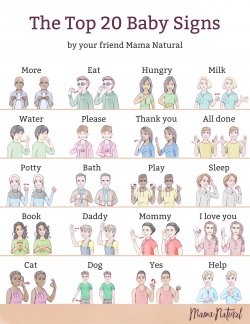
The following signs represent the standard foundational vocabulary used in infant communication programs:
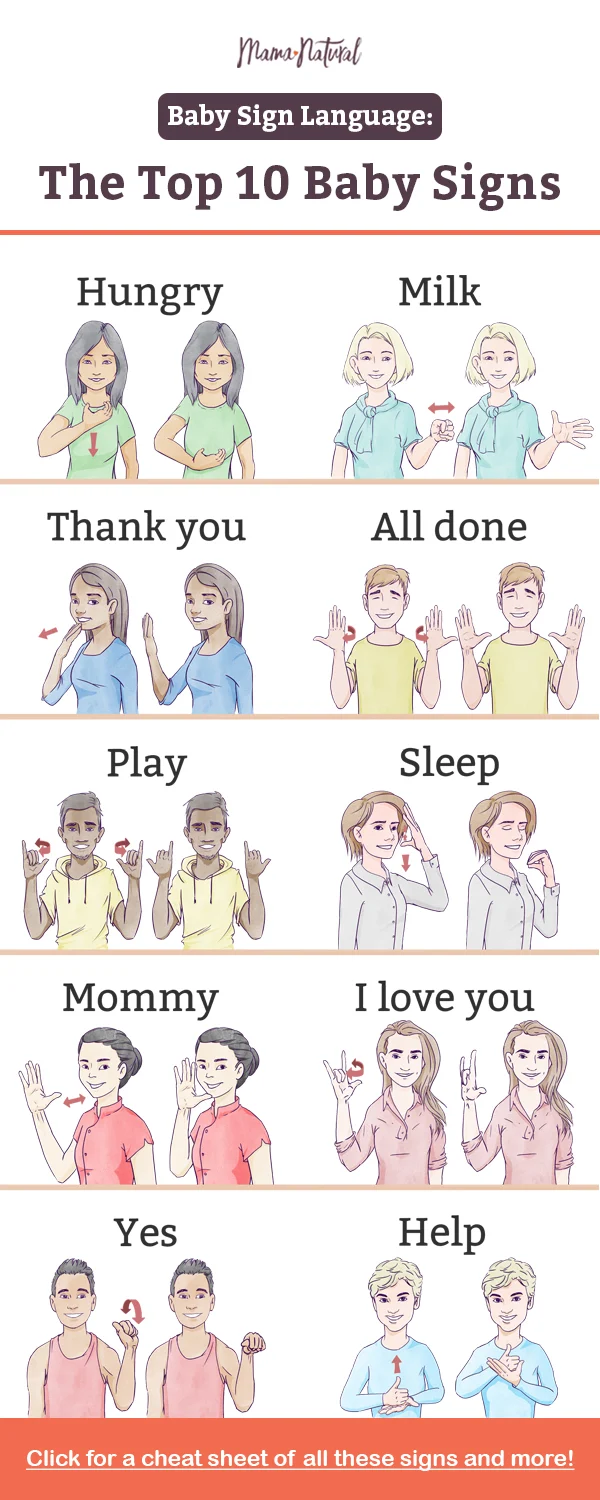
- More: Press the fingertips of both hands together repeatedly. This is often the first sign learned as it applies to food, play, and attention.
- Eat: Form a "flat-O" hand shape (fingertips touching the thumb) and tap the lips.
- Hungry: Slide the palm of the hand from the neck down to the stomach, tracing the path of food.
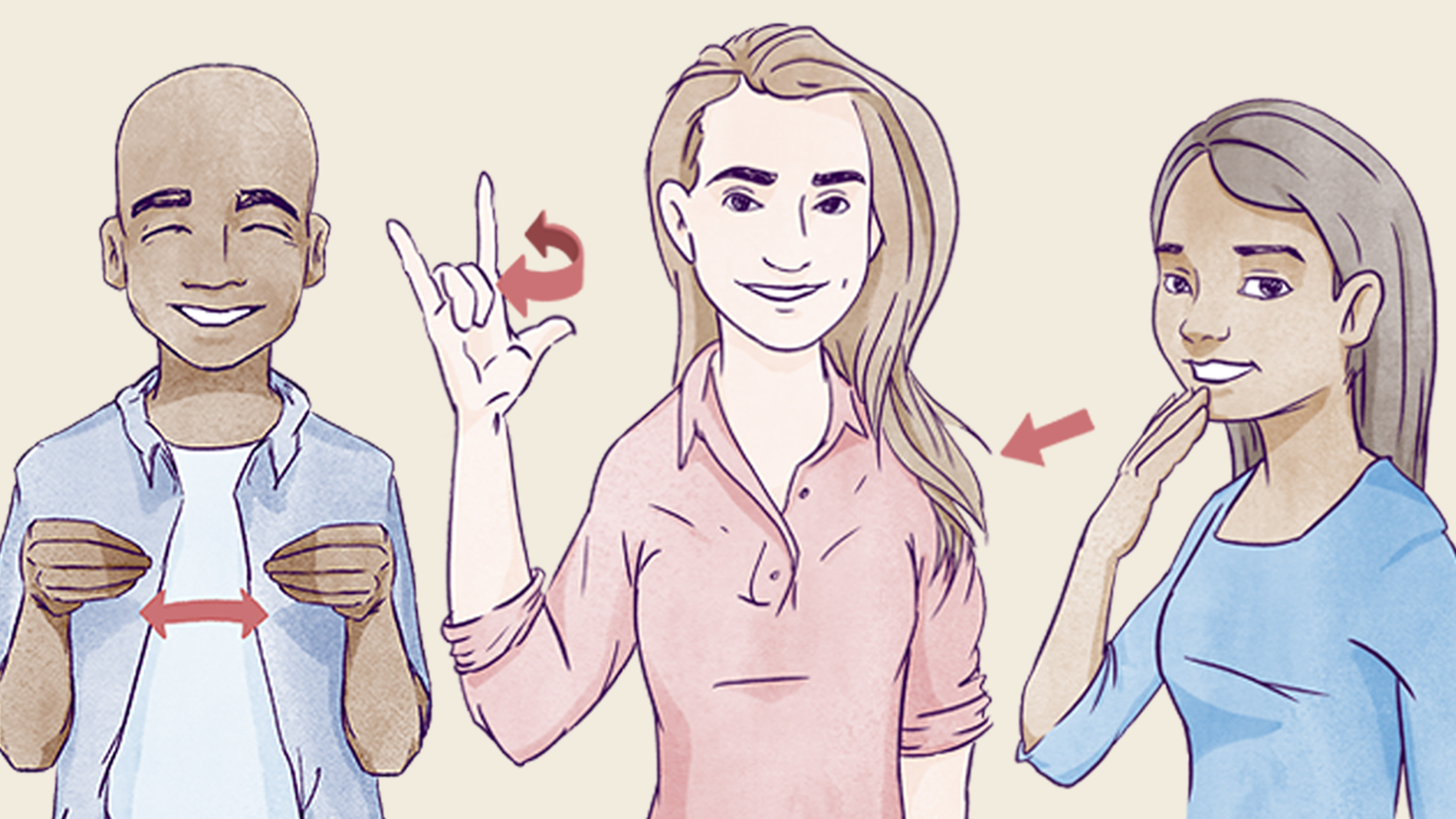
- Milk: Open and close a fist as if milking a cow.
- Water: Form a "W" with the three middle fingers and tap the index finger against the chin.
- Please: Rub a flat palm in a circular motion over the chest.
- Thank You: Move the hand from the lips forward and down toward the person being thanked, similar to blowing a kiss.
- All Done: Hold both hands up with palms facing the chest, then twist them outward to face the caregiver.
- Change: Cross the wrists with hands in a "hook" shape and rotate them, symbolizing the transition of a diaper change.
- Potty: Make a fist with the thumb tucked between the index and middle fingers (the "T" handshape) and shake it side to side.
- Bath: Form two fists and rub them up and down the chest, mimicking the act of scrubbing.
- Play: Extend the thumb and pinky finger while curling the middle fingers, then rotate the wrist back and forth.
- Sleep: Start with the hand over the face, fingers spread, then draw the hand down while closing the fingers and eyes.
- Book: Place palms together and then open them while keeping the "spine" (the pinky edges) touching.
- Daddy: Tap the thumb of an open hand against the forehead.
- Mommy: Tap the thumb of an open hand against the chin.
- Dog: Pat the thigh and then snap the fingers, mimicking the action of calling a canine.
- Cat: Use the thumb and index finger to "pull" imaginary whiskers away from the side of the mouth.
- I Love You: Cross the arms over the chest in a hugging motion.
- Yes: Form a fist and tilt it up and down at the wrist, mimicking a nodding head.
- Help: Place a "thumbs-up" hand on top of a flat palm and lift both hands upward together.
Official Responses and Institutional Adoption
The American Academy of Pediatrics (AAP) and various speech-language pathology organizations generally support the use of baby sign language as a supplemental tool. While the AAP notes that most children will naturally develop their own "home signs" (such as pointing or reaching), the use of a standardized system like ASL-based baby signs provides a more robust framework for communication.
Many modern daycare centers and early childhood education franchises have integrated BSL into their daily curriculum. This institutional adoption reflects a growing consensus that early communication is a key component of social-emotional development. By standardizing signs across home and care environments, children receive the consistency necessary for rapid acquisition.
Broader Impact and Future Implications
The implications of baby sign language extend into the realm of long-term literacy and emotional intelligence. By fostering an early interest in "language" as a concept, BSL sets the stage for a more sophisticated understanding of grammar and syntax later in life. Furthermore, the close physical proximity and eye contact required for signing strengthen the attachment bond between parent and child.
As digital communication continues to evolve, the emphasis on manual, face-to-face interaction provided by BSL offers a grounding developmental experience. It remains one of the most effective, evidence-based methods for empowering infants to express their needs, thereby reducing household stress and laying a firm foundation for a lifetime of successful communication. While the transition to verbal speech eventually renders manual signing less necessary for hearing children, the cognitive scaffolding built during those early months provides a lasting advantage in their intellectual and emotional journey.
