

The practice of teaching sign language to infants, a method once reserved primarily for the deaf and hard-of-hearing communities, has transitioned into a mainstream developmental tool utilized by millions of hearing families worldwide. This therapeutic and educational approach involves using a simplified version of American Sign Language (ASL) to facilitate communication between caregivers and pre-verbal infants. By leveraging a child’s natural ability to use gestures long before they possess the physiological maturity to produce complex speech sounds, baby sign language serves as a vital bridge in early childhood development. As research into early linguistics and cognitive psychology expands, the integration of manual signs into daily routines is increasingly recognized by pediatricians and speech-language pathologists as a beneficial strategy for reducing frustration and fostering early literacy.
The Evolution and Background of Early Gestural Communication
The formal study of baby sign language gained significant traction in the 1980s, spearheaded by researchers such as Dr. Linda Acredolo and Dr. Susan Goodwyn. Their landmark studies, often funded by the National Institutes of Health (NIH), demonstrated that infants who were taught to sign showed accelerated language development rather than delays. The fundamental premise of the practice is rooted in the physiological timeline of human development: the fine motor skills required for manual gesturing typically develop several months before the complex coordination of the vocal cords, tongue, and lips necessary for articulate speech.
In a contemporary context, baby sign language is not viewed as a replacement for verbal language but as a multimodal reinforcement. It utilizes a simplified lexicon of American Sign Language, modified to accommodate the developing motor skills of an infant. For instance, signs that require complex finger movements in standard ASL are often adapted to involve the whole hand or simpler palm-to-palm contact, making the language accessible to children as young as four to six months old.
Developmental Chronology and Implementation Milestones
The successful implementation of a signing regimen follows a specific chronological progression that aligns with an infant’s neurological and physical growth. While every child develops at a unique pace, the following timeline serves as a standard benchmark for parents and educators:
The Introductory Phase (4 to 6 Months): At this stage, infants begin to develop the visual acuity necessary to track hand movements and the cognitive ability to associate a specific gesture with an object or action. Experts recommend that parents begin consistent signing during this window, though immediate imitation from the infant is rare.
The Recognition Phase (6 to 9 Months): During this period, infants typically begin to demonstrate "receptive" signing. They may not yet produce signs themselves, but they show clear signs of understanding when a caregiver performs a sign, such as looking toward a bottle when the sign for "milk" is displayed.
The Expressive Phase (9 to 12 Months): This is the stage where most infants begin to sign back. Initial signs are often "approximations"—manual versions of baby talk—where the gesture may be clumsy but recognizable. Common first signs include "more," "eat," and "milk."
The Integration Phase (12 to 24 Months): As verbal skills begin to emerge, children often use signs and words simultaneously to emphasize their needs. Gradually, as vocal dexterity improves, the reliance on manual signs diminishes, eventually being replaced by full spoken sentences.
Quantifiable Benefits and Expert Analysis
The benefits of baby sign language extend beyond the simple exchange of information. Data from various developmental studies suggest a multi-faceted impact on the child’s well-being and cognitive trajectory.
1. Mitigation of Frustration and Behavioral Regulation:
One of the most significant advantages cited by child psychologists is the reduction of temper tantrums. Behavioral outbursts in toddlers are frequently the result of an inability to communicate specific needs or desires. A study published in Child Development indicated that infants who sign have a functional "vocabulary" to express hunger, pain, or discomfort, leading to a measurable decrease in frustration-based crying.
2. Cognitive and Linguistic Acceleration:
Long-term research conducted by Acredolo and Goodwyn followed children from infancy through the second grade. Their findings suggested that children who signed as babies scored higher on standardized IQ tests and possessed larger vocabularies than their non-signing peers. While the "IQ boost" remains a subject of academic debate, the consensus among speech-language pathologists is that signing reinforces the symbolic nature of language—the understanding that a specific signal (whether a sound or a gesture) represents a concept.
3. Emotional Bonding and Attunement:
The practice requires "joint attention," a state where the caregiver and the child are both focused on the same object and each other. This high level of engagement fosters a stronger emotional bond and improves parental attunement. When a parent correctly interprets a child’s sign, it validates the child’s efforts to communicate, thereby boosting self-esteem and confidence.
Instructional Methodology: A Step-by-Step Guide
To effectively teach sign language to an infant, experts suggest a pedagogical approach based on consistency, context, and positive reinforcement. The following steps outline the standard procedure for introducing signs:
Identify High-Frequency Concepts: Begin with signs that represent the child’s most immediate needs or interests. Concepts like "milk," "eat," and "more" are ideal because they occur multiple times daily, providing ample opportunities for repetition.
The "Sign-Say-Show" Technique: Every time a sign is used, it should be accompanied by the spoken word and the physical object or action. For example, when offering a bottle, the caregiver should perform the sign for "milk," say the word clearly, and then provide the milk. This creates a triple-sensory association.
Physical Guidance: If an infant struggles to form a sign, caregivers can gently mold the child’s hands to the correct position. This tactile feedback helps the child understand the physical mechanics of the gesture.
Consistent Modeling: All primary caregivers, including siblings and daycare providers, should be encouraged to use the same signs to ensure the child receives a consistent linguistic environment.
A Comprehensive Lexicon: The Top 20 Foundational Signs
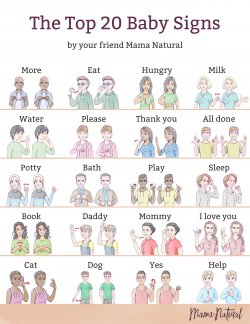
For families beginning their journey into baby sign language, the following 20 signs provide a robust foundation for daily communication.
- More: Bring the tips of the fingers and thumbs together on both hands to form "O" shapes, then tap the fingertips of both hands together repeatedly.
- Eat: Using the same hand shape as "more," tap your fingertips against your lips.
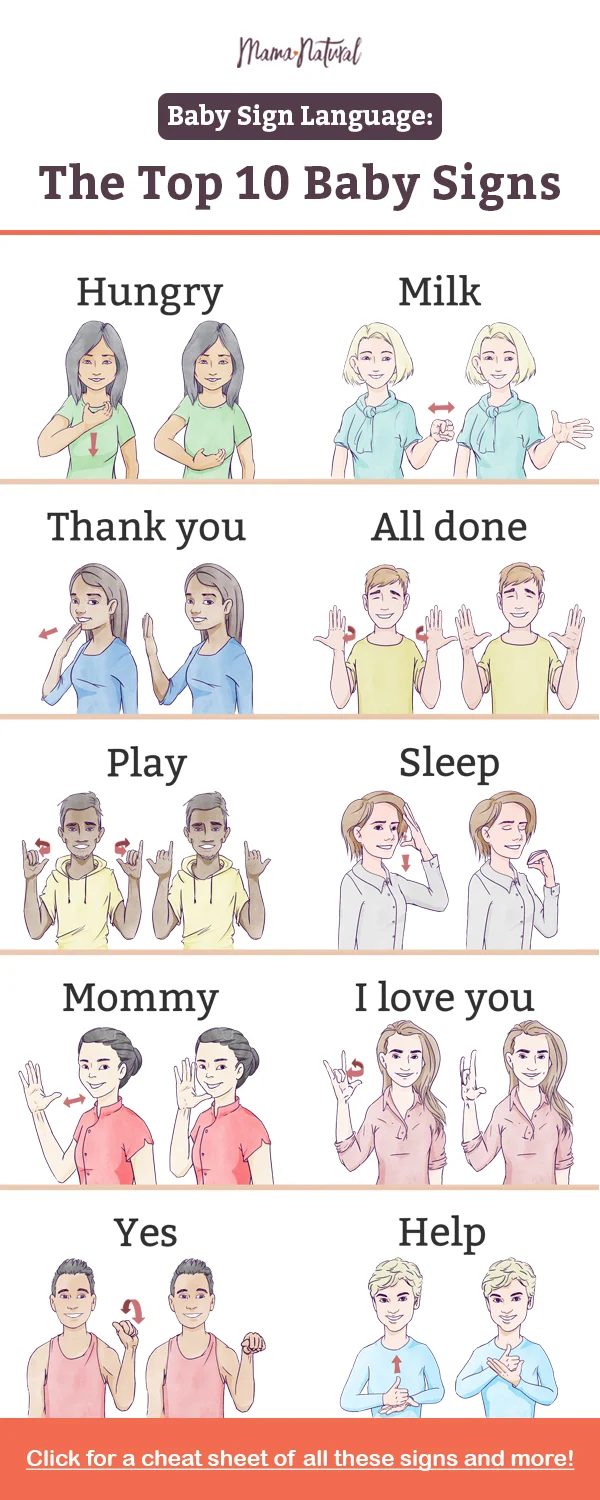
- Hungry: Place your hand in a "C" shape against your chest, just below the throat, and move it down toward your stomach.
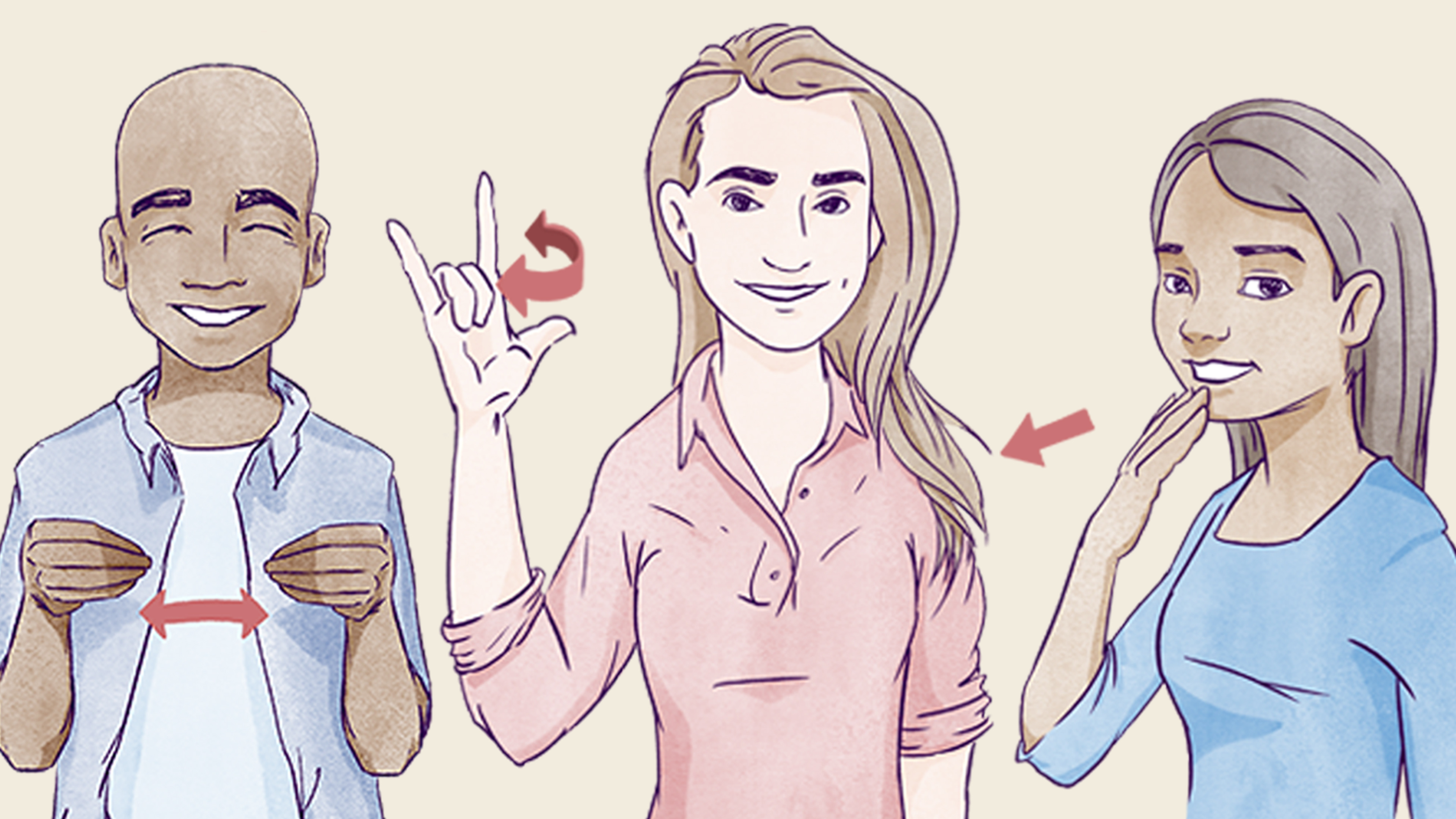
- Milk: Form a fist and then open and close your fingers, mimicking the motion of milking a cow.
- Water: Form a "W" with your three middle fingers and tap your index finger against your chin.
- Please: Place your palm flat against your chest and move it in a large circular motion.
- Thank You: Start with the fingertips of your dominant hand at your chin, then move your hand outward toward the person you are thanking.
- All Done: Hold both hands up with palms facing you, then quickly flip them outward so your palms face away.
- Change: Form both hands into hooks (using index fingers), cross them at the wrists, and rotate them so the top hand moves to the bottom.
- Potty: Make a fist with your thumb tucked between your index and middle fingers (the letter "T" in ASL) and shake it side to side.
- Bath: Make two fists and rub them up and down your chest, simulating the act of scrubbing.
- Play: Extend your thumbs and pinkies while tucking in the middle fingers (the "hang ten" gesture) and rotate your wrists back and forth.
- Sleep: Place your hand over your forehead with fingers spread, then draw the hand down to your chin while closing your fingers and thumb together.
- Book: Place your palms together and then open them as if opening a hinge, keeping the pinky sides of your hands touching.
- Daddy: Spread your fingers wide and tap your thumb against your forehead.
- Mommy: Use the same hand shape as "Daddy" but tap your thumb against your chin.
- Dog: Pat your thigh and then snap your fingers, or simply mimic the snapping motion.
- Cat: Use your thumb and index finger to "pinch" and pull away from the side of your mouth, mimicking whiskers.
- I Love You: In the context of baby sign, this is often represented by crossing the arms over the chest in a hugging motion.
- Help: Place your dominant hand in a "thumbs up" position on top of your flat non-dominant palm, then move both hands upward together.
Broader Implications and Societal Impact
The widespread adoption of baby sign language has influenced early childhood education curricula across the United States and Europe. Many daycare centers now incorporate basic ASL into their daily routines to manage large groups of toddlers more effectively. Furthermore, the practice has served to raise awareness and respect for the Deaf community and American Sign Language as a legitimate and sophisticated linguistic system.
Critics occasionally express concern that signing might delay verbal speech, fearing that a child who can sign will have no incentive to talk. However, clinical data consistently refutes this. A report from the American Academy of Pediatrics (AAP) suggests that because signing is always paired with spoken words, it actually stimulates the language centers of the brain. The physical act of signing provides a "kinesthetic" path to language that complements auditory and visual learning.
In conclusion, baby sign language represents a significant advancement in how caregivers approach infant communication. By acknowledging that an infant’s desire to communicate precedes their ability to speak, families can utilize these manual tools to foster a more harmonious, intellectually stimulating, and emotionally connected environment. As the child eventually transitions into full verbal fluency, the foundation laid by these early gestures often translates into stronger literacy skills and a lifelong appreciation for the power of communication.
