

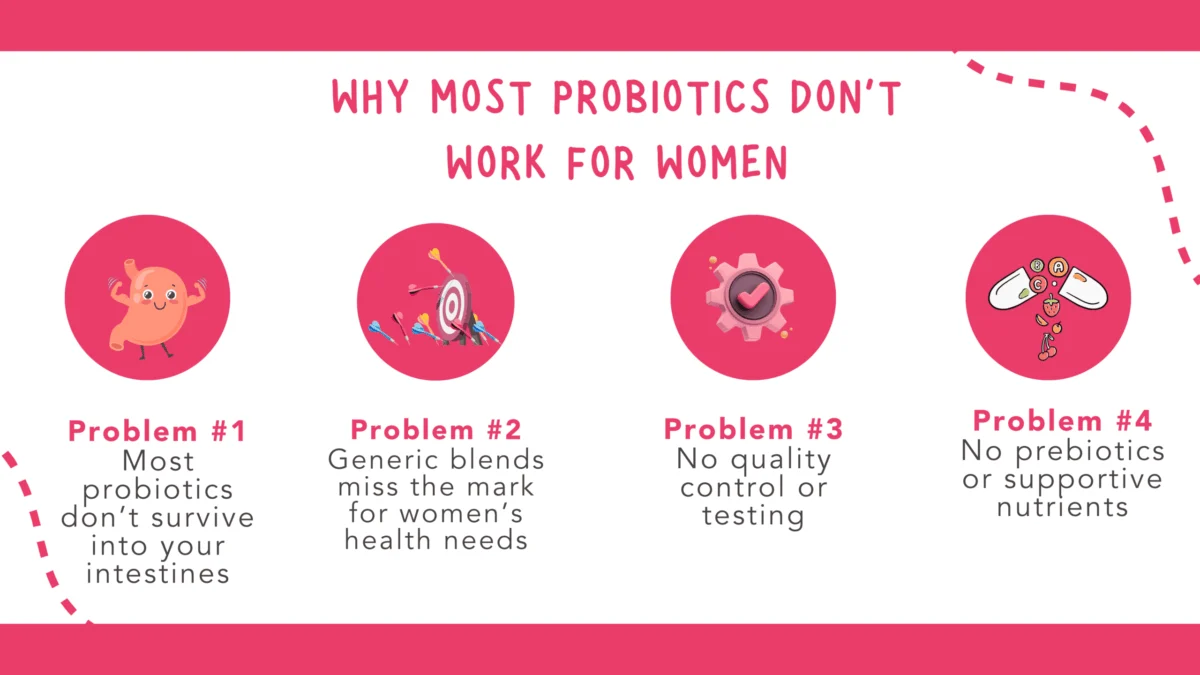
The global probiotic market, valued at over $70 billion as of 2023, is built upon the promise of enhancing human health through the introduction of beneficial bacteria into the gastrointestinal tract. However, a growing body of clinical evidence and consumer reports suggests a significant gap between the marketing of these supplements and their physiological efficacy, particularly concerning women’s health. While the "wellness" industry frequently promotes probiotics as a panacea for digestive distress, skin conditions, and mood regulation, many products currently available on retail shelves fail to deliver measurable results. This lack of efficacy is often attributed to three primary factors: the inability of live cultures to survive the harsh environment of the human digestive system, a failure to address the unique biological requirements of the female body, and systemic issues regarding quality control and labeling accuracy within the supplement industry.
The Biological Barrier: Gastric Acid and Probiotic Viability
The primary challenge facing any oral probiotic supplement is the journey through the upper gastrointestinal tract. The human stomach is an evolutionary marvel designed to destroy ingested pathogens through the secretion of hydrochloric acid, maintaining a pH level typically ranging from 1.5 to 3.5. While this acidic environment serves as a critical defense mechanism, it is equally lethal to many of the delicate bacterial strains found in standard probiotic supplements.
Research indicates that many generic probiotic formulations lose the majority of their "colony-forming units" (CFUs) within minutes of exposure to gastric juices. If the bacteria are neutralized in the stomach, they cannot reach the small and large intestines, which serve as the "gut garden" where they are intended to colonize and exert their beneficial effects. To counteract this, pharmaceutical-grade formulations have shifted toward the use of "potent overages." This manufacturing strategy involves packing a significantly higher number of live bacteria into each capsule than the label claims at the time of manufacture. By providing an excess of bacteria, manufacturers can ensure that a sufficient therapeutic dose survives the transit to the lower intestine. Furthermore, the selection of specific, resilient strains that demonstrate natural acid resistance is increasingly viewed as superior to relying solely on synthetic enteric coatings.
The Gender Gap in Microbiome Research
Historically, clinical research into the human microbiome has often utilized male-centric models, frequently overlooking the distinct physiological needs of women. The female body undergoes significant hormonal fluctuations throughout the menstrual cycle, pregnancy, and menopause, all of which impact gut motility and the composition of the vaginal microbiome.
Generic probiotic blends often focus on a broad-spectrum approach that may support general digestion but fails to address female-specific concerns such as urogenital health, hormonal acne, and the prevention of yeast infections. For a probiotic to be effective for women, it must include targeted strains that have been clinically studied for their ability to migrate to and colonize the vaginal tract. Strains such as Lactobacillus rhamnosus, Lactobacillus reuteri, and Lactobacillus gasseri have demonstrated specific efficacy in maintaining a healthy pH balance in the urogenital system and inhibiting the overgrowth of pathogens like Candida albicans. When these specific strains are absent, women may find that their probiotic provides little relief for the very issues they are seeking to resolve.
A Chronology of Probiotic Science and Market Evolution
To understand the current state of the probiotic industry, it is necessary to examine the timeline of its development:
- 1907: Nobel laureate Élie Metchnikoff proposes that the longevity of Bulgarian peasants was linked to their consumption of fermented milk containing lactic acid bacteria. This marks the birth of modern probiotic theory.
- 1994: The United States passes the Dietary Supplement Health and Education Act (DSHEA), which categorizes probiotics as dietary supplements rather than drugs. This allows products to enter the market without the rigorous pre-market FDA approval required for pharmaceuticals.
- 2007: The National Institutes of Health (NIH) launches the Human Microbiome Project (HMP). This initiative provides the first comprehensive map of the microbial communities inhabiting the human body, revealing the complexity of the gut-brain and gut-skin axes.
- 2011: Independent studies, including a landmark report published in the journal Therapeutic Advances in Gastroenterology, begin to highlight the "labeling gap," noting that many commercial probiotics contain significantly fewer live organisms than advertised.
- 2020–Present: The industry shifts toward "Precision Probiotics," focusing on strain-specific benefits and the integration of prebiotics to ensure the survival and proliferation of beneficial bacteria.
Quality Control and the Regulatory Landscape
One of the most pressing issues facing consumers is the lack of stringent regulatory oversight in the supplement market. Unlike prescription medications, probiotic manufacturers are not required to prove to the FDA that their products contain the exact number of live organisms listed on the label through the end of the product’s shelf life.
In a 2011 study, researchers found that several popular probiotic brands contained zero live bacteria by the time they reached the consumer. This degradation can occur due to improper storage, exposure to heat during shipping, or poor manufacturing practices. Furthermore, many products use generic names like "Lactobacillus" without specifying the exact strain. Scientific consensus holds that probiotic benefits are strain-specific; for example, two different strains of the same species may have vastly different effects on the body. The absence of third-party testing and certification from organizations like the NSF or USP remains a significant hurdle for consumers seeking reliable products.
The Role of Prebiotics: Nourishing the Microbiome
A significant reason for the failure of many probiotic regimens is the omission of prebiotics—non-digestible fiber compounds that serve as the primary food source for beneficial bacteria. Without adequate prebiotics, even the highest quality probiotic strains may fail to colonize effectively.
Modern diets, particularly in Western nations, are notoriously deficient in fiber. The average woman requires approximately 25 grams of fiber daily, yet most consume less than 15 grams. To address this, advanced formulations are now incorporating whole-food prebiotic sources. One notable example is the fiber derived from the Baobab tree (Adansonia digitata), often referred to as the "Tree of Life." Baobab fruit pulp is exceptionally high in soluble fiber and antioxidants, providing a gentle, natural substrate that allows probiotics to flourish without causing the bloating often associated with synthetic prebiotics like inulin.
Industry Analysis: What Defines an Effective Probiotic?
For a probiotic to be classified as effective under modern scientific standards, it must meet several criteria that move beyond the "one-size-fits-all" marketing model.
- Strain Specificity: Labels should list the full genus, species, and strain designation (e.g., Bifidobacterium longum BI-05).
- Clinical Dosage: The product must contain a CFU count that matches the levels used in successful clinical trials, typically ranging from 10 billion to 50 billion CFUs for general wellness.
- Clean Label Standards: The presence of fillers, binders, and common allergens (such as gluten, soy, or dairy) can trigger inflammatory responses in sensitive individuals, counteracting the benefits of the probiotic itself.
- Synergistic Formulation: The inclusion of prebiotics and supportive nutrients ensures that the bacteria have the necessary environment to survive and thrive.
Broader Implications for Women’s Healthcare
The failure of generic probiotics has broader implications for how women manage their health. When a supplement fails to deliver results, consumers often lose trust in nutritional interventions, potentially turning to more invasive or pharmaceutical options that may have greater side effects.
Medical professionals are increasingly advocating for a "food-first" approach, supplemented by high-quality, targeted probiotics. This involves integrating fermented foods—such as kefir, sauerkraut, and bone broth—into the diet while using specific probiotic strains to address acute or chronic health concerns. The shift toward transparency in the supplement industry is not merely a marketing trend but a necessary evolution in public health.
As the understanding of the "second brain"—the enteric nervous system—continues to grow, the link between gut health and mental health becomes clearer. For women, who are statistically more likely to experience IBS and anxiety, the use of a high-quality, viable probiotic is more than a matter of digestion; it is a critical component of systemic equilibrium.
In conclusion, the efficacy of a probiotic is determined by its formulation’s ability to survive the stomach’s acidity, its relevance to the user’s specific biological needs, and the integrity of its manufacturing process. By prioritizing strain-specific, prebiotic-supported, and third-party-verified products, women can move past the frustration of ineffective supplements and achieve the balanced microbiome necessary for long-term health. The future of the industry lies in precision, transparency, and a commitment to meeting the unique physiological demands of the female body.
