

Baby sign language has emerged as a pivotal bridge between the pre-verbal stage of infancy and the onset of formal speech, offering a sophisticated method for caregivers to understand the needs of children as young as four months old. While infants typically do not develop the complex muscular coordination required for spoken language until their second year, their capacity for gross and fine motor skills in their hands develops significantly earlier. By utilizing a simplified version of American Sign Language (ASL), parents and educators can tap into this developmental window, fostering a communicative environment that reduces frustration and enhances the cognitive bond between adult and child.
The Evolution and Foundations of Infant Gestural Communication
The practice of teaching sign language to hearing infants gained mainstream scientific recognition in the 1980s, largely due to the pioneering research of Dr. Linda Acredolo and Dr. Susan Goodwyn. Their studies, eventually funded by the National Institutes of Health (NIH), demonstrated that infants who used symbolic gestures—or "baby signs"—not only communicated more effectively but also showed accelerated verbal development compared to their non-signing peers.
At its core, baby sign language is a modified form of American Sign Language. The modifications are designed to accommodate the limited dexterity of an infant’s developing hands. For example, where formal ASL might require a specific finger configuration, baby sign language often prioritizes the general motion or location of the sign. This allows the infant to "approximate" the sign, much like a toddler approximates the sounds of words before achieving clear pronunciation.
Developmental Timeline: From Observation to Expression
Understanding the chronological progression of infant development is essential for the successful implementation of a signing curriculum. Experts in pediatric development suggest a specific timeline for introducing and expecting results from baby sign language:
- The Introduction Phase (4–6 Months): At this stage, an infant’s visual acuity is reaching adult-like levels, allowing them to focus on and track hand movements. While the child lacks the motor control to sign back, they begin to form neural associations between a specific gesture, a spoken word, and an object or action.
- The Recognition Phase (6–8 Months): Infants start to demonstrate "receptive" language skills. They may react with excitement when they see the sign for "milk" or "bath," indicating that the cognitive link has been established.
- The Expressive Phase (8–12 Months): Most infants produce their first intentional signs during this window. This often coincides with other milestones such as waving "bye-bye" or pointing.
- The Verbal Integration Phase (12–24 Months): As vocal cords and mouth muscles strengthen, the child begins to pair signs with spoken words. Gradually, as speech becomes more efficient, the reliance on signing naturally diminishes.
Empirical Data and Psychological Benefits
The integration of gestural communication provides several quantifiable benefits backed by decades of psychological research.
Reduction in Cortisol and Behavioral Frustration
The "terrible twos" are often characterized by temper tantrums that stem from a child’s inability to express complex desires. Data suggests that signing households experience a decrease in the frequency and intensity of these episodes. When a child can specifically sign "hungry" or "help" rather than relying on generalized crying, the caregiver’s response is more accurate, lowering stress levels (cortisol) for both parties.
Cognitive and Linguistic Acceleration
A common misconception among parents is the fear that signing will delay speech. However, a landmark study following children into their elementary years found that those who signed as infants scored an average of 12 points higher on IQ tests at age eight than the control group. The researchers hypothesized that the early use of symbols for communication stimulates the brain’s language centers, creating a "jump-start" for literacy and verbal reasoning.
Enhanced Emotional Intelligence and Self-Esteem
By being "heard" before they can speak, infants develop a stronger sense of agency and self-esteem. The immediate feedback loop of a caregiver fulfilling a signed request reinforces the child’s confidence in their ability to interact with and influence their environment.
Strategic Methodology for Teaching Signs
For caregivers looking to implement this tool, a structured and consistent approach is required. Journalists and educators who monitor early childhood programs suggest the following three-pillar strategy:
- Prioritize High-Frequency Vocabulary: Instruction should begin with "functional" signs—those that represent the child’s most immediate needs and frequent interactions. Starting with "milk," "more," or "eat" provides the child with immediate rewards for their communicative efforts.
- The Principle of Triple Association: To teach a sign effectively, the caregiver must provide three stimuli simultaneously: the physical sign, the spoken word, and the object or action itself. For instance, while giving a child a bottle, the parent should make the sign for "milk" and clearly say the word "milk."
- Consistency and Positive Reinforcement: Repetition is the primary driver of neural pathway formation in the infant brain. Experts recommend signing every time the corresponding word is spoken. When the infant makes their first attempt at a sign—even if it is clumsy—the caregiver should offer enthusiastic verbal praise and fulfill the request immediately to reinforce the behavior.
A Compendium of Essential Signs for Early Development
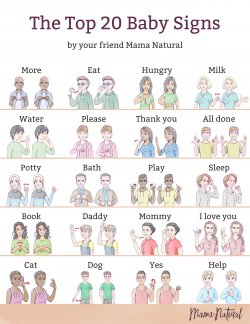
The following 20 signs represent a comprehensive starter vocabulary for infants and their caregivers, categorized by their functional application in daily routines.
Nutritional and Physical Needs
- More: Bring the tips of the fingers together on each hand to form a flattened "O" shape, then tap the fingertips of both hands together repeatedly. This is often the first sign an infant masters.
- Eat: Using the same hand shape as "more," tap the fingertips against the lips. This distinguishes the general desire for "more" from the specific need for food.
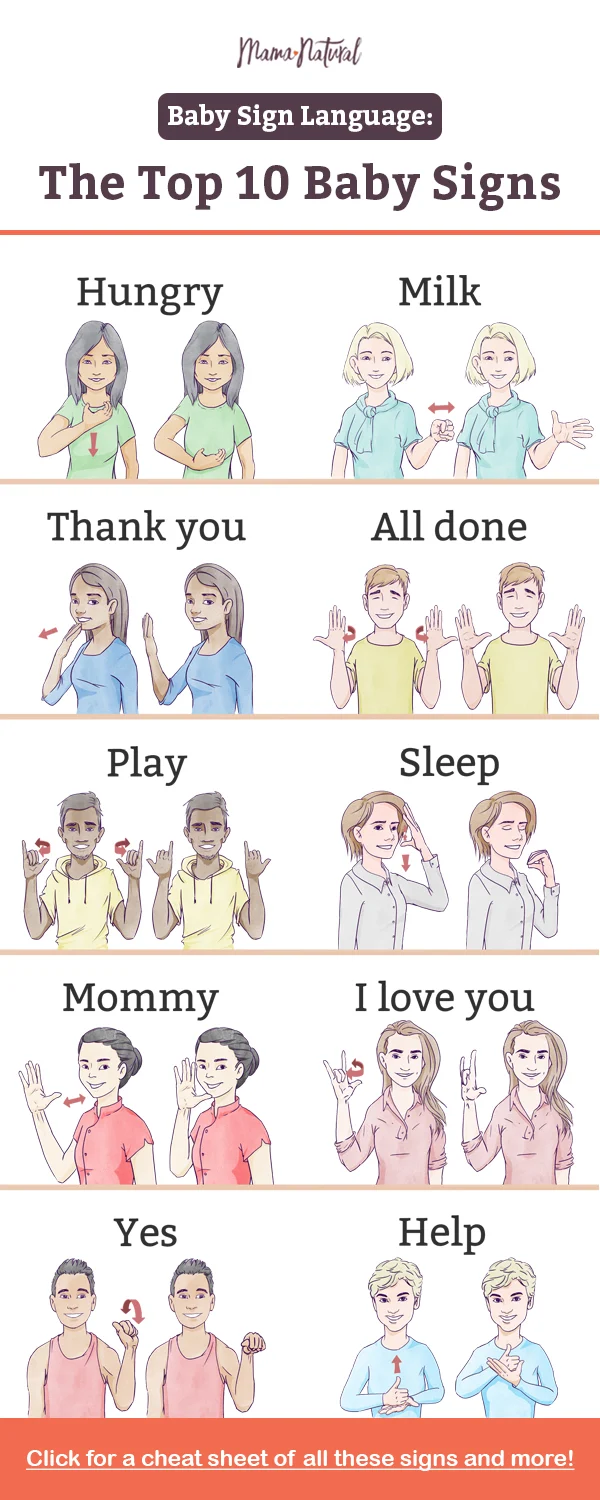
- Hungry: Place a flat hand against the chest below the chin and slide it down toward the stomach, symbolizing the path of food.
- Milk: Form a fist and then open and close the fingers in a squeezing motion, mimicking the action of milking a cow.
- Water: Extend the three middle fingers to form a "W" shape while tucking the thumb and pinky. Tap the index finger against the chin.
Social Interaction and Manners
- Please: Place a flat palm against the center of the chest and move it in a circular motion. This introduces the concept of social grace early in development.
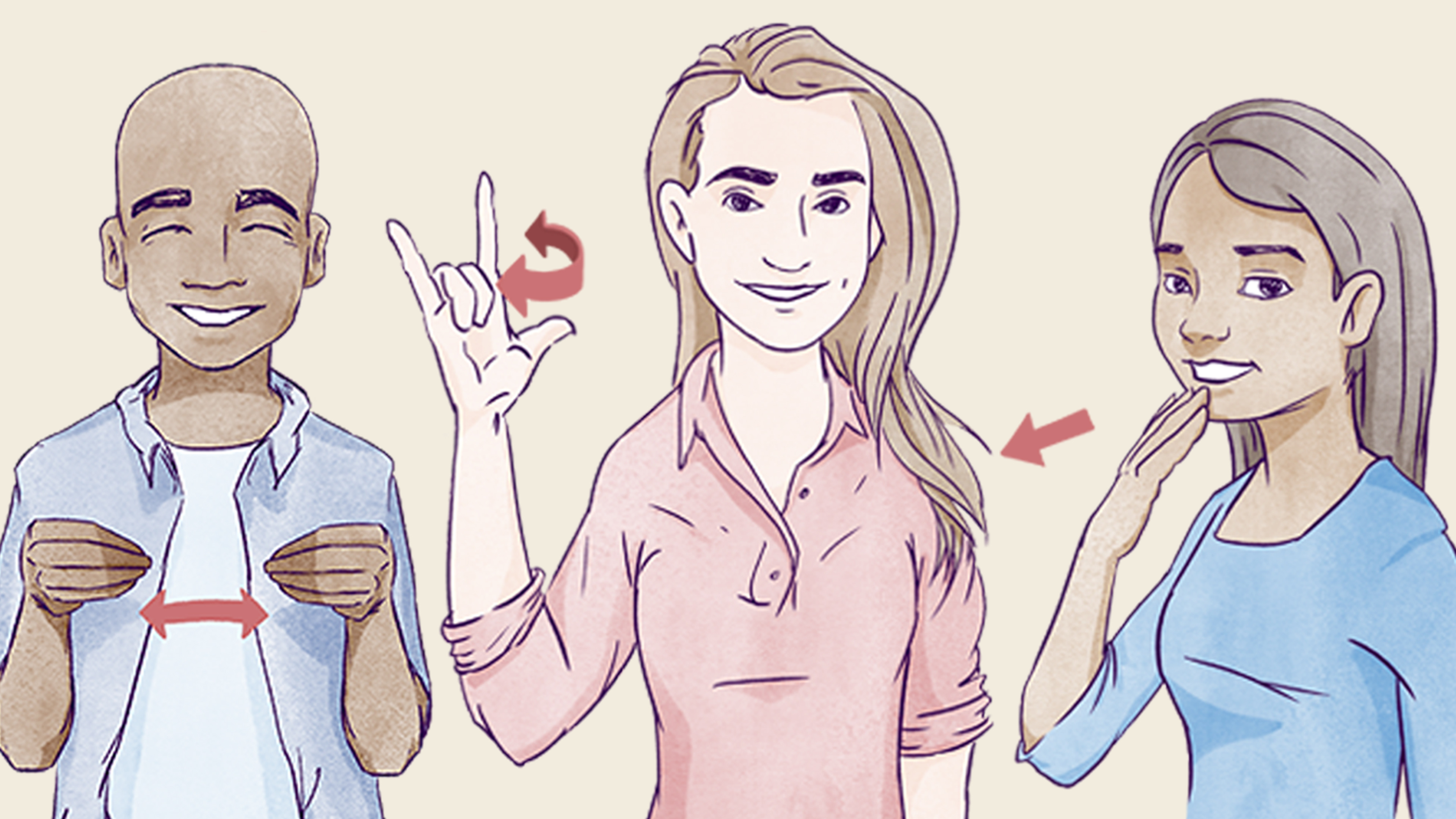
- Thank You: Start with the fingertips at the chin and move the hand forward and down toward the person being thanked, similar to the motion of blowing a kiss.
- All Done: Hold both hands up with palms facing the chest, then quickly flip them outward so the palms face the observer. This is crucial for ending mealtime or play.
- I Love You: While the traditional ASL sign involves extending the thumb, index, and pinky, the baby version is often simplified by crossing the arms over the chest in a self-hug.
- Yes: Form a fist and tilt it up and down at the wrist, mimicking a nodding head.
Daily Care and Environment
- Change: Form both hands into "hooks" with the index fingers, cross them at the wrists, and rotate them in a switching motion. This prepares the infant for diaper changes.
- Potty: Create a fist with the thumb tucked between the index and middle fingers (the ASL letter "T") and shake the hand side-to-side.
- Bath: Form fists and rub them up and down the torso as if scrubbing with a washcloth.
- Sleep: Place an open hand over the forehead with the palm facing the face, then draw the hand down to the chin while closing the fingers, symbolizing eyes closing.
- Help: Place a "thumbs-up" fist on top of a flat, open palm and lift both hands together. This is a powerful tool for reducing frustration during difficult tasks.
People and Objects
- Mommy: Spread the fingers wide with the palm facing sideways and tap the thumb against the chin.
- Daddy: Use the same hand shape as "mommy" but tap the thumb against the forehead.
- Book: Place the palms together and then hinge them open at the pinky side, mimicking the opening of a book.
- Dog: Pat the side of the thigh and then perform a small snap with the thumb and middle finger.
- Cat: Use the thumb and index finger to "pinch" and pull outward from the side of the mouth, mimicking the stroking of whiskers.
Expert Analysis and Global Implications
Speech-language pathologists (SLPs) emphasize that baby sign language should be viewed as a supplement to, rather than a replacement for, verbal interaction. The American Academy of Pediatrics (AAP) notes that while there is no evidence that signing is "essential" for healthy development, it is a beneficial tool for enriching the parent-child bond.
From a broader perspective, the rise of baby sign language reflects a shift in modern parenting toward "responsive caregiving." By acknowledging that infants have complex internal lives and specific desires long before they can articulate them, society is moving toward a more empathetic and scientifically grounded approach to early childhood. As more childcare centers and preschools integrate these signs into their curricula, the gap between infant frustration and adult understanding continues to narrow, creating a foundation for lifelong communication and emotional health.
