

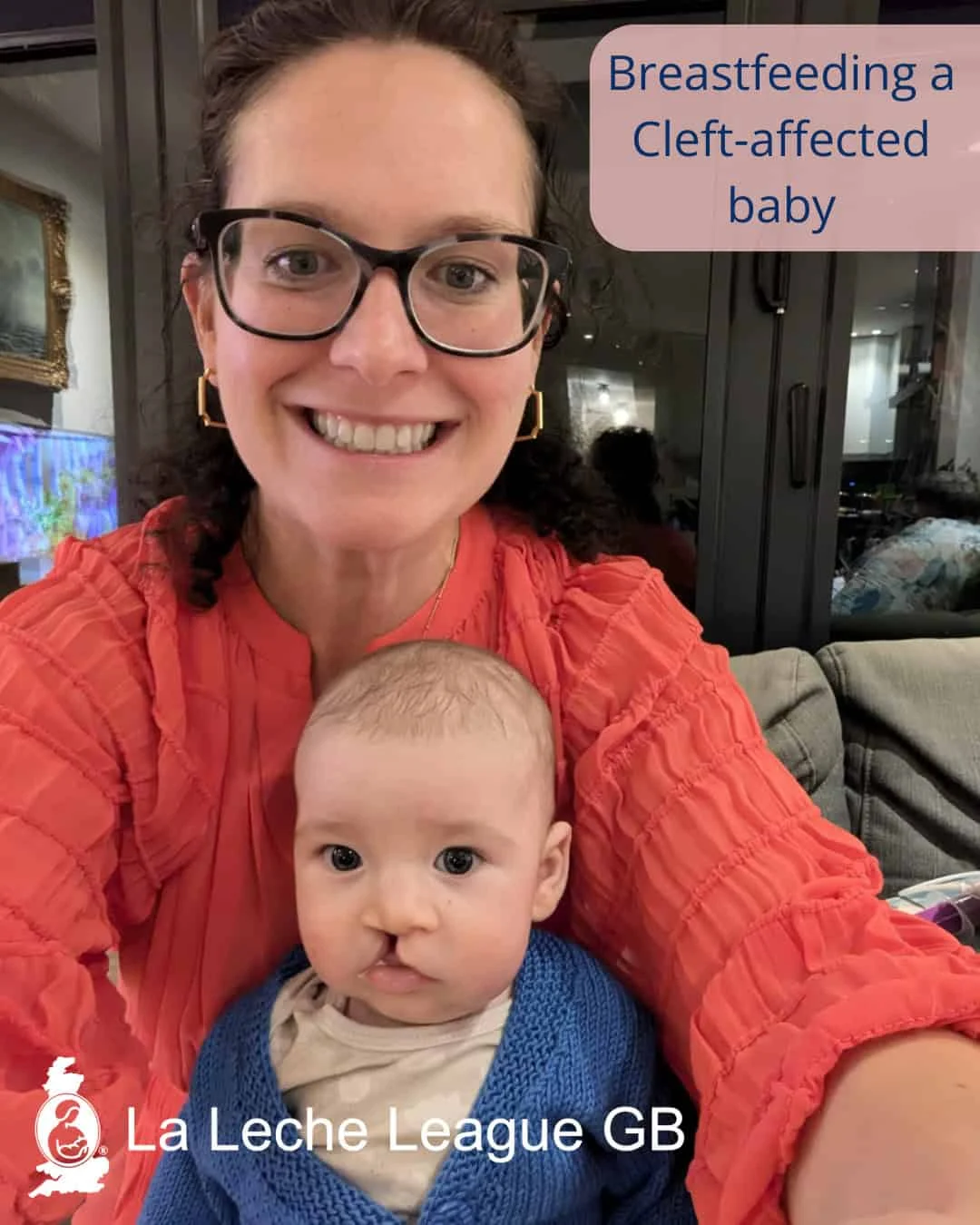
The remarkable journey of Sarah Muir-Little and her son, Russell, offers a compelling narrative of perseverance and adaptation in the face of significant medical challenges. Diagnosed antenatally with a cleft lip and palate, Russell’s condition initially presented a seemingly insurmountable barrier to breastfeeding, yet his mother’s unwavering determination and innovative approach ultimately led to a triumphant outcome, defying initial medical prognoses and highlighting the profound bond forged through persistent effort.
Antenatal Diagnosis and Initial Prognosis
The revelation of Russell’s cleft lip and palate arrived during a particularly trying period for the family. Sarah Muir-Little recounted an emotionally draining six weeks marked by her father-in-law’s critical condition in intensive care, overshadowing any initial excitement about her pregnancy. At the 20-week scan, what began as a moment of joy with the announcement of a baby boy quickly shifted when the sonographer inquired, "Have you heard of a cleft lip?" A subsequent conversation with a midwife delivered a disheartening blow: the baby’s cleft lip and palate would likely preclude breastfeeding. This pronouncement marked the beginning of what Sarah described as "our battle."
The diagnosis of a cleft lip or palate occurs when the structures forming the baby’s upper lip or the roof of the mouth (palate) fail to fuse correctly during fetal development. This congenital condition affects approximately 1 in every 700 babies born worldwide, making it one of the more common birth anomalies. While a cleft lip alone often allows for breastfeeding with some adaptations, a cleft palate presents a more complex challenge. Babies with a cleft palate cannot generate the necessary suction pressure to effectively draw milk from the breast, a physiological impediment that typically persists until the palate is surgically repaired. The Cleft Lip and Palate Association (CLAPA) serves as a vital resource in the UK, offering support and information to families navigating this condition, underscoring the widespread impact and the need for specialized care.
For Sarah, the news was particularly devastating. Having recently weaned her toddler in preparation for a new breastfeeding journey, the prospect of being unable to nurse her second child was deeply upsetting. She described feeling a profound sense of grief over the anticipated loss of an experience that she felt profoundly defined her role as a mother. A specialist nurse later offered a glimmer of hope, clarifying that some form of breastfeeding journey might still be possible, though it would undoubtedly differ from her previous experience. The extent of the palate’s involvement would only be confirmed after birth, and if confirmed, the inherent lack of suction would render direct breastfeeding improbable. The nurse also outlined the typical surgical timeline, involving two operations within Russell’s first year—one for the lip and another for the palate—with further procedures anticipated later in childhood.
The Quest for Alternative Feeding Strategies
Driven by an unwavering resolve, Sarah embarked on an exhaustive research mission. She meticulously trawled the websites of CLAPA, La Leche League (LLL), and other reputable sources, seeking any examples of successful breastfeeding outcomes following palate surgery. The findings were, initially, disappointingly sparse. However, the few cases she did uncover offered two crucial insights: the importance of maintaining a robust milk supply and the necessity of employing alternative methods for delivering milk to the baby while at the breast.
The first point, maintaining milk supply, seemed within her control. Sarah had successfully maintained an ample supply for her toddler, although her previous experience with pumping had been challenging, yielding limited milk from one side and often requiring manual expression to build a freezer stash. Armed with improved knowledge and determination, she was confident in her ability to meet Russell’s future milk demands.
The second point, alternative feeding methods, led her to investigate direct hand expressing into the baby’s mouth or using a nursing supplementer. The latter, which involves a thin tube delivering milk to the baby while latched, appeared to be the more practical long-term solution. The UK market offered two primary nursing supplementer systems suitable for cleft babies. One operated via gravity, resulting in a very slow milk flow, while the other utilized a squeezable bottle for milk delivery. Sarah acquired both systems for testing. The squeezable bottle, while capable of delivering a substantial milk volume, proved awkward to handle. Traditional advice for such situations often recommends the "dancer hand hold," a technique where the index finger and thumb form a ‘U’ shape to support the baby’s chin at the breast, aiding attachment for babies with low muscle tone or prematurity. However, practicing this hold with a doll, while simultaneously managing the supplementer bottle, felt unachievable. Neither system felt intuitively right to her.
Innovating the Feeding System: Russell’s Early Days
Upon Russell’s arrival, the initial feeding protocol involved expressed colostrum delivered via a syringe, accompanied by a finger in his mouth to encourage rudimentary sucking, while awaiting the increase in Sarah’s milk supply. The overarching plan was to transition to feeding at the breast with a supplementer. A serendipitous discovery occurred when some mistakenly ordered syringes, unsuitable for direct feeding, perfectly fit the supplementer tube. The midwifery team kindly sourced larger syringes from the labor ward. With a slight modification—drilling a snug hole in the screw-on caps of these larger syringes—Sarah ingeniously created a functional, custom-fitted system for her supplementer tube. It is crucial to note that while innovative, any modifications to feeding tools should always prioritize safety, ensuring caps are removed if used for direct feeding (to prevent choking hazards) and that milk is delivered slowly, with close observation of the baby’s comfort and swallowing pace.
The conventional guidance for supplementer use typically involves either inserting the tube into the baby’s mouth after they have latched or taping it to the breast before latching, ensuring the baby takes both the breast and the tube simultaneously. The former approach proved impractical for Russell, whose fragile latch, devoid of suction, would easily be disrupted. The latter, taping a long section of tube, seemed overly fiddly given a newborn’s small mouth and tendency to bob on and off the breast. Sarah devised her own method, taping the tube very close to the nipple to facilitate easy insertion into Russell’s mouth. This required experimentation with different tapes and placements to find one that could withstand moisture, often resulting in frustration and some milk loss due to the tape compromising the latch.
Despite the challenges, Sarah’s determination remained unshaken. She sought help from numerous sources, yet many lacked the specific experience required for her unique situation. Some professionals voiced concerns about potential aspiration (choking on milk), adding to the pressure. This period, marked by the euphoric high of a magical home birth contrasted with the frustrations of difficult feeding moments, tested her resilience repeatedly. However, she persevered, eventually establishing a system she believed was both effective and safe for delivering an adequate milk volume at a suitable speed.
Navigating Positioning and External Perspectives

The "dancer hold" continued to be a source of stress for both Sarah and Russell. Achieving the correct positioning was difficult, and Russell frequently struggled to latch, bobbing on and off the breast. Observing that he calmed down and fed well when offered the untaped breast with direct expression, Sarah knew hunger wasn’t the issue; it was the mechanics of the supplementer.
Having primarily used the cradle hold with her toddler, Sarah found it the most natural and comfortable position. Following consultation with a specialist at Great Ormond Street Children’s Hospital, they decided to continue with the cradle hold. While this sometimes resulted in more milk leakage from Russell’s mouth due to the cleft, it was deemed more appropriate for a newborn and, crucially, fostered a relaxed feeding environment for both mother and baby. Traditional advice sometimes suggests plugging the lip cleft with the breast or keeping the cleft side elevated to minimize milk loss. However, Sarah and Russell prioritized calm feeds with a deep latch in the familiar cradle position. In those initial weeks, feeds were often messy, with both mother and baby frequently damp from lost milk around the tape. Despite the fiddliness and occasional frustration, Sarah believed the effort was unequivocally worthwhile.
The profound impact of her efforts was not lost on her friends. One friend, initially questioning the extensive effort to bridge the gap until potential post-surgery breastfeeding, witnessed Sarah and Russell feeding and remarked, "I get it: you are already breastfeeding." Another, observing them from across a restaurant, commented, "Oh, so the worries about Russ not being able to breastfeed didn’t come to fruition!" Such comments provided immense validation and joy, reinforcing Sarah’s conviction.
However, the journey was also punctuated by negative comments. A pediatrician, for instance, expressed reservations about their chosen feeding method, stating that it wasn’t what they recommended, as specialized cleft bottles were known to be "safe and effective." Sarah perceived this as an implication that their method was not. Such remarks, especially from healthcare professionals, were hurtful and required considerable resilience to brush off. Yet, fortified by Russell’s consistent weight gain and his apparent enjoyment of feeding at the breast, Sarah remained convinced they were doing what was right. While she didn’t relish the necessity of the supplementer, she cherished the ability to breastfeed Russell to the best of their capacity, ensuring he received all the invaluable benefits of breast milk.
Evolution of Feeding Techniques and Milestones
Around ten weeks of age, Russell began to show increased discomfort with the tape in his mouth. In response, Sarah gradually adjusted their method, initially taping the tube much further away from the nipple, and eventually, ceasing to tape it altogether. This advanced technique demanded greater coordination but became more manageable as both mother and baby developed a shared understanding and rhythm.
Throughout their journey, there were moments that felt like setbacks, where Russell would become upset or refuse to feed. During these challenging times, Sarah consciously reminded herself that Russell was primarily a baby, and secondarily, a baby with a cleft. This perspective allowed her to differentiate between issues common to all infants—such as being easily distracted around three months of age—and those specifically related to his cleft. This realization often provided clarity and guided their adjustments.
The Surgical Journey and Post-Operative Recovery
Russell underwent surgery to reconstruct his lip and hard palate. In the immediate aftermath, once the morphine wore off, Russell initially preferred feeding from a bottle for several days. However, as he recovered and returned to the supplementer, he subsequently rejected bottles. Whether this was an association of bottles with the difficult post-operative days, or simply finding the supplementer less effort, the shift meant Sarah continued expressing milk. The demanding routine of expressing and performing all feeds could be exhausting, highlighting the indispensable support provided by her husband. He managed bottle washing, undertook night feeds while Sarah pumped, and offered crucial reassurance during difficult moments. Their journey, undoubtedly a tricky path, was navigated as a cohesive team. Each day they continued with the supplementer represented a bonus for Russell’s health and the strengthening of their bond, making every effort worthwhile. Sarah expressed immense pride in their collective achievement.
A Transformative Breakthrough: Direct Latching
A significant turning point arrived just before Russell’s first birthday, when he underwent his palate surgery. Although the surgeon advised avoiding suction for a month post-operation, Sarah almost immediately detected him attempting to suck for the very first time. Four weeks later, another milestone occurred: Russell discovered how to use a straw. Remarkably, the very next day, he began to suck and swallow directly at the breast.
From this pivotal moment, progress was gradual but steady. The reliance on the supplementer diminished, with its use becoming less frequent as Russell progressively learned to take more milk directly from the breast. After 15 months of daily pumping, a testament to Sarah’s dedication, she was finally able to cease the arduous routine. Russell’s latch, though initially atypical, proved effective, and he was clearly content. Today, he continues to breastfeed once or twice a day. This outcome, once deemed highly improbable, was never a certainty for the family. Their journey remains one of discovery, simply seeing where it leads next, a testament to the power of maternal intuition, resilience, and a deep-seated commitment to their child’s well-being.
Broader Implications and Enduring Legacy
Sarah Muir-Little’s experience with Russell transcends a personal narrative; it offers invaluable insights and inspiration for other families facing similar challenges. Their journey underscores the critical importance of maternal advocacy and the profound impact of personalized care, especially when conventional advice may not fully address individual needs. The benefits of breast milk, particularly for infants with medical conditions, are well-documented, contributing to improved immunity, digestion, and overall development. Russell’s story illustrates that even with significant anatomical challenges, creative solutions and unwavering dedication can facilitate access to these benefits.
Furthermore, this account highlights the essential role of comprehensive support networks, encompassing medical professionals who are open to individualized approaches, strong familial support, and peer-to-peer communities like CLAPA and La Leche League. These organizations provide vital information, emotional support, and a platform for sharing experiences that can empower parents to navigate complex feeding journeys. The Muir-Little family’s triumph is a powerful reminder that with resilience, innovation, and a collaborative spirit, what initially seems impossible can, through sheer determination, evolve into a deeply fulfilling reality, fostering a unique and enduring bond between mother and child.
