

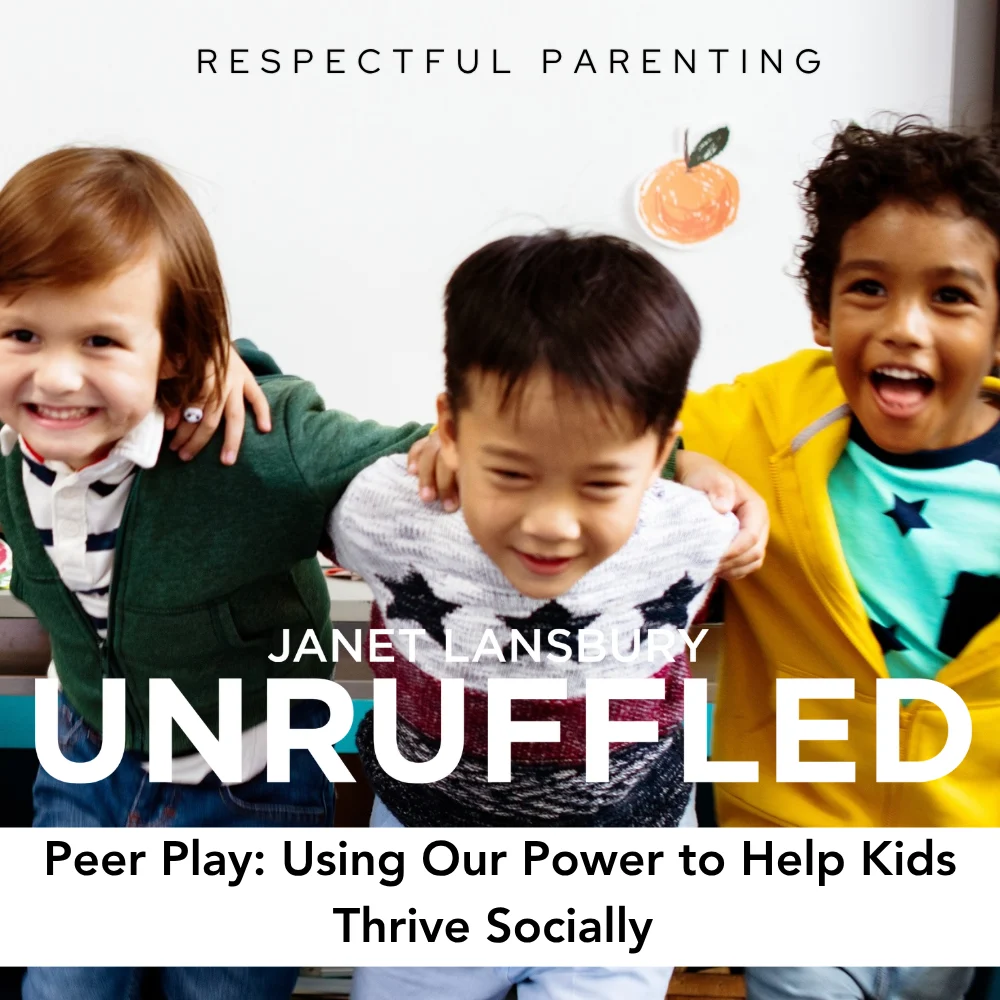
A recent discussion on the podcast "Unruffled" with Janet Lansbury, published on June 16, 2026, delves into the nuanced challenges parents face in fostering healthy social development in young children. The episode, titled "Peer Play. Using Our Power to Help Kids Thrive Socially," addresses three distinct parental concerns, highlighting a common thread: the significant, often underestimated, role parents play in shaping their children’s social competence. Lansbury emphasizes that while direct instruction and modeling are valuable, the foundational pillars of healthy peer interactions for children lie in parental boundaries and the trust placed in a child’s developmental process.
Understanding the Roots of Social Challenges
The core of Lansbury’s analysis revolves around the idea that children learn social skills not just by observation but through experiential learning, heavily influenced by their interactions with caregivers. She posits that when children exhibit social difficulties, such as being overly controlling in play, experiencing social anxiety, or facing exclusion, parents often have the power to facilitate positive change through subtle adjustments in their own approach. This involves a deeper understanding of how setting boundaries and trusting a child’s natural progression can foster resilience, confidence, and authentic connection with peers.
Lansbury addresses three specific scenarios presented by parents: a four-year-old whose rigid control over pretend play alienates friends; a four-and-a-half-year-old who is repeatedly excluded by her peer group at the playground; and a reserved three-year-old who struggles to engage comfortably around others. Each case, while seemingly unique, points to the interconnectedness of parent-child dynamics and a child’s ability to navigate the social landscape.
Case Study 1: The Dictatorial Director of Play
One parent describes a four-year-old immersed in imaginative play, who becomes intensely frustrated when playmates deviate even slightly from her meticulously crafted scripts. This rigidity, the parent notes, has spilled over into her interactions with friends, often resulting in tears and annoyance from her peers. The parent’s attempts to steer the play towards a more collaborative model have been met with resistance, leading to a year-long stalemate in resolving this behavior.
Lansbury’s analysis suggests that this child’s behavior is not necessarily a lack of understanding but rather a subconscious seeking of boundaries. When a child’s demands become excessively exacting, even when a parent is trying to participate, it often signals a need for the adult to establish a firmer, more reasonable limit. The parent’s discomfort and inability to please the child are key indicators that a boundary is missing.
"It can be easy to get kind of lost in this as parents, especially if we do have an approach where we respect and trust our child and we want to encourage them, of course," Lansbury explains. "But when we’re trying to participate with them and then they’re being so exacting and it seems impossible to please them even though we’re playing with them, that’s something to look at. A lot of times children will just go further and further and further into the ridiculousness of a demand on us, and that’s sort of where this has gone here."
The implication here is that by allowing the child to direct the adult with such stringent control, parents inadvertently grant her excessive power. This, in turn, can hinder her ability to understand and adapt to the fluid nature of peer interactions. When parents consistently yield to these demands, children may not learn that others have their own desires and play styles. The resulting frustration and anger experienced by the child when her friends don’t comply can be an outlet for deeper, unexpressed emotions, potentially related to sibling rivalry or the natural developmental push for individuation at this age.
Lansbury advocates for parents to recognize their own feelings of discomfort as a signal to set a boundary. Instead of trying to "fix" the child’s play style, parents can gently reject the offer to participate in the overly controlled game, stating, "This isn’t my job, this is her pretend stuff." This action, while potentially leading to the child’s temporary disappointment or anger, provides a crucial learning opportunity. It models that others have their own needs and that not all interactions will be perfectly aligned with one’s desires, a vital lesson for navigating friendships.
Case Study 2: Navigating Group Exclusion and "Bullying"
The second parent inquiry addresses the challenging dynamic of a four-and-a-half-year-old being excluded by her peers at the playground. The other children, who are a year older and perceived to be at a different stage of social-emotional development, engage in behaviors like pretending she’s a monster or leaving her out of games. The parent, while generally in favor of letting children resolve conflicts independently, is concerned about the repetitive nature of the exclusion and the other parents’ interventions, which range from casual discussions to one parent’s directive that his daughter must play with the excluded child.
Lansbury cautions against labeling such peer exclusion as "bullying" in young children. She argues that while exclusionary behavior is hurtful, it’s often a natural consequence of differing developmental stages and social dynamics, rather than a targeted campaign of malice. The one-year age gap in preschool, Lansbury points out, can be significant, leading to divergent play styles and social understanding.
"This word gets thrown around a lot these days, ‘bullying,’ and I don’t think it applies to children this age at all," Lansbury states. "It’s quite different from children excluding another child like this."
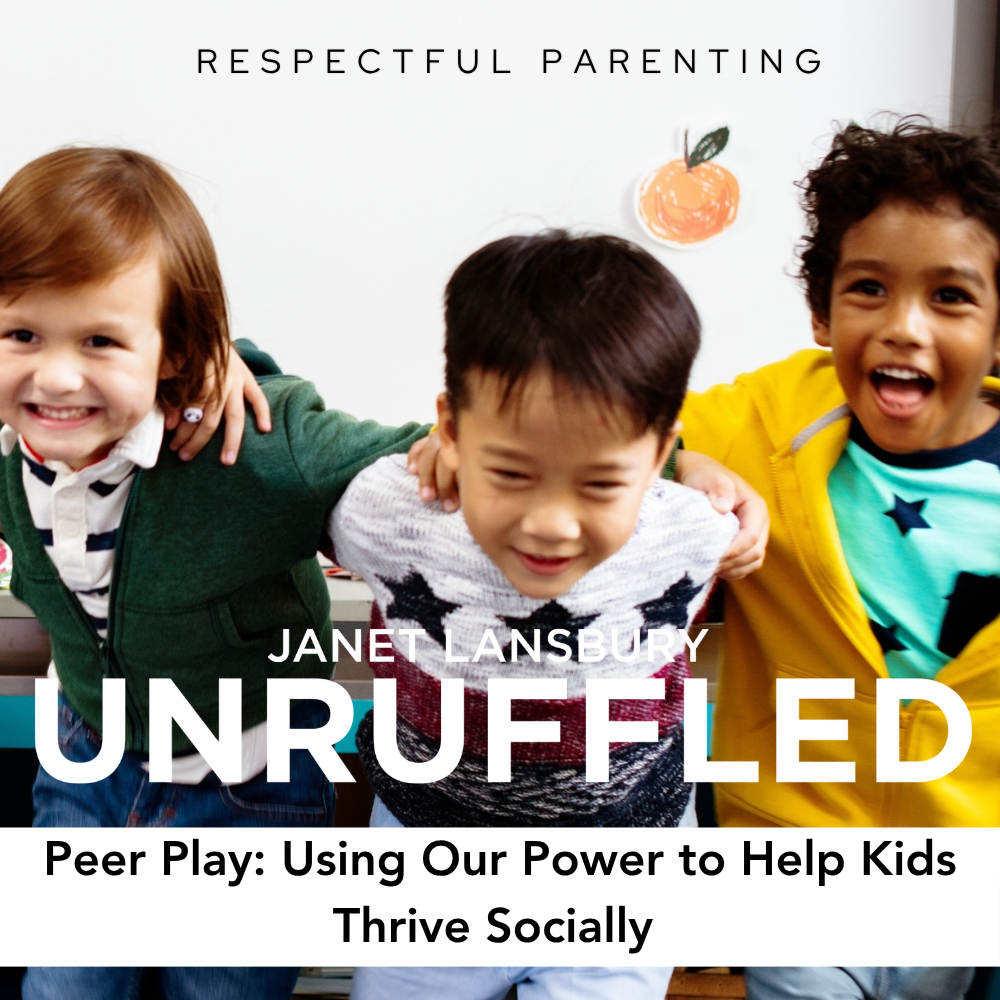
Instead of viewing the situation as a problem requiring immediate intervention or pity, Lansbury suggests parents adopt a perspective of trust in the child’s ability to navigate these social challenges. While allowing the child to vent her feelings and offering alternatives is a good start, the emphasis should be on trusting her to find her own way. This might mean accepting that playing with this particular group in a group setting will be difficult, and that one-on-one interactions are more viable.
The anecdote about a father mandating inclusion is acknowledged as a well-intentioned gesture but, according to Lansbury, not a long-term solution for fostering independent social skills. The true intervention, aligned with respectful parenting, involves helping the child manage her expectations and empowering her to make choices about engaging in potentially difficult social situations. Offering the child a choice, such as, "I think it’s going to be all the girls there and they might not play with you today. Do you want to do it?" can foster a sense of agency and prepare her for potential rejection, thereby building resilience.
Lansbury emphasizes that experiences of rejection and exclusion are crucial learning opportunities. When parents can frame these events as part of a child’s developmental journey rather than as personal failures or problems, children are better equipped to learn what works and what doesn’t in peer relationships. This learning process, though uncomfortable, is fundamental to building authentic social confidence.
Case Study 3: The Reserved Three-Year-Old
The briefest inquiry, received via Instagram, concerns helping a reserved three-year-old feel more comfortable around other people. Lansbury’s response is consistent with her overarching philosophy: trust the child’s process. Pushing, coaxing, or attempting to "fix" a child’s reserve can inadvertently signal to the child that their current state is problematic or a weakness.
"The answer is in trusting them to find their own way to feeling comfortable around other people by not pushing them, by not coaxing them to be comfortable, by not trying to make it happen as if this is a problem to fix or a weakness they need us to help them overcome," Lansbury advises.
Instead of actively managing the child’s comfort level, parents should provide a secure base. If the child wishes to sit with the parent in a social setting, that should be permitted. However, Lansbury also emphasizes the importance of setting boundaries for the parent’s own well-being. The request for a parent to constantly follow a child around, for instance, is something that can be gently declined with a statement like, "I’ll be here. I’ll be comfortable. I’ll have a boundary. I’ll take care of myself, and I trust you to do what you’re ready to do."
This approach reinforces the child’s autonomy and confidence in their own pace of social engagement. Children learn best when interactions are on their terms, and parental trust serves as a powerful catalyst for their developing social comfort. The underlying principle is that children are not on an adult-imposed timetable for social development, and parental patience and trust are paramount.
The Power of Parental Boundaries and Trust
Across all three scenarios, Lansbury reiterates the profound influence parents have on their children’s social development, not through direct instruction but through the quality of their relationship and their approach to boundaries and trust. She acknowledges that this perspective can sometimes feel like blame, but reframes it as empowerment. Recognizing the impact of parental actions allows for intentional adjustments that can significantly benefit a child’s social journey.
Lansbury encourages parents to be gentle with themselves, especially as many are forging new paths in respectful and authoritative parenting, often in contrast to their own childhood experiences. The absence of extensive literature on these nuanced parenting aspects means parents are often navigating uncharted territory. The key is to remain open to self-reflection and to understand that helping children overcome social hurdles is an ongoing process that relies heavily on the parent’s own capacity for setting boundaries and fostering trust.
Ultimately, "Peer Play. Using Our Power to Help Kids Thrive Socially" serves as a guide for parents to re-evaluate their role in their children’s social lives. By focusing on establishing reasonable boundaries and trusting their children’s developmental timelines, parents can equip their children with the confidence, resilience, and authentic social skills necessary to build meaningful connections with others. The podcast episode underscores that while direct intervention might seem like the most helpful path, it is often the indirect influence of parental modeling, boundaries, and unwavering trust that truly empowers children to thrive socially.
