

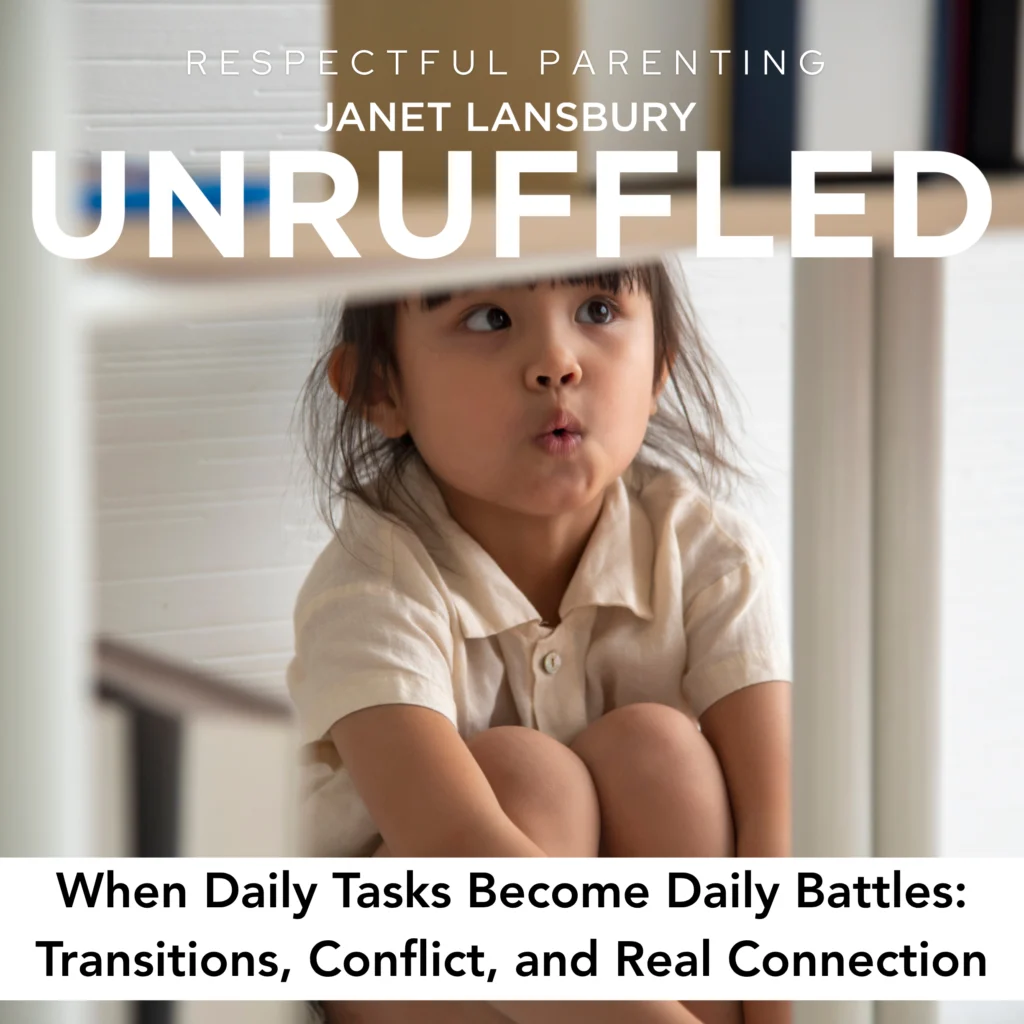
A poignant exchange between a concerned single mother and renowned parenting expert Janet Lansbury has illuminated the complex dynamics of everyday child-rearing, particularly when routine transitions devolve into protracted conflicts. The mother, navigating the challenges of a demanding work schedule and co-parenting complexities, shared her struggle with her five-year-old daughter’s persistent resistance to essential daily tasks such as dressing, hair brushing, bathing, and teeth brushing. What begins as a simple shift in activity can escalate into an hour-long ordeal, leaving both mother and child exhausted and the tasks often incomplete. Despite employing a range of strategies, from timers and reward charts to punishments and playful games, the parent finds herself at a loss, questioning her approach and the efficacy of conventional methods in fostering genuine connection.
Lansbury’s insightful response, shared via her podcast "Unruffled," delves into the underlying reasons why these seemingly well-intentioned strategies can inadvertently impede connection. She reframes these daily battles not as behavioral issues to be managed, but as expressions of a child’s internal processing of transitions and discomfort, offering a perspective shift that could fundamentally alter how parents approach these challenging moments.
The Parent’s Dilemma: A Cycle of Frustration
The mother, a dedicated listener of Lansbury’s work for years, describes herself as a single parent to a bright, affectionate, and "beautifully bossy" five-year-old. Her daughter is on the cusp of starting first grade, a significant developmental milestone. The mother’s professional commitments as a nurse and the inherent inconsistencies of her co-parenting situation contribute to a busy and often unpredictable home environment. She expressed a deep desire for her daughter to navigate these years feeling "connected and secure," yet the reality of daily routines has become a source of persistent conflict.
"Since about age three, my daughter has strongly resisted getting dressed, brushing her hair, bathing, and brushing her teeth," the mother recounted in her message. "I’ve tried timers, countdowns, a game we play called ‘Get Dressed Race’ to make it fun, silly getting-dressed games, reward charts, and punishments. I often say, ‘I see you don’t want to get dressed right now. Let me help you.’ What starts as a simple transition can turn into an hour-long battle, with both of us ending up overwhelmed and the task often still unfinished."
She further articulated a growing concern that her consistent application of "Unruffled" principles – emphasizing less pressure, more connection, acceptance, and leadership – might be inadvertently contributing to the problem. "Her resistance doesn’t seem to be improving with age and sometimes it almost feels like she’s compelled to fight these transitions even when she wants to move on with her day," she observed, highlighting the perplexing nature of her daughter’s behavior. Her core questions revolved around discerning when a child truly needs more support through discomfort versus when a parent must establish a firmer boundary, and whether an overemphasis on connection could hinder a child’s growth.
Lansbury’s Perspective: Connection Beyond Compliance
Janet Lansbury, responding to the parent’s heartfelt plea, acknowledged the extraordinary depth of thought and care evident in her message. Lansbury emphasized that the parent already possesses many of the essential tools for navigating these challenges, and her role was to offer clarity and bolster her confidence.
"You are a wonderful mom," Lansbury affirmed. "I think/hope I can clear up some things for you to help guide your way. You already have everything else you need."
Lansbury’s analysis began by validating the inherent difficulty of transitions for young children. She noted that these everyday struggles are often amplified by external factors, such as parental separation. "Children often comment when they’re old enough to, that when their parents are divorced or separated, the most difficult part for them is the going back and forth, having two different homes, two different lives, having parents that are in two different places." This acknowledgment serves to normalize the child’s resistance, framing it not as defiance but as a natural response to complex life circumstances.
Deconstructing Conventional Strategies
A central tenet of Lansbury’s advice is a critical examination of the strategies parents commonly employ to manage resistance. She argues that tactics like timers, countdowns, reward charts, and even punishments, while well-intentioned, often serve as "outside fixes" that bypass genuine connection.
"All of those things are kind of outside fixes rather than getting the practice that we need and that our child needs from us, really, that we’re being real right now together," Lansbury explained. She advocates for a more authentic approach, one that acknowledges and validates the child’s feelings of reluctance. This involves verbalizing the child’s experience: "This is what’s in front of us. We have to do this. You don’t want to do it, not at all. This is a big old drag. You don’t like this."
Lansbury posits that children’s resistance to tasks like brushing teeth or getting dressed is not a reflection of the task’s inherent difficulty, but rather an outward manifestation of deeper feelings related to navigating transitions. The child, in essence, is communicating, "I need to be a mess with transitions. This is where it’s coming out. Can you gather me through these overwhelmed feelings? Can you stay confident in the face of my overwhelmed feelings?" This requires the parent to embody a calm, confident leadership that can contain the child’s emotional expression without being overwhelmed by it.
The Nature of Connection in Conflict
The parent’s definition of connection – "feeling confident in my role while being on the same team as my daughter. I want to communicate in a way that respects her, shows that her voice matters, and teaches her that she deserves respect so we can move through life with confidence" – deeply resonated with Lansbury. However, Lansbury clarified that true connection isn’t about avoiding conflict but about navigating it authentically.
"We don’t have to choose one over the other. We can face conflicts with our child in a very connected, honest way," she stated. This means embracing the difficult moments, allowing children to express their discomfort fully, and remaining a steady, supportive presence. The goal is not to eliminate the struggle but to transform it into an opportunity for deeper understanding and relational growth.
Lansbury critically assessed the impact of strategies that aim to "stuff uncomfortable emotions and correcting behavior," a pattern she observed in parenting approaches from previous generations. While these methods may have been delivered with love, they often send the implicit message that "I’m not comfortable with you sharing these overwhelmed feelings… I need to just make this go well." This, Lansbury explained, is precisely why such tactics can be ultimately ineffective in fostering long-term growth and confidence.
Redefining Boundaries and Support
The parent’s question regarding the balance between supporting a child through discomfort and holding a firm boundary is a common point of confusion for many caregivers. Lansbury argued that in the context of essential daily tasks and transitions, the concept of a rigid "firm boundary" is often misplaced.
"This isn’t something where we can hold a very firm boundary because it’s not something that works when we force it," she explained, referencing scenarios where a child might be physically restrained to complete a task. Instead, these situations call for "finesse, that give and take where yes, we’re firm in that we’re going to do this, but we’re not going to force it. We want to work in teamwork with our child."
The true firmness, Lansbury contended, lies in the parent’s internal confidence and their ability to hold space for the child’s emotional experience while gently guiding them through the necessary activity. This involves acknowledging the difficulty for the child: "You really don’t want to do this and this is not fun. It’s so hard on you to have to keep making these changes…" This empathetic validation, coupled with the parent’s unwavering presence and commitment to completing the task, is what truly supports the child’s development.
Implications for Child Development and Parental Well-being
The implications of this approach extend beyond resolving immediate conflicts. By embracing "messy, messy connection," parents can cultivate resilient children who understand that their emotions are valid and that they have a secure base from which to navigate life’s challenges. This fosters a sense of trust and self-efficacy, enabling children to approach future difficulties with greater confidence.
For parents, this shift in perspective can be liberating. It removes the pressure to be perfect or to constantly "fix" their child’s behavior. Instead, parents are encouraged to be their authentic selves, engaging with their children in a genuine and honest way, even amidst frustration and resistance. This can lead to a more peaceful and connected family dynamic, where conflicts are seen not as failures but as opportunities for deeper understanding and growth.
The parent’s observation that her own negative self-talk echoes messages she absorbed growing up highlights a generational pattern that many parents are striving to break. Lansbury’s insights offer a pathway to interrupt this cycle by modeling a different approach: one that prioritizes emotional acceptance and authentic connection over behavioral correction.
The exchange underscores that the most effective parenting strategies are not about implementing a new set of techniques, but about cultivating an internal shift in perspective. By trusting their own instincts, embracing vulnerability, and holding confidence in their role as a supportive leader, parents can transform daily battles into opportunities for profound connection and lasting growth. This nuanced understanding of conflict and connection offers a beacon of hope for parents navigating the inevitable challenges of raising children in today’s complex world.
