

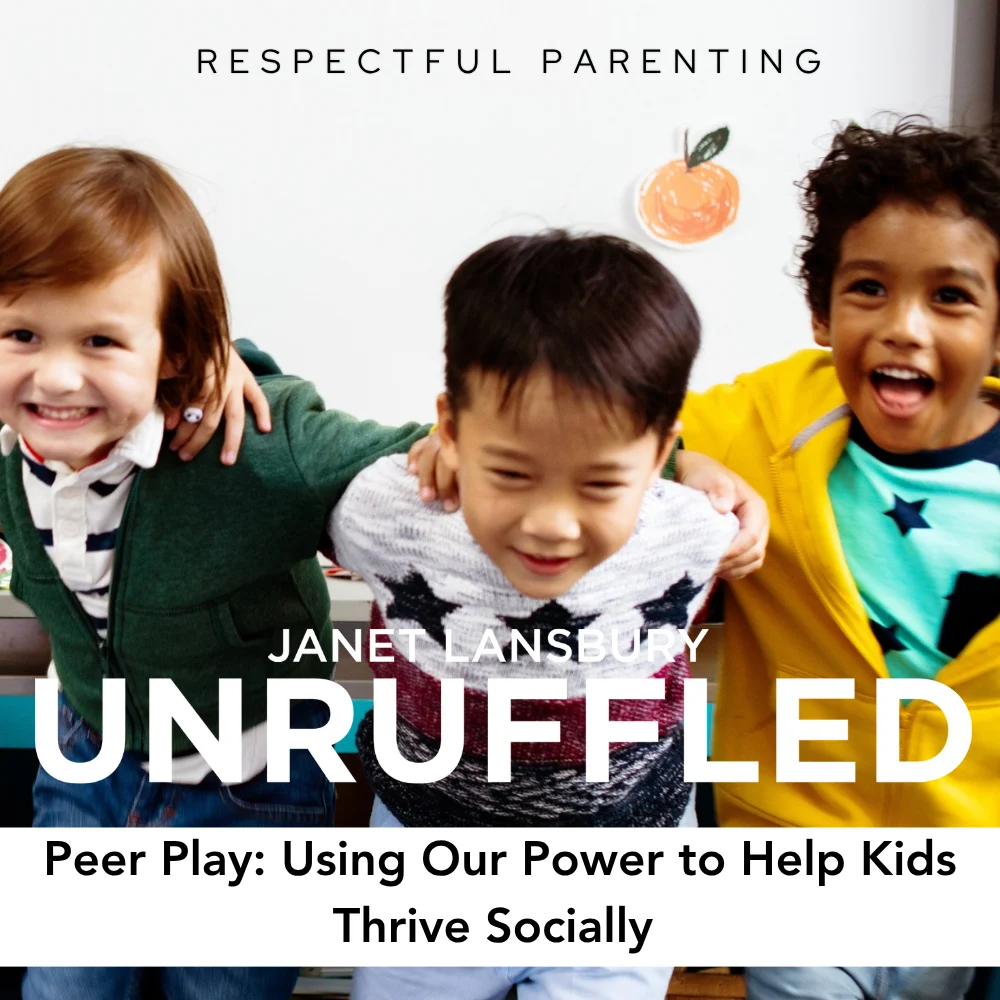
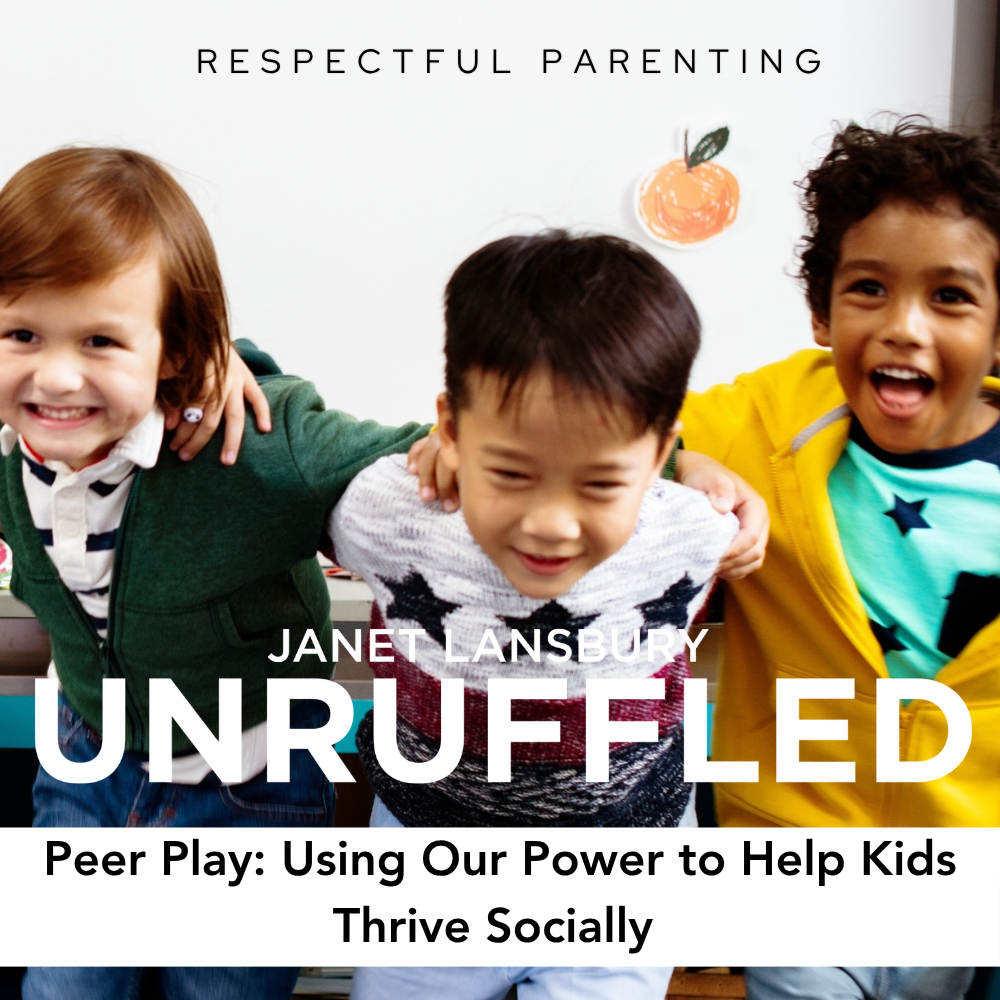
A prominent child development expert, Janet Lansbury, has offered nuanced guidance to parents grappling with common social challenges faced by young children. In a recent podcast episode, "Peer Play. Using Our Power to Help Kids Thrive Socially," Lansbury addresses scenarios involving preschoolers struggling with peer interactions, highlighting the significant, often overlooked, role parents play in shaping their children’s social competence. Her insights, rooted in respectful parenting principles, emphasize the power of parental boundaries and trust in fostering children’s confidence, resilience, and healthy social development.
The episode tackles three distinct parental concerns: a four-year-old who rigidly dictates play and becomes distressed when others don’t comply, a four-and-a-half-year-old who is frequently excluded by peers, and a reserved three-year-old who struggles to engage with others. Lansbury argues that while direct modeling of kindness and generosity is crucial, social skills development is largely an experiential process, not one that can be achieved solely through instruction. She posits that parents wield considerable influence not just through their own behavior but also through the way they set boundaries and, perhaps most critically, by trusting their child’s developmental process.
The "Pretend Play Disaster": Navigating Control and Boundaries
One of the most detailed scenarios discussed involves a four-year-old deeply immersed in imaginative play, who exhibits an inflexible approach to directing her peers. The parent describes her daughter’s insistence on precise adherence to her scripted play, leading to frustration and tears when friends deviate, even slightly. This has extended beyond family interactions to peer play, causing distress for both the child and her playmates.
"This has spilled over to most of her interactions with friends," the parent reported. "She gets so angry or sad when friends don’t say exactly what she’s asking them to. Sometimes she can move on and play their games, but very often this ends in tears." The parent’s initial approach of allowing the children to work through the conflict independently for a year has yielded no significant improvement.
Lansbury identifies this situation as a critical juncture where parental boundaries are paramount. She suggests that while it’s natural to praise a child’s imagination, an overly accommodating parental response to demanding play can inadvertently reinforce an inflexible approach. "The main thing I want to help this parent understand is how important her boundaries are in setting her child up for success with other children," Lansbury stated.
She elaborates that when parents find themselves struggling to please a child’s exacting play demands, it often signifies a need for the parent to establish a more reasonable boundary. This is not about control but about modeling healthy interaction. "A lot of times children will just go further and further and further into the ridiculousness of a demand on us," Lansbury observed. She posits that the child’s rigid play style might be an expression of underlying feelings, potentially related to sibling rivalry (with a one-year-old sibling) or a general need to assert independence at age four, a developmental stage characterized by "pushing out" and testing boundaries.
The implication here is that the parent’s willingness to be directed so precisely in play, while intending to be supportive, might be inadvertently preventing the child from learning the natural ebb and flow of peer negotiation. By consistently allowing themselves to be directed, parents might be modeling an imbalance of power that the child then expects in her interactions with peers. This can lead to frustration when peers, who are not bound by the same parental dynamic, do not comply.
Addressing Exclusion and Perceived Bullying on the Playground
The second case study presented to Lansbury concerns a four-and-a-half-year-old who is repeatedly excluded by a group of slightly older peers on the playground. The other children engage in behaviors like pretending she is a monster and running away, or deliberately doing things they know will upset her. The parent is concerned about this dynamic, labeling it as potentially "bullying" and seeking guidance on how respectful parenting approaches such situations.
Lansbury offers a critical reframing of the term "bullying" for this age group. "This word gets thrown around a lot these days, ‘bullying,’ and I don’t think it applies to children this age at all," she stated. She distinguishes these playground dynamics from true bullying, suggesting that the exclusion and imaginative play scenarios described are more likely a reflection of developmental differences and the natural, albeit sometimes difficult, process of group play.
The age difference, with the other girls being a year ahead, is highlighted as a significant factor. "In preschool, a spread of a year of age is a big difference. And as this parent said, their social-emotional development is at a different place than this little girl’s is," Lansbury explained. She suggests that these older children might simply be operating on a different social wavelength, making their play naturally exclusive to younger children.
The parent’s inclination to let children resolve conflicts independently is generally supported by Lansbury. However, she advises against framing the situation as a "problem" or one where the child is a victim. Instead, she advocates for empowering the child by trusting her to navigate these social challenges. When one of the other girls’ fathers intervened by mandating inclusion, it achieved a temporary solution but, according to Lansbury, did not foster the child’s long-term social problem-solving skills.
Lansbury emphasizes that while allowing children to vent their feelings is important, parents should avoid projecting pity or over-identifying with their child’s discomfort. "It’s really hard not to project and feel sorry for a child in this situation," she acknowledged, "but that’s where the trust comes in there in that scenario, trusting that it’s okay for this girl to feel rejected in her way of playing with us."
The broader implication here is that childhood social development involves learning to cope with rejection and exclusion. These experiences, while difficult, are crucial for building resilience and understanding social reciprocity. Lansbury suggests that by allowing children to experience these natural social consequences, parents equip them with valuable life lessons that build confidence in their ability to handle social complexities.
Supporting a Reserved Three-Year-Old
The third, more concise question addressed involves helping a reserved three-year-old become more comfortable around others. Lansbury’s response to this scenario echoes the core themes of trust and non-interference.
"The answer is in trusting them to find their own way to feeling comfortable around other people by not pushing them, by not coaxing them to be comfortable, by not trying to make it happen as if this is a problem to fix or a weakness they need us to help them overcome," Lansbury stated.
She emphasizes that children have their own timelines for social engagement. Forcing interaction or attempting to "fix" a child’s natural reserve can be counterproductive. Instead, Lansbury advises parents to provide a secure base and set gentle boundaries. For instance, a parent can sit with a reserved child in a social situation but should avoid following the child around, thereby allowing the child to explore at their own pace.
This approach fosters confidence by demonstrating trust in the child’s ability to manage their own social comfort. It teaches the child that their feelings are valid and that they do not need to be "fixed" or rushed into social situations. The focus remains on the parent-child relationship as a model, where the parent’s own comfort and reasonable boundaries provide a stable environment for the child to develop at their own pace.
The Power of Parental Influence: Boundaries and Trust
Lansbury consistently returns to two fundamental tools parents possess: establishing clear, reasonable boundaries and cultivating deep trust in their child’s innate capacity to learn and grow. She acknowledges that this approach may diverge from conventional parenting advice and can be challenging, especially when parents are navigating new territory or have experienced different parenting styles themselves.
"There aren’t a lot of books about this, how to do this, there isn’t a lot of information. And many of us are forging a path to a respectful and authoritative approach that maybe we didn’t receive as children," Lansbury remarked. She encourages parents to grant themselves grace and remain open to adjusting their own responses.
The underlying principle is that by managing their own reactions and expectations, parents can significantly impact their child’s social development. When parents exhibit discomfort or an overeagerness to intervene in social situations, children can sense this unease, which can hinder their own independent exploration and problem-solving.
In essence, Lansbury’s advice suggests that parents have a profound power to help children thrive socially, not by orchestrating every interaction or solving every social dilemma, but by providing a secure, boundary-rich environment where children are trusted to learn, experiment, and eventually succeed in their peer relationships. This approach fosters a more robust and authentic form of social competence, built on self-reliance and genuine connection.
