

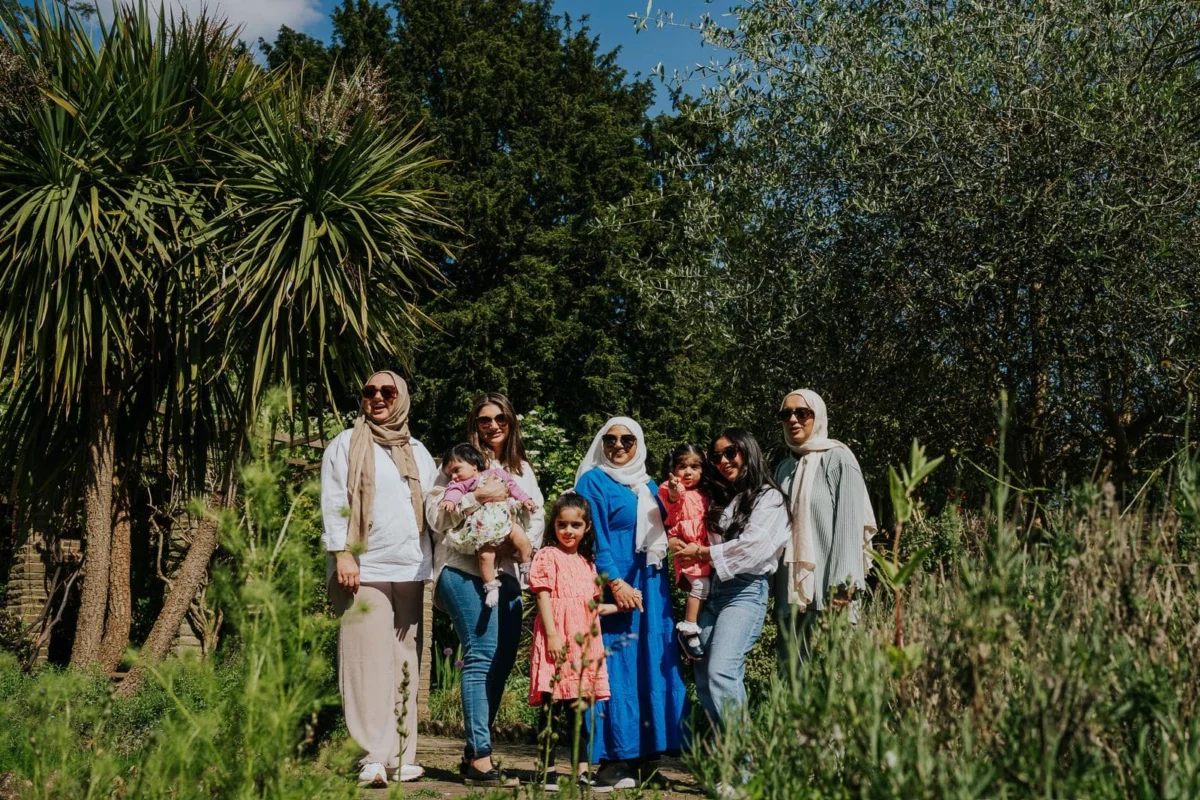
Zarina Ayyub’s journey, spanning over three decades and five children, stands as a powerful testament to resilience and advocacy in the face of deep-seated cultural barriers and systemic institutional shortcomings surrounding breastfeeding. From her own traumatic initial experiences as a young mother in Birmingham in the early 1990s to becoming a dedicated peer supporter and doula in London, Ayyub has not only transformed her own family’s understanding of infant feeding but has also become a pivotal voice in encouraging open dialogue and providing crucial support for South Asian women across the UK. Her story highlights the profound impact of cultural norms, the critical need for informed maternal care, and the enduring power of individual determination to drive generational change.
Early Roots and Generational Shifts: A Mother’s Story
Zarina Ayyub’s personal narrative is deeply interwoven with her mother’s pioneering experiences as an immigrant in the United Kingdom. Born in Birmingham, Zarina’s mother arrived in England from Pakistan in the late 1960s, a period of significant demographic and cultural shifts in the UK. She was among the first in her Asian community to have children born in the country, navigating a new society without the familiar support structures of her homeland. Her experience with breastfeeding her eldest son was marked by significant distress and a profound lack of support, both from her immediate family and the healthcare system.
Living with her in-laws, who did not encourage breastfeeding, Zarina’s mother encountered prevailing cultural beliefs that often viewed colostrum – the vital first milk – as "dirty" or unsuitable for newborns. Instead, traditional practices in some parts of India and Pakistan, as recounted by Zarina, advocated for feeding infants a concoction of cooled boiled water with fennel and other seeds to clear meconium. This cultural advice, combined with the lack of privacy and pressure to conform to household rules within a multi-generational home predominantly occupied by male relatives, created an environment antithetical to successful breastfeeding.
Compounding these cultural hurdles, the institutional practices of the time in UK hospitals actively undermined breastfeeding. Zarina’s mother was given formula and medication to dry up her milk, a common intervention in an era when formula feeding was heavily promoted by medical professionals, often without fully informed consent. This experience left a lasting trauma, with Zarina’s mother recalling intense pain and a pervasive sense that her baby was never satisfied, leading her to "never enjoy a minute of it." This generational legacy of trauma and misinformation would profoundly influence Zarina’s own initial approach to motherhood.
A New Mother’s Ordeal: The Birth of Zarina’s First Child
Zarina’s entry into motherhood mirrored, in many ways, the systemic failures her mother had faced, albeit in a different decade. At just 20 years old, Zarina went into labour shortly before her own birthday in November, giving birth to her first baby on November 3rd. Her daughter was born prematurely, weighing a tiny 4 lbs 13 oz, a fact later attributed to placental insufficiency, though the reasons were not clearly explained to her at the time.
The hospital environment in the early 1990s, while ostensibly more modern, offered little more genuine support for breastfeeding than in her mother’s time. Zarina recounts a bewildering and isolating experience: her baby was immediately taken to a special nursery and fed formula by tube, while Zarina was placed in a room alone. Crucially, she received no explanation about colostrum, expressing milk, or the basic physiology of breastfeeding. The concept of informed choice was absent; no one discussed options with her or offered guidance. The fear was palpable, even extending to holding her own newborn. Her mother, still scarred by her own ordeal, reinforced a message of unquestioning trust in medical professionals: "They know what they’re doing," she advised, cautioning Zarina against asking questions.
The physical trauma followed. By day three, Zarina was severely engorged. Her mother urged her to ask for milk-drying pills, but an instinctive desire to breastfeed had taken root. When a midwife finally attempted to help, the experience was brutal: "A midwife grasped my breast and forced my baby onto me. It was really horrible and I was crying my eyes out." This forceful intervention, combined with her mother’s pleas to stop and offer a bottle, underscored the profound lack of empathetic and skilled support available to new mothers, particularly those with complex needs like a tiny, premature infant struggling to latch.
Returning home around day five or six, the struggle intensified. Zarina’s nipples were severely cracked and bleeding. A desperate attempt by her husband to find a breast pump in Birmingham, where shops were not open late as they were in London, resulted in a non-functional hand pump and a pacifier too large for her baby’s face. This vivid anecdote illustrates the isolation and lack of readily available resources for breastfeeding mothers, especially outside of major metropolitan areas, and the profound distress it caused the entire family. These painful memories, Zarina notes, remain with her to this day, highlighting the long-term psychological impact of traumatic birth and early postnatal experiences.
Navigating Cultural Expectations and Family Pressures
Beyond the immediate challenges of childbirth and initial feeding, Zarina faced a complex web of cultural expectations and familial pressures that continued to undermine her efforts to breastfeed. After her initial two-week stay with her mother, Zarina and her husband moved into their own flat in London. However, their home became a revolving door for newly arrived relatives from Pakistan, a common practice within the diaspora where established families provide support to newcomers. This constant presence of guests, while a gesture of hospitality, meant Zarina was perpetually "busy cooking and cleaning," leaving little time or privacy for responsive feeding.
Her mother-in-law, despite having breastfed all her own sons, joined other family members in questioning Zarina’s commitment to breastfeeding. Within their Pakistani community, a spotless house and active contribution to family chores were often prioritized as indicators of a woman’s diligence and worth. "They wanted me to be up and about doing housework, rather than sitting down feeding my baby," Zarina recalls. Sitting to breastfeed was often perceived as "laziness," a cultural judgment that placed immense pressure on new mothers to quickly resume domestic duties.
This societal pressure was compounded by her husband’s concerns. Comparing their children, who were naturally small (Zarina herself is only five feet tall), to other "huge" children in the family, he expressed worry that their babies were "too skinny" and needed "bottle milk." This reflects a broader issue in some communities where formula-fed babies, often perceived as plumper, are sometimes seen as healthier or better nourished, contributing to the "chubby baby" ideal that can inadvertently undermine breastfeeding confidence.
Zarina’s instinctive understanding of her baby’s need for touch and closeness—picking her up whenever she cried—often clashed with the more rigid, schedule-driven feeding approaches common in her community, which were influenced by formula feeding practices. Despite these immense pressures, Zarina persevered, driven by an innate connection with her children and a deep-seated belief in the benefits of breastfeeding. This period underscores the immense psychological and emotional burden placed on mothers attempting to breastfeed in environments where cultural norms and family expectations are not aligned with their choices.
Empowerment Through Knowledge: A Turning Point
The trajectory of Zarina’s breastfeeding journey took a significant turn with the arrival of her third child. By this point, her household had expanded further, with her husband’s mother and two brothers also living with them. The cumulative pressure was immense, yet Zarina found a new source of strength: knowledge. It was during this pregnancy that she discovered The Womanly Art of Breastfeeding, a seminal text published by La Leche League International. She borrowed the book from the library and devoured its contents over nine months, a self-education that proved transformative.
The book debunked the myths she had grown up with, particularly the belief that colostrum was "dirty." It illuminated the physiological process of breastfeeding, even teaching her about relactation—the ability to re-establish milk supply after it has diminished or ceased. Armed with this comprehensive information, Zarina felt empowered. "I felt that now I had all this information, no one was going to mess with me!" she declared. This newfound confidence allowed her to breastfeed her third child for two full years, a remarkable achievement given the constant "critical comments" and lack of support from her extended family. This period highlights the critical role of accurate, accessible information in empowering mothers to make informed choices and persist in their breastfeeding goals, even in challenging social environments.
From Personal Struggle to Professional Advocacy
Zarina’s personal struggles were the crucible for her future advocacy. A few weeks after her third baby’s birth, she suffered from mastitis, a painful breast infection. This led her to contact a La Leche League (LLL) Leader and attend an LLL group in Wimbledon. This initial foray into a support group was daunting. As the "only woman wearing shalwar kameez," traditional South Asian attire, she felt awkward and embarrassed to feed in a longer top, despite its practicalities in managing family expectations. This experience underscored the need for culturally sensitive spaces where women from diverse backgrounds feel comfortable and understood. It took her years to gather the courage to return to such a group.
Despite this initial discomfort, the seeds of advocacy had been sown much earlier. Just four weeks after becoming a mother for the first time, Zarina had instinctively helped her husband’s aunt, who was also struggling with engorgement and lack of support within a similar extended family setting. "At least with her I felt less awkward, because we both wanted to feed our babies and knew it was normal," Zarina reflected. She also became a staunch supporter for her younger sister, helping her successfully breastfeed all her children. Over time, seeing her sister’s "big, happy babies" gradually shifted her own mother’s perspective, who eventually became "really supportive" during Zarina’s last two breastfeeding journeys.
The desire to formally help other mothers solidified after her fifth child, who was born at 35 weeks with severe reflux, presented a new set of breastfeeding challenges. After receiving "poor advice" from a breastfeeding counsellor, Zarina sought help at a local breastfeeding café. There, she discovered an advertisement for La Leche League’s 12-week peer supporter training course, run by the NHS in her area. This discovery felt providential: "thank God I came today!" she thought. She was determined to provide the proper, evidence-based support she herself had so desperately needed. Graduating from the course, receiving a symbolic pink knitted "boob," was a moment of deep pride and validation.
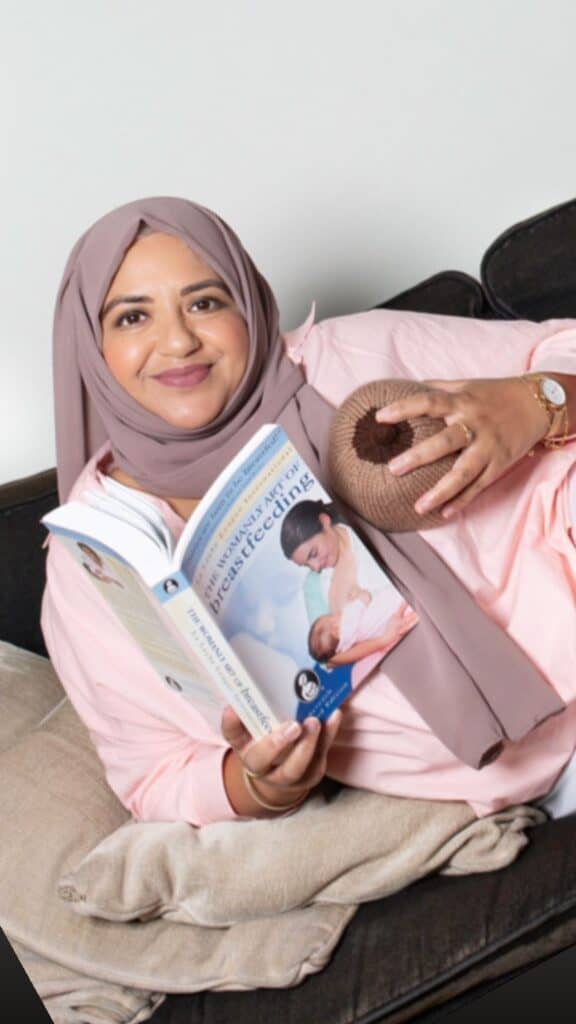
For two or three years, Zarina served as the sole Muslim peer supporter in her area. She observed the significant barrier that cultural differences posed, even without a language barrier, noting the rarity of Asian women attending the groups she ran. Her impact, however, extended beyond her own community; many mothers she assisted wanted to "take me home with them," a testament to her empathetic and effective support.
Today, Zarina continues her advocacy as a Doula, supporting mothers through birth and the postnatal period. Her children are now grown, ranging from 18 to 34, allowing her more freedom to pursue her passion. She actively participates in initiatives aimed at supporting ethnic minority families, such as The Raham Project in Peterborough and the charity BLISS, where she shared her emotional birth stories in a project focused on neonatal intensive care units and premature babies. Her raw honesty in these forums underscores the ongoing pain associated with her early experiences and her commitment to preventing similar traumas for other mothers.
A Legacy of Change: Impact and Future Outlook
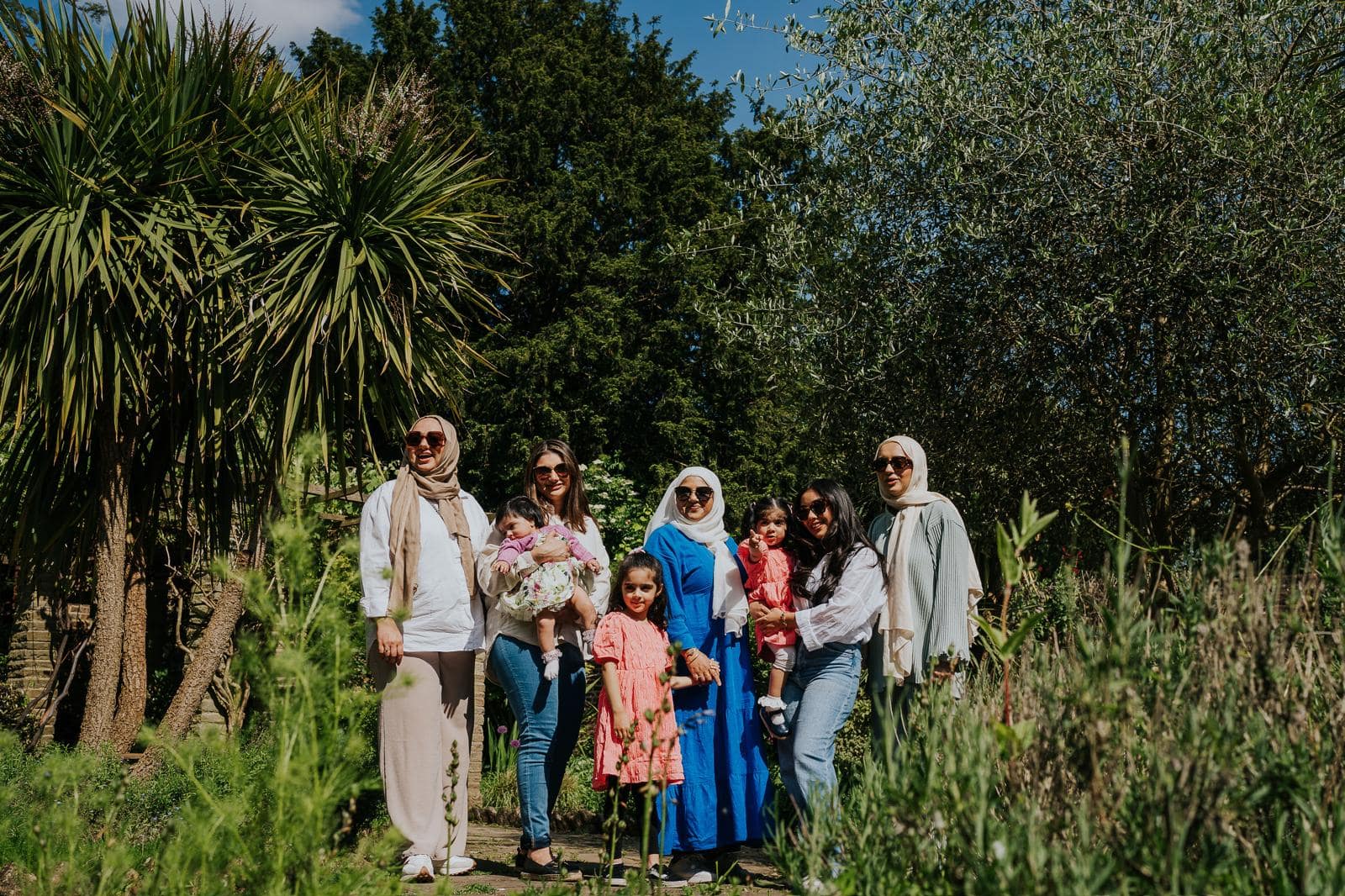
Zarina Ayyub’s perseverance has yielded a remarkable legacy within her own family, demonstrating the ripple effect of informed advocacy. Her daughters, now grown, have embraced breastfeeding with a confidence and support system that was absent for Zarina. One daughter, living just down the road, has three children under four. She breastfed her first for two years, successfully tandem-fed her first two, and her youngest, at eight months, continues to thrive. This daughter’s journey is notably different from Zarina’s, with her husband providing strong support, even though his family initially harbored discomfort with public breastfeeding. Zarina has also extended her support to her daughter’s sister-in-law, who has had a similarly successful breastfeeding experience.
The most profound shift has occurred within her immediate family, where discussions about women’s health, including breastfeeding and menstruation, have become "normalised." This openness, Zarina attributes to her "forever talking about it," has extended to her children’s spouses and friends. Furthermore, her daughters are now exploring the option of home births, a "huge miracle" in a community where hospital births are overwhelmingly the norm. This intergenerational transformation underscores the power of breaking cultural taboos and fostering open communication.
Despite these positive changes, Zarina acknowledges that "there is still a lot of shame surrounding breastfeeding in the Asian community." Many families remain "quite prudish," leading to lower engagement with breastfeeding support services among South Asian women compared to other demographics. This reluctance is often misinterpreted as religious shame, but Zarina clarifies that "it’s the culture that has been confused with religion." The Muslim faith, she emphasizes, actually teaches that a baby has a right to be breastfed for as long as desired, though a common misinterpretation limits this to two years.
Zarina’s work, and that of organizations like La Leche League, focuses on building relationships of trust to address these fears and normalize breastfeeding. She champions the message that breastfeeding is "not something to be embarrassed about; it’s a normal and natural process that is so beneficial for your baby and your own health, too." Her recent participation in the Breastfeeding Matters LLLGB Podcast in January 2025 further amplifies this message, discussing the crucial need for a safe and supportive environment for new mothers, echoing the ancient tradition of the "fourth trimester" practiced across many cultures.
Conclusion: A Trailblazer’s Enduring Message
Zarina Ayyub, from Tooting, London, stands as a formidable trailblazer whose personal sacrifices and unwavering commitment have carved a path for future generations of South Asian mothers. Her journey from isolation and trauma to empowerment and advocacy epitomizes the profound impact an individual can have in challenging deeply ingrained cultural norms and systemic deficiencies. By bravely sharing her story and dedicating her life to supporting others, Zarina is not just helping individual mothers but is actively contributing to a broader societal shift, ensuring that breastfeeding becomes recognized as the natural and celebrated act it truly is. Her call to action—"Let’s all work together to make it the very natural and normal way of life that it surely is"—resonates as a powerful plea for collective effort in fostering a more supportive and informed environment for all mothers.
