

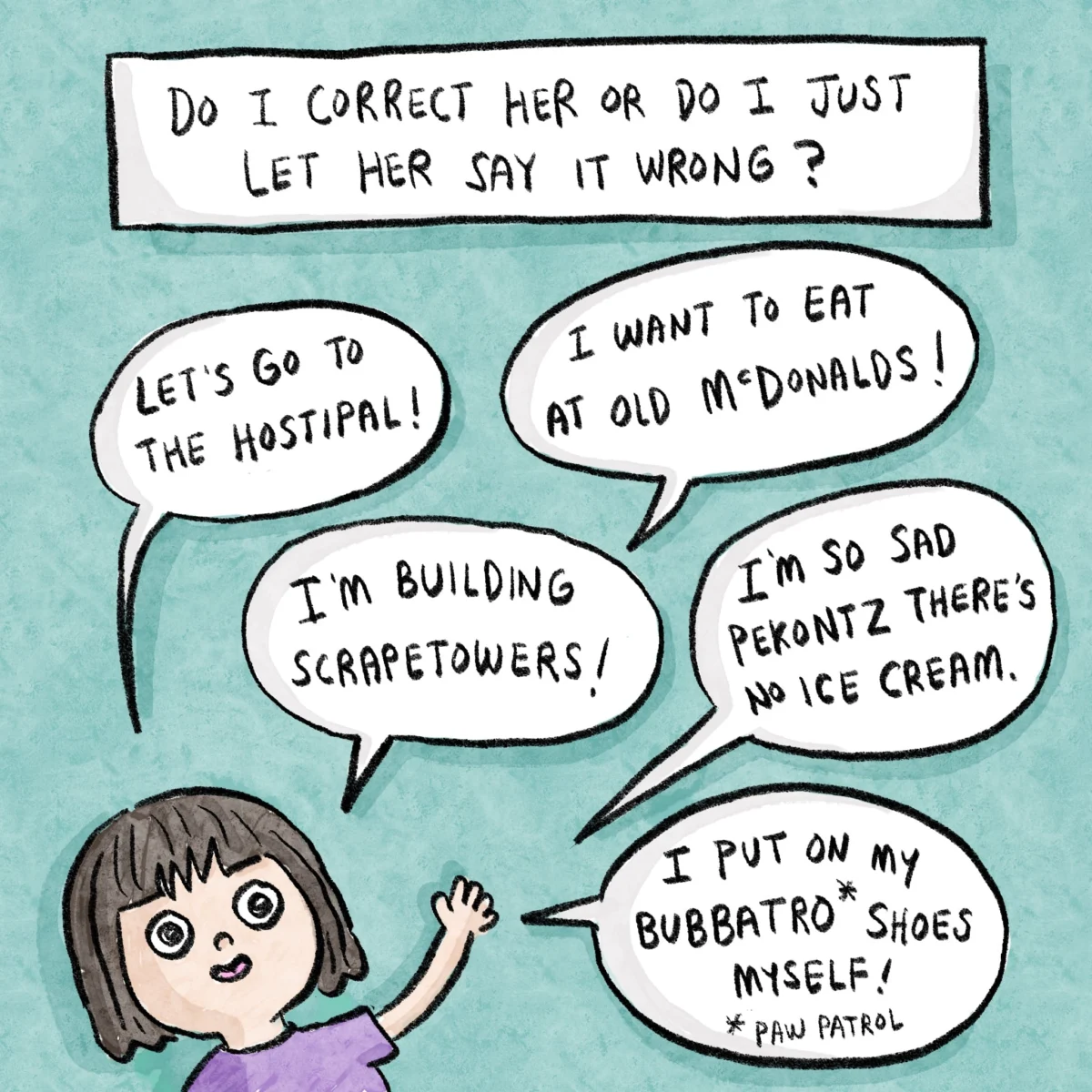
The digital publication Cup of Jo has recently released a new illustrative feature by renowned Brooklyn-based artist Ruth Chan, titled "Correcting or Not," which explores the nuanced linguistic development of children and the accompanying parental dilemma of whether to rectify endearing mispronunciations. This latest installment contributes to a broader editorial series that examines the intersections of modern parenting, child psychology, and the preservation of childhood innocence through the medium of visual storytelling. As digital media continues to pivot toward relatable, long-form lifestyle content, Chan’s work represents a significant intersection of artistic expression and developmental observation, capturing a universal experience for caregivers navigating the early stages of language acquisition.
The Cultural and Media Context of Cup of Jo
Founded by Joanna Goddard, Cup of Jo has evolved from a personal blog into a major influential platform in the lifestyle and parenting sector, boasting a monthly readership that reaches into the millions. The site has built its reputation on a blend of aesthetic curation and substantive discourse on topics ranging from fashion and design to mental health and grief. The inclusion of illustrators like Ruth Chan marks a strategic move by the publication to provide multi-dimensional content that resonates with a demographic of parents who value both intellectual depth and emotional relatability.
Chan, a prolific author and illustrator of children’s books, has become a staple contributor to the platform. Her portfolio for Cup of Jo is extensive, covering complex human experiences such as the loss of a pet, the management of Obsessive-Compulsive Disorder (OCD), and the profound shifts in identity that accompany motherhood. "Correcting or Not" serves as a thematic successor to her previous works, focusing specifically on the "baby wonder" phase—a period characterized by rapid cognitive development and the unique linguistic "errors" that define early childhood.
The Science of Linguistic Acquisition and Mispronunciation
The central premise of Chan’s comic—the internal struggle parents face when hearing a child mispronounce a word—is rooted in established linguistic theory. Pediatric speech-language pathologists identify these mispronunciations not as errors, but as "phonological processes." These are patterns of sound errors that typically developing children use to simplify adult speech as they develop the coordination required for complex articulation.
Common processes include "velar fronting" (replacing back-of-the-mouth sounds like /k/ or /g/ with front sounds like /t/ or /d/) and "cluster reduction" (dropping one consonant from a pair, such as saying "pider" instead of "spider"). According to data from the American Speech-Language-Hearing Association (ASHA), most children phase out these patterns by the age of five. However, the period between ages two and four is often a "golden age" of idiosyncratic language, where children create unique names for objects—a phenomenon Chan’s work highlights as a source of both humor and sentimental attachment for parents.
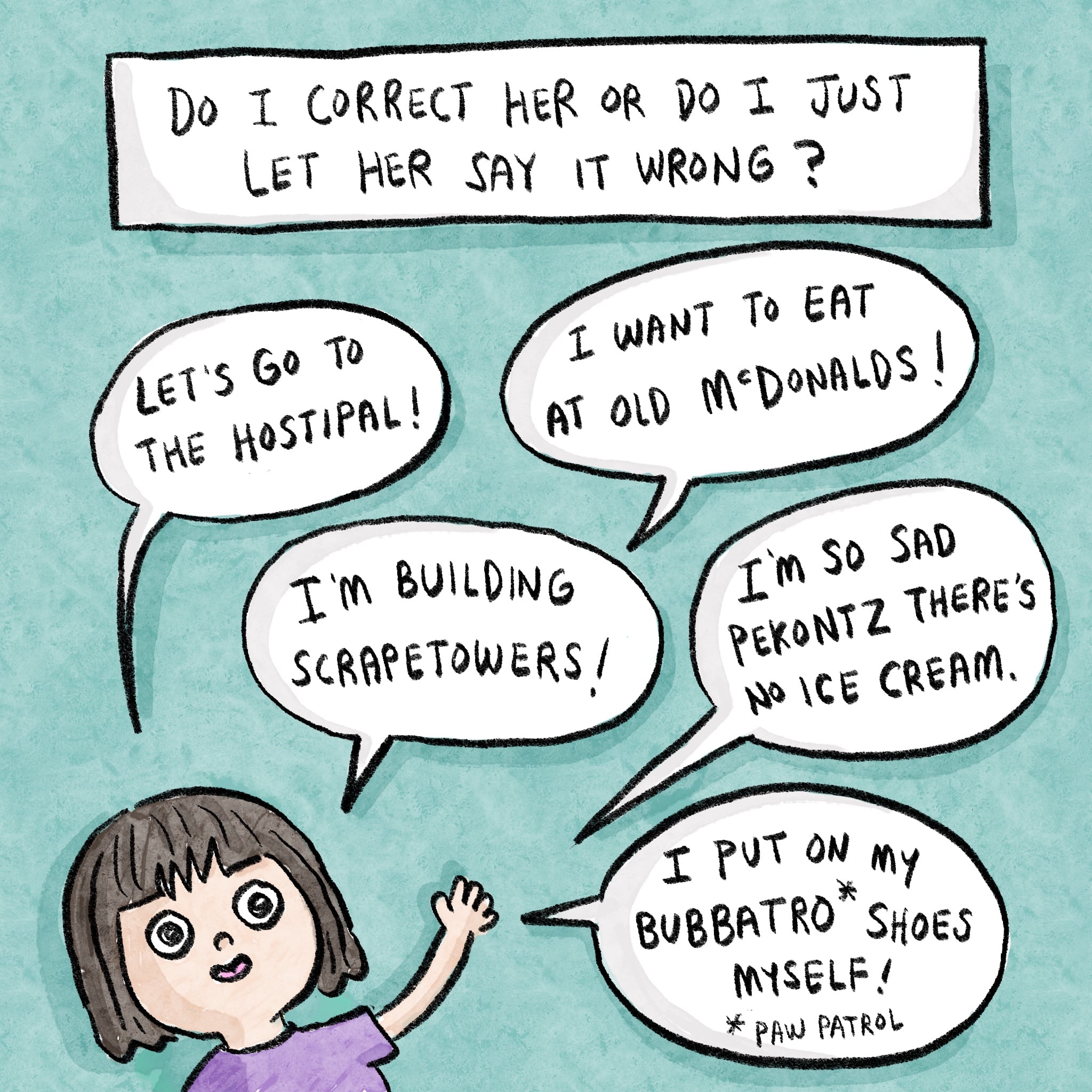
The "correcting or not" debate mentioned in the title refers to a concept in linguistics known as "recasting." Research suggests that explicit correction (e.g., telling a child "No, say ‘spaghetti,’ not ‘pasketti’") is often less effective than recasting, where the parent repeats the child’s sentence back with the correct pronunciation (e.g., "Yes, we are having spaghetti for dinner"). This method provides a model for the child without discouraging their communicative intent. Chan’s comic captures the emotional weight of this choice: the desire to foster proper development versus the desire to linger in a fleeting stage of the child’s life.
Chronology of Ruth Chan’s Contributions
To understand the impact of "Correcting or Not," it is necessary to examine the timeline of Chan’s engagement with her audience through Cup of Jo. Her work has historically mirrored the lifecycle of familial and personal growth:
- Early Contributions (2021-2022): Chan’s early work focused on foundational emotional experiences. In March 2022, she addressed the universal pain of losing a pet, followed by a July 2022 piece on the complexities of grief. These comics established her as an artist capable of handling sensitive subjects with a gentle, humorous touch.
- Mental Health Advocacy (May 2022): Chan published a significant piece regarding her journey with OCD, which was widely cited by readers as a vital contribution to de-stigmatizing mental health issues within the parenting community.
- The Motherhood Shift (2024-2025): Following the birth of her own child, Chan’s focus shifted toward the logistical and emotional realities of new parenthood. Her August 2024 piece, "Baby Wonder," and her February 2025 series on "Parenting Questions" documented the transition from an individual to a caregiver.
- Linguistic and Social Connection (2025-2026): By late 2025 and into 2026, Chan’s work began to focus on the communicative bond between parent and child. "Correcting or Not" (November 2026) represents the culmination of this period, focusing on the specific joy found in the imperfections of early speech.
Parental Responses and Community Engagement
The publication of "Correcting or Not" has elicited significant engagement from the Cup of Jo community, a group known for its high level of interaction. Within the first 24 hours of posting, the feature garnered numerous comments from parents sharing their own "babyisms"—unique family vocabularies that often persist long after a child has mastered standard English.
Psychologists suggest that these shared family languages serve an important social function. They act as "idioglossia" or "familect," strengthening the internal bond of the family unit. When parents choose not to correct a mispronunciation immediately, they are often making a subconscious decision to prioritize emotional connection over academic instruction. This sentiment is a recurring theme in Chan’s work, which often advocates for finding beauty in the "messiness" of domestic life.
Industry analysts in the digital media space note that content like Chan’s performs exceptionally well because it provides "micro-validations" for parents. In an era of high-pressure parenting and "perfectionist" social media feeds, the acknowledgment that a parent might intentionally allow a child to say "aminal" instead of "animal" because it is "too cute to fix" offers a reprieve from the rigors of modern educational expectations.
Broader Implications for Digital Storytelling
The success of "Correcting or Not" and Chan’s broader body of work indicates a shift in how lifestyle platforms approach parenting content. There is an increasing move away from prescriptive "how-to" articles toward narrative-driven, artistic reflections. This trend is mirrored in the work of other contributors mentioned in the publication’s ecosystem, such as Grace Farris and Brooke Barker.

Grace Farris, for instance, utilizes a "flowchart" style of illustration to dissect the complexities of "tween" love languages, while Brooke Barker uses animal facts to draw parallels to human behavior. Together with Chan, these illustrators are creating a new grammar for parenting media—one that relies on visual shorthand and emotional resonance rather than authoritarian advice.
From a commercial perspective, the integration of high-quality illustration into lifestyle blogs has proven to be a durable strategy for maintaining audience loyalty. As AI-generated content becomes more prevalent, the distinct, hand-drawn style and personal voice of artists like Ruth Chan provide a level of authenticity that readers increasingly crave. The "Correcting or Not" feature is not merely a comic about kids’ speech; it is a testament to the value of human-centric storytelling in a digital age.
Conclusion and Future Outlook
As Ruth Chan continues her residency with Cup of Jo, her work is expected to follow the developmental trajectory of her subjects. If her past work is an indicator, future installments may explore the transition into formal schooling, the evolution of sibling dynamics, or the challenges of maintaining a creative identity while raising a family.

"Correcting or Not" stands as a significant marker in this journey. It captures a specific, ephemeral moment in the life of a family—the point where language is still a playground rather than a set of rules. By documenting these moments, Chan and Cup of Jo provide a digital archive of the modern parenting experience, one that acknowledges the science of development while celebrating the irrational, heart-led choices that define the bond between parent and child.
In the broader context of 2026 media trends, this piece reinforces the importance of "slow media"—content that encourages readers to pause, reflect, and find common ground in the small, often overlooked details of daily life. Whether a parent chooses to correct a child’s speech or let the "cute" version linger for a few more months, Chan’s work suggests that the most important thing is the connection being built through the attempt to communicate.
