

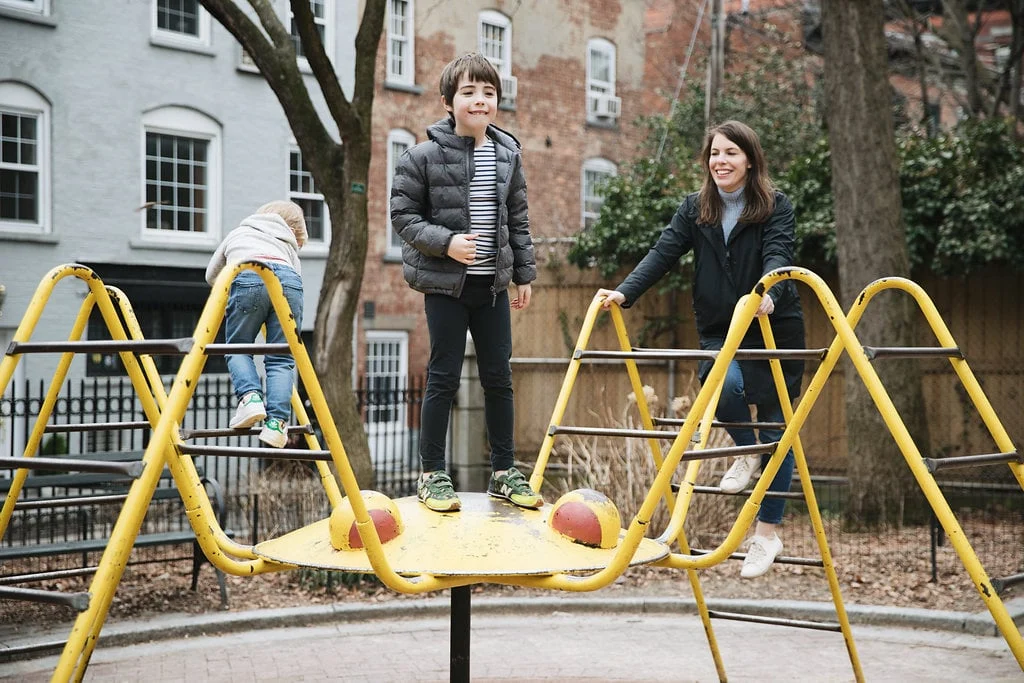
The landscape of modern digital discourse surrounding domestic life has recently shifted toward the exploration of "peak parenting moments," a term used to describe the rare instances of harmonious connection that contrast with the daily logistical and emotional challenges of child-rearing. This phenomenon was recently highlighted by Joanna Goddard, the founder of the influential lifestyle platform Cup of Jo, who shared a narrative regarding the psychological and social dynamics of parental play. By documenting a specific instance of "hiding in plain sight" during a game of hide-and-seek, Goddard catalyzed a broader discussion on the importance of spontaneity, the cognitive development of children, and the role of community in the parenting experience.
The Concept of the Peak Parenting Moment
In the contemporary sociological framework, parenting is often characterized by its "low-lows" and "high-highs." Goddard’s recent editorial contribution explores this dichotomy, contrasting the high-stress environments—such as managing infants on long-haul flights or navigating the emotional volatility of the adolescent years—with what she terms "pinch-myself" moments. These moments are defined as instances where the reality of parenthood aligns perfectly with the idealized expectations of the role.
The specific anecdote shared by Goddard involved a neighborhood playground setting where she engaged her children in a game of hide-and-seek. After exhausting traditional concealment locations, Goddard opted for a psychological strategy: blending into a group of conversing adults. By entering the adult social circle and requesting to join their conversation as a means of concealment, she utilized a tactic that exploited the children’s cognitive development and their categorical perception of social groups. The children, while searching diligently behind physical obstacles like benches and slides, failed to identify their mother within the "grown-up" group, illustrating a fascinating aspect of selective attention in pediatric psychology.
The Psychological Framework of Playful Engagement
The effectiveness of Goddard’s "hiding in plain sight" tactic can be analyzed through the lens of developmental psychology. According to researchers in the field of cognitive development, children often operate under "schema-based" processing. In this instance, the children’s schema for a "hiding spot" likely included inanimate objects or natural features like trees and bushes. Because they categorized the group of adults as a separate social entity—a background environment rather than a set of individual participants in their game—they experienced a form of "inattentional blindness."
This type of play is more than mere entertainment; it serves as a critical component of child development. Engaging in hide-and-seek aids in the development of object permanence and spatial awareness. Furthermore, when a parent subverts the rules or expectations of the game in a playful manner, it encourages "theory of mind"—the ability of a child to understand that others have perspectives, intentions, and strategies different from their own.
Chronology of Digital Parenting Discourse
The discussion initiated by Goddard is part of a decade-long evolution in how parenting is presented online. The timeline of this evolution suggests a move away from the "curated perfection" of the early 2010s toward a more nuanced "authentic realism."
- 2010–2014: The Rise of the Aesthetic Parent. Digital platforms were dominated by highly stylized imagery of domestic life, often omitting the struggles of daily routines.
- 2015–2019: The Vulnerability Shift. Influencers began sharing the "messy" side of parenting, focusing on sleep deprivation, postpartum challenges, and the "mental load."
- 2020–Present: The Pursuit of Joyful Presence. In the post-pandemic era, there has been a resurgence in documenting "micro-joys." The focus has shifted to finding sustainable happiness within the chaos, as evidenced by the high engagement with Goddard’s recent prompt.
Goddard’s post, which garnered over 260 comments within a short timeframe, serves as a metric for the current public appetite for narratives that validate both the difficulty and the magic of child-rearing.
Supporting Data on Parental Well-being and Social Connection
Data from the Pew Research Center suggests that while a majority of parents find the role rewarding, approximately 62% of parents report that the task is "somewhat" or "very" difficult. The "joy gap" is a recognized phenomenon where the stress of logistics often overshadows the emotional benefits of parenting.

Interactions like the one described at the playground—where a parent engages with both their children and their peers—act as a buffer against parental burnout. Sociological studies on "third places" (social surroundings separate from the two usual social environments of home and the workplace) suggest that playgrounds and neighborhood parks serve as vital communal hubs. Goddard’s ability to "walk up to the adults" and be "taken right in" underscores the importance of informal social support networks in urban and suburban environments.
Official Responses and Community Engagement
While there are no "official" governmental statements on specific hide-and-seek tactics, child development experts and family therapists frequently advocate for the types of interactions Goddard described. Dr. Lucy Kalanithi, a physician and Goddard’s sister, has often engaged in public discourse regarding the intersection of family life, resilience, and emotional health. The dialogue between the sisters highlights a shared professional and personal interest in the "stuff" that constitutes a meaningful life.
The community response to the narrative has been overwhelmingly positive. Readers have shared their own "peak moments," which range from the linguistic milestones of toddlers to the quiet, shared confidences of older children. These anecdotes serve as a form of "social proof," reinforcing the idea that while the "world may be coming down around you," these fleeting moments of connection provide the necessary emotional capital to continue the demanding work of parenting.
Broader Impact and Implications for Modern Families
The implications of this discourse extend beyond simple storytelling. They point toward a broader cultural shift in how we value parental presence. In an era of high digital distraction, the act of being "in the moment"—even if that moment involves hiding in a crowd to trick one’s children—is seen as a radical act of engagement.
Furthermore, the "hide-and-seek" anecdote serves as a metaphor for the modern parental identity. Parents are often required to "hide in plain sight," maintaining their individual identities (the "grown-up" chatting about adult topics) while simultaneously being fully immersed in the world of their children. The ability to navigate these two spheres fluidly is a hallmark of contemporary parental resilience.
Analysis of the "Hiding in Plain Sight" Phenomenon
From a tactical perspective, the success of Goddard’s hiding spot reveals much about the "invisible" nature of adults in a child’s world. To a child, a group of adults is often perceived as a monolithic barrier or a background element of the environment. By leveraging this perception, Goddard demonstrated a form of "social camouflage."
This incident also highlights the role of laughter and humor in the parent-child bond. The "epic hiding spot" mentioned in the original text—referencing a child pretending to be a coat rack—further illustrates the creative cognitive leaps that occur during play. When parents and children engage in these high-level games of wit and imagination, they are building a shared language of humor that experts suggest can lead to better emotional regulation and lower rates of conflict during the teenage years.
Conclusion
The narrative shared by Joanna Goddard is more than a lighthearted playground story; it is a case study in the power of playful presence and the importance of community validation. As modern parents continue to navigate an increasingly complex social and digital landscape, the focus on "peak moments" provides a necessary counter-narrative to the prevailing themes of burnout and stress. By identifying and sharing these instances of "magic," parents are not only documenting their personal histories but also contributing to a collective understanding of what it means to raise children in the 21st century. The high level of engagement with this topic suggests that the "stuff" of parenting—the laughter, the clever hiding spots, and the shared bedtime stories—remains the most valued currency in the economy of family life.
