

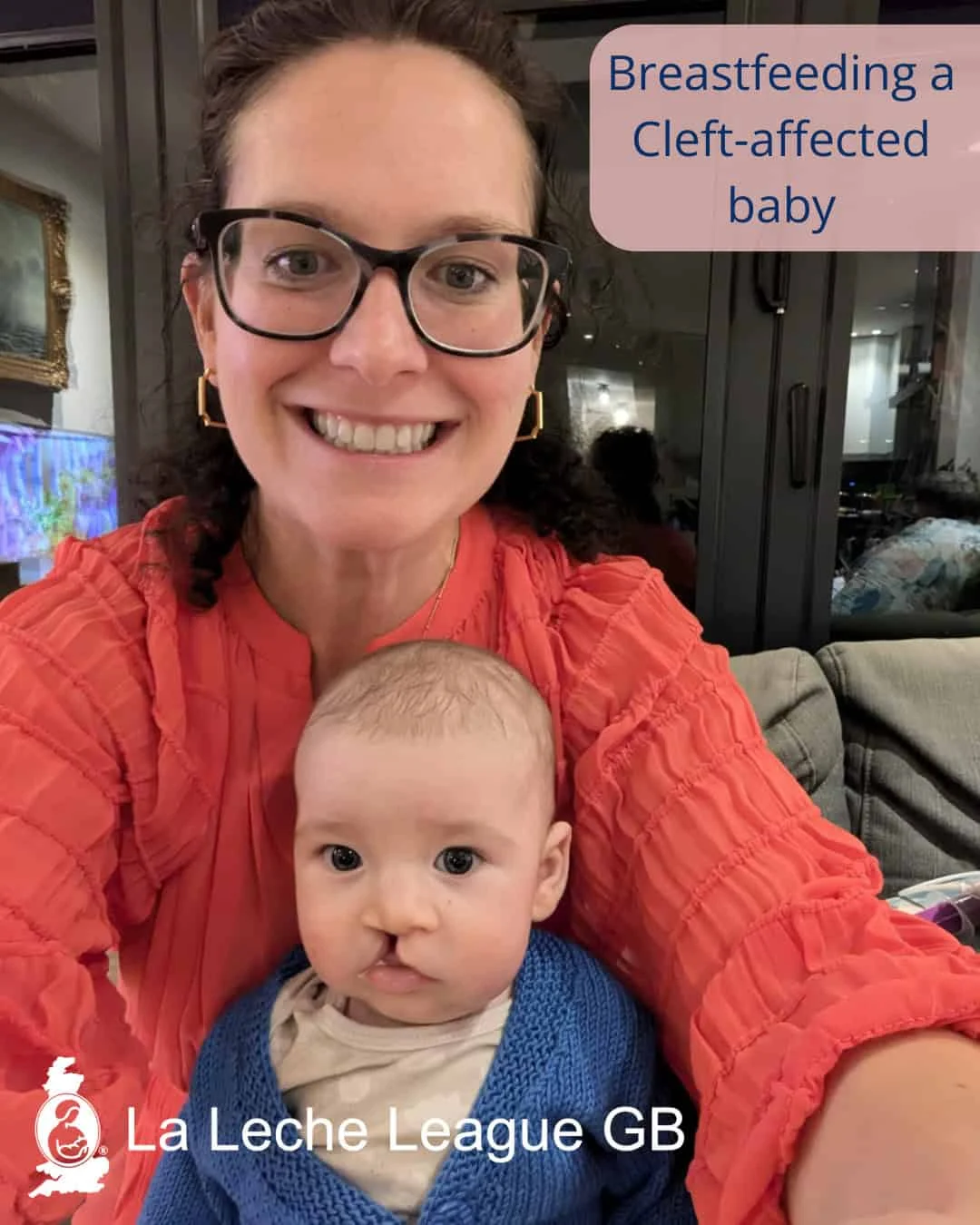
The path to successful breastfeeding, often celebrated as a natural bond, can present unforeseen complexities, particularly when an infant is born with a medical condition such as a cleft lip and palate. The narrative of one mother, Sarah Muir-Little, and her son, Russell, stands as a testament to determination, adaptation, and the profound impact of informed support in navigating these challenges. Their journey, spanning from an antenatal diagnosis to successful direct breastfeeding, offers valuable insights into the resilience required and the innovative solutions employed by families facing similar circumstances.
The Antenatal Diagnosis: A Pivotal Moment
The initial six weeks of Sarah Muir-Little’s pregnancy with Russell had been overshadowed by family illness, leaving little room for the usual excitement of impending parenthood. It was during the routine 20-week scan, following the joyous reveal that they were expecting a boy, that the sonographer delivered an unexpected query: “Have you heard of a cleft lip?” This question marked the beginning of a challenging but ultimately triumphant journey. A subsequent consultation with a midwife delivered the initial, disheartening news: Russell’s cleft lip and palate would likely preclude breastfeeding. This pronouncement, striking at the heart of Sarah’s previous positive breastfeeding experience with her toddler, ignited a "battle" for the maternal bond she deeply cherished.
The emotional weight of such a diagnosis is profound, often plunging expectant parents into a state of shock, grief, and uncertainty. For Sarah, who had only recently weaned her toddler in anticipation of nursing her new baby, the prospect of losing this fundamental aspect of motherhood was "extremely upsetting." It underscored a common sentiment among mothers who view breastfeeding as integral to their identity and connection with their child. The initial blanket statement regarding the impossibility of breastfeeding, though well-intentioned, often fails to account for the nuances and potential for adapted feeding journeys.
Understanding Cleft Lip and Palate
Cleft lip and palate are among the most common congenital conditions, affecting approximately 1 in 700 babies globally. In the UK, this statistic remains largely consistent. These conditions occur when the structures forming a baby’s upper lip or the roof of their mouth (palate) do not fully fuse during early fetal development. A cleft lip can range from a small notch to a complete separation extending into the nose, while a cleft palate can involve the soft palate, the hard palate, or both, creating an opening between the mouth and the nasal cavity.
The distinction between cleft lip and cleft palate is critical in understanding feeding challenges. Babies born with only a cleft lip often retain the ability to breastfeed, albeit sometimes with specific positioning adjustments to help achieve a seal. However, a cleft palate presents a more significant hurdle. The presence of an opening in the roof of the mouth prevents the baby from creating the necessary suction pressure to effectively draw milk from the breast. This lack of suction is the primary reason why direct breastfeeding is often not feasible until surgical repair of the palate has taken place. Surgical intervention for cleft conditions typically involves a series of operations: lip repair usually occurs around 3-6 months of age, followed by palate repair around 9-12 months, with potential for further corrective surgeries later in childhood. Organisations like the Cleft Lip and Palate Association (CLAPA) in the UK play a vital role in providing comprehensive support, information, and advocacy for families affected by cleft.
Navigating the Breastfeeding Landscape with Cleft
The initial consultation with a specialist nurse offered a glimmer of hope, clarifying that a "sort of breastfeeding journey" might still be possible, though it would undoubtedly differ from her previous experience. The uncertainty regarding the extent of palate involvement until Russell’s birth added another layer of anxiety. This period of waiting prompted Sarah to immerse herself in research, seeking out examples of successful breastfeeding post-palate surgery. Her investigation led her to resources from CLAPA and La Leche League, organisations renowned for their expertise in supporting families with breastfeeding challenges.
Her research, though yielding disappointingly few examples, highlighted two crucial factors for potential success: maintaining a robust milk supply and finding an effective method for milk delivery while the baby was at the breast. For Sarah, ensuring a sufficient milk supply was within her control, drawing on her previous experience of successfully nursing her toddler. She acknowledged the need for improved pumping knowledge, having previously struggled with expressing milk effectively. This proactive approach to milk production is a cornerstone of success for mothers of cleft-affected infants, often involving diligent pumping from birth to establish and maintain supply.
Research and Preparation: Paving a Unique Path
The challenge of milk delivery without adequate suction led Sarah to explore various methods, including direct hand expressing into the baby’s mouth and the use of nursing supplementers. The latter, designed to deliver milk via a thin tube while the baby is latched to the breast, emerged as the most practical long-term solution. The UK market offered two primary nursing supplementer systems suitable for cleft babies. One system relies on gravity for milk flow, often resulting in a slow delivery, while the other features a squeezable bottle for controlled milk delivery. Sarah acquired both, intending to experiment and determine the most effective for Russell.
However, practical trials with a doll, simulating the "dancer hand hold" often recommended for babies with feeding difficulties (where the index finger and thumb support the baby’s chin), proved challenging. The combined act of holding a baby, managing a supplementer bottle, and ensuring proper latch felt "impossible." This early frustration underscored the gap between theoretical advice and the complex realities of hands-on infant feeding, particularly with the added demands of a medical condition. The dancer hold, while beneficial for improving stability and milk transfer for babies with low muscle tone or prematurity, requires considerable dexterity and practice.
Russell’s Arrival and the Initial Weeks
Upon Russell’s arrival, the immediate focus shifted to feeding. Expressed colostrum, the nutrient-rich "first milk," was administered via a syringe alongside a finger in his mouth to encourage rudimentary sucking reflexes. This transitional period allowed Sarah’s milk supply to increase while preparing for the planned supplementer feeding at the breast. A serendipitous discovery occurred when some wrongly ordered syringes, though unsuitable for direct feeding, perfectly fitted the supplementer tube. This unexpected compatibility, coupled with the kind assistance of the midwife team in sourcing larger, adaptable syringes with screw-on caps that could be modified, highlighted the resourcefulness often required in these situations. It also underscores the importance of adhering to safety guidelines for any modified feeding tools, ensuring caps are removed to prevent choking hazards and feeding rates are carefully monitored.

The standard advice for supplementer use—either inserting the tube after latch or taping it to the breast pre-latch—presented its own set of practical difficulties. Russell’s fragile latch, due to the absence of suction, made inserting the tube post-latch unfeasible. Taping the tube to the breast prior to latching, while a viable option, introduced the challenge of managing a "long section of tube flapping around" into a tiny newborn mouth. Sarah’s innovative solution involved taping the tube very close to the nipple, necessitating a tape strong enough to withstand moisture. This experimentation with different tapes and positions often resulted in distress for both mother and baby, until a functional, though imperfect, system was established. The compromise, unfortunately, often meant a degree of milk loss due to the tape interfering with the latch.
Mastering the Feed: Technique and Tenacity
The initial weeks were marked by persistent struggles with the "dancer hold," leading to stress for both Sarah and Russell. Achieving the correct position and maintaining a consistent latch proved elusive, with Russell frequently bobbing on and off the breast. Observing that Russell calmed and fed effectively when direct hand-expressed milk was offered on the non-taped breast confirmed his hunger, directing Sarah’s focus towards optimizing the supplementer feed.
Drawing on advice from a specialist at Great Ormond Street Children’s Hospital, a renowned centre for pediatric care, Sarah made the pragmatic decision to revert to the cradle hold, a position she found more natural and familiar from feeding her toddler. While this sometimes resulted in more milk spilling from the side of Russell’s mouth, the priority shifted to achieving calm and relaxed feeds for both. Conventional advice regarding plugging the cleft with the breast or keeping the cleft side up for milk retention was secondary to fostering a peaceful feeding environment and a deep latch. These early weeks were physically demanding, with both mother and baby frequently wet from spilled milk, but Sarah’s determination remained unwavering, believing the effort was "worth it."
Over time, their feeding technique evolved. Sarah learned to pace the milk delivery via the syringe, pausing when Russell paused, and adapting the flow to prevent him from becoming overwhelmed or frustrated. This intuitive understanding of Russell’s feeding cues was crucial. She observed that refilling the syringe while he was still at the breast would upset him if the milk flow ceased, leading her to either put him down or adjust her hold to manage his expectations.
The unique nature of their feeding method sometimes elicited comments from others. A friend, initially questioning the extensive effort, understood the profound connection upon witnessing their feeds, affirming, "I was already breastfeeding." Another friend, observing them in a restaurant, expressed relief that the worries about breastfeeding "didn’t come to fruition." These affirmations provided immense emotional validation for Sarah. However, not all feedback was positive. A paediatrician’s comment, suggesting their method wasn’t recommended in favour of "safe and effective" specialist cleft bottles, was particularly hurtful. Such remarks from healthcare professionals, implying an inferior or unsafe practice, can significantly undermine parental confidence and require immense resilience to "brush off," especially when the parent is convinced their approach is effective and baby is thriving. Russell’s consistent weight gain and enjoyment of feeding at the breast were Sarah’s ultimate proof of success, reinforcing her belief in their unique journey.
Evolution of Feeding and Surgical Milestones
As Russell grew, his needs and preferences changed. Around ten weeks of age, the tape used to secure the supplementer tube became increasingly bothersome. This prompted another adaptation: initially taping the tube further from the nipple, and eventually, eliminating tape altogether. While this demanded greater coordination, the established rhythm and mutual understanding between mother and son made the untaped method manageable. There were inevitable setbacks, moments when Russell would become upset or refuse to feed, prompting Sarah to distinguish between typical infant feeding challenges and issues related specifically to his cleft. Often, the cause was universal – such as the common three-month distraction phase, where babies become easily diverted during feeds.
The journey reached a significant milestone with Russell’s surgery to reconstruct his lip and hard palate. Post-operatively, as the effects of morphine subsided, Russell initially favored bottle feeds, possibly associating bottles with the comfort of those difficult days. However, he soon rejected bottles in favour of the supplementer, perhaps finding it less effort or simply preferring the closeness of the breast. This period, requiring Sarah to express milk and manage all feeds, was exhausting but reinforced their bond and progress. The unwavering support of her husband, handling bottle-washing, night feeds during pumping sessions, and providing crucial reassurance, was an indispensable element of their shared success. Their journey underscored that every day of using the supplementer was a bonus for Russell’s health and their connection, making their efforts inherently worthwhile.
The Triumph of Direct Breastfeeding
The ultimate triumph arrived just before Russell’s first birthday, following his palate surgery. Although the surgeon advised avoiding suction for a month post-operation, Sarah almost immediately noticed Russell attempting to suck. This innate drive, suppressed by the anatomical realities of his cleft palate, began to emerge. Four weeks later, a new developmental leap: Russell discovered how to use a straw. Remarkably, the very next day, he began to suck and swallow directly at the breast.
This was a gradual transition. The supplementer, a constant companion for fifteen months, was progressively used less and less as Russell learned to extract more milk independently. This momentous shift allowed Sarah to finally cease daily pumping, marking the end of a long and demanding phase. While Russell’s latch initially wasn’t "typical," it was effective, and he was content. At the time of this update, Russell continues to breastfeed once or twice a day, a profound achievement that once felt impossible. Their journey, a testament to persistence and adaptive care, continues to evolve, embracing the unexpected turns with grace and gratitude.
Broader Implications and Advocacy
Russell’s story transcends a personal anecdote; it is a powerful illustration of the broader implications for families navigating the complexities of infant feeding with congenital conditions. It highlights the critical need for nuanced, informed, and empowering guidance from healthcare professionals, moving beyond categorical statements to embrace adaptive and family-centred approaches. The initial advice that breastfeeding would be impossible, though common, risks disempowering parents and depriving them of a deeply desired experience.
The journey underscores the invaluable role of multidisciplinary cleft teams, who ideally should provide comprehensive feeding support from antenatal diagnosis through to post-surgical recovery. It also champions parental advocacy and the importance of seeking information from reputable sources like CLAPA and La Leche League, which offer evidence-based strategies and peer support. The benefits of breastfeeding for cleft-affected babies extend beyond nutrition, potentially aiding oral motor development, providing immune protection, and fostering a unique bond between mother and child, even when adapted methods are employed. Sarah’s resilience in the face of discouraging comments, particularly from some medical professionals, serves as an inspiration for other parents to trust their instincts and celebrate their unique feeding journeys. Russell’s Breastfeeding Journey stands as a compelling testament to the power of love, determination, and innovative adaptation in achieving a fulfilling breastfeeding experience against significant odds.
