

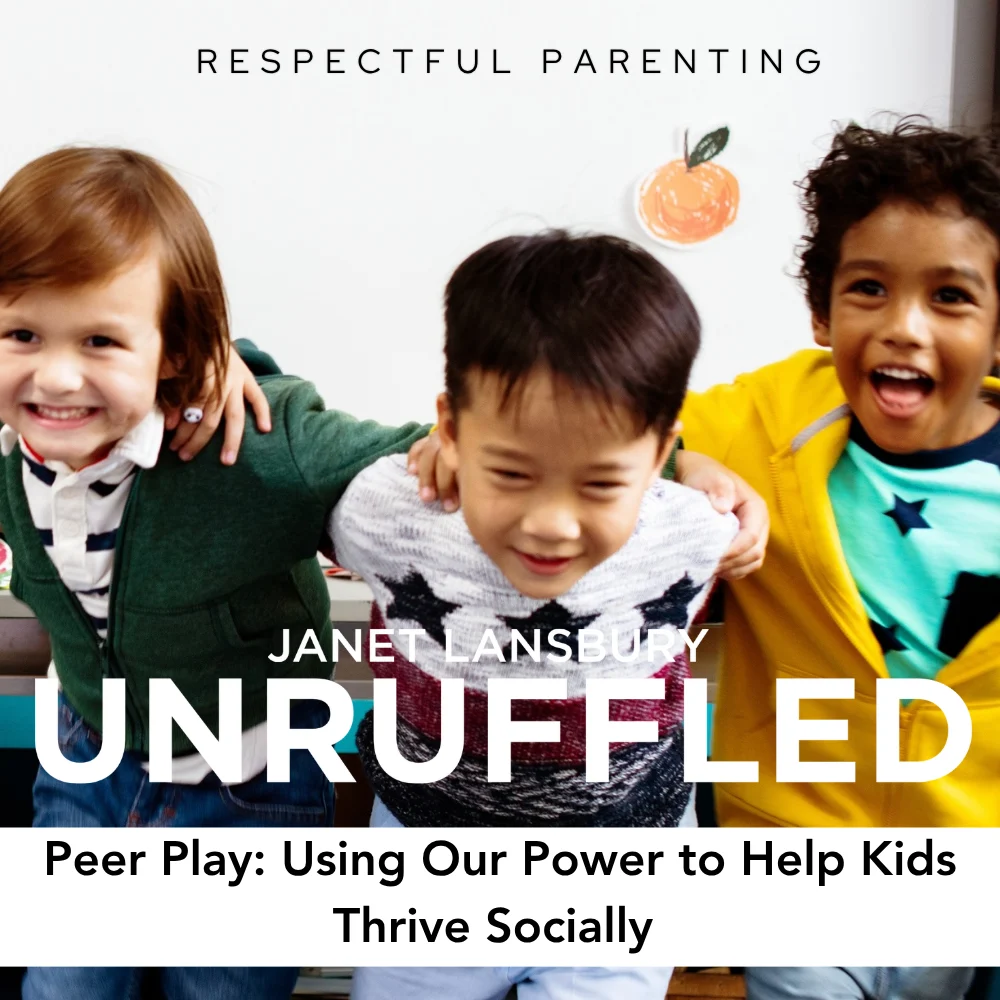
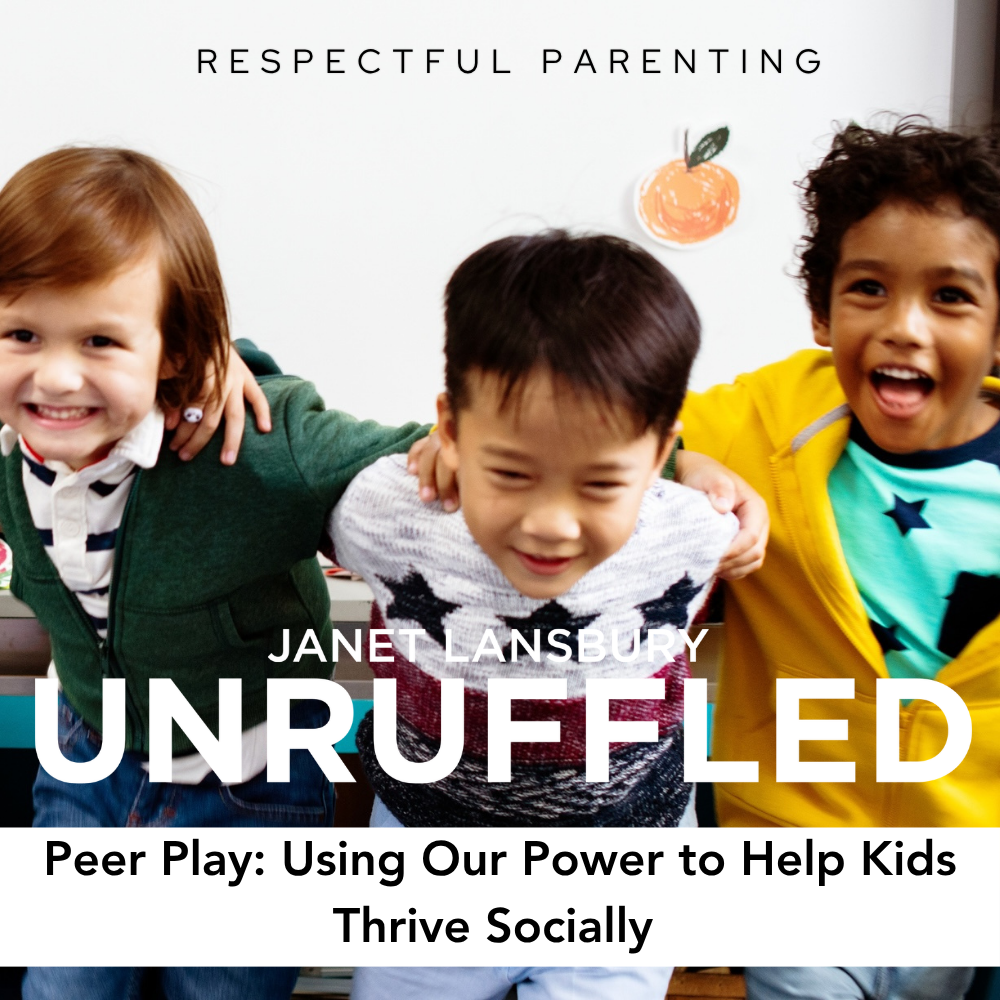
A growing concern among parents of young children centers on navigating complex social dynamics, from rigid play directives to playground exclusion. Child development expert Janet Lansbury, in a recent podcast episode titled "Peer Play: Using Our Power to Help Kids Thrive Socially," addresses three distinct parental inquiries that highlight these challenges. Her insights underscore the significant, yet often overlooked, influence parents wield in shaping their children’s social competence, emphasizing the roles of boundaries and trust in fostering confidence and resilience.
Understanding the Nuances of Early Social Development
Lansbury’s discussion stems from a series of parent submissions detailing common, yet often perplexing, social hurdles faced by preschoolers. One parent describes a four-year-old whose imaginative pretend play devolves into frustration when friends don’t adhere to her exact instructions. Another parent seeks guidance on supporting a reserved three-year-old’s comfort level around others. A third inquiry addresses how respectful parenting approaches situations like exclusion on the playground, which some parents label as bullying.
The common thread, Lansbury notes, is the parental desire to help children succeed in social interactions and forge meaningful connections. She posits that while parental modeling of kindness, generosity, and graciousness forms a foundational element of social learning, true social skill development is more nuanced and experiential. It’s not merely about direct instruction but about how parents navigate boundaries and, crucially, how they trust their child’s individual developmental process.
The "Pretend Play Disaster": When Imagination Meets Rigidity
The first case study, "Help! Pretend play disaster," features a parent of a four-year-old deeply immersed in imaginative play. The child, who lives a significant portion of her day in character, exhibits a highly directive style of play. She dictates the roles and dialogue for her playmates, becoming upset if even a single word deviates from her script. This rigidity, initially managed within the family, has begun to negatively impact her friendships.
"She gets so angry or sad when friends don’t say exactly what she’s asking them to," the parent writes. "Sometimes she can move on and play their games, but very often this ends in tears." Despite a year of allowing the dynamic to unfold, the issue persists, leaving the parent questioning her approach.
Lansbury’s analysis centers on the parent’s role in this scenario, suggesting that the child’s demanding play style may be a signal that she is seeking boundaries from her parents, not necessarily more involvement in her elaborate games. She argues that parents can inadvertently empower children to exert excessive control when they themselves become overly accommodating or strive too hard to please.
"The main thing I want to help this parent understand is how important her boundaries are in setting her child up for success with other children," Lansbury states. She elaborates that when parents feel uncomfortable or unable to "please" their child during play, it’s a strong indicator that a boundary needs to be established. This discomfort, she suggests, is not about blaming the parent but about recognizing an opportunity to model healthy self-care and relationship dynamics.
Data Point: Research from the American Academy of Pediatrics highlights that by age four, children are developing more complex social play, including cooperative play and imaginative scenarios. However, they are also beginning to test boundaries and assert their will, which can manifest as rigid adherence to rules in play.
Lansbury advises parents not to see their role as constantly playing with their child in their elaborate games, but rather to provide focused attention and a safe environment. She suggests that the child’s exacting demands might be a way to process underlying feelings, possibly related to sibling rivalry (especially with a one-year-old sibling) or the natural individuation process at age four. By refusing to engage in the overly controlled play, parents allow the child to experience frustration and anger, which can be a healthy release of pent-up emotions.
Navigating Playground Exclusion and the "Bullying" Label
The second parent inquiry, "How does respectful parenting approach bullying?," presents a scenario where a four-and-a-half-year-old is frequently excluded by her peers at the playground. The other girls, who are a year older and, as the parent notes, "a year ahead of her in preschool," will pretend she is a monster, run away, or simply leave her out of their games. While one-on-one play is positive, the group dynamic proves challenging.
The parent generally favors allowing children to resolve their own conflicts and offers her daughter a space to vent and explore alternatives. However, witnessing the consistent exclusion and the interventions of other parents, including one father who insisted his daughter play with the inquiring parent’s child, prompts her to seek advice on more respectful approaches.
Lansbury begins by challenging the "bullying" label, suggesting it’s often misapplied to young children’s social interactions. She argues that while exclusion is painful, it is distinct from the deliberate and pervasive targeting characteristic of true bullying. She emphasizes that the age and developmental differences between the children are significant factors, making it natural for the older girls to have a different play style that might exclude younger children.
"I would try not to think of it that way and to cast my child as a victim," Lansbury advises. Instead, she advocates for trusting the child to navigate these social challenges, with parental support focused on listening and validating feelings without trying to "fix" the situation.
Background Context: The concept of "bullying" in early childhood is a subject of ongoing discussion among developmental psychologists. While overt aggression and persistent negative interactions can occur, the nuanced social dynamics of preschool often involve exclusion, testing boundaries, and developing social hierarchies, which may not always fit the clinical definition of bullying.
Lansbury questions the intervention of the other father, while acknowledging his good intentions. She posits that adult intervention, even to ensure inclusion, can undermine a child’s ability to develop her own coping mechanisms and social strategies. Instead, she suggests offering the child agency by asking if she wants to engage in a situation where exclusion is likely. This empowers the child to make informed choices and build confidence through her own navigation, even if it means experiencing rejection.
Broader Impact: The increasing awareness of social-emotional learning (SEL) in early childhood education emphasizes the importance of teaching children skills like empathy, conflict resolution, and self-awareness. However, Lansbury’s perspective highlights that these skills are not solely taught through direct instruction but are profoundly shaped by how adults respond to children’s social experiences, particularly during moments of difficulty.
Fostering Comfort in Reserved Children
The third, briefer inquiry from Instagram asks about "Helping a reserved three-year-old be comfortable around other people?" Lansbury’s response is consistent with her approach to the other scenarios: trust. She argues that pushing or coaxing a reserved child to be comfortable is counterproductive.
"The answer is in trusting them to find their own way to feeling comfortable around other people by not pushing them, by not coaxing them to be comfortable," she states. She advises parents to provide a secure base, allowing the child to stay close if they wish, but maintaining their own presence without becoming a constant shadow. The key is to establish reasonable boundaries for the parent’s own engagement while trusting the child’s developmental timeline.
Timeline/Chronology: The podcast episode, "Peer Play. Using Our Power to Help Kids Thrive Socially," was released on June 16, 2026. The parent inquiries likely represent ongoing situations that have been developing over a period of time, potentially months or even a year in the case of the "Pretend Play Disaster."
Lansbury reiterates that children learn best on their own terms. When adults intervene too readily, whether to force inclusion or to rush a child’s social integration, they can inadvertently hinder the child’s natural development and confidence-building process.
The Power of Parental Boundaries and Trust
Across all three scenarios, Lansbury emphasizes that parents possess a significant, yet often underestimated, power to influence their children’s social development. This power lies not in direct control or intervention, but in two fundamental approaches:
- Establishing Reasonable Boundaries: For the child with rigid play rules, this means parents setting limits on their own participation and refusing to be dictated to. This models healthy self-respect and teaches the child that not everyone will cater to their every whim, a crucial lesson for peer relationships.
- Trusting the Child’s Process: For the child experiencing exclusion and the reserved child, this means trusting their individual pace and capacity to navigate social situations. It involves allowing them to experience feelings of discomfort, rejection, or shyness without feeling the need to "fix" it.
Lansbury acknowledges that these approaches can be challenging for parents, especially when they may not have experienced such supportive parenting themselves. She encourages parents to approach these situations with self-compassion and an openness to learning.
Analysis of Implications: The implications of Lansbury’s advice are far-reaching. By reframing parental roles from active interveners to supportive observers and boundary-setters, parents can empower children to develop intrinsic social skills, resilience, and a stronger sense of self. This approach not only benefits the child’s social interactions but also strengthens the parent-child relationship by fostering mutual respect and trust. The emphasis on not projecting personal anxieties or past experiences onto children’s current social challenges is also a key takeaway.
Ultimately, Lansbury’s message is one of empowerment for parents. By understanding and strategically applying their influence through boundaries and trust, they can effectively support their children in thriving socially, fostering confidence, resilience, and healthy relationships throughout their lives. The challenges presented by young children’s social interactions, while sometimes difficult, offer invaluable opportunities for growth, both for the child and for the parent.
