

Recent discourse among caregivers and child development experts has shed new light on the complex intersection of domestic logistics, maternal mental health, and the developmental milestones associated with ordinary household errands. For many families, particularly those raising multiples such as twins or triplets, the simple act of grocery shopping represents a significant shift from a state of "survival mode" to one of active community engagement. This transition, often spanning several years, reveals much about the evolving nature of modern parenting, the psychological toll of early childhood care, and the societal structures that support or hinder young families.
The logistical challenges of navigating retail environments with multiple children of the same age are profound. According to data from the National Center for Health Statistics, while the twin birth rate in the United States has seen a slight decline from its peak in 2014, multiples still account for approximately 31 out of every 1,000 live births. For these families, the physical requirements of a grocery outing often necessitate a level of strategic planning akin to a major operation. Parents report the necessity of utilizing multiple shopping carts—one to house the children and another for the provisions—or relying on specialized equipment like double-seated carts and ergonomic baby carriers to manage the physical load.
The Chronology of Parental Errands: From Isolation to Integration
The progression of how parents manage household errands typically follows a distinct chronological arc influenced by the age of the children and the prevailing public health climate. During the infancy and toddler stages, many parents of multiples describe a period of "retail isolation." This phase is characterized by a reliance on grocery delivery services and curbside pickup, a trend that was significantly accelerated by the COVID-19 pandemic. For children born between 2017 and 2022, the grocery store was often a late-stage introduction to the world, leading to a sense of "sensory overload" when they finally entered these environments as older toddlers.
As children reach the age of three or four, the "survival mode" of the early years begins to give way to what experts call "socialization errands." During this period, parents begin to reintroduce children to the retail environment, though often with significant trepidation. The "split" strategy has emerged as a popular method for managing this transition. In this model, two caregivers divide the children and the shopping list, allowing for one-on-one time that is otherwise rare in households with multiples. This tactical separation serves a dual purpose: it reduces the sensory input and potential for behavioral "cascading"—where one child’s distress triggers the others—and it allows for focused developmental interaction between the parent and a single child.
By the time children reach school age, around seven to nine years old, the grocery store often transforms from a site of stress to an enjoyable shared activity. Parents of older multiples frequently report that taking a single child on an errand feels like a "vacation" or a "spa day" compared to the high-intensity management required during the toddler years. This shift marks a significant milestone in parental recovery from the physiological and psychological demands of early childhood care.
The Psychological Landscape: Anxiety and the Singleton Vacation
The psychological impact of public parenting is a critical component of the modern caregiving experience. For many mothers, the grocery store serves as a primary site of social interaction, but it can also be a source of significant anxiety. Postpartum Anxiety (PPA) is estimated to affect approximately 10% to 15% of new mothers, often manifesting as an intense fear of leaving the child or a paralyzing sense of overwhelm in public spaces.
Accounts from the parenting community highlight a phenomenon known as "separation anxiety in reverse," where the parent feels an intense, physical distress when attempting to shop without their child for the first time. This "brain fog" or feeling of being "alien" in a familiar environment is often exacerbated by chronic sleep deprivation. Clinical psychologists note that the transition from being "intertwined" with an infant to functioning as an independent adult in a retail setting requires a period of neurological and emotional adjustment.
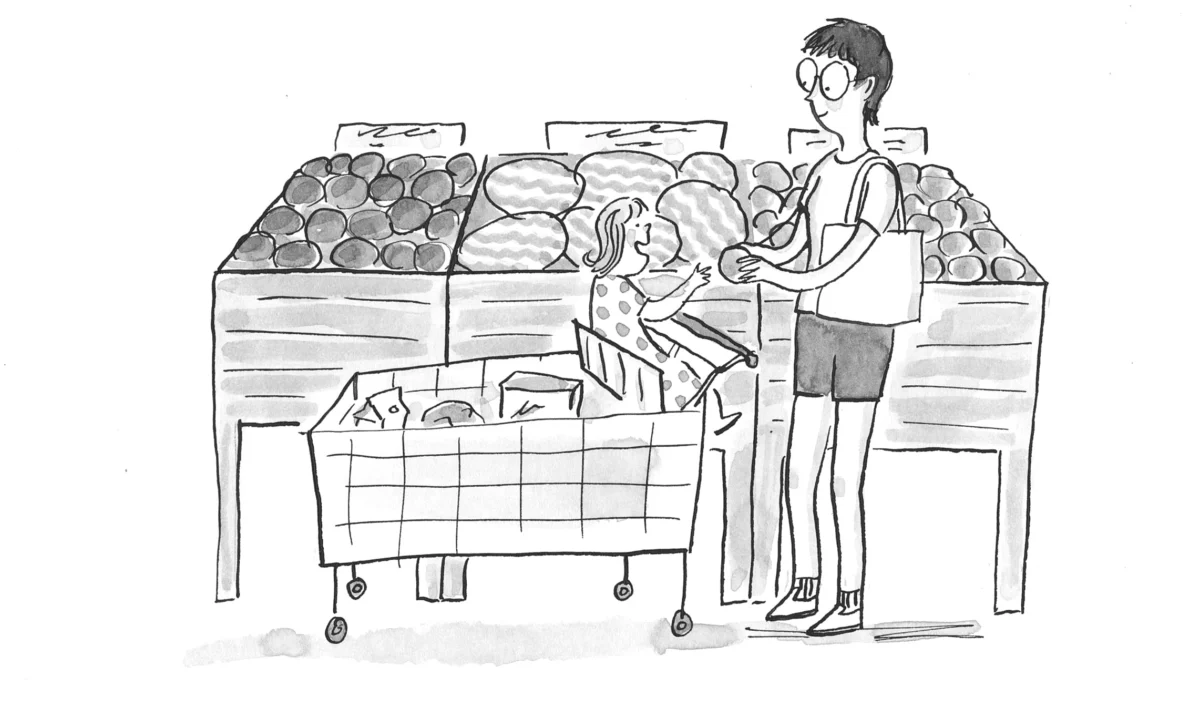
Conversely, for parents of multiples, the experience of "singleton shopping"—taking only one of their children to the store—provides a unique psychological reprieve. This 1:1 ratio allows for a different quality of interaction, characterized by "narration" and "whimsical chatter." Parents find themselves more willing to engage in playful behaviors, such as dancing in the aisles or singing along to store music, when they are not in a state of high-alert management. This suggests that the "burden" of parenting is not merely the presence of children, but the exponential increase in management complexity that occurs with each additional child in a public space.
Societal Interactions and the Oh Honey Effect
The grocery store functions as a microcosm of society, where different generations of parents interact. A recurring theme in the lives of young parents is the "Oh Honey" effect—encounters with older shoppers who offer words of encouragement or shared recognition of the difficulties of early parenthood. While "enjoy every minute" is often cited as a common, albeit sometimes frustrating, piece of advice, seasoned parents often provide more grounded support, acknowledging the "hard phases" and offering hope that the intensity of the situation will eventually wane.
However, these public interactions are not always positive. Parents frequently face "blatant defiance" from toddlers—such as a child intentionally touching a germ-covered cart handle while making eye contact with the parent—or public meltdowns that draw judgment from other shoppers. These moments test the parent’s emotional regulation and highlight the lack of structural support for families in many commercial environments. The presence of "car carts" or "race car carts" in stores can be a double-edged sword: a vital tool for containment that becomes a source of "tragedy" and public distress if unavailable.
Retail Infrastructure and the Economic Logic of Delivery
The design of retail spaces plays a significant role in the parental experience. Wholesale clubs like Costco are frequently praised by parents of multiples for their "double-seated" carts and spacious checkout areas. Unlike traditional grocery stores, where the checkout lane is often a "gauntlet" of enticing candy and narrow passages, the wholesale environment is perceived as more family-friendly. The interaction with checkout staff who are accustomed to high-volume shoppers often provides a brief but necessary "babysitting break" for the parent.
From an economic perspective, the rise of grocery delivery services represents a rational trade-off for many families. When a parent of multiples calculates the "cost of time" and the "emotional tax" of a chaotic shopping trip, a $99 annual delivery fee is often viewed as a high-value investment. This shift in consumer behavior has permanent implications for how grocery retailers must market to and accommodate young families. To remain competitive for in-person shopping, retailers must move beyond basic provisions and offer an "experience" that justifies the logistical hurdle of the trip.
Implications for Child Development and Community Literacy
Beyond the parental experience, taking children on errands has significant implications for early childhood development. In an era dominated by digital distractions, the grocery store remains one of the few remaining "analog" environments where children can observe adult social norms, financial transactions, and community interactions.
Child development experts emphasize the importance of "community literacy"—the ability of a child to understand how their world functions outside the home. By observing their parents interact with cashiers, navigate choices based on cost and quality, and manage the physical environment, children gain a foundational understanding of social responsibility. The "narration" that occurs during these trips—where a parent describes the texture of a pear or the color of a vegetable—is also a critical driver of language acquisition.
Furthermore, these outings allow children to develop their own "social personality." Anecdotes from parents describe children who use errands as a way to express "acts of service" by helping to tidy shelves, or who test social boundaries by greeting every stranger they pass. These interactions, while sometimes embarrassing for the parent, are essential for the child’s development of empathy and social confidence.
Conclusion: The Resilience of the Modern Caregiver
The evolving narrative of the "grocery store journey" reflects a broader story of parental resilience. Whether it is a mother of triplets finally feeling comfortable in the aisles after nine years, or a new twin parent navigating their first "hero’s journey" to the store, these experiences underscore the intense work involved in raising the next generation.
The move from "survival mode" to "vacation shopping" is more than just a change in logistics; it is a sign of the gradual reclaiming of the self that occurs as children grow. As society continues to navigate the post-pandemic landscape, the visibility of families in public spaces like the grocery store remains a vital indicator of community health and the enduring strength of the parental bond. For the modern caregiver, the grocery cart is not just a tool for food; it is a vehicle for navigating the complex, exhausting, and ultimately rewarding terrain of parenthood.
