

The Evolution and Context of Early Manual Communication
The practice of teaching signs to hearing infants gained mainstream scientific attention in the late 20th century. Researchers, including Dr. Joseph Garcia and psychologists Dr. Linda Acredolo and Dr. Susan Goodwyn, observed that children in Deaf households often began communicating their needs significantly earlier than children in hearing households. This observation led to the hypothesis that the fine motor skills required for manual signing develop months before the complex muscular coordination needed for speech—involving the tongue, lips, breath control, and vocal cords—is fully matured.
Baby sign language is not intended to replace verbal language but to serve as a pre-verbal scaffolding. It simplifies formal ASL gestures to accommodate the limited dexterity of an infant. For instance, while a formal ASL sign might require specific finger placement, baby sign language prioritizes the general movement and location of the hand, making it accessible for a child whose nervous system is still undergoing myelination.
Scientific Data and Developmental Benefits
Research into the efficacy of baby sign language has yielded compelling data regarding its impact on child development. A landmark study funded by the National Institutes of Health (NIH) followed two groups of infants: one taught to sign and a control group. The findings suggested that infants who used signs exhibited advanced language development once they began speaking.
1. Mitigation of Frustration-Based Behaviors
The primary benefit observed by pediatricians and child psychologists is the significant reduction in temper tantrums. Most early childhood outbursts stem from the frustration of being unable to communicate basic needs such as hunger, pain, or tiredness. By providing a "lexicon" for these needs, caregivers report a more harmonious household environment. Data suggests that when an infant can successfully signal "milk" or "more," the cortisol levels associated with crying and stress are significantly lowered for both the child and the parent.
2. Emotional Regulation and Self-Esteem
Effective communication is foundational to a child’s sense of agency. When a caregiver responds accurately to a sign, it reinforces the infant’s understanding that their actions have a direct impact on their environment. This positive feedback loop fosters early self-esteem and strengthens the secure attachment between parent and child.
3. Cognitive and Neurological Stimulation
While the debate continues regarding whether signing increases a child’s ultimate IQ, some studies indicate that the multi-modal nature of signing—which combines visual, kinesthetic, and auditory stimuli—engages multiple areas of the brain simultaneously. This "cross-talk" between the brain’s hemispheres may enhance early cognitive processing and visual-spatial intelligence.
Chronology of Implementation: When to Start
Teaching baby sign language is a process that aligns with specific neurological and physical milestones.
- Four to Six Months: This is the recommended window for parents to begin modeling signs. At this stage, an infant’s eyesight has developed sufficiently to track hand movements, and they are beginning to understand the concept of cause and effect.
- Seven to Nine Months: Most infants will begin to attempt their first signs during this period. These early attempts may be "approximations"—imperfect versions of the sign that reflect the child’s developing motor control.
- Ten to Fourteen Months: As motor skills sharpen, the child’s "active vocabulary" of signs typically expands rapidly, often reaching a dozen or more functional signs before they can articulate a single clear word.
Strategic Methodology for Caregivers
Professional speech-language pathologists suggest a systematic approach to teaching signs to ensure retention and minimize confusion.
Consistency and Repetition
The "Sign-Say-See" method is the standard pedagogical approach. Caregivers should perform the sign, say the word clearly, and ensure the infant is looking at the object or action being described. Repetition is the most critical factor; a sign may need to be modeled hundreds of times before an infant internalizes the connection between the gesture and its meaning.
Prioritizing Functional Vocabulary
Initial instruction should focus on "high-motivation" signs—those that represent the child’s most immediate needs or favorite objects. Experts recommend starting with a small "starter set" of four to five signs before expanding the vocabulary.
A Practical Lexicon: 20 Essential Signs
The following signs represent the core vocabulary most effective for early communication.
- More: To sign "more," bring the thumb and fingers of each hand together to form an "O" shape, then tap the fingertips of both hands together repeatedly. This is often the first sign learned as it applies to food, play, and attention.
- Eat: Using the same hand shape as "more" (fingertips to thumb), tap the fingers against the lips. This distinguishes general hunger from the specific act of consuming solids.
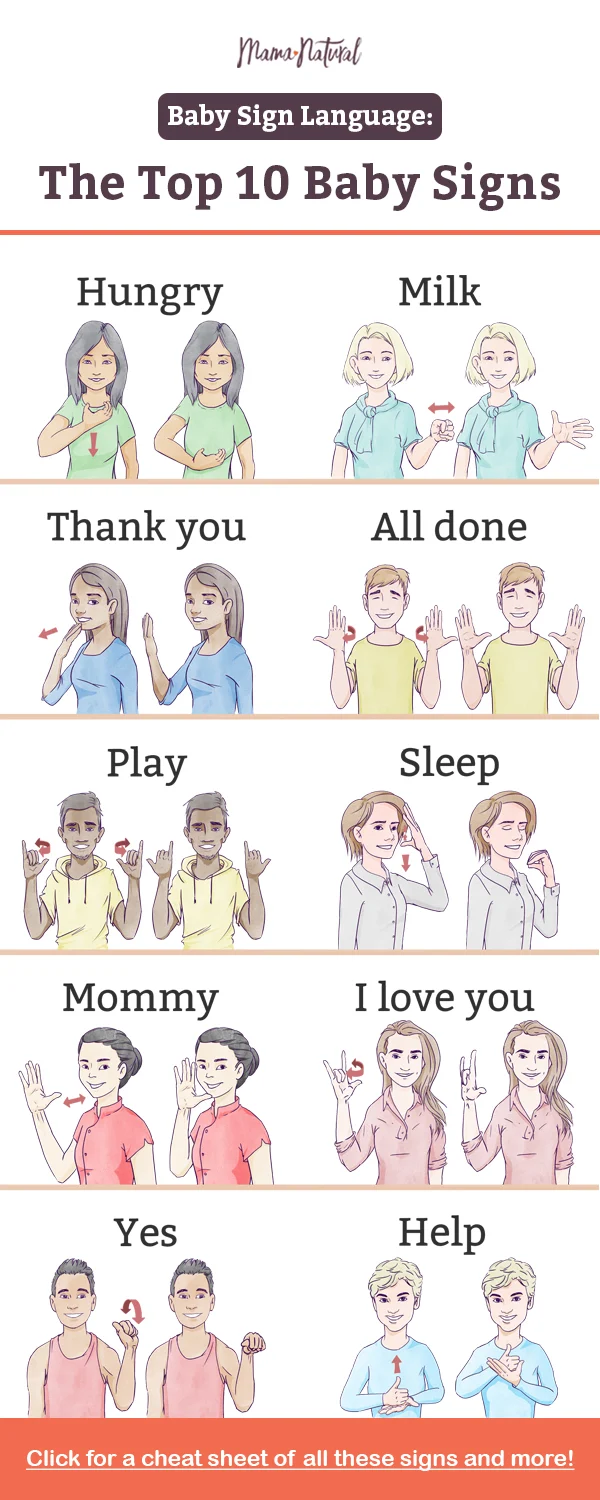
- Hungry: Place the hand in a "C" shape against the chest, then move it downward toward the stomach, mimicking the path of food.
- Milk: Form a fist and then open and close the fingers, resembling the motion of milking a cow. This is a high-frequency sign for infants still primarily on a liquid diet.
- Water: Extend the three middle fingers to form a "W" while the thumb and pinky are tucked. Tap the index finger against the chin.
- Please: Place the palm flat against the center of the chest and move it in a clockwise circular motion. This introduces the concept of social etiquette early.
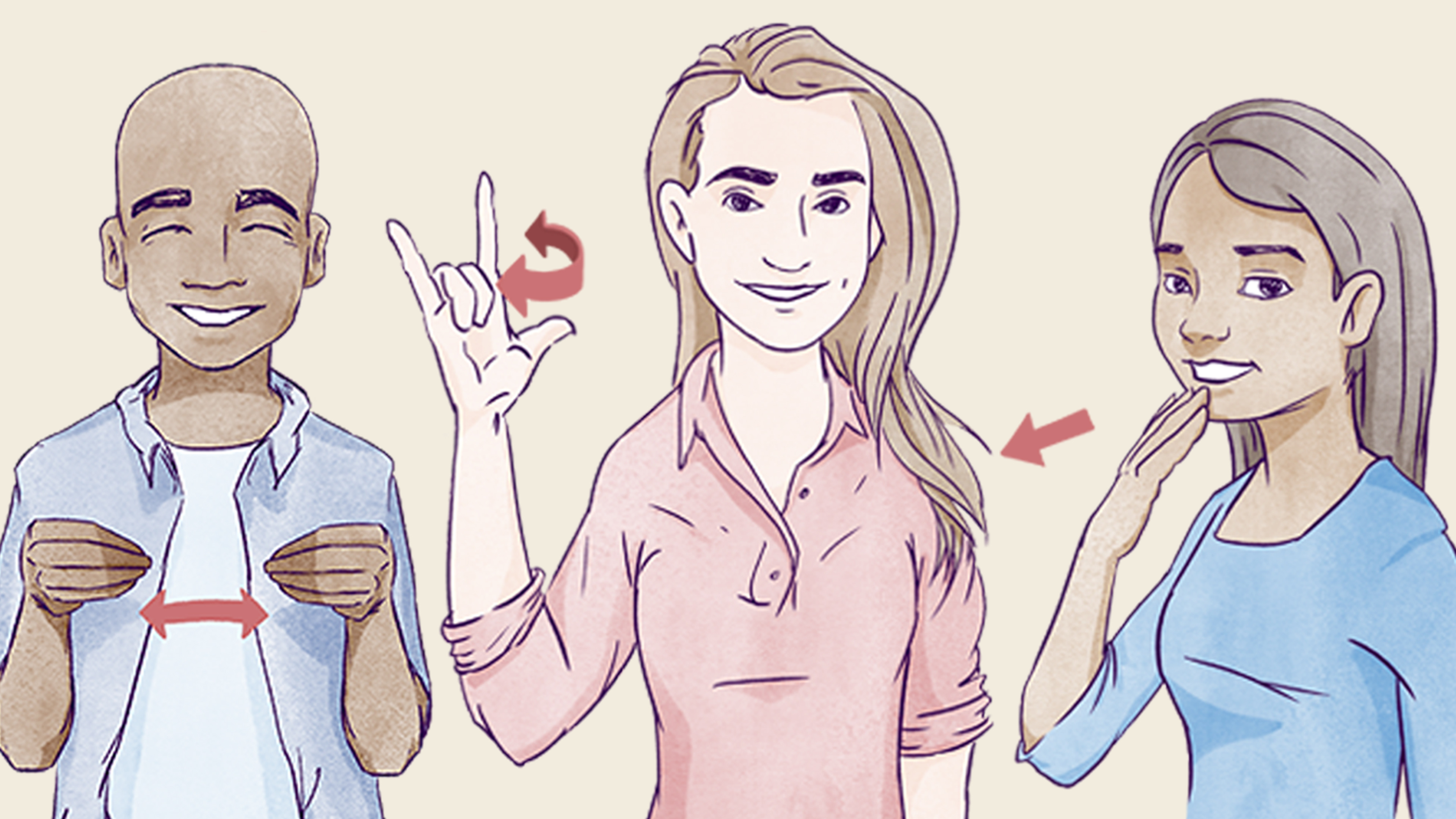
- Thank You: Start with the fingers of the dominant hand touching the lips, then move the hand forward and slightly down toward the person being thanked, similar to blowing a kiss.
- All Done: Hold both hands up at chest level with palms facing the body, then quickly flip them outward so the palms face away. This is crucial for ending meal times or activities.
- Change: Close both hands into fists with index fingers hooked. Cross the wrists and rotate the hands so they swap positions, symbolizing the transition of a diaper change.
- Potty: Form a fist with the thumb tucked between the index and middle fingers (the letter ‘T’ in ASL) and shake the hand side to side. This is vital for early toilet training communication.
- Bath: Form both hands into fists and rub them up and down the torso, mimicking the action of scrubbing the body.
- Play: Extend the thumbs and pinkies of both hands while keeping the middle fingers tucked. Twist the wrists back and forth.
- Sleep: Start with the hand over the forehead, fingers spread. Move the hand down toward the chin while closing the fingers to touch the thumb, symbolizing eyes closing.
- Book: Place the palms together, then open them while keeping the bottom edges touching, as if opening a spine.
- Daddy: With the hand open and fingers spread, tap the thumb against the forehead.
- Mommy: Using the same open-hand shape as "Daddy," tap the thumb against the chin.
- Dog: Pat the thigh and then snap the fingers, mimicking the common gesture used to call a canine.
- Cat: Use the thumb and index finger to "pull" imaginary whiskers away from the side of the mouth.
- I Love You: Cross the arms over the chest in a hugging motion. Note: This is a simplified version for infants, distinct from the ASL hand-shape for the same sentiment.
- Help: Place a thumb-up fist of the dominant hand onto the flat palm of the non-dominant hand and lift both hands together. This is a powerful tool for reducing frustration during difficult tasks.
Expert Analysis and Official Responses
The American Academy of Pediatrics (AAP) generally views baby sign language as a positive tool for enhancing parent-child interaction. While some early critics feared that signing might delay speech—reasoning that a child would have no incentive to talk if their signs were understood—clinical evidence has largely debunked this. Most experts now agree that signing actually stimulates the language centers of the brain.
Speech-language pathologists emphasize that signing should always be accompanied by verbal language. The goal is to provide a multi-sensory experience where the child hears the word, sees the sign, and eventually associates both with the object or action.
Broader Implications for Early Education
As the benefits of early manual communication become more widely recognized, many childcare centers and preschools have integrated basic sign language into their daily routines. This standardization allows for a smoother transition between home and care environments, ensuring that a child’s needs are met regardless of the setting.
In conclusion, baby sign language represents a significant advancement in our understanding of infant capabilities. By treating the pre-verbal period not as a time of silence, but as a time of untapped communicative potential, caregivers can foster a more empathetic, intelligent, and less stressful developmental path for their children. The transition from signs to speech is a natural progression, and the foundation laid by these early gestures often results in a lifelong advantage in linguistic and emotional expression.
