

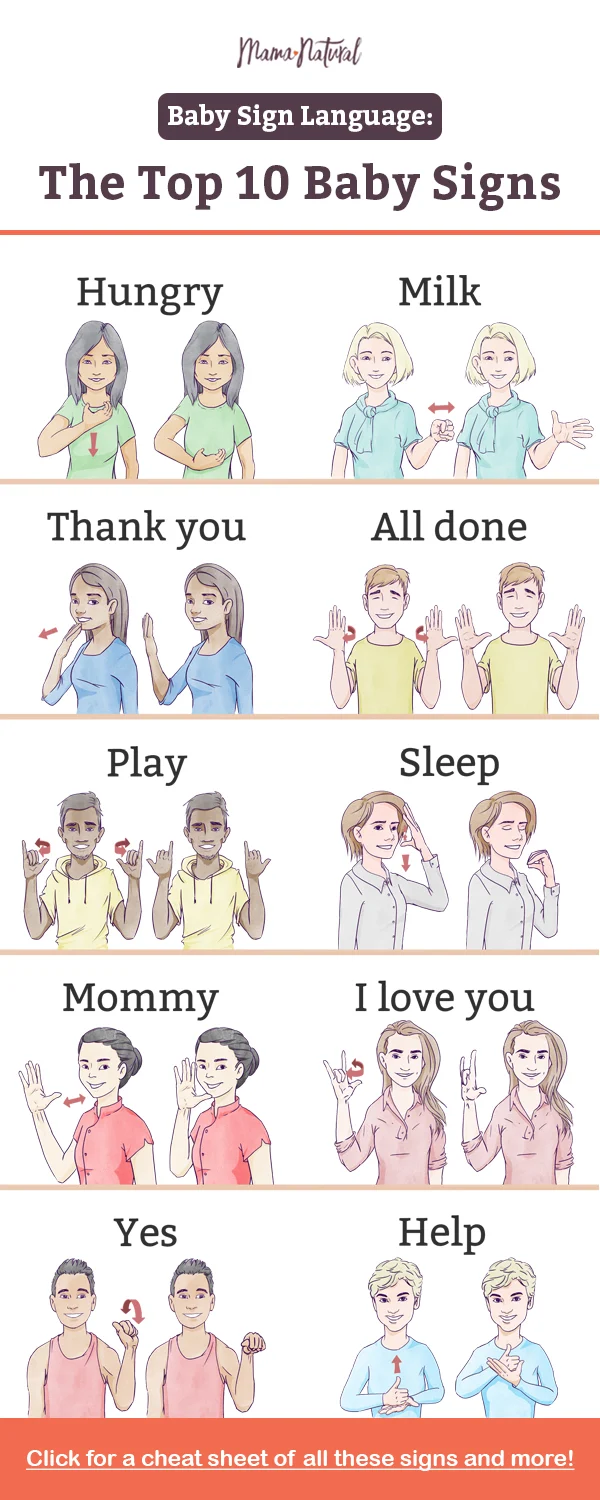
Baby sign language has emerged as a significant transitional tool in early childhood development, offering a bridge between an infant’s desire to communicate and their physical ability to produce articulate speech. While traditionally associated with the Deaf and hard-of-hearing communities, the use of modified American Sign Language (ASL) has gained widespread traction among hearing families. This specialized form of communication utilizes simplified gestures tailored to a baby’s developing motor skills, allowing infants to express basic needs and emotions months before their vocal tracts are sufficiently developed for verbal language. As pediatricians and child development experts increasingly recognize the benefits of this practice, baby sign language is shifting from a niche parenting trend to a standard recommendation for enhancing early cognitive and emotional bonds.
The Evolution of Infant Communication Research
The formal study of baby sign language began to gain momentum in the late 20th century. In the 1980s, Dr. Joseph Garcia, a researcher and interpreter, observed that the hearing children of Deaf parents were able to communicate their needs much earlier than children in hearing-only households. Simultaneously, Dr. Linda Acredolo and Dr. Susan Goodwyn, professors at the University of California, Davis, conducted extensive long-term studies funded by the National Institutes of Health (NIH). Their research suggested that infants who learned to sign demonstrated accelerated verbal development and, in some cases, higher IQ scores in later childhood compared to non-signing peers.
The premise of baby sign language is rooted in the physiological timeline of human development. An infant’s fine motor skills, particularly the ability to control hand and arm movements, mature significantly faster than the complex coordination required for speech, which involves the diaphragm, vocal cords, tongue, and lips. By tapping into this "motor-vocal gap," caregivers can provide a functional outlet for an infant’s cognitive intent.
Developmental Timelines and Cognitive Readiness
Determining the optimal window for introducing sign language requires an understanding of an infant’s neurological and physical milestones. Most developmental experts suggest that caregivers can begin modeling signs when a baby is approximately four months old. At this stage, an infant’s eyesight has improved enough to track hand movements, and their interest in social interaction is increasing.
However, there is a distinct difference between a baby’s ability to observe signs and their ability to reproduce them. The typical chronology of baby sign language development follows a specific pattern:
- Observation (4–6 Months): The infant begins to notice repetitive gestures associated with specific activities or objects.
- Recognition (6–8 Months): The baby demonstrates understanding when a caregiver uses a sign, often reacting with excitement or anticipation.
- Production (8–12 Months): The infant begins to attempt the signs themselves. These initial attempts are often "approximations"—simplified versions of the gesture that reflect the child’s limited dexterity.
- Fluency (12–24 Months): The child uses a repertoire of signs to initiate communication, ask for help, or label the world around them, eventually phasing out the signs as verbal proficiency takes over.
Clinical Benefits and Behavioral Impact
The primary driver for the adoption of baby sign language is the reduction of frustration within the household. Temper tantrums in toddlers are frequently the result of a communication breakdown; the child knows exactly what they want but lacks the linguistic tools to convey it. By providing a functional sign, such as "milk" or "all done," the child gains a sense of agency.
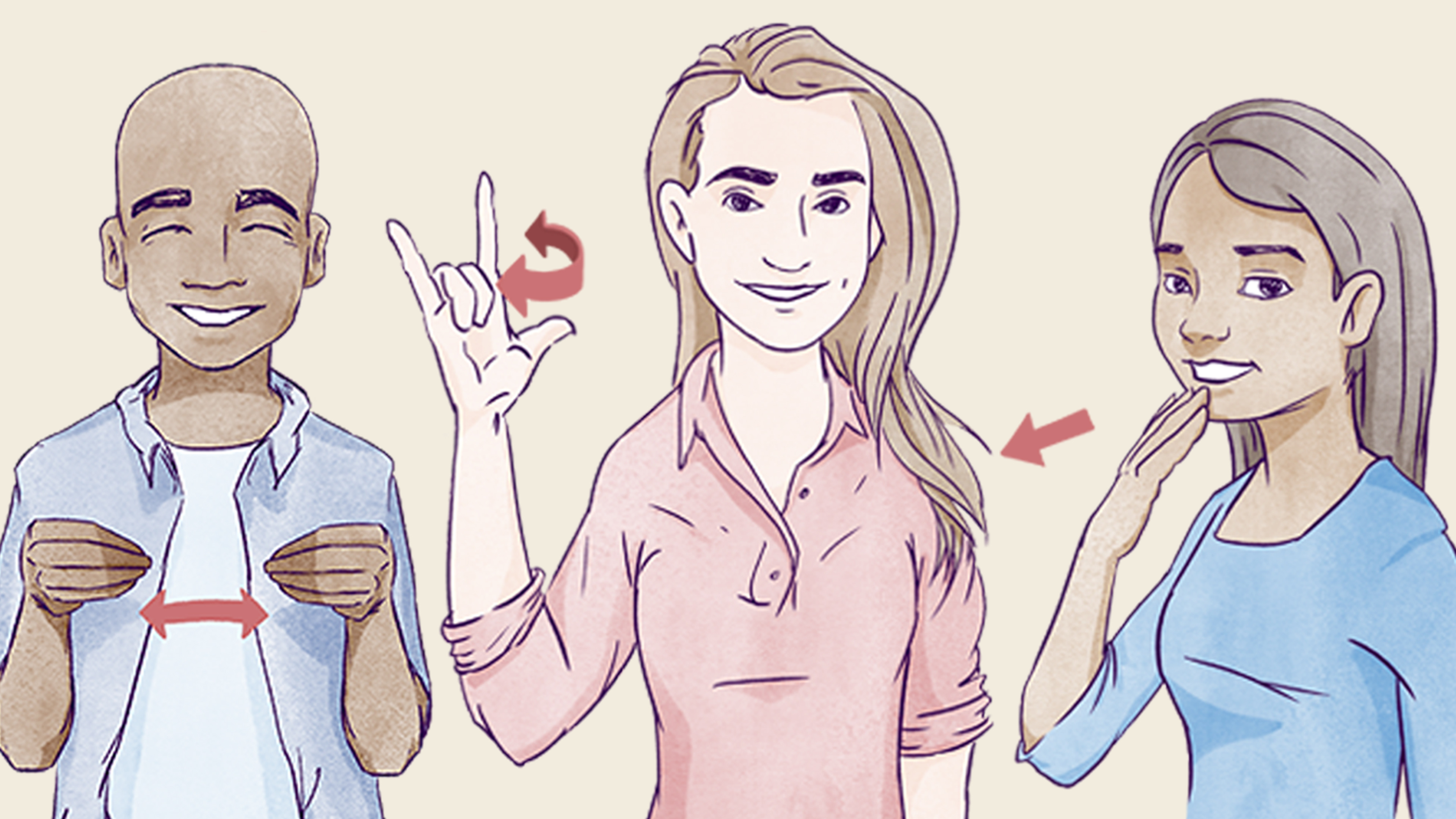
Data from behavioral studies indicate that signing can significantly lower the levels of cortisol—the stress hormone—in both infants and parents. When a caregiver responds accurately to a child’s sign, it reinforces a "secure attachment," a psychological term for a bond characterized by trust and responsiveness. Furthermore, the practice encourages caregivers to maintain eye contact and engage in more frequent face-to-face interactions, which are critical for social-emotional development.
Regarding speech development, the scientific community maintains a consensus that signing does not delay verbalization. While early theories suggested that signing might make a child "lazy" about talking, subsequent research has debunked this. Instead, signing acts as a scaffolding for language. For instance, when a child signs "dog" and the parent responds, "Yes, that is a big brown dog," the child receives enriched verbal input that actually aids in the acquisition of spoken vocabulary.
Educational Methodologies for Caregivers
Teaching baby sign language requires consistency and contextualization rather than formal "lessons." Experts recommend a three-pillar approach to ensure success:
1. Contextual Association
Signs should always be paired with the spoken word and the physical object or action. For example, a parent should perform the sign for "eat" while saying the word and presenting the high chair or food. This creates a multi-sensory link in the infant’s brain.
2. Repetition and Persistence
Because infants learn through pattern recognition, caregivers must use the signs consistently during daily routines. It is common for several months to pass before a baby signs back, leading some parents to abandon the effort prematurely. Persistence is key, as the cognitive processing of the sign often occurs long before the physical execution.
3. Positive Reinforcement
When a baby makes an attempt to sign, even if the gesture is imprecise, caregivers should respond with enthusiasm and immediate fulfillment of the request. This positive feedback loop encourages the infant to continue using gestures as a primary means of interaction.
A Comprehensive Lexicon of Essential Signs
For parents beginning the process, focusing on a core set of 20 signs related to survival, routine, and social bonding is most effective. The following descriptions outline the standardized gestures for early communication:
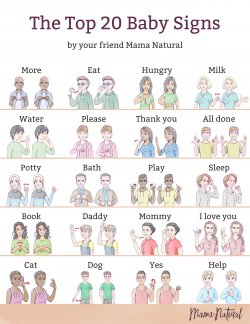
- More: Bring the fingertips of both hands together repeatedly. This is often the first sign a baby learns to request additional food or play.
- Eat: Touch the fingertips of one hand to the lips, mimicking the act of putting food in the mouth.
- Hungry: Slide a flat hand down the chest toward the stomach, indicating the path of food.
- Milk: Open and close a fist as if milking a cow; this is essential for infants to signal nursing or bottle-feeding needs.
- Water: Form a "W" with the three middle fingers and tap the index finger against the chin.
- Please: Rub a flat palm in a circular motion over the chest.
- Thank You: Touch the fingertips to the chin and move the hand forward and down, similar to blowing a kiss.
- All Done: Hold both hands up with palms facing the body, then twist the wrists so the palms face outward.
- Change: Form hooks with the index fingers and rotate the hands around each other to signify a diaper change.
- Potty: Make a fist with the thumb tucked between the index and middle fingers, then shake the hand side-to-side.
- Bath: Rub two fists up and down the chest, simulating the act of scrubbing.
- Play: Extend the thumb and pinky of both hands while tucking the other fingers, and rotate the wrists.
- Sleep: Place a hand over the forehead with fingers spread, then draw the hand down the face until the fingers and thumb touch.
- Book: Press the palms together and then open them like a book, keeping the bottom edges touching.
- Daddy: Tap the thumb of an open hand against the forehead.
- Mommy: Tap the thumb of an open hand against the chin.
- Dog: Pat the thigh and then snap the fingers, mimicking the traditional way of calling a canine.
- Cat: Use the thumb and index finger to "pull" whiskers away from the side of the mouth.
- I Love You: Cross both arms over the chest in a self-hugging motion.
- Help: Place a "thumbs-up" fist on top of a flat palm and move both hands upward together.
Expert Perspectives and Research Limitations
While the benefits of baby sign language are widely touted, some experts urge a balanced perspective. Dr. Erika Hoff, a developmental psychologist, notes that while signing is a valuable tool, it is not a "magic bullet" for intelligence. The observed correlation between signing and higher IQ may be influenced by the fact that parents who invest time in signing are also likely to engage in other high-quality developmental activities, such as reading and talking to their children.
Speech-language pathologists (SLPs) also emphasize that baby sign language should not be used as a replacement for professional intervention if a child is showing signs of a true developmental delay. However, SLPs frequently utilize signs as a therapeutic tool for children with speech apraxia, Down syndrome, or autism, as it provides a visual and tactile way to process language.
Broader Societal and Developmental Implications
The integration of baby sign language into mainstream parenting has broader implications for how society views infant intelligence. It challenges the antiquated notion that babies are passive recipients of care, instead highlighting their active role as communicators with complex internal lives.
As more childcare centers and preschools incorporate basic signs into their curricula, the "language gap" between infants of different developmental speeds is narrowing. Furthermore, the use of ASL-based signs fosters an early appreciation for non-verbal communication and may lead to increased interest in learning formal American Sign Language later in life, promoting greater inclusivity for the Deaf community.
Ultimately, baby sign language serves as a powerful reminder of the human drive to connect. By providing infants with the tools to be heard before they can speak, caregivers are not just teaching a skill; they are fostering an environment where communication is valued, frustration is minimized, and the foundational bonds of family are strengthened through mutual understanding. The practice stands as a testament to the efficacy of early intervention and the remarkable adaptive capabilities of the developing human mind.
