

The utilization of Baby Sign Language (BSL) has emerged as a significant transitional tool in pediatric development, serving to bridge the physiological gap between an infant’s cognitive desire to communicate and the maturation of the vocal apparatus. While infants typically begin to master the complex muscular coordination required for speech between 12 and 18 months, their capacity for symbolic thought and manual dexterity develops much earlier. By employing a simplified version of American Sign Language (ASL), parents and educators can establish a functional communicative link that addresses the immediate needs of pre-verbal children. This systematic approach to early intervention not only mitigates the frustration associated with the "communication gap" but also fosters a foundational environment for linguistic and emotional growth.
The Foundations of Infant Gestural Communication
Baby Sign Language is fundamentally a specialized subset of American Sign Language, modified to accommodate the developing gross and fine motor skills of an infant. Unlike formal ASL, which is a complex natural language with its own syntax and grammar, BSL focuses on keyword signing. This method involves pairing a spoken word with a specific manual gesture to reinforce meaning. Research in child development suggests that infants possess the neurological readiness to associate gestures with objects and actions long before they can articulate the phonemes necessary for spoken language.
The primary objective of BSL is to provide a "safety valve" for the emotional volatility often seen in toddlers. Pediatricians and child psychologists note that a significant portion of early childhood "temper tantrums" are the direct result of a child’s inability to express specific physiological needs—such as hunger, fatigue, or physical discomfort—to their caregivers. By providing a manual lexicon, BSL transforms a cry of distress into a specific, actionable request.
Chronological Milestones in Sign Acquisition
The implementation of Baby Sign Language follows a predictable developmental timeline, though individual progress varies based on the child’s unique rate of maturation.
Initial Exposure (4 to 6 Months)
Developmental experts suggest that the optimal window to begin introducing signs is approximately four months of age. At this stage, an infant’s visual acuity has improved sufficiently to track hand movements, and their cognitive ability to recognize patterns is beginning to flourish. While the infant will not yet have the motor control to reciprocate signs, this period is critical for observational learning.
Recognition and Comprehension (6 to 8 Months)
During this phase, infants often demonstrate "receptive signing," where they clearly understand the meaning of a sign performed by a caregiver even if they cannot yet replicate it. This is frequently observed when a child reacts with excitement to the sign for "milk" or "bath" before the activity commences.
Active Production (8 to 12 Months)
Most infants produce their first intentional sign between seven and nine months. Initial attempts are often "approximations"—gestures that lack the precision of the adult version but are used consistently in the correct context. As fine motor skills improve, these signs become more distinct. By the first birthday, many children trained in BSL can navigate a vocabulary of 10 to 20 signs.
Methodological Strategies for Effective Instruction
To successfully integrate sign language into an infant’s routine, experts recommend a structured, three-pillar approach based on consistency, context, and positive reinforcement.
- Contextual Association: Signs should always be introduced in the presence of the object or during the activity they represent. For instance, the sign for "eat" should be performed immediately before and during mealtime to solidify the mental link between the gesture and the concept of nourishment.
- Verbal Reinforcement: It is imperative that caregivers speak the word clearly while performing the sign. This dual-sensory input—auditory and visual—ensures that signing does not replace verbal development but rather enhances it.
- Repetitive Frequency: The human brain requires multiple exposures to a new concept before it is encoded into long-term memory. Caregivers are encouraged to use the same four or five basic signs dozens of times a day across various settings.
The Core Lexicon: Essential Signs for Daily Life
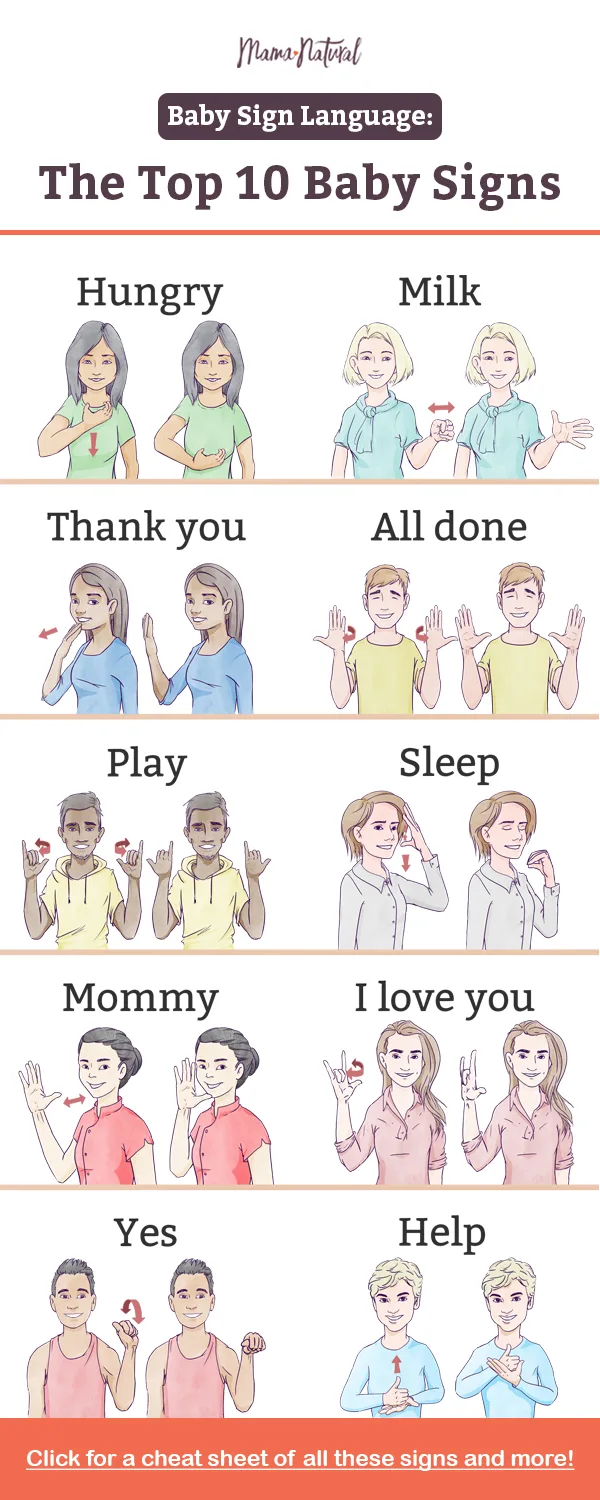
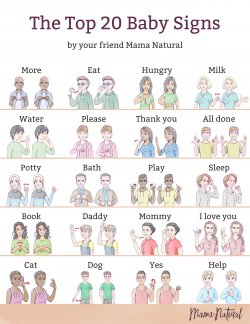
A functional BSL vocabulary focuses on high-utility words that represent an infant’s most frequent needs and observations. The following 20 signs constitute the foundational "cheat sheet" for early communication.
Physiological Needs
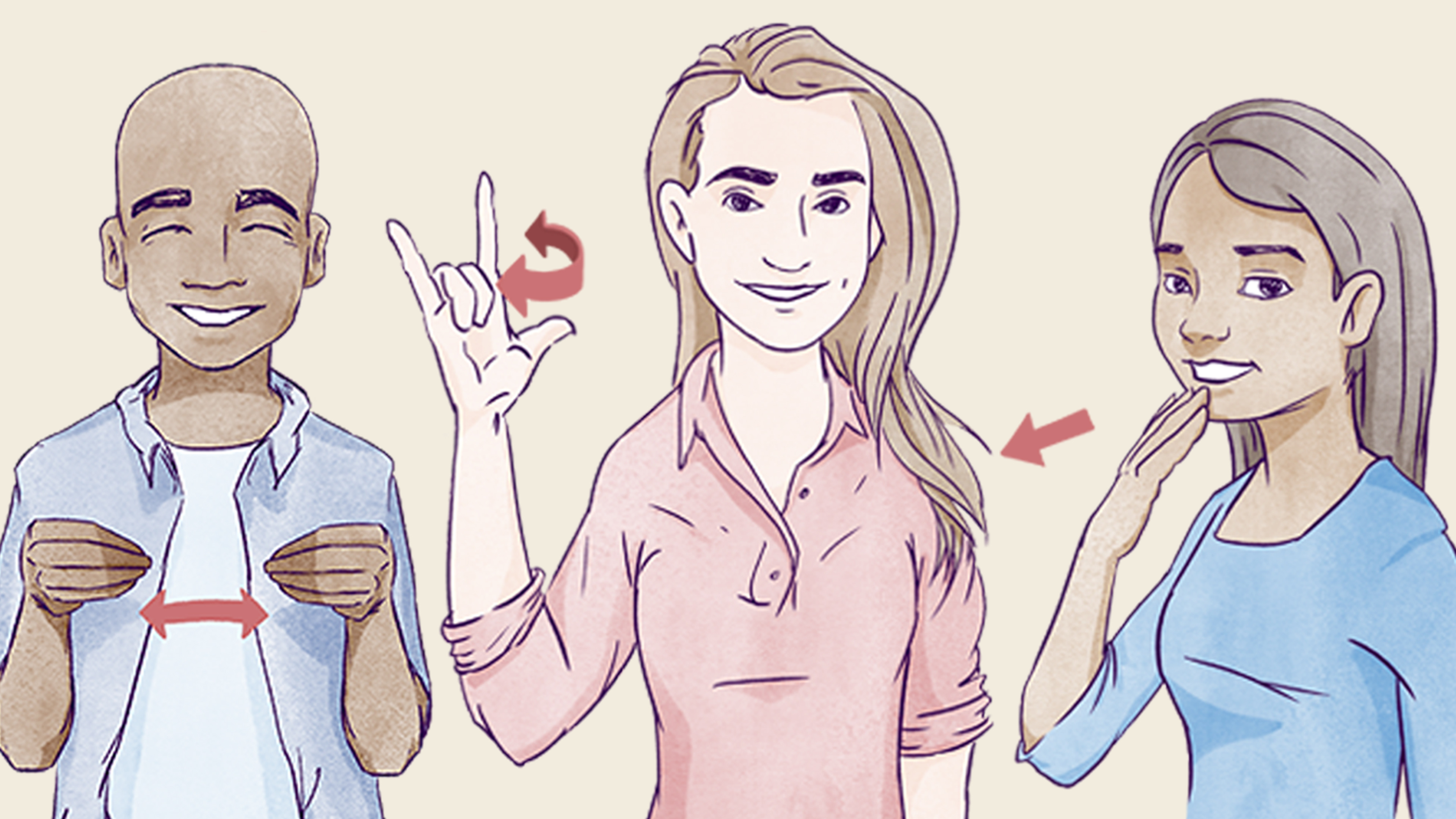
- Milk: Executed by making a fist and then opening and closing the fingers, mimicking the action of milking a cow. This is often the first sign learned due to its high frequency of use.
- Eat: Bringing the tips of the fingers to the lips repeatedly. This sign helps distinguish between a desire for a bottle/breast and a desire for solid food.
- Hungry: Placing a flat palm on the chest and sliding it down toward the stomach, representing the path of food.
- Water: Forming a "W" with the three middle fingers and tapping the index finger against the chin.
- Potty: Tucking the thumb between the index and middle fingers (forming a "T" in ASL) and shaking the hand. This is a vital tool for early potty training efforts.
- Sleep: Starting with an open hand over the forehead and drawing it down the face while closing the fingers, symbolizing eyes closing.
Social and Behavioral Regulation
- More: Bringing the fingertips of both hands together repeatedly. This is a versatile sign that can apply to food, play, or affection.
- All Done: Holding both hands up with palms facing the chest, then flipping them outward. This indicates the completion of a meal or activity, reducing the likelihood of a child throwing food when finished.
- Please: Moving a flat palm in a circular motion over the chest.
- Thank You: Touching the fingers to the chin and then moving the hand forward and down, similar to blowing a kiss.
- Help: Placing a "thumbs up" hand on top of a flat palm and lifting both together. This is a sophisticated sign that empowers the child to seek assistance rather than succumbing to frustration.
Environment and Relationships
- Mommy and Daddy: Both signs involve an open hand with spread fingers. For "Mommy," the thumb taps the chin; for "Daddy," the thumb taps the forehead.
- Book: Pressing palms together and then hinging them open at the pinky side, mimicking the opening of a book.
- Play: Extending the thumb and pinky while tucking the middle fingers, then twisting the wrists.
- Bath: Making fists and rubbing them up and down the torso, suggesting a scrubbing motion.
- Dog and Cat: "Dog" involves snapping the thumb and middle finger together; "Cat" involves using the thumb and index finger to mimic stroking whiskers away from the mouth.
- Change: Crossing the wrists with hands in a "hook" shape and rotating their positions, used specifically for diaper changes.
- I Love You: Crossing the arms over the chest in a self-hugging motion.
- Yes: Making a fist and tilting it up and down, mimicking a nodding head.
Scientific Analysis and Developmental Impact
The impact of Baby Sign Language has been a subject of academic scrutiny since the 1980s, most notably through the work of Dr. Linda Acredolo and Dr. Susan Goodwyn. Their long-term studies, funded by the National Institutes of Health (NIH), suggested that infants who used sign language showed accelerated verbal development and even scored higher on standardized IQ tests in later childhood.
However, modern research presents a more nuanced view. A 2005 study published in the journal Child Development and subsequent reviews by the American Academy of Pediatrics (AAP) suggest that while BSL does not necessarily provide a permanent "head start" in intelligence, it certainly does not delay speech. The most significant confirmed benefits are psychological and social. By reducing the "frustration gap," BSL lowers cortisol levels in both the infant and the caregiver, leading to a more harmonious domestic environment. Furthermore, the practice encourages "joint attention"—a state where the parent and child are focused on the same object—which is a known catalyst for neurological development.
Broader Implications for Early Childhood Education
The integration of BSL into mainstream childcare and early education centers reflects a shift toward more inclusive and proactive developmental strategies. Speech-language pathologists (SLPs) frequently utilize signing as a foundational intervention for children with developmental delays, Down syndrome, or autism spectrum disorder. For neurotypical children, BSL serves as an early introduction to the concept of symbolic representation, which is the basis for reading, writing, and mathematics.
From a journalistic perspective, the "Baby Sign" movement represents a broader cultural trend toward "responsive parenting." This philosophy emphasizes the importance of recognizing an infant as an active participant in communication rather than a passive recipient of care. As technology and social media continue to disseminate these tools, the practice of infant signing is moving from a niche educational trend to a standard component of early childhood care.
In conclusion, Baby Sign Language stands as a scientifically supported, practical intervention that enhances the quality of life for families during the pre-verbal stage. While it requires patience and consistent effort from caregivers, the reward is a deeper, more empathetic connection with the child. By empowering infants to "speak" with their hands, we provide them with the tools to navigate their world with greater confidence and less distress, laying a robust foundation for the complex linguistic journey ahead.
