

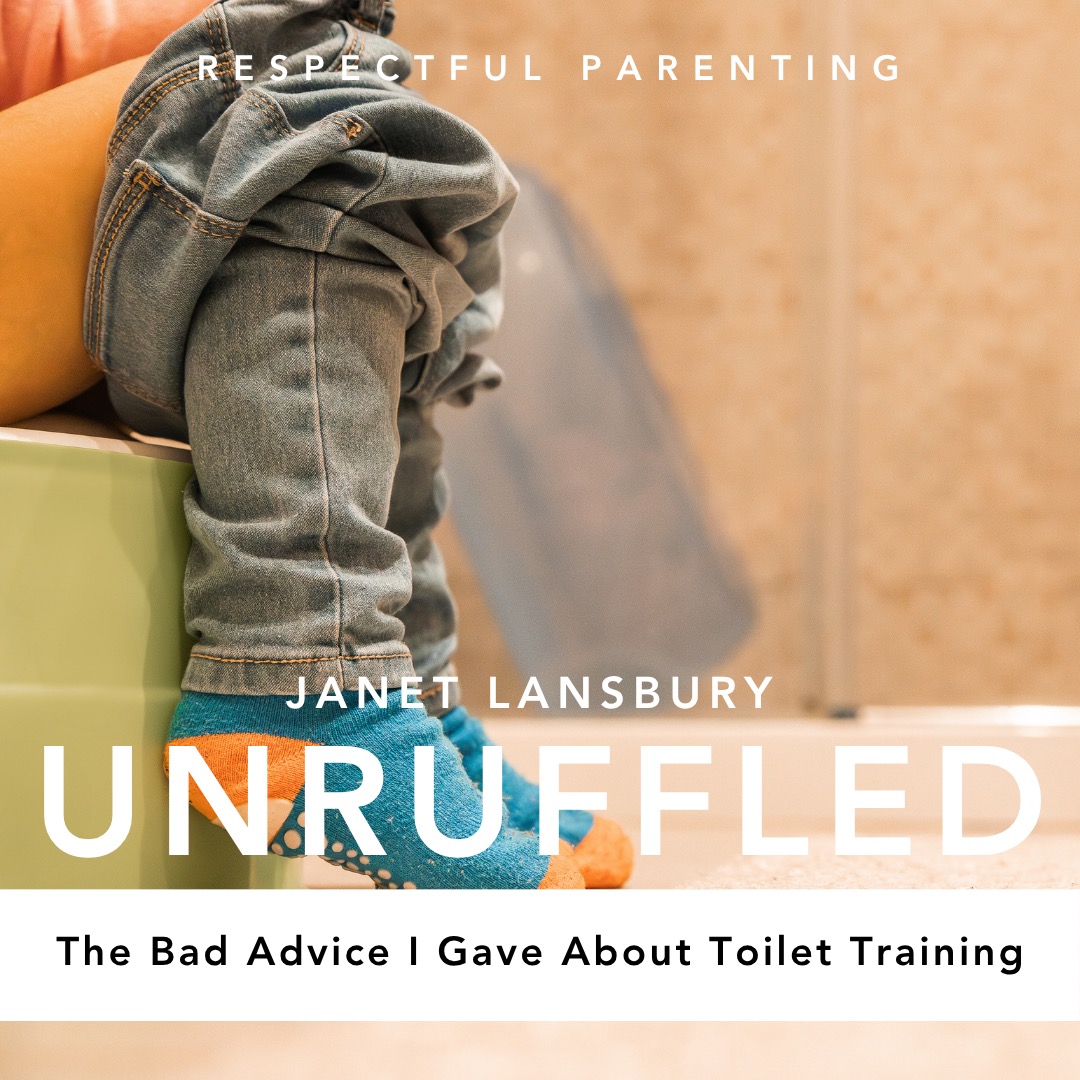
In a candid self-reflection, renowned parenting expert Janet Lansbury has revisited a previous "Unruffled" podcast episode where she offered guidance on toilet training to a struggling parent. The update from this parent, received nearly a year later, revealed a surprising outcome: the child’s successful toilet learning was achieved not by following Lansbury’s advice, but by adopting a diametrically opposed approach. This turn of events has prompted Lansbury to re-examine her original recommendations, offering a nuanced perspective on why her guidance may have been ineffective for this particular family, and by extension, potentially for others facing similar challenges.
A Parental Struggle and an Unexpected Resolution
The initial query, featured in Lansbury’s November 2024 episode titled "When Kids Don’t Seem Motivated (to Potty, Crawl, or Create)," described a three-and-a-half-year-old daughter who was "absolutely set on being in diapers ‘forever.’" Despite exhibiting clear signs of developmental readiness – including a dislike for diaper changes, body awareness, and verbal communication about her needs – the child vehemently resisted any interaction with a potty or discussions about toilet training. The parent, describing herself as a "fearful and avoidant kid" who requires consistent parental guidance in other areas, struggled to reconcile Lansbury’s child-led philosophy with her daughter’s apparent avoidance, which she felt was becoming a "fear cycle" and enabling a "phobia."
Lansbury’s initial advice, grounded in her philosophy of child-led learning, centered on three key remedies: genuine trust in the child’s abilities and inner direction, the establishment of reasonable boundaries, and the welcoming of the child’s uncomfortable feelings. She emphasized that children are born motivated and that parental anxiety or over-involvement can inadvertently create resistance. Her recommendation for this specific case was to fully commit to the child-led approach, trusting that the child would eventually initiate the process when truly ready, drawing parallels to natural developmental milestones like walking.
However, the parent’s recent update paints a different picture. As her daughter approached her fourth birthday, the parent, unwilling to have a child of that age in diapers without a diagnosed developmental disability, decided to implement a firm, parent-led approach. This decision, made despite the child’s lack of expressed interest, involved "pushing really hard through" intense fear and resistance. The outcome was remarkably swift: within days, the child began using the toilet willingly and has not had an accident in a week.
Lansbury’s Re-evaluation: The Nuance of "Bad Advice"
Lansbury begins her re-evaluation by expressing genuine joy for the parent’s success and relief, while also acknowledging the possibility that her own advice may have inadvertently led the parent astray from her instincts. She states, "I’m genuinely thrilled for you and your daughter that you got this result. I imagine you’re greatly relieved, and I’m sincerely sorry if my advice led you astray and away from your instincts."
The core of Lansbury’s revised perspective lies in the concept of "mixed messaging" and the importance of parental conviction. She posits that while her initial intention was to advocate for a child-led approach, her previous advice may not have sufficiently accounted for the parent’s own underlying anxieties and belief system. Lansbury explains that children are acutely attuned to parental emotions and subconscious messaging. If a parent expresses doubt, even subtly, or harbors an underlying belief that the child cannot achieve something, this can create a "mixed message" for the child, leading to confusion and resistance.
In this particular case, Lansbury acknowledges that the parent, despite her best efforts to appear fully trusting and detached, harbored doubts about her daughter’s ability to initiate toilet training independently. The parent’s description of herself as an "anxious overthinker" is highlighted as a crucial factor. Lansbury suggests that this anxiety, transmitted to the child, may have contributed to the child’s own fear and resistance. The parent’s eventual success, achieved through a firm, parent-led approach, demonstrates the power of unwavering parental certainty.
The Role of Parental Instinct and Conviction
Lansbury’s introspection leads her to a critical realization: her advice, while rooted in her belief in child-led development, was not the "right advice" for this specific parent because it did not align with her core feelings and instincts. She emphasizes that while she advocates for a child-led approach as the preferred method, allowing children the opportunity for autonomous achievement, this does not negate the validity of other successful methods.
The parent’s own reflection in her update is particularly poignant: "I honestly feel regretful that I didn’t listen to myself as I look back at my previous email and push it earlier. What I saw was a scared kid who needed help doing something she was fully capable of. She was stuck and needed us to see through that." This sentiment underscores Lansbury’s revised understanding. The parent’s "instinct" was that her daughter needed a firm push, akin to a necessary medical procedure rather than a developmental milestone like walking, which she felt was inherently achievable by the child.
Lansbury argues that when parenting advice, even from respected sources, doesn’t resonate with a parent’s core instincts, it is unlikely to be effective. She elaborates, "Whatever parenting advice you’re getting from anywhere, it’s got to resonate with your instincts… if parenting advice from anybody about any aspect of parenting doesn’t feel like that to us, it’s never going to work because it’s not right for us." This perspective shifts the focus from a one-size-fits-all approach to a more individualized and instinct-driven model of parenting.
Examining the "Mixed Messaging" and Boundaries
Lansbury delves deeper into the concept of mixed messaging, explaining how it can manifest even in seemingly innocuous parental behaviors. She re-examines the parent’s mention of having a "Velcro kid" who "almost always follows me into the bathroom." While the parent stated she was "totally fine with" this, Lansbury suggests that for many parents, this indicates an underlying discomfort with setting boundaries related to separation. This discomfort, she argues, can lead to unintentional mixed messages, leaving the child in a state of uncertainty and anxiety.
The parent’s successful approach to guiding her daughter through other fears, by acknowledging emotions but still proceeding, is contrasted with the approach to toilet training. Lansbury posits that while the parent expertly navigated other situations by being a "wise guide," the application of this principle to toilet training was perceived differently by the child. The parent’s eventual decision to "force the issue" with a "hundred percent certainty" suggests that for this child, the natural developmental drive was perhaps overshadowed by a phobia that required a more directive intervention.
Broader Implications for Parenting Advice
This self-critical examination by Janet Lansbury offers valuable insights into the nature of parenting advice itself. It highlights that:
- Instinct is paramount: Parental intuition, even if initially doubted or overridden by external advice, often holds crucial wisdom.
- Conviction matters: A parent’s genuine belief in a chosen approach, whether child-led or parent-led, is more impactful than a theoretical adherence to a method that doesn’t feel authentic.
- Context is key: What works for one child and family may not work for another, demanding flexibility and a willingness to adapt advice to individual circumstances.
- The role of parental anxiety: Parents’ own emotional states can significantly influence their children’s behavior and development, requiring self-awareness and emotional regulation.
Lansbury concludes by emphasizing that while she remains a proponent of child-led learning for its developmental benefits, she recognizes that her previous advice was not universally applicable. She expresses her gratitude for the parent’s update, which served as a powerful learning experience, reinforcing the idea that the most effective parenting advice is that which deeply resonates with a parent’s instincts and convictions, allowing them to proceed with "a hundred percent certainty." This introspection underscores a commitment to continuous learning and a nuanced understanding of the complex landscape of child-rearing.