

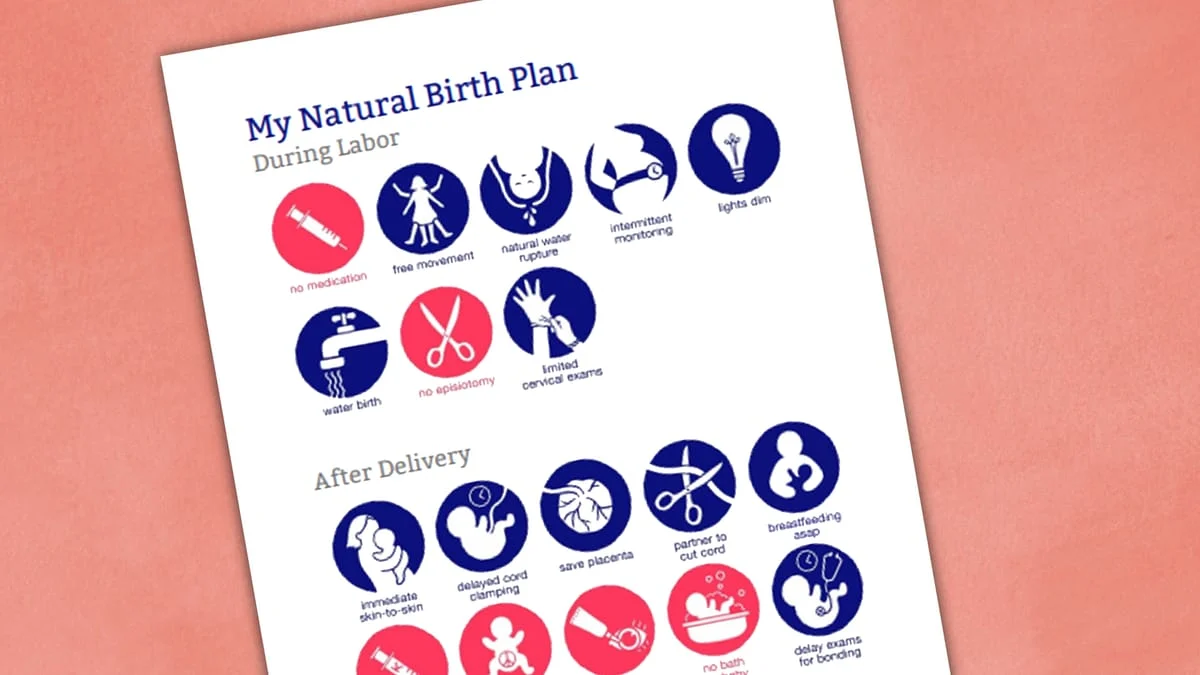
Revolutionizing Maternal Advocacy Through Visual Birth Planning and Digital Communication Tools serves as a critical bridge between expectant parents and medical providers, transforming the traditional birth plan from an often-ignored manifesto into a streamlined, actionable clinical tool. In the modern obstetric landscape, the birth plan has evolved from a simple list of preferences into a sophisticated document of intent that facilitates shared decision-making. As hospitals and birthing centers increasingly prioritize patient-centered care, new digital templates are emerging to simplify this communication, allowing parents to create visual, one-page summaries of their labor and delivery wishes in a matter of minutes via mobile devices.

The Evolution of Birth Planning: A Chronological Perspective
The concept of the birth plan emerged in the late 1970s and early 1980s as a response to the highly medicalized birthing environment common in Western hospitals. During this era, laboring women often felt sidelined by rigid institutional protocols that prioritized efficiency over individual autonomy. The original birth plans were typically long-form narratives, often typed or handwritten, detailing every possible scenario from pain management to newborn care.

By the 1990s, the medical community began to recognize the importance of patient agency, yet the delivery of birth plans remained problematic. Medical staff frequently viewed multi-page documents as "demands" rather than "preferences," leading to friction in the delivery room. Nurses and obstetricians often reported that long-form plans were difficult to digest during the fast-paced, high-stakes environment of active labor.

The 2010s saw a shift toward standardized checklists, but these often lacked the nuance required for a personalized experience. The current decade marks the era of the "Visual Birth Plan." This contemporary iteration utilizes iconography and color-coded systems to convey complex medical preferences at a glance. By leveraging mobile technology, these tools allow expectant parents to select specific interventions or avoidances through intuitive interfaces, resulting in a professional, one-page document that aligns with the visual processing needs of healthcare providers in clinical settings.

The Clinical Significance of Informed Consent and Shared Decision-Making
At the heart of the modern birth plan is the principle of informed consent. This legal and ethical framework requires that healthcare providers explain the risks, benefits, and alternatives of any medical intervention. However, in the heat of labor, true informed consent can be difficult to achieve if the patient is in significant pain or under the influence of medication.

A visual birth plan acts as a pre-negotiated roadmap. It allows the patient to exercise their right to choose or refuse interventions—such as continuous fetal monitoring, episiotomies, or the administration of Pitocin—well before the onset of labor. According to the American College of Obstetricians and Gynecologists (ACOG), communication between patients and their care teams is a primary factor in reducing maternal morbidity and improving the overall experience of childbirth.

Data suggests that when patients feel their voices are heard and their preferences respected, they report higher satisfaction scores and a lower incidence of birth-related trauma. Conversely, a lack of communication can lead to "obstetric violence," a term used by advocacy groups to describe the performance of medical procedures without clear consent. Visual birth plans mitigate this risk by providing a clear, non-verbal reference point for every staff member who enters the birthing room.

Structural Analysis of the Visual Birth Plan System
The modern visual birth plan utilizes a sophisticated yet simple taxonomy to categorize medical choices. The current industry standard for these digital tools often employs a binary icon system to ensure clarity under pressure.

- Positive Preferences (The "Yes, Please" Category): These are typically represented by a specific color, such as navy blue. They indicate desired actions, such as "intermittent monitoring," "freedom of movement," "delayed cord clamping," and "immediate skin-to-skin contact."
- Avoidance Preferences (The "No, Thanks" Category): Represented by a contrasting color, such as pink, these icons signify procedures the patient wishes to avoid unless medically necessary for the safety of the mother or child. Common examples include "no routine IV," "no episiotomy," and "no artificial rupture of membranes."
These icons are categorized into four distinct phases of the birthing process:

- During Labor: Focuses on environment (lighting, music), movement, and pain management (epidural vs. natural techniques).
- Right After Birth: Covers the "Golden Hour," including cord clamping and placental delivery.
- Newborn Care: Addresses vaccinations (Vitamin K, Hep B), antibiotic eye ointment, and feeding preferences (exclusive breastfeeding vs. formula).
- Contingency Planning (Cesarean Section): Provides a framework for preferences even if surgery becomes necessary, such as "clear drapes" or "music in the OR."
Addressing the Provider-Patient Gap: Responses and Reactions
While the benefits of birth plans are well-documented, a historical tension exists between laboring mothers and hospital staff. Some healthcare providers have expressed frustration with birth plans that they perceive as "inflexible" or "unrealistic." In some clinical settings, the term "birth plan" has been colloquially associated with "high-maintenance" patients, a stigma that advocacy groups are working to dismantle.

Professional nursing associations, such as the Association of Women’s Health, Obstetric and Neonatal Nurses (AWHONN), emphasize that the most effective birth plans are those that are concise and collaborative. Midwives and nurses have reacted positively to the visual format because it removes the cognitive load of reading through paragraphs of text. Stephanie, a recent user of a visual template, noted that her midwife "absolutely loves it" and described it as "the best and clearest way to keep everyone on the same page."

By presenting preferences as a visual "at-a-glance" document, patients can reduce the likelihood of being perceived as adversarial. Medical professionals are more likely to honor a plan that acknowledges the unpredictable nature of birth while clearly stating the patient’s baseline desires.

Socio-Political Impact and Maternal Health Equity
The rise of digital birth planning tools also plays a significant role in addressing maternal health disparities. For women of color, particularly Black women in the United States who face significantly higher rates of maternal mortality and morbidity, a birth plan is more than a list of preferences—it is a tool for survival and advocacy.

The "Black Birthing Bill of Rights" is often integrated into birth planning discussions to empower marginalized patients to demand respectful, high-quality care. By having a documented plan, patients have a physical or digital record that can be used by their partners or doulas to advocate for them when they may be unable to speak for themselves. This level of documentation is a crucial step in systemic efforts to ensure that "Standard of Care" does not equate to "Standardized Neglect."

Analysis of Implications for Future Obstetric Practice
The shift toward visual, mobile-optimized birth plans indicates a broader trend in healthcare: the democratization of medical information and the streamlining of provider-patient communication. As hospitals continue to adopt electronic health record (EHR) systems, the integration of these visual templates directly into a patient’s digital chart is the likely next step.

Furthermore, the simplicity of the visual birth plan reduces the potential for medical errors. In a high-turnover environment where nursing shifts change every 8 to 12 hours, a visual plan ensures that the incoming team is immediately aware of the patient’s wishes without requiring a lengthy verbal handoff.

Conclusion: The Win-Win of Simplified Planning
The ultimate goal of a visual birth plan is to foster a collaborative environment where the birthing person feels empowered and the medical team feels informed. By replacing long-form text with intuitive icons and a clear key, these tools solve the primary complaint of medical providers: lack of time.

In conclusion, the visual birth plan represents a significant advancement in maternal health advocacy. It honors the physiological process of birth while respecting the clinical realities of the hospital setting. For expectant parents, the ability to "tap icons" and "generate a plan" in minutes reduces the anxiety of preparation, allowing them to focus on the transition to parenthood with the confidence that their voice will be seen, heard, and respected. As this technology becomes more ubiquitous, it is expected to become a standard component of prenatal care, ensuring that every birth is approached with the dignity and personalization it deserves.
