

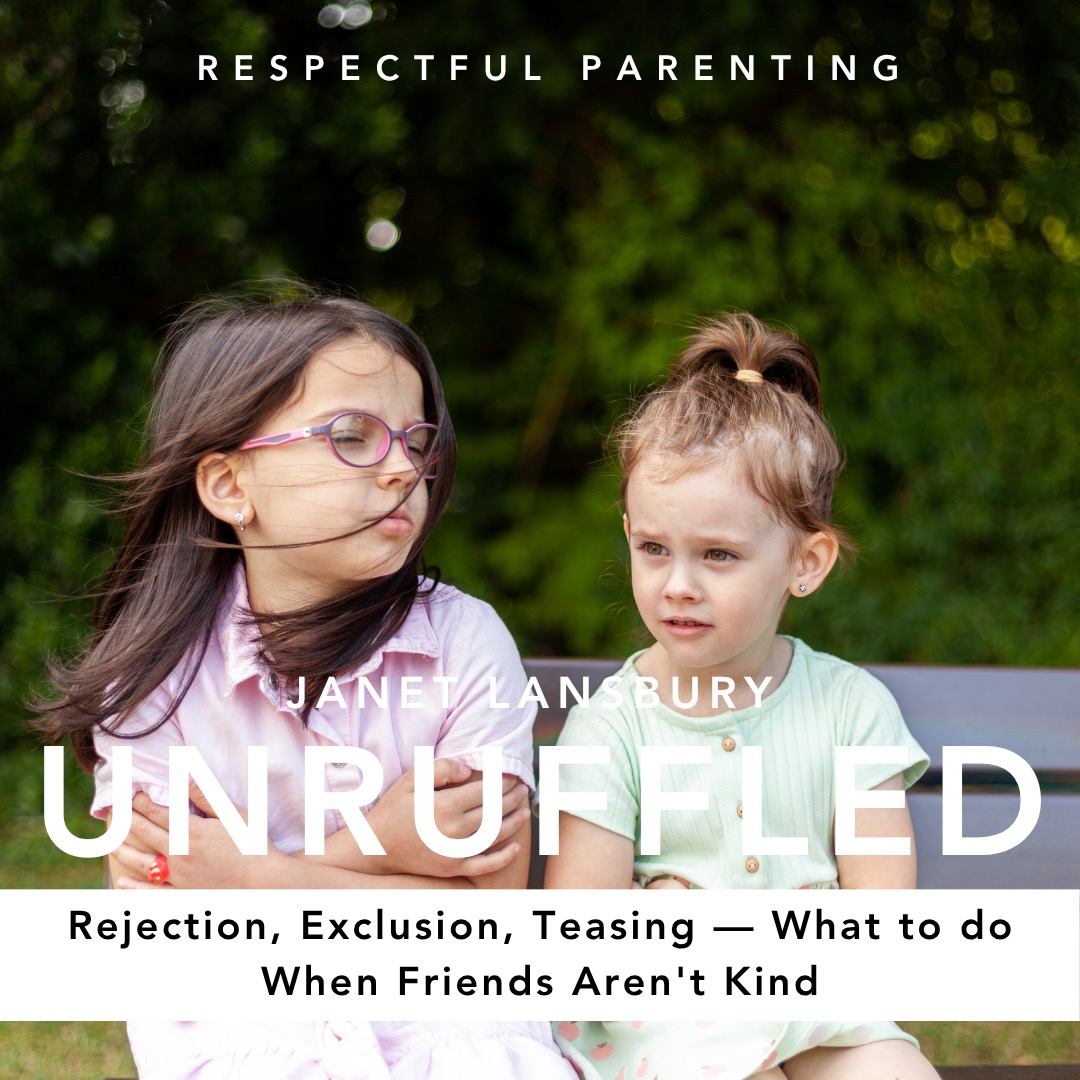
The intricate dynamics of childhood friendships, often characterized by blossoming bonds and mutual appreciation, can unfortunately devolve into painful experiences of rejection, exclusion, and teasing. This common, yet deeply upsetting, reality for many families highlights the challenges parents face in supporting their children through difficult peer interactions. A recent analysis by early childhood expert Janet Lansbury offers a perspective on empowering children to navigate these social complexities, emphasizing the fundamental principle that individuals hold the ultimate power over how much influence others have upon them.
The Unfolding Landscape of Childhood Social Struggles
Lansbury’s insights, drawn from recent inquiries from parents of five-year-old daughters, illuminate a pattern of relational aggression and social exclusion that can leave young children feeling hurt, confused, and disappointed. These situations, while sometimes dismissed as typical childhood squabbles, can have a significant emotional impact, leading to tearful playdates and a pervasive sense of unease. The underlying issue, as Lansbury posits, is not necessarily the behavior itself, but rather the power children and adults alike attribute to it.
Case Study 1: The Ultimatum and the Silent Treatment
One parent describes a recurring scenario involving her daughter and a friend. The conflict often arises from disagreements over play activities, leading the friend to issue ultimatums such as, "If you don’t do X, then I won’t be your friend anymore." This is frequently followed by the friend refusing to acknowledge the daughter, or abruptly ending the playdate with a curt, "I don’t want to play anymore," without even a goodbye. The parent observes that the friend seems to derive power from withholding social interaction and affection.
"It seems like she feels the power in withholding," the parent notes, a sentiment that Lansbury identifies as a crucial insight into the dynamic. While acknowledging the difficulty of witnessing such exchanges, Lansbury advises against over-intervention, suggesting that parents can inadvertently amplify the situation by giving it undue power. The parent’s suggestion to the other mother, that children should be encouraged to respond verbally even with a "no," rather than resorting to silent treatment, reflects a desire for more constructive conflict resolution. However, Lansbury’s approach leans towards empowering the child to manage their own emotional responses and to recognize the source of the other child’s behavior.
Lansbury’s core message revolves around the idea that "People only have power over us when we give it to them." This principle, she argues, is particularly relevant in an era where social media and constant comparison can exacerbate feelings of inadequacy and FOMO (fear of missing out) in children. By not allowing external behaviors or opinions to dictate their self-worth, children can develop resilience and agency.
Navigating Exclusion in a New Environment
A second case involves a family that recently relocated to a new country. The daughter, described as social and outgoing, quickly made friends in her new neighborhood. However, two sisters began to exclude her, actively discouraging other children from playing with her and even yelling at their younger siblings to leave if the daughter approached. This coordinated effort to ostracize the daughter created a challenging social environment.
The parent in this scenario grapples with the extent of intervention, aiming to support her daughter without rescuing her. She has spoken with the other children’s mother, who has also addressed the behavior with her daughters. The parent’s internal conflict lies in her desire to remain a welcoming figure to her neighbors while simultaneously feeling disinclined to engage with the children exhibiting bullying behavior.
"I want my daughter to know I’m on her side, so I find myself having a hard time being pleasant with these children," the parent admits. This sentiment underscores the emotional toll on parents when their children are subjected to social aggression. Lansbury’s advice here focuses on trusting the child’s capacity to manage the situation with parental support. She suggests encouraging the daughter to foster friendships with children who are kind and supportive, while allowing the exclusionary behavior of the other girls to run its course without excessive parental involvement.
The "Weakest" Asserting Power
Lansbury analyzes this situation by framing the exclusionary behavior as an attempt by the two sisters to assert power, stemming from insecurity rather than genuine happiness. "Those are the weakest people that are trying to do that," she states, referring to those who resort to manipulative social tactics. The parent’s efforts to mediate through playdates proved temporarily effective but ultimately did not resolve the underlying exclusionary dynamic. This illustrates how children can sometimes engage in "immature games" to gain social control, and that such behaviors, when not given undue power by adults, can eventually lose their efficacy.
The parent’s question about how to treat the children bullying her daughter is met with Lansbury’s advice to maintain a stance of kindness but avoid over-extending oneself to appease them. This approach, Lansbury argues, prevents validating behavior that is not conducive to healthy friendships and reinforces the idea that the exclusionary actions are a reflection of the other children’s insecurities, not the target child’s shortcomings.
Kindness as Strength, Not Weakness
A poignant third case highlights a parent’s deep-seated concern for her daughter, who possesses a naturally kind, empathetic, and naive disposition. The parent worries that her daughter’s inherent sweetness will be perceived as weakness, leading to her being taken advantage of, mirroring the parent’s own childhood experiences of being bullied. The daughter has already faced instances of exclusion, such as being told she cannot play with a group and witnessing friends choose her younger sister.
"My mind instantly jumps to what this might mean for her later in life," the parent expresses, revealing the personal anxieties that often accompany parental fears for their children’s well-being. She grapples with the instinct to teach her daughter to be "mean back" or to "get people on her side," recognizing that these are not appropriate lessons for a five-year-old.
Lansbury addresses this by reframing kindness not as a vulnerability, but as a form of strength. She explains that those who resort to meanness and exclusion are, in fact, demonstrating weakness. The daughter’s acceptance of exclusion, while leading to sadness, is also a powerful act of self-regulation, demonstrating her ability to walk away from a negative situation.
Empowering Children Through Parental Trust
Lansbury emphasizes that the most impactful way for parents to support children in these situations is by believing in their innate capacity to navigate social challenges. This involves modeling a calm and balanced response, rather than projecting their own fears and anxieties onto the child. The parent’s self-awareness, acknowledging that much of her concern stems from her own past experiences, is a crucial step.
"What am I missing?" the parent asks. Lansbury’s response centers on the idea that the daughter is already demonstrating her power by choosing not to engage with negativity. Her kindness and empathy are not liabilities but valuable traits that will serve her well in the long run. The key is to nurture these strengths and to foster a belief in her own resilience, rather than trying to equip her with aggressive tactics.
The Sibling Dynamic and Parental Triggers
The final case study presents a different, yet related, challenge: a parent who finds herself frequently correcting her own daughter during playdates, particularly when her daughter exhibits teasing behavior towards her best friend. The five-year-old daughter, described as strong-willed and confident, sometimes says things like, "You’re shy" or "I’m better at X than you," which elicits a negative response from her friend, who then seeks comfort from the parent.
The parent acknowledges that her own annoyance and discomfort are palpable to her daughter and admits that her experience as a parent of an only child may contribute to her difficulty in managing sibling-like conflict. She notes that her daughter behaves impeccably in other social settings, suggesting that the dynamic with her close friend, coupled with the parent’s presence, triggers this specific behavior.
Lansbury highlights the parent’s self-reflection, particularly her concluding statement: "I suspect it’s a normal kid thing and that it’s me who needs help to accept and learn to support in the right way." This recognition is key. Lansbury explains that the parent’s discomfort and tendency to scold her daughter, while understandable, may inadvertently be giving power to the situation.
Supporting Without Over-Intervening
Lansbury advises the parent to focus on supporting both children when conflicts arise, rather than solely on correcting her daughter. When the friend runs to the parent upset, Lansbury suggests a response that validates the friend’s feelings without immediately admonishing the daughter. For instance, asking, "Oh, what happened?" or "You didn’t like that, huh?" and then reflecting the child’s emotions. The goal is to avoid taking over the conflict or making it a larger issue than the children themselves perceive it to be.
The parent’s observation that her daughter’s behavior is more noticeable when she is present, compared to when her daughter is at other people’s homes, is a significant clue. Lansbury suggests this might indicate that the daughter is picking up on her mother’s heightened awareness and perhaps even her anxiety, which can inadvertently empower the dynamic. By letting go of the need to "fix" the behavior and instead offering supportive presence, parents can allow children the space to learn from their interactions and develop their own conflict-resolution skills.
Broader Implications for Child Development
The overarching theme across all these scenarios is the importance of parental trust in a child’s capacity to navigate social challenges. By refraining from over-intervention, and by modeling a calm, non-judgmental approach, parents can empower their children to develop self-reliance, resilience, and a strong sense of self-worth. The principle that individuals control the power they give to others is a vital lesson that, when learned early, can serve as a protective factor throughout life, especially in an increasingly interconnected and socially complex world.
The insights provided by Lansbury offer a valuable framework for parents seeking to support their children through the inevitable ups and downs of friendship. Her emphasis on empowering children, fostering their internal locus of control, and modeling confident, supportive parenting provides a path forward for nurturing emotionally resilient and socially adept young individuals. The ability to discern between kindness and being taken advantage of, and to recognize that true strength lies in empathy and self-awareness, are lessons that transcend childhood and contribute to lifelong well-being.