

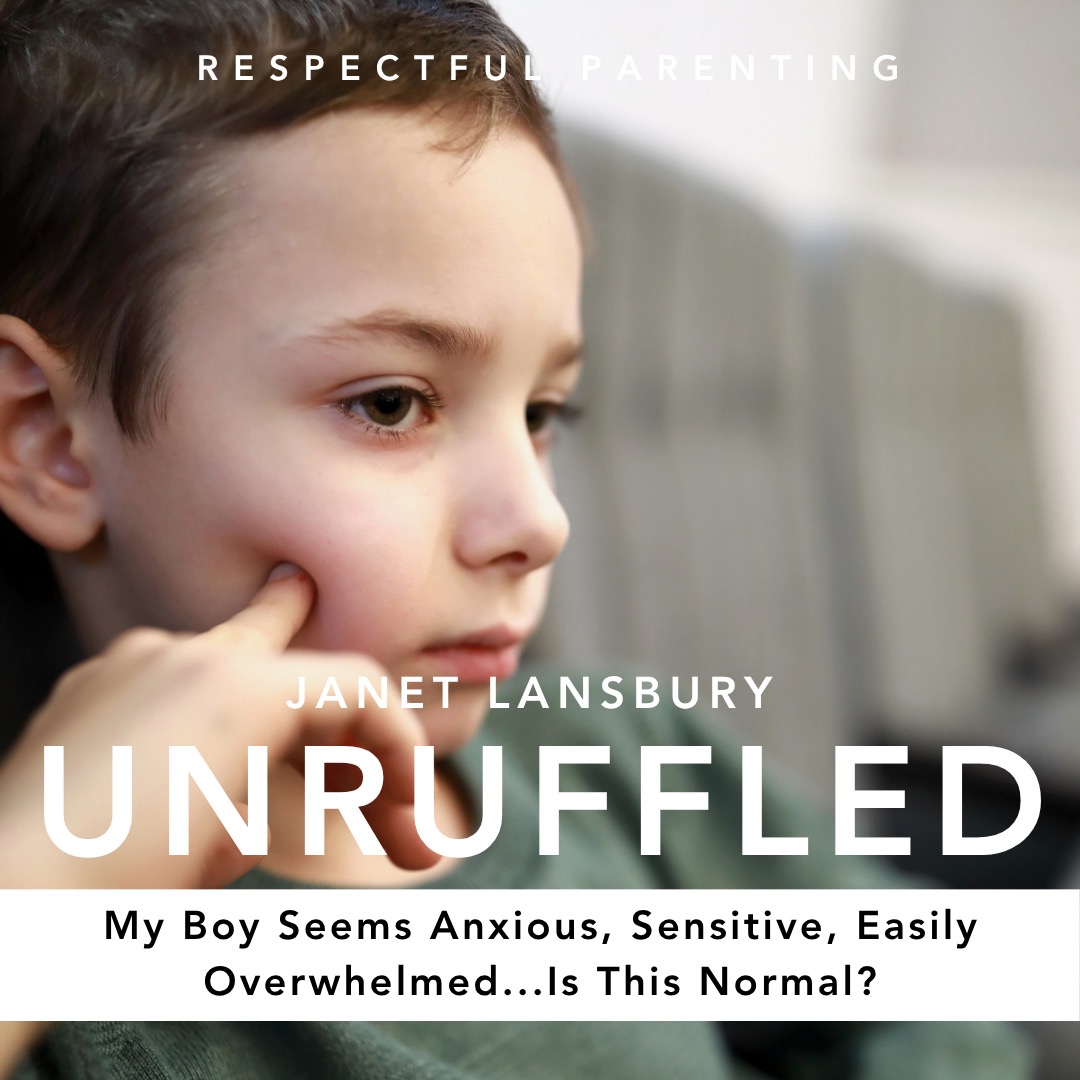
In a recent installment of her popular podcast, "Unruffled," child development advocate Janet Lansbury addressed the growing concerns of parents whose young children exhibit heightened sensitivity, anxiety, and a tendency to become easily overwhelmed in social and stimulating environments. Lansbury, a proponent of respectful parenting practices, offered guidance and reassurance to three parents grappling with these temperaments, emphasizing that such traits are not only normal but can also be valuable.
The podcast episode, originally published on July 5, 2025, delved into the specific anxieties of parents who observe their children reacting differently from their peers. One parent articulated a common sentiment: "I’m so lost… Sometimes I feel shame – not about him – but because I want to do fun things with him, but he always pulls back and retreats." This feeling of helplessness and societal pressure to conform to a perceived norm of childhood sociability formed the core of the parents’ inquiries.
Understanding Sensitive Temperaments: A Growing Parental Concern
Lansbury’s response to the parents’ queries stems from extensive experience and observation in early childhood development. She acknowledges that children who are described as reserved, introverted, slow to warm up, or shy, are often misunderstood. The term "shy," in particular, Lansbury notes, can carry negative connotations, recalling her own childhood experiences where being labeled as such felt like a disapproval of her natural disposition.
The central thesis of Lansbury’s advice is a call for parental acceptance and trust in the child’s innate temperament. She asserts that these children, while potentially finding large groups or unpredictable situations overwhelming, can thrive in one-on-one interactions, in small doses, or within environments where they feel a sense of control. The challenge for parents, she explains, lies in navigating their own potential frustration and concern without projecting it onto their children, which can inadvertently send the message that the child’s feelings are problematic.
Case Study 1: The Overwhelmed Three-Year-Old
The first parent detailed the experiences of their three-year-old son, who, despite being described as independent and comfortable playing alone, exhibits significant distress in more crowded or demanding social situations. This was vividly illustrated during his birthday party, where the collective "Happy birthday!" chorus led him to bury his face in his mother’s shoulder and bite her. While acknowledging that biting is unacceptable behavior, Lansbury interprets it as an impulsive reaction to being overwhelmed. She commended the mother’s quick and sensitive response in asking the other children to sing more quietly.
Further examples included the child’s aversion to swimming if additional people joined him and his tendency to hover near, rather than join, groups of playing children if more than one other child was present. Lansbury highlighted that the child’s ability to engage with one peer, or to retreat and engage in solitary play when overwhelmed, demonstrates a self-regulatory capacity, even at a young age. The parent’s feeling of shame, stemming from the desire to engage in shared activities that the child consistently withdraws from, was addressed by Lansbury’s affirmation that the child’s actions are not a reflection of his mother’s parenting but rather a manifestation of his temperament.
Lansbury’s analysis suggested that the parent’s desire to teach her son how to manage overwhelm is admirable, but the approach should focus on validation rather than correction. By allowing the child to withdraw appropriately and acknowledging his need for space, parents implicitly teach him that it is acceptable to feel overwhelmed. Attempting to push him through these feelings or make him "get over it" can send the opposite, detrimental message.
Case Study 2: Navigating the Playgroup and Football Class
The second parent, a first-time mother, expressed gratitude for Lansbury’s resources over the past five years but admitted to feeling "exhausted" and "lost." Her four-year-old son has always been reserved, a trait that may have been subtly reinforced by the family’s isolation during the COVID-19 pandemic. While he has shown improvement in socialization at a playgroup, he still occasionally cries during transitions or performances, such as during his "moving up" pictorial, where his photos captured him in tears or looking sad.
Lansbury interpreted these instances not as failures but as healthy expressions of a sensitive child navigating challenging situations. The tears during the pictorial, for example, were seen as a positive indication that the child was not suppressing his emotions. However, the parent’s exhaustion peaked when enrolling her son in a football class. Despite enjoying football with his father individually, the child became extremely clingy during the group class, crying if his parents didn’t remain within close proximity. This behavior contrasted with younger children in the same class who, while occasionally distracted, did not exhibit the same level of distress.
Lansbury advised setting "reasonable boundaries" in such situations. While trusting the child’s temperament is crucial, parents also need to establish boundaries for themselves to avoid exhaustion. In the context of the football class, this meant not allowing the child’s clinginess to dictate the parents’ participation to an unsustainable degree. Lansbury questioned the appropriateness of a highly structured activity like football for a five-year-old with this particular temperament, suggesting that simpler, less performance-oriented activities might be more suitable. She emphasized that there is no rush for children to engage in competitive or complex group activities and that parental involvement should stem from the child’s genuine interest.
Case Study 3: The Six-Year-Old’s Anticipatory Sadness
The third parent presented a unique situation involving their nearly six-year-old son, who actively requested that his parents not attend school events. His reasoning was not a desire for their absence but an anticipation of sadness and crying upon their departure at the end of the event. While the child had previously experienced separation anxiety at the beginning of school, he now waved his mother off happily. His experience at a full-day school trip was positive, but shorter events seemed to trigger different emotions.
During an athletics event, he initially expressed uncertainty about his parents’ attendance, fearing he would get sad. Despite this, he changed his mind, and his parents attended. He did, as predicted, become upset and cried for a short period, missing some of the event. However, once he processed these emotions, he had a great time, and his departure from his parents was fine.
In the current scenario, with 10 class swimming lessons for parents to observe, the child explicitly stated he did not want them to come because he knew he would get sad. The parents respected his choice and did not attend. This led the parent to question whether it is better to encourage children to face difficult emotions or to always respect their choices.
Lansbury proposed a nuanced approach. She suggested that parents can express their desire to attend and witness their child’s activities, framing it as an opportunity to share the experience and process any difficult emotions together. The key is to communicate that the parent is not afraid of the child’s crying or sadness. "It’s okay if you cry. I really want to come, and I’m not afraid of you crying. I want you to share that with me," is the kind of message Lansbury advocates. This approach, she explained, normalizes the child’s feelings and allows them to be expressed openly, rather than being suppressed.
She stressed the importance of parental bravery in the face of a child’s vulnerability. If parents can remain calm and accepting of their child’s emotional expressions, children are less likely to feel anxious about their own feelings. The cycle of parental anxiety amplifying a child’s anxiety is a significant concern, and Lansbury urged parents to break this pattern by trusting their own instincts and their child’s inherent capacity to navigate their emotions.
Broader Implications and Expert Analysis
Lansbury’s analysis underscores that these temperaments, while perhaps less common than more outgoing dispositions, are a natural variation in childhood development. The increasing number of parents seeking guidance on this topic suggests a growing awareness of diverse childhood personalities and a potential societal shift towards greater understanding and acceptance.
The implications of Lansbury’s advice extend beyond individual parent-child relationships. By advocating for a non-judgmental and accepting approach, she aims to foster a generation of children who feel secure in their own skin, regardless of their social tendencies. This can contribute to greater self-esteem and resilience, as children learn to trust their own feelings and needs.
Furthermore, Lansbury’s emphasis on "reasonable boundaries" provides a practical framework for parents. It suggests a balance between validating a child’s emotional experience and maintaining parental well-being and the ability to participate in life’s activities. This balance is essential for healthy family dynamics, preventing parental burnout and ensuring that the child’s unique needs are met without overwhelming the entire family unit.
The article highlights the inherent value of sensitivity and depth in children. While these traits may present challenges in navigating certain social situations, they often correlate with empathy, creativity, and a rich inner life. By encouraging parents to view these characteristics not as deficits but as gifts, Lansbury seeks to empower them to support their children in developing into confident, well-adjusted individuals who embrace their authentic selves. The observation that all the children discussed were boys is also noted, prompting a brief consideration of whether parental expectations or societal norms surrounding masculinity might influence their reactions or the parents’ interpretations.
In conclusion, Janet Lansbury’s "Unruffled" episode serves as a vital resource for parents navigating the complexities of sensitive and anxious children. Her message of acceptance, trust, and courageous boundary-setting offers a path toward nurturing these children, allowing them to thrive and develop their unique strengths in a world that often favors extroversion. The core takeaway is a profound reassurance: these temperaments are not only normal but are also a testament to a child’s deep capacity for feeling and experiencing the world.