

Baby sign language has emerged as a significant pedagogical tool in early childhood development, serving as a linguistic bridge for infants who have not yet reached the physiological maturity required for verbal speech. By utilizing simplified gestures derived from American Sign Language (ASL), parents and educators can establish a two-way communication stream with children as young as six months old. This practice, while once considered a niche educational trend, is now widely recognized by developmental psychologists and pediatricians as a viable method for reducing frustration in the pre-verbal stages of infancy. The primary objective of baby sign language is not to replace spoken language but to provide a temporary symbolic system that aligns with an infant’s motor skill development, which typically precedes the complex coordination of the vocal tract.
The Historical and Scientific Context of Infant Gestural Communication
The formal study of baby sign language began to gain mainstream traction in the 1980s and 1990s, spearheaded by researchers such as Dr. Joseph Garcia and Dr. Linda Acredolo. Garcia observed that children of deaf parents often communicated their needs much earlier than children of hearing parents because they were exposed to ASL from birth. Simultaneously, Acredolo and her colleague Dr. Susan Goodwyn conducted long-term studies funded by the National Institutes of Health (NIH), which suggested that symbolic gesturing could actually provide a "jumpstart" for verbal language development.
The scientific premise rests on the gap between cognitive capacity and physical ability. An infant’s brain is capable of forming specific desires—such as wanting more food or feeling cold—long before the muscles in the tongue, throat, and lips can articulate the corresponding words. Research indicates that while the vocal apparatus may not be fully functional for speech until 12 to 18 months, the gross motor skills required for manual signing are often sufficiently developed by 7 to 9 months.
A Developmental Timeline for Sign Acquisition
The implementation of baby sign language follows a predictable chronological trajectory based on an infant’s neurological and physical milestones.
Four to Six Months: The Observational Phase
At approximately four months, an infant’s eyesight has developed enough to follow fast-moving hand gestures. During this period, caregivers are encouraged to begin modeling signs consistently. While the infant will not have the motor control to sign back, they are beginning to form the mental associations between a specific gesture and its real-world outcome.
Seven to Nine Months: The Emergence of Manual Expression
Most infants begin to produce their first signs during this window. This coincides with the development of the "pincer grasp" and improved hand-eye coordination. Initial attempts at signing may be "approximations"—imperfect versions of the gesture that the caregiver must learn to recognize and reinforce.
Twelve to Eighteen Months: The Transition to Verbalization
As the child’s vocal tract matures, they typically begin to pair signs with spoken words. This period marks the height of the "signing vocabulary," which can often exceed 50 distinct gestures. Gradually, as the ease of speaking surpasses the effort of signing, the child will naturally phase out the manual gestures in favor of verbal communication.
Quantifiable Benefits and Psychological Impact
The integration of sign language into early childhood routines offers several documented advantages that extend beyond simple communication.
1. Mitigation of Behavioral Frustration
A primary cause of temper tantrums in toddlers is the inability to communicate complex needs or feelings. When a child can clearly sign "milk" or "all done," the need for crying as a primary communication tool diminishes. Data suggests that households utilizing baby sign language report a lower frequency of communication-based behavioral outbursts.
2. Cognitive Development and Self-Efficacy
The use of signs encourages early symbolic thought. By understanding that a movement of the hands represents an object or an action, the infant is engaging in high-level cognitive processing. This mastery of a communication system builds self-esteem and a sense of agency, as the child learns that their actions can directly influence their environment and the behavior of their caregivers.
3. Impact on Verbal Language Acquisition
While some parents express concern that signing might delay speech, longitudinal studies have largely debunked this myth. Acredolo and Goodwyn’s research indicated that at 36 months, children who had signed as infants scored higher on standardized language tests than those who had not. However, it is important to note that the scientific community remains divided on whether signing provides a permanent IQ boost, with more recent studies suggesting the benefits are primarily centered on early socio-emotional attunement.
Strategic Methodology for Teaching Signs
For sign language to be effective, it must be introduced through a structured and consistent pedagogical approach.
The Principle of Frequency and Context
Caregivers are advised to start with three to five "high-value" signs—words that represent the child’s most frequent needs or interests. The most common starting signs include "more," "milk," and "eat." The sign should always be performed simultaneously with the spoken word to ensure the child associates the gesture with the auditory label.
Positive Reinforcement and Approximation
When an infant attempts a sign, immediate positive reinforcement is required. This is often referred to as "shaping" the behavior. Even if the infant’s gesture is clumsy or inaccurate, acknowledging the attempt encourages the child to continue refining their motor skills.
Maintenance of Visibility
Signs should be performed within the infant’s direct line of sight, typically 12 to 18 inches from their face. Maintaining a calm, encouraging facial expression is also critical, as infants are highly attuned to non-verbal emotional cues.
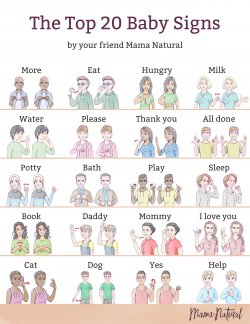
The Essential Lexicon: Descriptions of 20 Common Signs
The following signs represent the foundational vocabulary for most baby sign language programs. These gestures are simplified versions of ASL designed for infant motor capacities.
Basic Needs and Requests
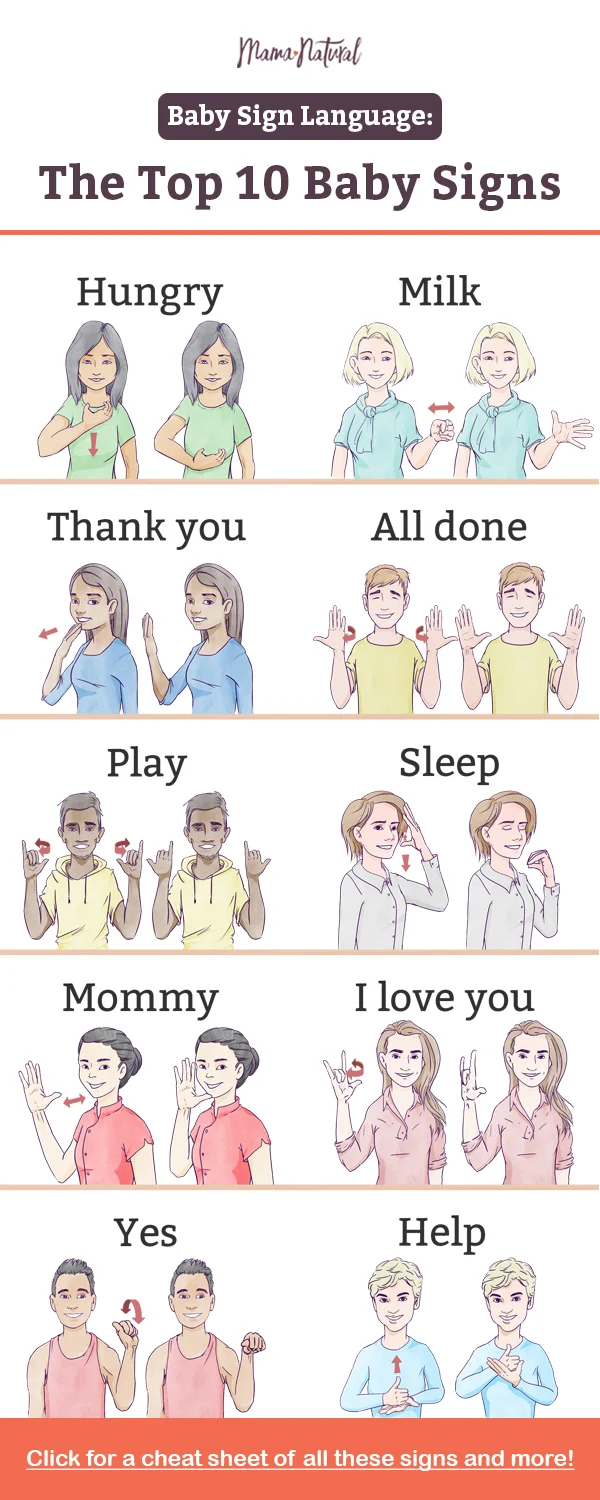
- More: Bring the tips of the fingers and thumbs together on each hand to form a "flat O" shape, then tap the hands together repeatedly.
- Eat: Using the "flat O" hand shape, tap the fingertips against the lips.
- Hungry: Place a flat hand on the chest and slide it down toward the stomach, simulating the path of food.
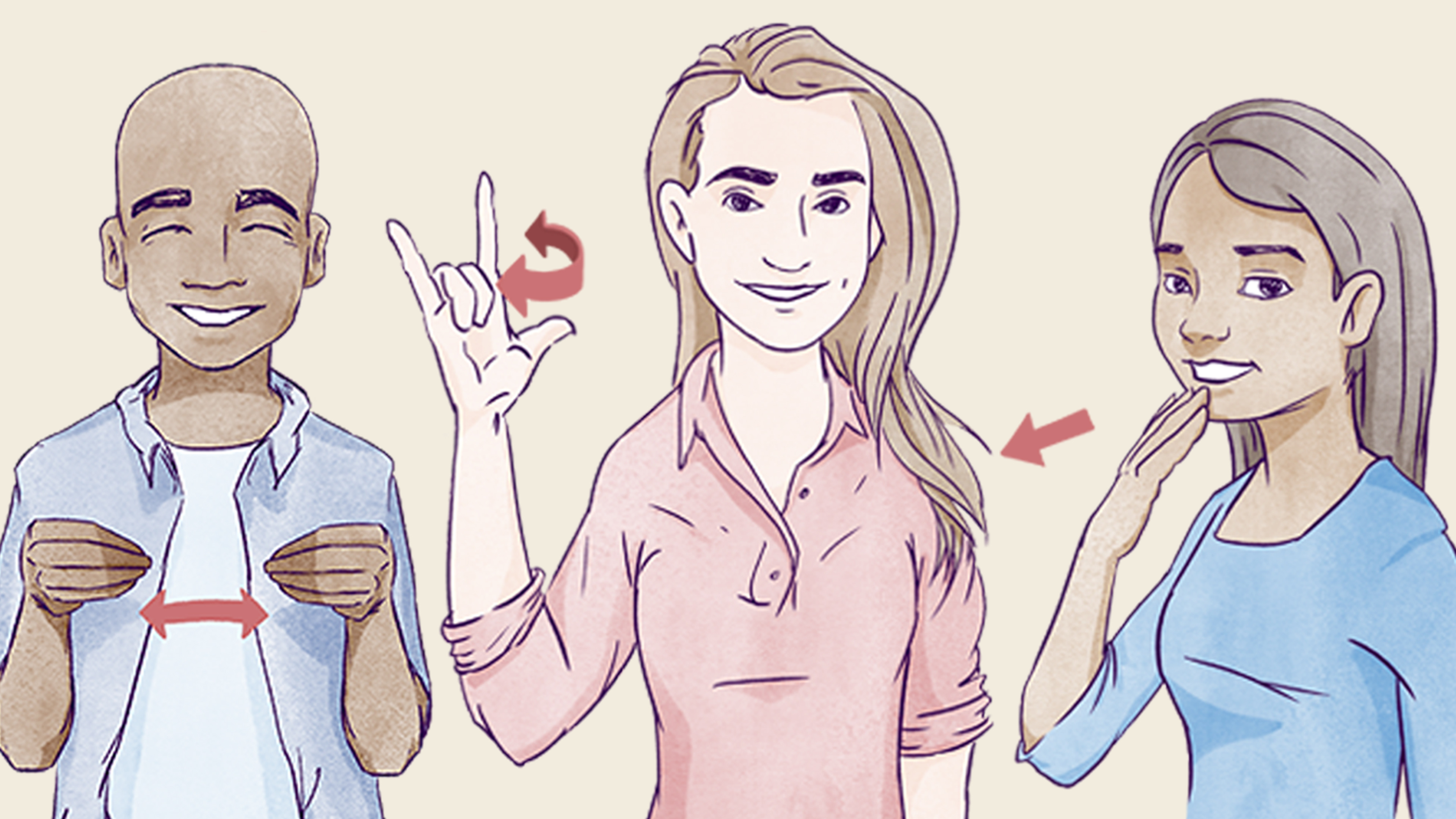
- Milk: Form a fist and then open and close the hand, mimicking the motion of milking a cow.
- Water: Form a "W" with the three middle fingers and tap the index finger against the chin.
- Help: Place a "thumbs-up" hand on top of a flat palm and move both hands upward together.
- All Done: Hold both hands up with palms facing the body, then twist the wrists so the palms face outward.
Social Interaction and Manners
- Please: Place a flat palm against the chest and move it in a circular motion.
- Thank You: Touch the fingertips to the chin and then move the hand forward and down, similar to blowing a kiss.
- I Love You: Cross both arms over the chest, hands balled into fists, simulating a self-hug.
- Yes: Form a fist and tilt it up and down at the wrist, mimicking a nodding head.
- Play: Extend the thumb and pinky finger while tucking the middle fingers into the palm, then rotate the wrist back and forth.
Daily Routines and People
- Mommy: Extend the fingers and tap the thumb against the chin.
- Daddy: Extend the fingers and tap the thumb against the forehead.
- Sleep: Start with a flat hand over the forehead, then pull the hand down toward the chin while closing the fingers.
- Bath: Form fists with both hands and rub them up and down the chest, mimicking a scrubbing motion.
- Book: Place the palms together and then open them as if opening a book, keeping the "spine" (the pinky side of the hands) connected.
- Potty: Form a fist with the thumb tucked between the index and middle fingers, then shake the hand side-to-side.
- Change: Form two "hooks" with the index fingers and thumbs, then rotate the wrists to switch the position of the hands.
Environment
- Dog: Pat the thigh and then snap the fingers, mimicking the action of calling a canine.
- Cat: Use the thumb and index finger to "pull" imaginary whiskers away from the side of the mouth.
Professional Perspectives and Clinical Implications
Speech-language pathologists (SLPs) frequently utilize gestural communication as an intervention strategy for children with developmental delays, Down syndrome, or autism spectrum disorder. In these clinical contexts, sign language serves as an "augmentative and alternative communication" (AAC) tool. For typically developing infants, the American Academy of Pediatrics (AAP) notes that while signing is not a developmental requirement, it can be a helpful tool for enhancing the parent-child bond and facilitating early communication.
The broader impact of baby sign language is found in the "attunement" it fosters between caregiver and child. When a parent successfully interprets a sign, it validates the infant’s attempt to communicate, creating a positive feedback loop that supports healthy emotional attachment.
Conclusion and Future Outlook
As the understanding of infant neurobiology continues to evolve, the role of gestural communication is likely to remain a cornerstone of early childhood education. While the technology of communication changes, the fundamental human need for connection remains constant. Baby sign language provides a practical, evidence-based solution to the "communication gap" of the first year of life. By investing the time and patience required for sign acquisition, caregivers can gain a unique window into the thoughts and needs of their pre-verbal children, fostering an environment of mutual understanding long before the first word is ever spoken. The long-term implications of this early empowerment include not only improved linguistic outcomes but also a more resilient and confident approach to learning and social interaction as the child matures.
