

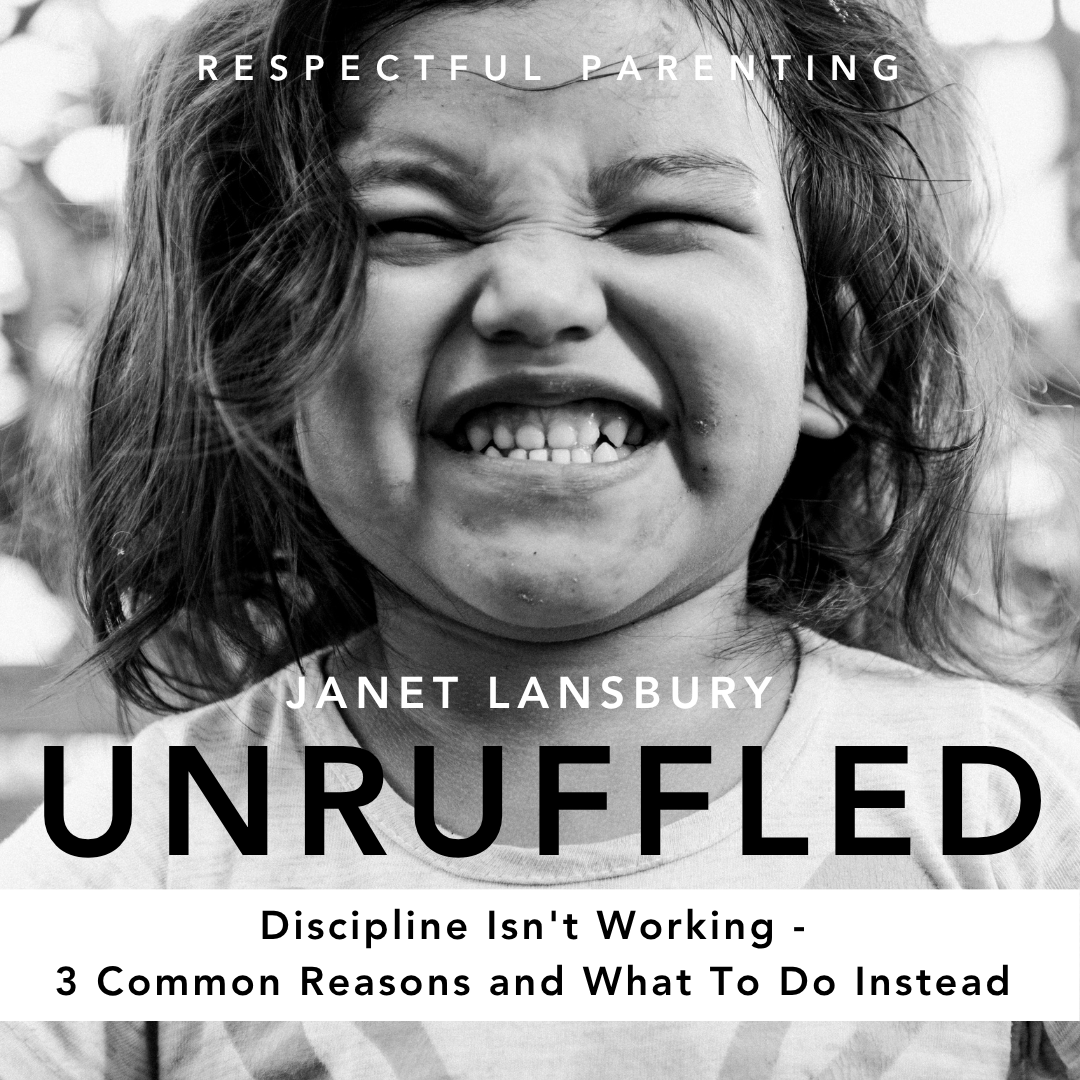
The landscape of parenting advice has undergone a significant evolution, particularly concerning how children’s emotions and behaviors are understood and managed. Janet Lansbury, a prominent voice in early childhood education and author, recently addressed persistent challenges parents face when traditional disciplinary approaches seem ineffective. In her podcast episode, "Unruffled," Lansbury identified three core reasons why attempts at respectful discipline often fall short, offering a nuanced perspective on fostering healthier parent-child relationships and supporting children’s emotional development.
The Shifting Paradigm of Childhood Emotional Expression
Lansbury’s commentary highlights a notable shift in societal attitudes towards children’s feelings since the late 2000s. Initially, a prevailing sentiment, often shared between parents through early blogging platforms, involved a degree of shaming if a child exhibited distress, such as prolonged crying or meltdowns. This was frequently framed as a direct reflection of parental inadequacy—implying insufficient breastfeeding, carrying, or connection. This perspective, Lansbury notes, has largely given way to an increased emphasis on acknowledging and validating children’s emotions.
However, this pendulum swing has, in some instances, led to an overemphasis on feelings, creating confusion for parents regarding their role. The perception can become that managing a child’s emotional state is an all-consuming and paramount responsibility, potentially overshadowing other aspects of parenting and child development. Lansbury references the wisdom of figures like Mooji, who suggests that "Feelings are just visitors. Let them come and go," advocating for a healthy parental stance that accepts emotions as transient and normal, rather than something to be fixed or eradicated. This balanced perspective, she argues, is crucial for teaching children emotional resilience and self-regulation, fostering a sense of safety and acceptance.
Three Common Pitfalls in Modern Discipline
Lansbury outlines three primary reasons why disciplinary efforts may prove counterproductive:
1. Reacting to Symptoms, Not Underlying Causes
A frequent challenge arises when parents address outward behaviors without delving into the root causes, often driven by underlying emotions or stress. Children, particularly when overwhelmed, can exhibit behaviors that appear unreasonable or "kooky" because their emotional systems are dysregulated. Lansbury illustrates this point with a poignant example shared by a parent on Instagram.
This parent described a four-year-old exhibiting extreme behavioral changes—constant yelling, defiance, aggression towards siblings and pets, and severe bedtime struggles. These issues emerged amidst significant family stressors: the recent death of a beloved family dog, the hospitalization of adored grandparents who lived with them, and the unexpected acquisition of a new puppy. The child, described as bright and manipulative, admitted to feeling sad daily due to the dog’s passing.
Lansbury emphasizes that such intense behavioral shifts are "totally expected" given the circumstances. She posits that children’s primary influence on their sense of security and self-control stems from their parents. When parents themselves are understandably "ruffled" by life events, their children are even more profoundly affected. The advice offered in this situation was not to reprimand the behavior but to protect those around the child from it, while allowing the child to express her distress. This involves practical measures like ensuring the baby is in a protected space and the dog is supervised, acknowledging that the child is "terribly uncomfortable" and likely does not wish to behave this way. The intelligence of a child, Lansbury notes, can sometimes amplify their sensitivity to losing control.
The parent’s observation that bedtime routines had become protracted, lasting over two hours with screaming and resistance, is also analyzed. Lansbury suggests this is often a consequence of unexpressed emotions accumulating throughout the day. Each boundary set by parents—such as preventing the child from being near the baby when out of control—can trigger a reaction, allowing the child to vent. If these feelings are processed safely throughout the day, they are less likely to build to a critical mass at bedtime. This highlights the importance of allowing children to express their emotions in response to boundaries, rather than suppressing them, which can lead to prolonged and intense emotional releases later.
Supporting Data: Research in developmental psychology consistently demonstrates the link between significant life stressors and behavioral changes in children. Studies on childhood trauma and adverse childhood experiences (ACEs) reveal that even seemingly minor disruptions can impact a child’s emotional regulation and behavior, particularly in younger children who have less developed coping mechanisms. For instance, a 2020 study published in the Journal of Child Psychology and Psychiatry indicated that children exposed to parental stress or family disruption are at higher risk for developing behavioral problems.
2. Saying No to Behavior Without Offering an Alternative Outlet for Feelings
A second common pitfall identified by Lansbury is the practice of simply prohibiting undesirable behaviors without providing children with an acceptable avenue to express the underlying emotions driving those actions. While parents may set boundaries, such as saying "no" to a specific behavior, they often fail to create space for the child to communicate their feelings about that boundary.
Lansbury clarifies that this does not necessitate complex emotional analysis or labeling of feelings. Instead, it involves a simple acknowledgment and presence: "Can’t let you do that. I’m going to stop you. You want to keep doing that. You’re really having a hard time stopping yourself." This brief reflection, where the parent is seen by the child, can have a calming effect. It conveys that while the behavior is not acceptable, the desire to engage in it is understandable, and the parent is not angry about the child’s feelings. This message is critical, as children can otherwise internalize that their problematic behaviors are inherently wrong and that they should never feel the urge to act them out. When parents solely focus on symptoms and don’t address the cause, children may feel their emotions are unwelcome or unmanageable, hindering their ability to develop healthy coping strategies.
3. Parental Discomfort with or Responsibility for the Child’s Feelings
The third reason discipline may falter is when parents feel overly responsible for their child’s emotional state, becoming uncomfortable with or sad about their child’s distress. This can lead to a desire to "make it better" rather than holding a boundary and allowing the child to experience their full range of emotions. Lansbury stresses that this is a common reaction, particularly for parents who are naturally empathetic or have been influenced by contemporary parenting philosophies that may overemphasize parental intervention in emotional regulation.
She distinguishes this from the parent’s role in setting boundaries and welcoming feelings. The parent’s job is not to teach a child self-regulation on top of everything else, nor is it to calm them down directly. Rather, it is to be a steady presence who accepts the child’s emotional experience. When parents feel responsible for alleviating their child’s discomfort, they may second-guess their boundaries or try to placate the child, inadvertently undermining their own authority and the child’s ability to learn resilience. This can create a perception for the child that their negative emotions are indeed an "event" requiring significant parental intervention, rather than a normal part of life that they can navigate with support. The younger the child, the more pronounced this emotional fluctuation will be, and increased household stress can further exacerbate it.
The Nuance of "Success" in Parenting
Lansbury addresses a poignant letter from a parent who expressed discouragement after hearing about seemingly "peaceful, harmonious outcomes" in previous podcast episodes. This parent, a mother of a six- and four-year-old, detailed her consistent application of respectful parenting methods, yet found her reality to be "extremely challenging." She described an instance where her son, upon being told he couldn’t bring a cardboard sword to his grandparents’ house, became upset and refused to leave. Despite her efforts to acknowledge his feelings, express curiosity, and suggest an alternative, the child remained angry and immobile for 15 minutes.
This parent’s feedback underscores a critical point: the journey of parenting is inherently messy, prolonged, and emotionally intense, even with committed and aligned efforts. Lansbury acknowledges that her intention is never to discourage parents but to offer a glimpse into a "sweet spot" where challenges can be navigated with greater ease. She clarifies that the success stories shared do not imply an end to difficulties but rather a capacity to return to that more balanced state. The "success" lies in the parent’s ability to find that place of acceptance and understanding, even amidst a child’s emotional storm.
Lansbury’s response to this parent highlights a potential misinterpretation of her approach: an over-emphasis on making the child "okay" or "safe" in their emotional expression. She suggests that for a six-year-old, a more direct, yet kind, approach might be more effective. This could involve a simple statement like, "Yeah, you really want to bring that. Gosh, that’s making you so mad. Come on, we’re going to go. But you can yell at us the whole way in the car if you need to." The key, Lansbury argues, is to maintain conviction, simplicity, and honesty while welcoming the feelings. This approach, she believes, allows for quicker resolution and teaches children that expressing anger is acceptable and manageable, rather than a cause for concern or an event requiring extensive intervention.
Broader Implications for Parent-Child Bonds
The implications of these disciplinary pitfalls extend beyond immediate behavior management. When parents consistently react to symptoms, fail to provide outlets for emotions, or become overly enmeshed in their child’s feelings, it can subtly undermine the parent-child bond. Children may perceive that their negative emotions are not fully safe or acceptable, leading them to suppress or hide their true feelings. This can hinder the development of trust and open communication, which are foundational to a strong, lasting relationship.
Conversely, adopting a more balanced approach—one that acknowledges the normality of childhood emotional volatility, validates feelings while upholding boundaries, and trusts in the child’s capacity to navigate challenges—can foster greater security and resilience. This does not mean parents are unaffected by their child’s distress; rather, it means they can hold their own discomfort and respond with a calm, consistent presence that reassures the child. As Lansbury concludes, this dynamic requires bravery and a deep belief in children’s inherent capabilities to manage life’s inevitable disappointments.
The core message is that effective discipline is not about controlling children’s behavior through punishment or strict adherence to rules, but about guiding them through their emotional experiences with empathy, clarity, and unwavering support. This nuanced understanding, Lansbury contends, is key to simplifying parenting and deepening the connection with our children, allowing them to feel seen, safe, and truly supported.