

The implementation of baby sign language (BSL) has transitioned from a niche pedagogical tool to a mainstream developmental strategy utilized by parents and early childhood educators globally to bridge the communication gap between infancy and verbal fluency. By utilizing a simplified version of American Sign Language (ASL) adapted for the developing motor skills of infants, caregivers can establish a functional dialogue with children months before the physiological capacity for speech is fully realized. This communicative modality serves as a vital intervention for reducing the cognitive and emotional friction often associated with the pre-verbal stage of human development.
The Evolution and Mechanics of Infant Manual Communication
Baby sign language is fundamentally an adaptation of standard American Sign Language, modified to accommodate the limited fine motor control of infants. While ASL is a complex, nuanced language with its own syntax and grammar, BSL focuses on high-utility nouns, verbs, and requests. The primary objective is to provide a visual and physical representation of concepts that an infant understands cognitively but cannot yet articulate vocally due to the slow maturation of the vocal cords, tongue, and respiratory control.
The practice gained significant academic attention in the 1980s, primarily through the research of Dr. Linda Acredolo and Dr. Susan Goodwyn. Their longitudinal studies suggested that infants who used symbolic gestures exhibited accelerated language development and higher IQ scores in later childhood. Today, pediatricians and speech-language pathologists frequently recommend signing as a supplemental tool to enhance the bond between caregiver and child while fostering early literacy skills.
Chronological Milestones in Symbolic Gesture Acquisition
The introduction and mastery of baby sign language follow a predictable developmental timeline aligned with neurological and physical maturation.
- Preparation Phase (Birth to 4 Months): During this period, infants focus on visual tracking and basic motor responses. While signing to an infant at this stage provides exposure, the child lacks the depth perception and cognitive mapping required to process the gestures.
- Introduction Phase (4 to 6 Months): Most developmental experts agree that four months is the optimal age to begin consistent signing. At this stage, the infant’s eyesight has matured sufficiently to observe hand shapes, and they begin to associate specific gestures with recurring events or objects.
- Passive Recognition (6 to 8 Months): The infant may begin to show excitement or recognition when a caregiver uses a familiar sign, such as "milk" or "eat," though they may not yet have the coordination to replicate the motion.
- Active Production (7 to 9 Months): This is the typical window for the "first sign." Infants usually begin with simplified versions of the gestures they have seen most frequently.
- Expansion Phase (10 to 14 Months): Once the first few signs are mastered, the rate of acquisition increases rapidly. This often overlaps with the emergence of the first spoken words, creating a multi-modal communication system.
Scientific Data and Developmental Benefits
The integration of manual signs into early childhood routines offers several measurable benefits backed by psychological and linguistic research.
Emotional Regulation and Mood Stabilization
A primary source of stress for infants is the inability to communicate physiological needs, leading to the "frustration-aggression" cycle commonly manifested as temper tantrums. Data indicates that infants who can sign "hungry" or "all done" experience a lower frequency of emotional outbursts. By providing a medium for expression, caregivers can respond to needs with precision, maintaining a calmer domestic environment.
Cognitive and Linguistic Acceleration
Contrary to the concern that signing might delay speech, a study funded by the National Institutes of Health (NIH) demonstrated that signing actually reinforces verbal skills. The repetitive pairing of a physical gesture with a spoken word provides dual-sensory input—visual and auditory—which strengthens the neural pathways associated with language. Research suggests that these children often have larger vocabularies and stronger reading skills as they enter primary education.
Enhanced Self-Esteem and Social Bonding
Being "understood" is a fundamental human need. When an infant successfully uses a sign to influence their environment, it builds a sense of agency and self-efficacy. This positive feedback loop encourages further exploration of language and deepens the secure attachment between the child and the caregiver.
Pedagogical Methodology: How to Implement BSL
Effective instruction requires a systematic approach rooted in consistency and positive reinforcement.
- Prioritize High-Utility Vocabulary: Initial instruction should focus on "survival signs"—those that represent the child’s most immediate needs. This ensures the child sees the immediate practical value of the gesture.
- The Principle of Repetition: Caregivers are advised to use the sign every time they say the corresponding word. The gesture should be performed within the child’s line of sight, ideally close to the object being discussed.
- Positive Reinforcement: When a child attempts a sign, even if the hand shape is imprecise, caregivers should provide immediate verbal praise and fulfill the request. This validates the child’s effort and encourages continued practice.
A Comprehensive Lexicon of Essential Early Signs
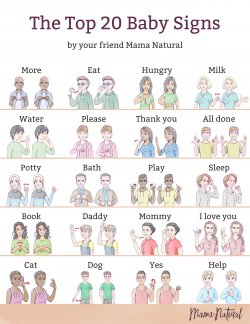
To facilitate a successful start, educators have identified 21 foundational signs categorized by their utility in daily life.
Biological and Immediate Needs
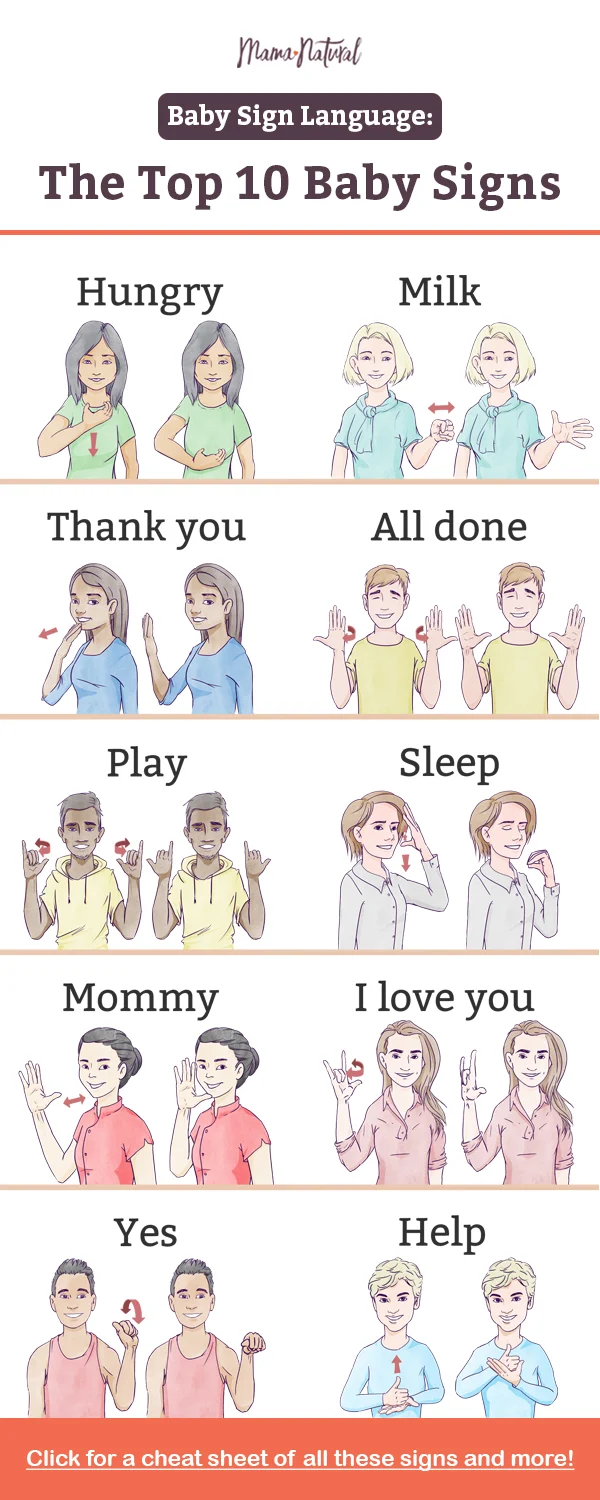
- Milk: Formed by opening and closing a fist, mimicking the action of milking an udder. This is often the first sign learned due to its high frequency of use.
- Eat: Bringing the tips of the fingers to the lips repeatedly.
- Hungry: Sliding a flat palm down the chest toward the stomach, representing the path of food.
- Water: Creating a "W" shape with the three middle fingers and tapping the index finger against the chin.
- Sleep: Drawing the hand down over the face while closing the fingers, symbolizing eyes closing.
- Potty: Placing the thumb between the index and middle fingers (the letter ‘T’ in ASL) and shaking the hand side-to-side.
- Help: Placing a "thumbs-up" hand on top of a flat palm and lifting both together, symbolizing support.
Social Interaction and Etiquette
- More: Tapping the fingertips of both hands together. This is a crucial sign for reducing mealtime frustration.
- Please: Moving a flat palm in a circular motion over the chest.
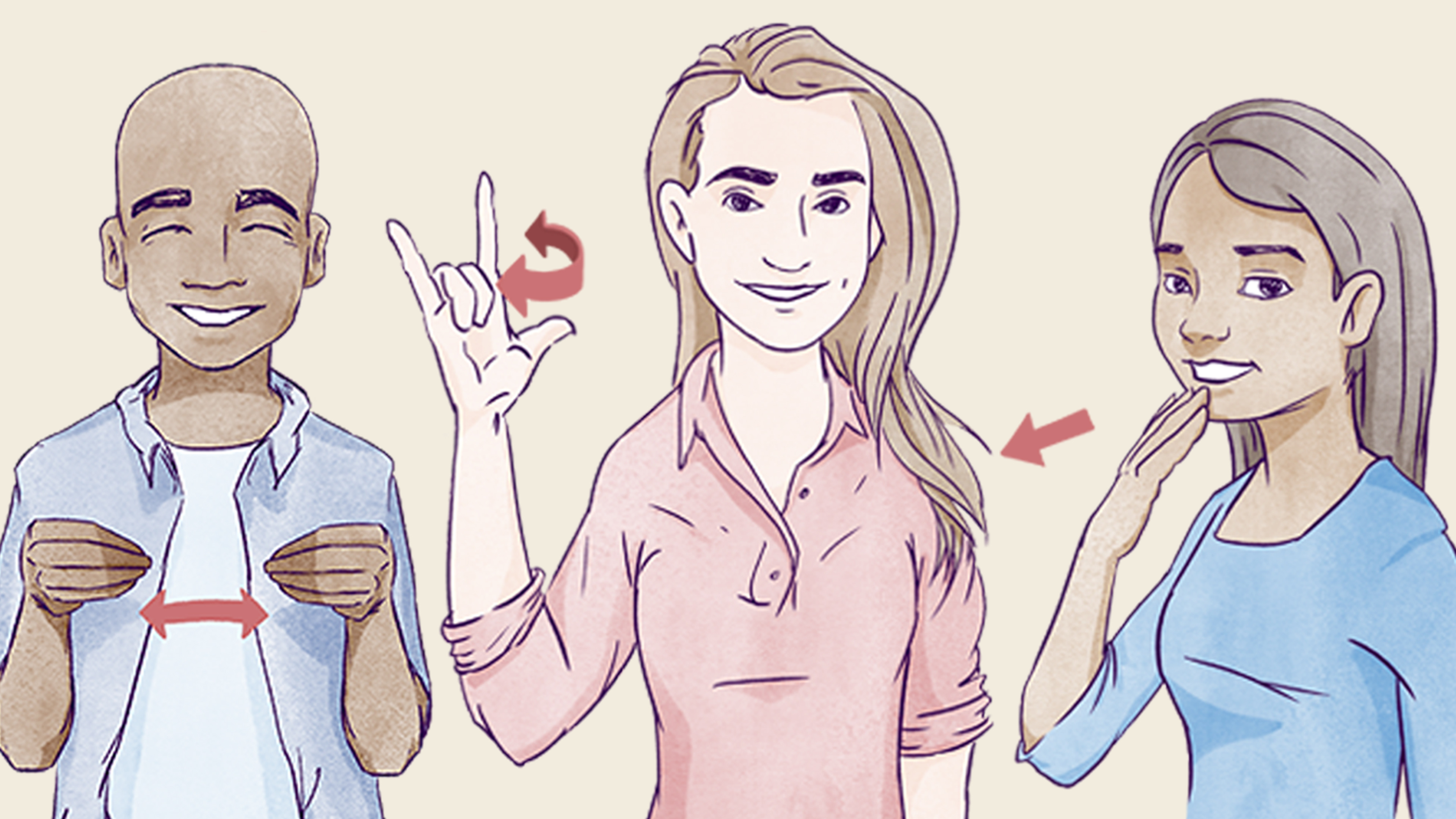
- Thank You: Touching the fingers to the chin and moving the hand forward, similar to blowing a kiss.
- All Done: Holding both hands up with palms facing in, then flipping them outward to face the child.
- Yes: Creating a fist and tilting it up and down at the wrist, mimicking a nodding head.
- I Love You: Crossing the arms over the chest in a hugging motion (a simplified version for infants).
People and Environment
- Mommy: Tapping the thumb against the chin with an open hand.
- Daddy: Tapping the thumb against the forehead with an open hand.
- Dog: Snapping the thumb and middle finger together or tapping the thigh, as if calling a canine.
- Cat: Using the thumb and index finger to "pull" imaginary whiskers away from the cheeks.
- Play: Extending the thumb and pinky finger while tucking the middle fingers, then twisting the wrist.
Routine Activities
- Bath: Moving two fists up and down the torso, as if scrubbing the body.
- Book: Placing palms together and then opening them like the spine of a book.
- Change: Hooking the index fingers of both hands and rotating the wrists to swap their positions, indicating a diaper change.
Professional Analysis and Long-term Implications
The broader implications of baby sign language extend beyond the nursery. Experts in bilingualism note that BSL introduces children to the concept of symbolic representation—the idea that a specific movement or sound represents an object or thought. This is a foundational pillar of all human communication and abstract thinking.
Furthermore, the use of BSL has been analyzed for its impact on neuroplasticity. By engaging both the motor cortex and the language centers of the brain simultaneously, infants may develop more robust cognitive frameworks for processing information. While the "mixed" research mentioned in some studies suggests that signing is not a "magic bullet" for genius-level IQ, the consensus among the medical community is that the emotional and behavioral benefits alone justify its implementation.
Pediatric associations emphasize that while signing is beneficial, it should never replace verbal interaction. The goal is a "total communication" environment where the caregiver speaks, signs, and maintains eye contact, providing a rich, multi-dimensional linguistic landscape for the developing child.
Conclusion
Baby sign language represents a significant advancement in our understanding of early childhood capabilities. By acknowledging that an infant’s cognitive grasp of the world exceeds their physical ability to speak, caregivers can use these 21 signs to foster a more inclusive, responsive, and peaceful upbringing. The transition from crying as a primary communication tool to purposeful, manual gesturing marks a major milestone in a child’s developmental journey, setting the stage for a lifetime of effective communication and emotional intelligence. Consistent application, patience, and a focus on high-utility signs are the hallmarks of a successful signing program that benefits both the infant and the broader family unit.
