

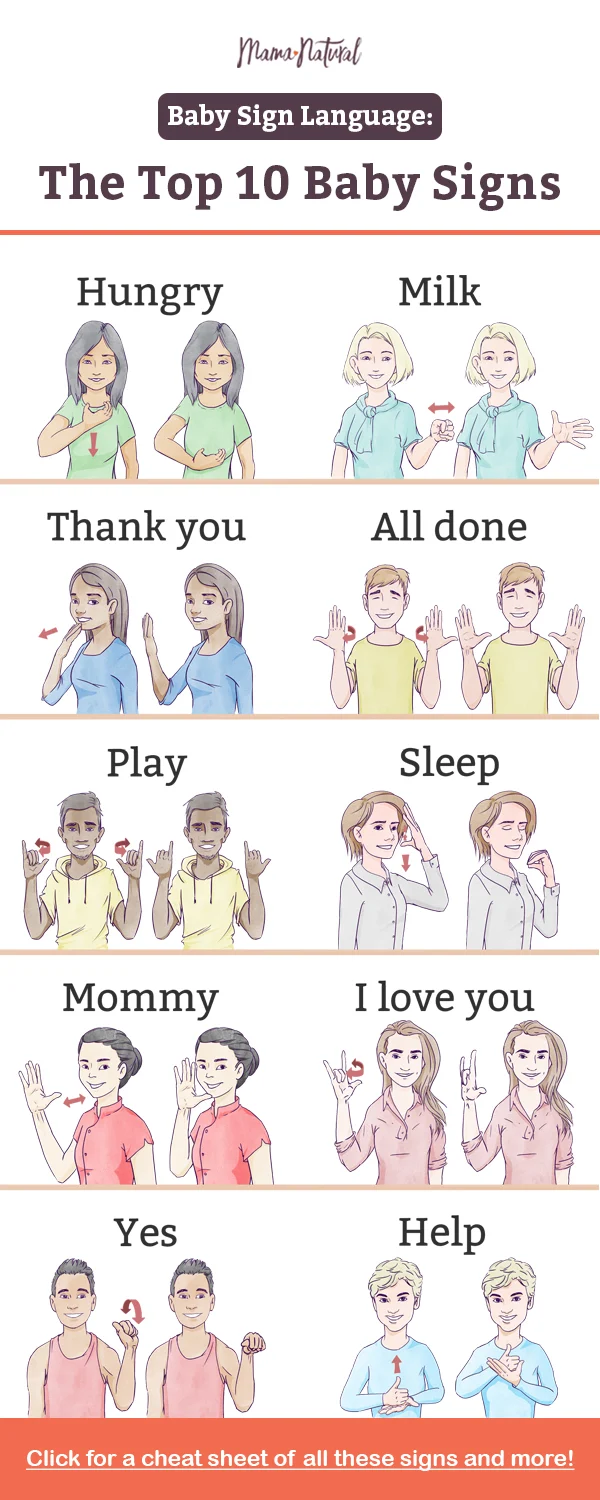
In the landscape of early childhood development, baby sign language has emerged as a critical pedagogical tool, functioning as a linguistic bridge for infants who have not yet reached the physiological maturity required for spoken language. While traditional communication between caregivers and infants has long relied on interpretive cues such as crying, facial expressions, and body language, the formalization of baby sign language offers a structured method for bilateral communication. This practice, primarily derived from American Sign Language (ASL) and modified for the limited motor skills of infants, is increasingly recognized by developmental psychologists and pediatricians as a means to reduce frustration, enhance bonding, and potentially accelerate cognitive milestones.
The Fundamental Mechanics of Infant Gestural Communication
Baby sign language is defined as a specialized version of typical ASL, simplified to accommodate the developing musculoskeletal systems of infants. Unlike the complex syntax and grammar of formal sign languages used by the Deaf community, baby sign language focuses on high-utility nouns and verbs. The primary objective is to allow children to express their immediate needs—such as hunger, thirst, or physical discomfort—before their vocal tracts and neural pathways are sufficiently developed to produce articulate speech.
Neurologically, the areas of the brain responsible for processing language and controlling motor movements in the hands develop more rapidly than the intricate coordination required for the tongue, lips, and vocal cords. By tapping into these early-developing motor pathways, caregivers can establish a functional lexicon as early as the middle of the first year of life.
Historical Context and Developmental Chronology
The academic study of infant signing gained significant momentum in the 1980s and 1990s, spearheaded by researchers such as Dr. Linda Acredolo and Dr. Susan Goodwyn. Their longitudinal studies suggested that infants who used symbolic gestures exhibited higher scores on language development tests in later childhood. This research shifted the perception of signing from a tool exclusively for the hearing-impaired to a mainstream developmental aid.
The implementation of baby sign language typically follows a specific developmental timeline:
- Observation Phase (4–6 Months): At this stage, infants possess the visual acuity to track hand movements. While they cannot yet replicate signs, they begin to associate specific gestures with recurring events or objects.
- Recognition Phase (6–8 Months): Infants demonstrate comprehension of signs used by caregivers. A child may look toward a bottle when the sign for "milk" is presented, indicating the formation of neural links between the gesture and the object.
- Expressive Signing (8–12 Months): As fine motor skills improve, infants begin to produce their first signs. These are often approximations of the caregiver’s gestures, refined over time through repetition and reinforcement.
- Transition to Speech (12–24 Months): As verbal capabilities emerge, signing usually persists as a secondary support system. Most children naturally phase out signs as their spoken vocabulary becomes more efficient at conveying complex ideas.
Scientific Data and Psychological Benefits
The integration of sign language into early childhood routines is supported by several psychological frameworks. One of the most prominent benefits is the measurable reduction in "frustration-based behavior," commonly referred to as temper tantrums. Research indicates that many outbursts in toddlers stem from a "communication gap"—the inability to convey a specific need despite having the cognitive awareness of that need.
A study conducted at the University of Western Ontario examined the impact of gestural communication on the parent-child dyad. The findings suggested that while signing does not necessarily "create geniuses," it significantly improves the "maternal-infant bond" by fostering a more responsive environment. When an infant signs "water" and receives it, they experience a sense of agency and self-esteem.
Furthermore, data regarding verbal development remains a subject of ongoing study. While some researchers, including Acredolo and Goodwyn, reported that signing children had larger vocabularies at age three compared to non-signers, other studies suggest the gap closes by age four. Crucially, however, the consensus among speech-language pathologists is that signing does not delay speech; rather, it provides a scaffolding for linguistic concepts.
Practical Application: A Lexicon for Early Intervention
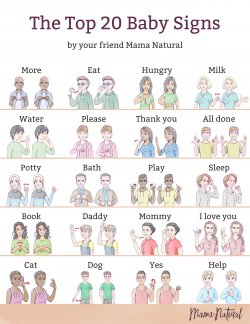
For caregivers seeking to implement this tool, experts recommend starting with a core vocabulary of 20 signs. These are categorized by their relevance to the infant’s daily routine and survival needs.
The Foundational Needs Trio: More, Eat, and Milk
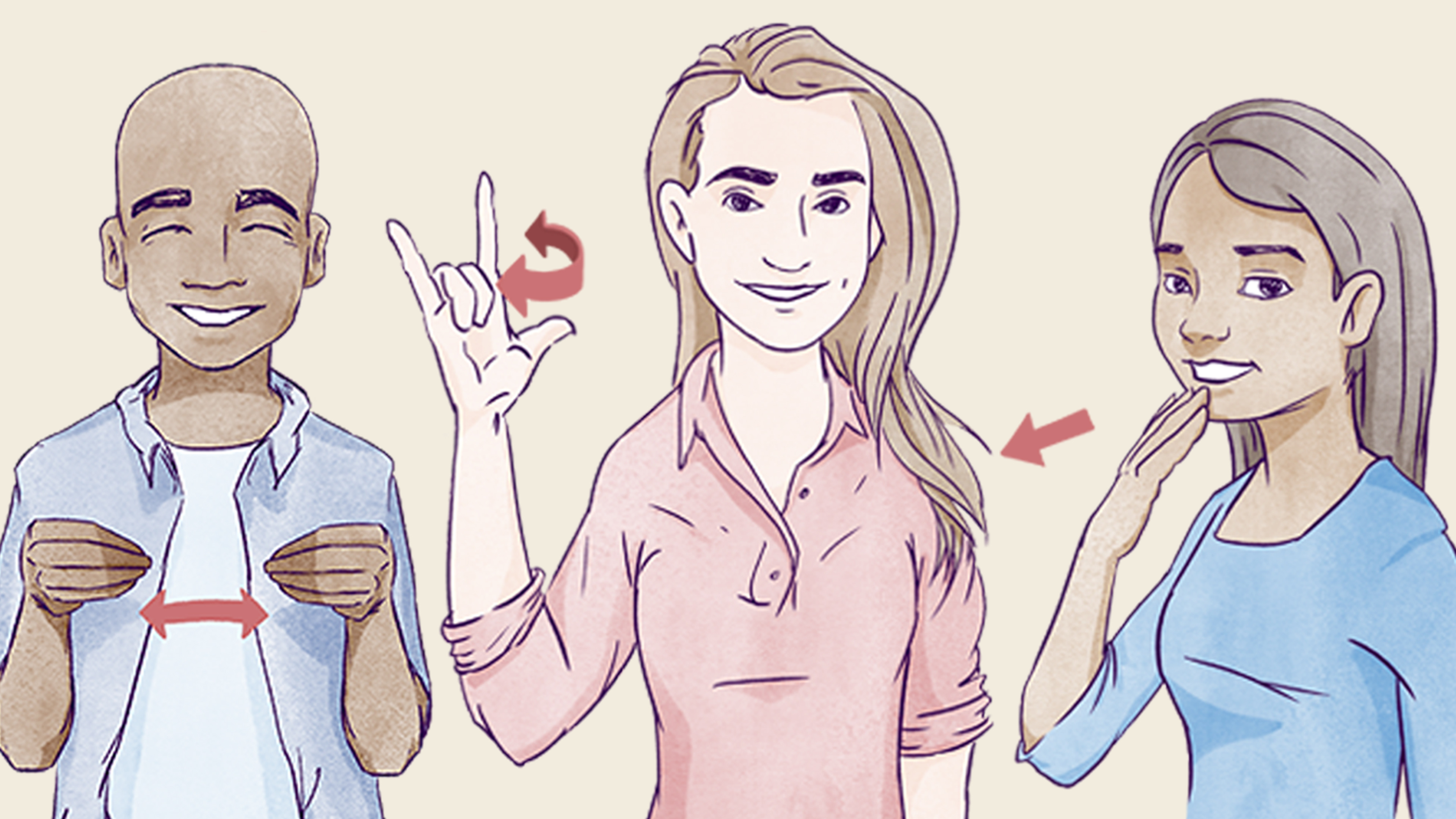
The sign for "More" is achieved by pressing the fingers of each hand to the thumbs and tapping the hands together. This is often the first sign learned due to its high reward value. "Eat" utilizes the same hand shape, but the fingers tap the lips repeatedly. "Milk" mimics the motion of milking a cow, involving the opening and closing of a fist.
Health and Hygiene: Potty, Change, and Bath
To sign "Potty," a caregiver forms a fist with the thumb tucked between the index and middle fingers, then shakes the hand side-to-side. "Change" is more complex, requiring the hands to be hooked at the fingers and rotated around each other, symbolizing the transition of a diaper. "Bath" involves rubbing two fists against the chest in a vertical scrubbing motion.
Etiquette and Social Interaction: Please, Thank You, and Help
Teaching "Please" involves a flat-handed circular motion over the chest. "Thank You" is signed by touching the fingers to the chin and moving the hand forward, similar to blowing a kiss. The sign for "Help" is highly symbolic: the dominant hand forms a "thumbs up" and is lifted by the flat palm of the non-dominant hand, representing the act of support.
Daily Routine and Environment: Sleep, Book, and All Done
"Sleep" is signed by drawing the hand down the face while closing the fingers, mimicking eyes shutting. "Book" involves placing the palms together and opening them as if on a hinge. "All Done" is expressed by holding both hands up and twisting the wrists so the palms face outward, signaling the completion of a task or meal.
Institutional Perspectives and Expert Reactions
Major health and educational organizations have weighed in on the utility of infant signing. The American Academy of Pediatrics (AAP) notes that while not a mandatory milestone, signing can be a helpful way to facilitate communication. Speech-language pathologists often advocate for its use in "early intervention" settings, particularly for children with developmental delays or those in bilingual households, as it provides a universal visual anchor for words.
"The goal is not to replace speech, but to provide a temporary bridge," states Dr. Elizabeth McCauley, a child psychologist. "When a child signs, they are engaging in the symbolic thought required for language. They are learning that a specific action represents a specific object or desire. This is a profound cognitive leap."
Critics of the trend occasionally argue that the commercialization of baby sign language "kits" puts unnecessary pressure on parents to meet artificial benchmarks. However, proponents argue that when practiced naturally—without the pressure of performance—it remains one of the most effective ways to democratize communication for the youngest members of society.
Broader Implications for Early Literacy
The implications of baby sign language extend beyond the immediate relief of a crying infant. There is a growing body of evidence suggesting that the multisensory nature of signing—visual, kinesthetic, and auditory—supports diverse learning styles. By seeing a sign, hearing the word, and performing the movement, infants engage multiple regions of the brain simultaneously.
This "triple-coding" of information is believed by some educators to lay the groundwork for early literacy. Children who are accustomed to symbolic representation through signs may find the transition to letters and written words more intuitive. Additionally, in an increasingly inclusive society, exposing hearing infants to ASL-based signs fosters an early awareness of different modes of communication and disability, potentially building greater empathy as the child matures.
Analysis of Long-term Impact
As baby sign language moves from a niche parenting trend to a standard feature in many daycare and preschool curricula, its long-term impact on the "frustration-aggression" cycle in early childhood cannot be overlooked. By providing a "safety valve" for expression, signing may contribute to a more regulated emotional environment in early education settings.
In conclusion, baby sign language represents a sophisticated intersection of motor development and linguistic theory. While it requires patience, consistency, and a high volume of repetition from caregivers, the data suggests the effort yields significant dividends in emotional regulation and communicative clarity. As a tool for "attuned parenting," it allows for a deeper understanding of an infant’s internal world months before they can utter their first coherent sentence. The practice stands as a testament to the infant’s innate drive to connect with their environment and the people within it.
