

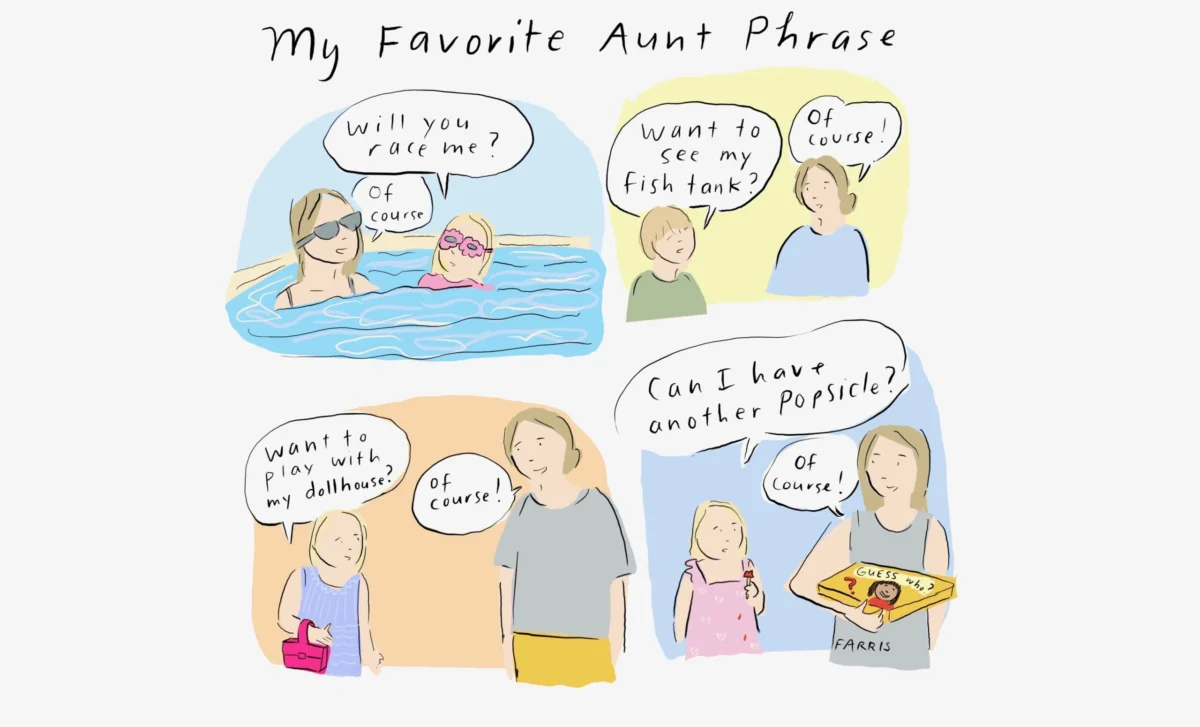
The "Of Course" aunt has emerged as a significant sociological phenomenon, representing a specific tier of extended family support characterized by unconditional enthusiasm and the consistent affirmation of a child’s interests and needs. This role, often filled by biological aunts, uncles, or "chosen family" members, serves as a critical bridge between the structured authority of parenthood and the peer-level engagement of friendship. In contemporary society, where the nuclear family often operates in relative isolation, the presence of an adult figure who habitually responds to requests with an enthusiastic "of course" or "heck yeah" is increasingly recognized by child development experts as a vital component of emotional resilience and social belonging. This trend highlights a broader shift in how modern kinship networks function, moving toward a model of communal care that prioritizes emotional availability and the creation of "whimsical" childhood memories.
The Evolution of the "Of Course" Philosophy
The concept of the "Of Course" aunt is rooted in the psychological principle of "attunement"—the reactive and harmonious relationship between a child and an adult. While parents are frequently tasked with the logistical and disciplinary aspects of child-rearing, which often necessitates the use of the word "no" for safety or developmental reasons, the extended family occupies a unique space. Data suggests that children who have at least one consistent, supportive non-parental adult in their lives show significantly lower rates of depression and higher levels of academic engagement.
The "Of Course" response functions as a form of radical validation. Whether a child is asking to show a drawing, go down a waterslide for the tenth time, or have an impromptu Starbucks treat, the immediate affirmation reinforces the child’s sense of worth. Sociologists note that this dynamic has evolved alongside the "Professional Aunt, No Kids" (PANK) demographic—a term coined to describe women who do not have children of their own but contribute significantly, both financially and emotionally, to the lives of their nieces and nephews. However, the role is not exclusive to childless adults; many parents find that they can inhabit the "Of Course" persona more freely with their siblings’ children than they can with their own, as the stakes of daily discipline are removed.
Chronology of Kinship: From Traditional Village to Digital Connection
The history of extended family involvement has undergone significant shifts over the last century. In the early 20th century, multi-generational households were common, and the "auntie" role was a structural necessity for domestic labor and childcare. Following the post-WWII shift toward the suburban nuclear family, these bonds were often stretched by geographic distance.
By the early 2020s, a "re-villaging" trend began to emerge, fueled by the realization that the nuclear family model was often insufficient for the emotional demands of modern life. In September 2026, social discourse around this topic peaked as individuals shared testimonials regarding the impact of these relationships.
- Early Childhood (Ages 0-5): The focus is on physical presence and play. The "Of Course" aunt becomes a source of "unexpected enthusiasm," building the foundation of trust.
- Middle Childhood (Ages 6-12): This period is marked by the "Yes Day" or "Cosmo Can Day" traditions, where children are given agency to lead activities, with the adult serving as an enthusiastic participant.
- Adolescence (Ages 13-18): The relationship shifts toward mentorship. Aunts often stand in for parents at school events or provide a "safe harbor" for discussions that a teenager might find difficult to have with a parent.
- Young Adulthood (Ages 19+): The roles begin to reverse or stabilize into peer-like mentorship, such as an aunt helping a nephew navigate his first 401k sign-up or a niece providing emotional support during an aunt’s medical recovery.
Remote Kinship and the Digital "Village"
One of the primary challenges to the "Of Course" role in the 21st century is geographic dispersion. According to recent demographic surveys, nearly 40% of Americans live more than an hour away from their closest extended family member. This has necessitated the rise of "digital kinship."
Participants in modern family networks have developed several strategies to maintain the "Of Course" energy from a distance:
- Video Exchange Programs: Rather than traditional "sit-down" FaceTime calls, which toddlers often find taxing, aunts and nephews utilize short video messages to ask and answer "wild" questions, such as "What is your favorite airplane?"
- Snail Mail Engagement: The use of postcards, stickers, and handwritten letters remains a high-impact strategy. The physical arrival of mail addressed specifically to a child reinforces their importance within the family hierarchy.
- Narrated Activities: To bridge the gap, remote relatives often take children on "virtual tours" of their daily lives—showing them a backyard, a pet’s activities, or even the process of cleaning a junk drawer—to create a sense of shared reality.
Psychological Impact on Adults: The Reciprocity of Care
The benefits of the "Of Course" relationship are not unidirectional. For many adults, particularly those facing fertility challenges or family estrangement, the role of the aunt provides a vital sense of purpose and emotional healing. One participant noted that being an aunt made them feel "less sad and desperate" during years of trying for a baby. The ability to pour love into "niblings" (a gender-neutral term for nieces and nephews) serves as an emotional outlet that benefits the adult’s mental health.
Furthermore, the "Of Course" aunt often acts as a bridge in cases of family trauma. In instances where individuals have experienced estrangement from their own parents or siblings, the opportunity to be a "neighborhood aunt" or to cultivate a relationship with a partner’s niece allows for the breaking of generational cycles of neglect. The phrase "nieces and nephews heal things in me that they never broke" encapsulates the therapeutic nature of these bonds.
Supporting Data and Economic Influence
The economic and social influence of extended family members is substantial. Market research indicates that the PANK demographic alone accounts for billions of dollars in annual spending on gifts, travel, and educational support for children.
- Educational Support: Aunts and uncles are increasingly stepping in to fund extracurricular activities, from rollerblades to college application fees.
- Parental Relief: The "Of Course" aunt provides a critical safety net for parents. Whether it is attending a "Parents Weekend" when a parent is indisposed due to surgery or picking up a sick child from school, this support system reduces parental burnout and strengthens the overall family unit.
- Long-term Stability: Longitudinal studies suggest that children with strong ties to extended family members have a more robust sense of identity and are better equipped to handle life transitions, such as moving to college or starting a career.
Broader Implications for Society
The rise of the "Of Course" aunt signifies a move away from the rigid "parent-child" dyad toward a more fluid and inclusive definition of family. This has significant implications for urban planning and social policy. There is a growing demand for "intergenerational living" and communities that facilitate easy access between extended family members.
In times of crisis, the value of this network becomes even more apparent. Reflecting on historical events such as the September 11 attacks, many individuals recall that the strength of their "chosen" and extended families provided the necessary emotional infrastructure to navigate national trauma. The "holy" feeling of a memorial or the comfort of a sentimental sweatshirt passed down from an aunt are more than just personal anecdotes; they are the threads that hold the social fabric together.
Conclusion: The Power of Affirmation
The "Of Course" aunt is a testament to the power of positive reinforcement and the importance of non-obligatory love. By choosing to say "yes" to the whimsy and curiosity of children, these adults create a legacy of confidence and joy. As society continues to grapple with issues of loneliness and the breakdown of traditional community structures, the intentional cultivation of the "Of Course" mindset offers a scalable and deeply human solution. It is a reminder that while parents provide the roots, it is often the aunts and uncles who provide the wings, through the simple, transformative power of "Of course you can."
