

The global probiotic market, valued at approximately $68.8 billion in 2023 and projected to reach nearly $100 billion by 2030, has seen an unprecedented surge in consumer interest as gut health becomes a central pillar of wellness. However, a growing body of consumer feedback and clinical observation suggests a significant disconnect between the marketing promises of "improved digestion" and "clearer skin" and the actual physiological results experienced by users, particularly women. Industry analysts and healthcare professionals are increasingly identifying a "efficacy gap" caused by biological survival hurdles, generic formulations, and a lack of stringent quality control within the supplement industry.
As women’s health enters a new era of personalized nutrition, the failure of standard probiotic supplements has become a focal point for researchers. The complexity of the female microbiome, which includes not only the gastrointestinal tract but also the vaginal and urinary ecosystems, requires a more nuanced approach than the one-size-fits-all products currently saturating the market. Understanding why these products fail is the first step toward identifying the specific criteria required for a functional, effective probiotic regimen.
The Biological Barrier: The Challenge of Gastric Survival
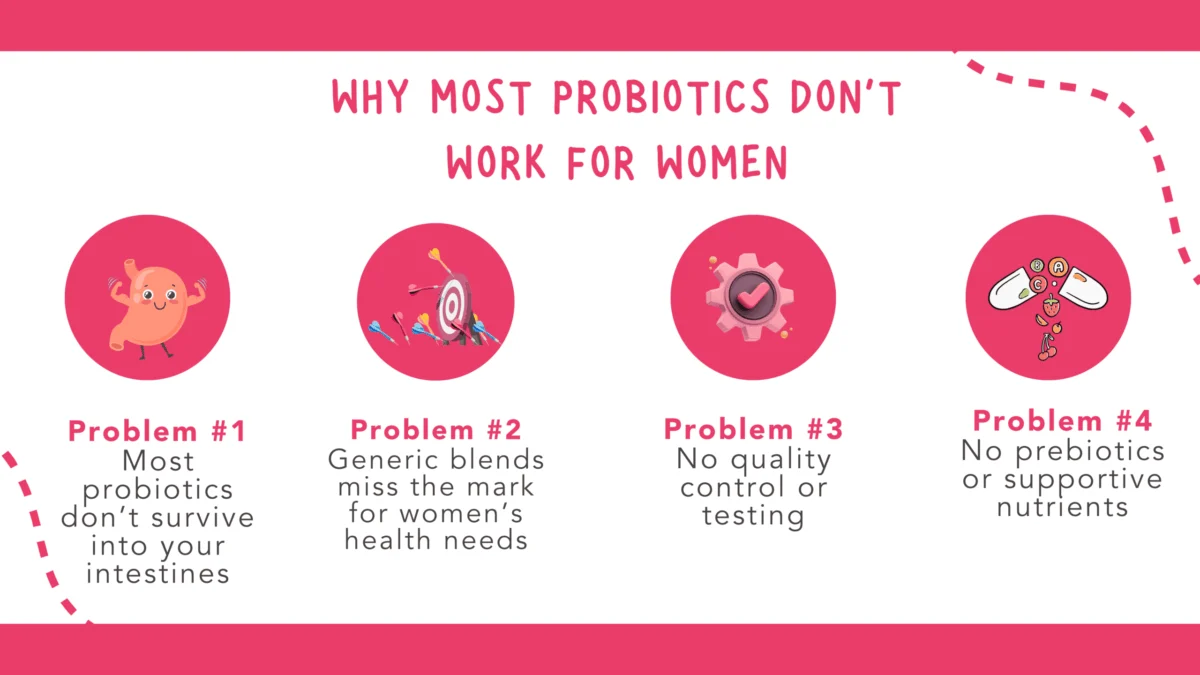
The primary reason most probiotic supplements fail to produce results is the harsh environment of the human digestive system. The stomach is designed as a biological furnace, utilizing hydrochloric acid with a pH typically ranging from 1.5 to 3.5. This high-acidity environment serves as a primary defense mechanism, breaking down proteins and neutralizing potentially harmful pathogens before they can reach the intestines.
Unfortunately, many probiotic strains are highly sensitive to this acidity. When a consumer ingests a standard probiotic capsule, the live cultures often perish within minutes of entering the stomach. By the time the supplement reaches the small and large intestines—where the bacteria are intended to colonize and provide health benefits—the "colony-forming units" (CFUs) have been decimated.
To combat this, a new generation of supplements, such as the Mama Natural Women’s Probiotic, utilizes a strategy known as "potent overage." Rather than relying solely on enteric coatings, which can sometimes fail to dissolve at the correct time, manufacturers are packing capsules with significantly higher numbers of live bacteria than the label requires. This ensures that even after the "attrition of the journey" through the stomach, a therapeutic dose of viable bacteria survives to reach the gut garden.
Addressing the Gender-Specific Microbiome Gap
For decades, nutritional science has frequently defaulted to a male-centric model, often ignoring the distinct hormonal and physiological cycles that define women’s health. The female microbiome is uniquely influenced by fluctuations in estrogen and progesterone, which can impact gut motility, immune response, and the delicate balance of the vaginal flora.
Generic probiotic blends often focus on a broad spectrum of Lactobacillus and Bifidobacterium without selecting the specific strains that address female-centric concerns such as Urinary Tract Infections (UTIs), yeast overgrowth, and hormonal acne. Clinical research has identified several "powerhouse" strains that are particularly beneficial for the female biological profile:
- Lactobacillus rhamnosus: Extensively studied for its ability to survive the GI tract and its role in supporting both vaginal health and immune function.
- Lactobacillus reuteri: Known for its ability to produce antimicrobial molecules that inhibit the growth of pathogenic bacteria and support a balanced vaginal pH.
- Lactobacillus gasseri: Frequently associated with metabolic health and the maintenance of a healthy vaginal ecosystem.
- Bifidobacterium longum: A key strain for stabilizing the intestinal barrier and modulating the stress response, which is often linked to hormonal fluctuations.
The failure of many over-the-counter probiotics can be traced to the use of low-cost, generic strains that lack the scientific backing to address these specific needs.
The Regulatory Landscape and Quality Control Challenges
The probiotic industry operates within a regulatory framework that often places the burden of proof on the consumer rather than the manufacturer. In the United States, the Food and Drug Administration (FDA) regulates probiotics as dietary supplements, not as drugs. This means that products do not require FDA approval for safety or efficacy before they hit the shelves.
This lack of oversight has led to a transparency crisis. An independent study published in the Journal of Clinical Gastroenterology and Hepatology highlighted a disturbing trend: many probiotics contained significantly fewer live organisms than advertised, and some contained none at all by the time they reached the consumer. Factors such as heat exposure during shipping, improper storage in retail environments, and poor manufacturing practices contribute to the rapid degradation of these living organisms.
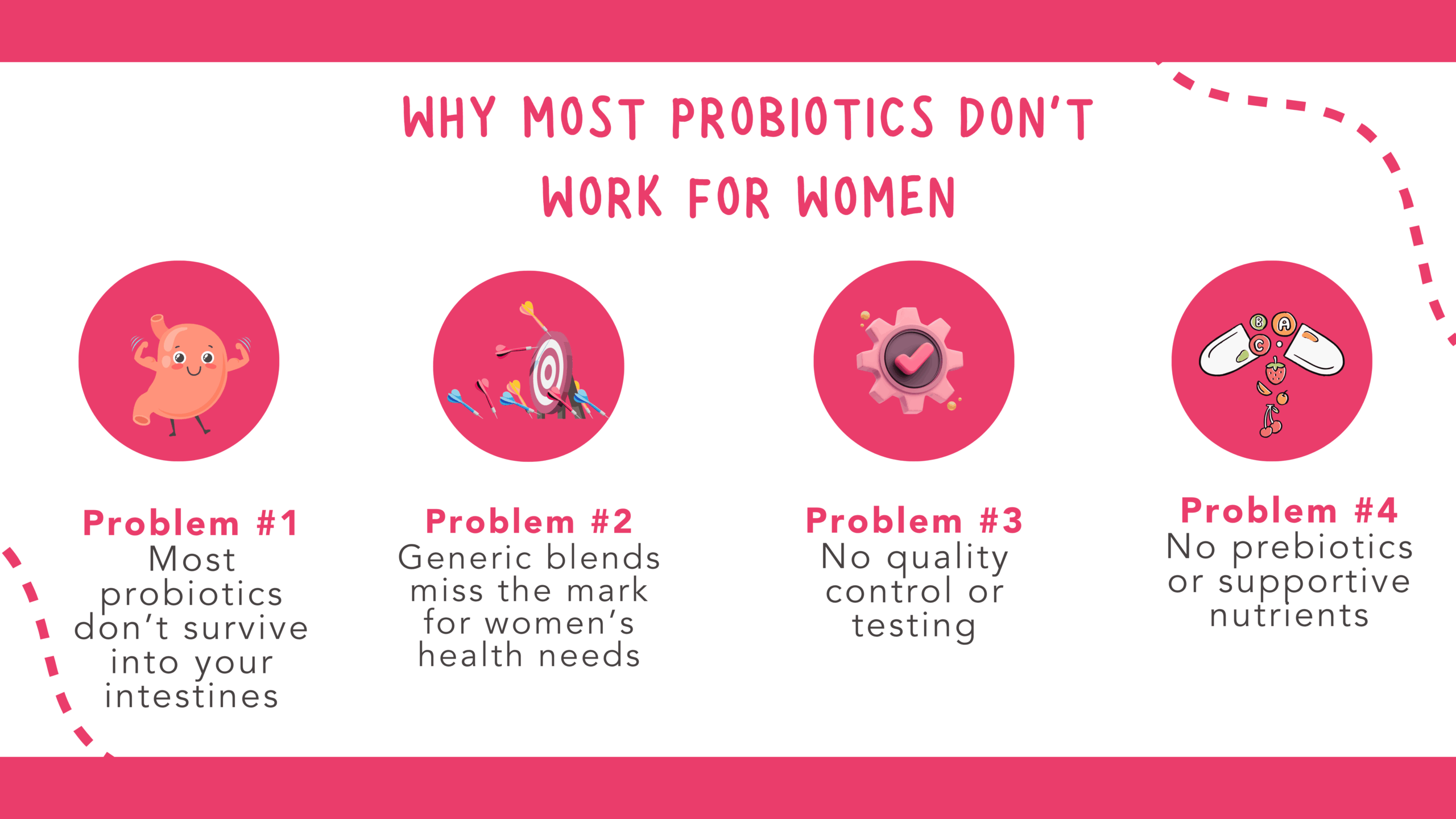
Furthermore, many brands fail to utilize third-party testing to verify their claims. Journalistic investigations into the supplement supply chain have revealed that without rigorous "Good Manufacturing Practices" (GMP) and independent certification (such as NSF or USP), there is no guarantee that the strains listed on the label are present in the capsule.
The Evolution of Synbiotics: Why Prebiotics are Essential
A significant advancement in the field of gut health is the move toward "synbiotics"—products that combine probiotics (live bacteria) with prebiotics (the food that fuels them). A common reason for probiotic failure is that even if the bacteria survive the stomach, they arrive in a gut environment that is "starving" for the fiber-based compounds necessary for colonization.
The modern Western diet is notoriously deficient in fiber. While health organizations recommend that women consume approximately 25 grams of fiber daily, the average intake remains much lower. Without adequate prebiotic fiber, introduced probiotic strains cannot thrive or multiply, rendering the supplement a temporary "visitor" rather than a permanent resident of the microbiome.
Innovative formulations are now incorporating natural, whole-food prebiotics to bridge this gap. For instance, the use of organic baobab fruit fiber—sourced from the African "Tree of Life"—is gaining traction. Baobab is not only a potent source of soluble and insoluble fiber but is also rich in antioxidants and vitamin C, providing a supportive matrix for the bacteria to flourish. This "whole-ecosystem" approach marks a shift away from isolated supplements toward integrated nutritional support.
Timeline of Probiotic Development and Research
To understand the current state of the industry, it is helpful to look at the chronology of probiotic science:
- 1907: Elie Metchnikoff, a Nobel laureate, first proposes that consuming "sour milk" containing Lactobacillus could prolong life by suppressing putrefactive bacteria in the gut.
- 1990s: The term "probiotic" is standardized, and the first major wave of commercial probiotic yogurts enters the global market.
- 2008: The National Institutes of Health (NIH) launches the Human Microbiome Project, a massive undertaking to sequence the microbes living in and on the human body.
- 2015-2020: Research explodes regarding the "Gut-Brain Axis" and the "Gut-Vaginal Axis," highlighting how gut health influences mental health and reproductive wellness.
- 2023-Present: The market shifts toward "targeted nutraceuticals," where consumers demand strain-specific, allergen-free, and third-party-verified products like the Mama Natural 4-in-1 support system.
Industry Response and the Move Toward Clean Labeling
In response to growing consumer skepticism, premium brands are pivoting toward "clean labeling." This involves removing common allergens and unnecessary fillers that can irritate the gut lining—the very thing the probiotic is meant to heal.
Many mass-market probiotics contain binders like magnesium stearate, synthetic dyes, or allergens such as dairy, gluten, and soy. For women with sensitivities or autoimmune conditions, these additives can trigger inflammatory responses that negate the benefits of the probiotic strains. The emergence of vegan, non-GMO, and "8-allergen-free" formulations represents an industry-wide acknowledgment that the delivery vehicle is just as important as the cargo.
Broader Implications for Public Health
The implications of improving probiotic efficacy extend far beyond simple digestion. A balanced microbiome is linked to reduced systemic inflammation, improved insulin sensitivity, and a more robust immune system. For women, this can mean fewer recurrent infections, more stable mood patterns, and enhanced skin health.
Medical professionals emphasize that while high-quality supplements are a vital tool, they must be part of a holistic lifestyle. Consistency is the most frequently cited factor in success; clinical data suggests that it takes between two to four weeks of daily use for the microbiome to begin a meaningful shift. When paired with a diet rich in fermented foods, bone broth, and diverse plant fibers, the right probiotic can act as a catalyst for total body wellness.
As the science of the microbiome continues to evolve, the era of "generic" health is ending. The transition toward high-potency, strain-specific, and prebiotic-supported supplements like the Mama Natural Women’s Probiotic reflects a broader trend in medicine: the recognition that women’s bodies require specialized care to achieve optimal balance. For the millions of women who have previously found probiotics to be ineffective, these advancements offer a scientifically grounded path to actual results.
