

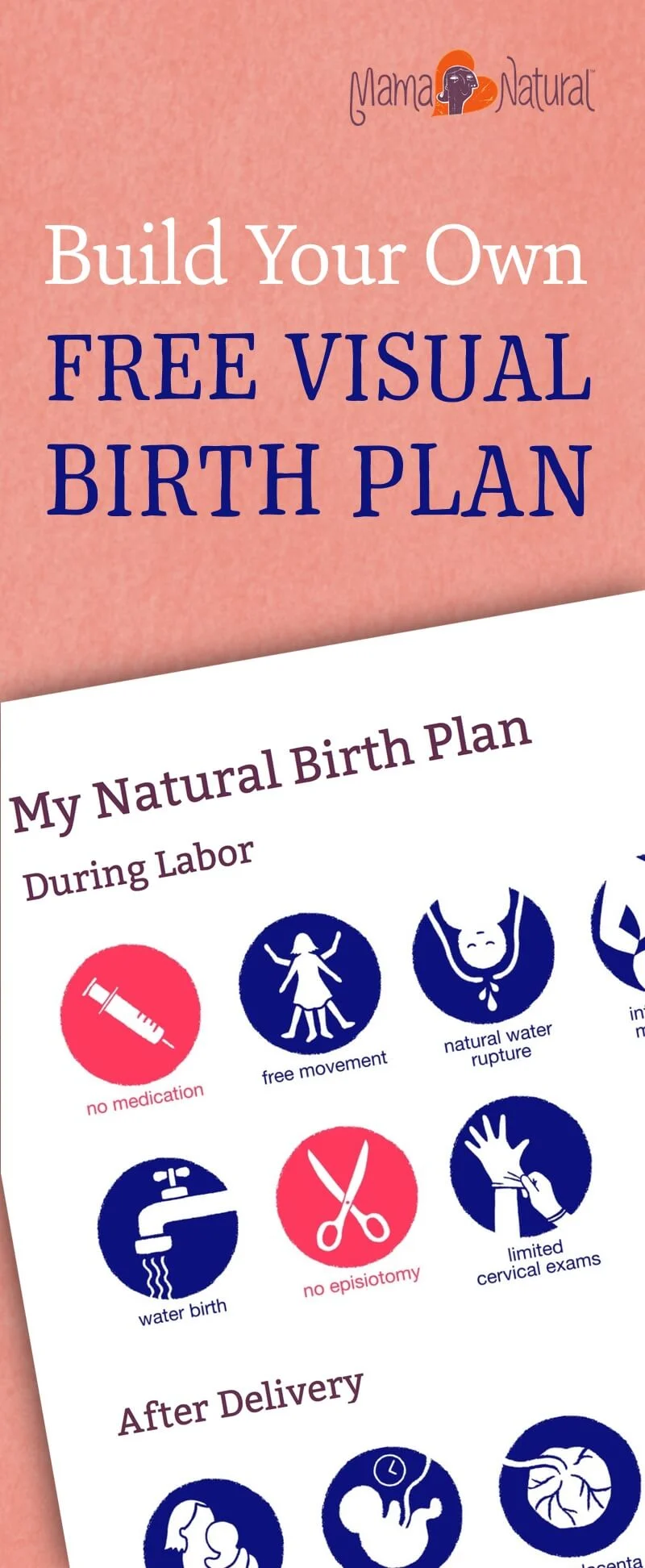
The arrival of a newborn marks one of the most significant medical and personal events in a family’s life, often necessitating a complex balance between clinical safety and personal preference. In recent years, the obstetric community has witnessed a shift toward patient-centered care, characterized by the increasing use of birth plans. A birth plan serves as a foundational blueprint, outlining the choices and preferences of expectant parents regarding labor and delivery. As the medical field moves toward more streamlined communication, the "Mama Natural" visual birth plan template has emerged as a prominent tool, utilizing an icon-based system to bridge the gap between expectant mothers and healthcare providers.
The Shift from Text-Heavy Documents to Visual Communication
Historically, birth plans were often multi-page documents that detailed every possible scenario, from lighting preferences to specific medical interventions. However, the high-pressure environment of a hospital labor and delivery unit often makes it difficult for nursing staff and physicians to review lengthy documents during active labor. Research into clinical communication suggests that visual aids and concise summaries significantly reduce the risk of information oversight. The Mama Natural template addresses this by providing a one-page, icon-driven layout that allows healthcare providers to grasp a patient’s primary desires at a glance.
This transition to visual communication is supported by data regarding the efficiency of information processing in medical settings. Studies indicate that healthcare professionals are more likely to adhere to patient preferences when they are presented in a clear, categorized format. By utilizing icons rather than dense paragraphs, the visual birth plan reduces the cognitive load on staff, ensuring that the "big picture" of the patient’s care remains at the forefront of the birthing experience.
Chronology of the Birth Plan Movement
The concept of a birth plan gained traction in the late 1970s and early 1980s as the "natural childbirth" movement sought to return more autonomy to laboring women. Initially, these plans were seen as a way to resist what many perceived as the "over-medicalization" of birth. Over the following decades, the relationship between patients and providers evolved from a hierarchical model to a collaborative one.
By the early 2000s, hospitals began to integrate patient preference forms into their admission paperwork. However, these were often limited in scope. The mid-2010s saw the rise of digital templates and the popularization of the "visual birth plan," which used graphic representations for common preferences such as delayed cord clamping, skin-to-skin contact, and the use of hydrotherapy. The 2025 update to the Mama Natural template represents the latest iteration of this evolution, incorporating feedback from thousands of parents to include icons for modern medical trends, such as "Gentle Cesareans" and specific newborn care protocols.
Technical Specifications and Customization of Modern Templates
The Mama Natural visual birth plan is designed for high levels of personalization, acknowledging that no two births are identical. The resource is provided in two primary formats: a static PDF for those with standard preferences and an editable ZIP file containing a Word document for deep customization. The template operates on a "drag-and-drop" logic, where users can select from over a dozen icons to reflect their specific values.
A unique feature of the 2025 template is the color-coded icon system. Blue icons are utilized to represent positive preferences—actions the birthing team is encouraged to take, such as "freedom of movement" or "dim lights." Conversely, red icons represent negative preferences—actions the patient wishes to avoid unless medically necessary, such as "no episiotomy" or "no artificial rupture of membranes." This binary visual system allows a nurse entering a room for the first time to immediately identify the "dos" and "do-nots" of the patient’s care plan.
Addressing Clinical Skepticism and Improving Provider Relations
Despite the benefits, birth plans have historically been a point of contention in some clinical settings. Some medical professionals have expressed concern that rigid birth plans can set unrealistic expectations, leading to disappointment or trauma if the clinical situation necessitates a change in course. Nurses have occasionally characterized patients with extensive birth plans as "high maintenance," particularly if the plan is perceived as being adversarial toward medical staff.
However, the visual format specifically aims to mitigate this friction. By keeping the plan to a single page and focusing on key outcomes rather than minute details, the template fosters a spirit of cooperation. Testimonials from patients, such as Stephanie, a mother who utilized the template, indicate that midwives and hospital staff often react positively to the clarity of the visual format. "I just went to the hospital to put this in my chart, and my midwife absolutely loves it," she noted. "She said it’s the best and clearest way to keep everyone on the same page."

Data and Trends in Labor Interventions
The necessity of a birth plan is often dictated by the standard of care at a specific facility. According to data from the Centers for Disease Control and Prevention (CDC), the national Cesarean section rate in the United States remains at approximately 32%. Furthermore, interventions such as the administration of Pitocin for labor induction or the use of continuous fetal monitoring vary significantly between hospitals.
For mothers seeking a "natural birth"—defined as a birth with minimal medical intervention—the birth plan acts as a safeguard. In hospitals where certain interventions are routine, the birth plan serves as a formal exercise of informed consent. It ensures that the patient’s right to refuse or request specific treatments is documented and visible to the entire rotating shift of medical professionals.
The Rise of the Gentle Cesarean
One of the most significant additions to the 2025 birth plan template is the inclusion of icons for a "Gentle Cesarean." Also known as a family-centered C-section, this approach aims to bring elements of a vaginal birth into the operating room. Icons for this section include requests for a clear drape (allowing the mother to see the birth), the immediate initiation of skin-to-skin contact in the OR, and the presence of a doula during the surgery.
This trend reflects a broader medical recognition that the psychological experience of birth is as important as the physical outcome. By including these options in a standard template, the Mama Natural resource helps normalize these requests, making them more accessible to women who may require surgical delivery but still wish to maintain certain aspects of their birthing vision.
Equity and Advocacy in the Birthing Room
The use of a birth plan is also being recognized as a tool for advocacy, particularly for marginalized populations. The Black Birthing Bill of Rights is a critical document mentioned in the context of birth planning, aimed at empowering women of color who face statistically higher rates of maternal mortality and morbidity. For these women, a birth plan is more than a list of preferences; it is a vital tool for ensuring respectful, high-quality care and for exercising their legal rights within a healthcare system that has historically underserved them.
By providing a free, accessible template, organizations like Mama Natural aim to democratize the birth planning process, ensuring that all parents, regardless of their background or socioeconomic status, have the tools to communicate effectively with their medical teams.
Analysis of Long-Term Implications for Obstetric Care
The continued popularity and refinement of visual birth plans suggest a permanent shift in the landscape of obstetric care. As healthcare systems move toward more integrated digital health records, it is likely that these visual templates will eventually be digitized and embedded directly into patient portals.
The primary implication of this trend is the reduction of "birth trauma"—a psychological condition often caused by a feeling of loss of control or a lack of communication during labor. When a patient feels heard and their preferences are respected, they report higher levels of satisfaction with their birth experience, even if medical complications arise. The visual birth plan, by simplifying the communication of complex human desires, serves as a bridge between the clinical necessity of the hospital and the personal autonomy of the family.
In conclusion, the Mama Natural visual birth plan template is more than a simple organizational tool; it is a response to a historical need for clearer communication in the delivery room. By emphasizing simplicity, using intuitive visual cues, and incorporating modern clinical trends like the Gentle Cesarean, the template provides a practical solution for expectant parents to navigate the unpredictable journey of childbirth with confidence and clarity. As the medical community continues to embrace patient-centered models, the adoption of such visual aids is expected to become a standard component of prenatal preparation.
