

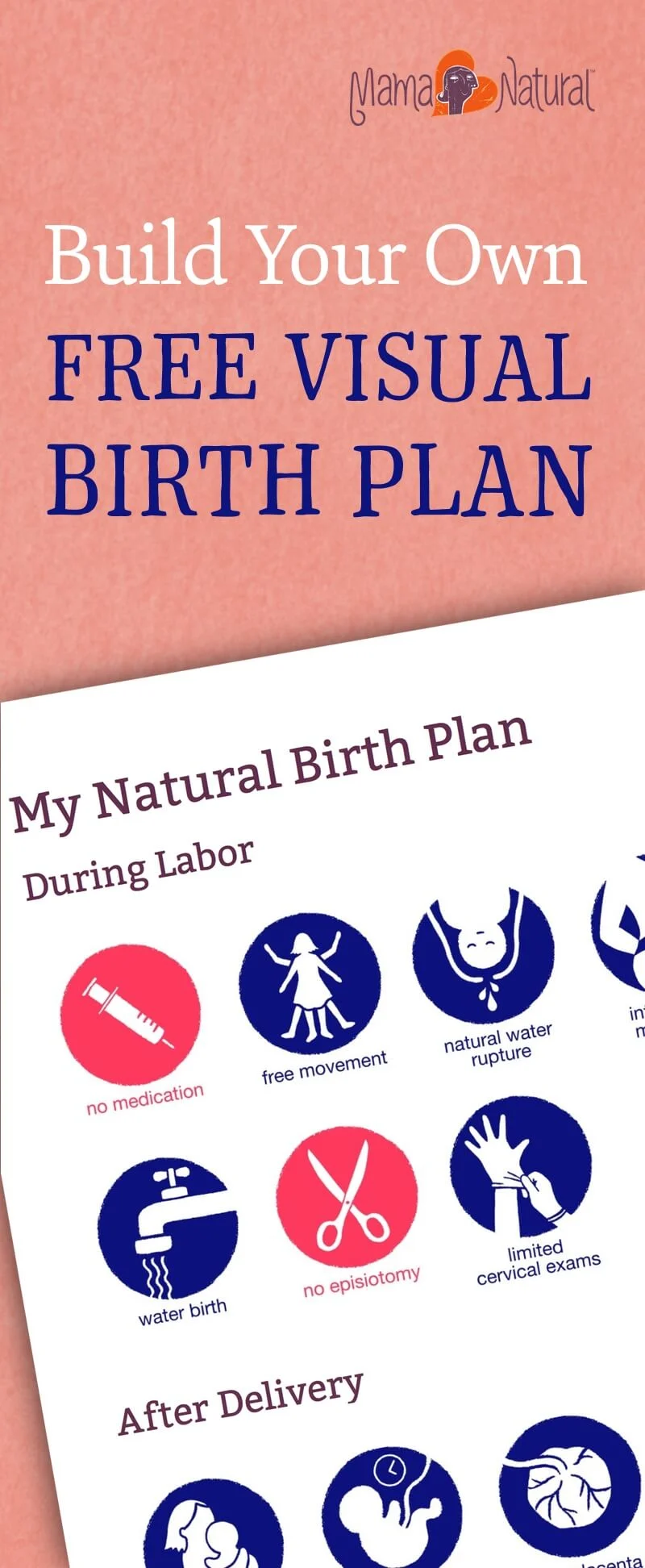
The landscape of modern maternity care is undergoing a significant transformation as expectant parents increasingly adopt structured, visual communication tools to navigate the complexities of labor and delivery. Central to this shift is the emergence of the "visual birth plan," a streamlined, icon-based document designed to replace traditional, text-heavy narratives that healthcare providers often find difficult to review during the fast-paced environment of active labor. As the medical community moves toward a more collaborative model of care, these templates—such as the 2025 updated versions provided by maternal health advocates like Mama Natural—are becoming essential instruments for ensuring patient autonomy and safety.
A birth plan serves as a comprehensive blueprint detailing the preferences and choices of a birthing person and their partner. It covers a spectrum of care, from the use of pain management and labor interventions to immediate postpartum procedures for the newborn. Historically, birth plans were often lengthy documents that medical staff struggled to integrate into clinical workflows. However, the move toward visual templates represents a tactical shift in health literacy, utilizing universally recognized symbols to convey complex medical preferences at a glance. This evolution is not merely a matter of convenience; it is a response to a growing body of evidence suggesting that clear, pre-established communication between patients and clinical teams can significantly improve maternal outcomes and patient satisfaction.
The Functional Design of Visual Communication in Obstetrics
The design of modern birth plan templates is rooted in behavioral psychology and clinical efficiency. The 2025 visual birth plan model utilizes a color-coded icon system to differentiate between affirmative requests and prohibitive preferences. Blue icons typically represent "positive" choices—actions the birthing team is encouraged to take, such as allowing for free movement during labor, utilizing a birthing ball, or proceeding with delayed cord clamping. Conversely, red icons represent "negative" choices or interventions the patient wishes to avoid unless medically necessary, such as episiotomies, the routine breaking of the amniotic sac, or immediate newborn bathing.
This binary visual system addresses a primary complaint among labor and delivery nurses: the "wall of text" birth plan. In a high-stakes clinical setting, a nurse or midwife may have only seconds to scan a patient’s chart. A visual plan allows the care team to identify the patient’s "non-negotiables" without disrupting the physiological flow of labor. For instance, an icon depicting a shower head or a tub immediately signals a preference for hydrotherapy, while a red icon with a syringe may indicate a desire to avoid or delay an epidural. By simplifying these choices, the template minimizes the cognitive load on the medical provider while maximizing the patient’s voice.
Statistical Context and the Need for Standardized Communication
The push for standardized birth plans is supported by data regarding medical errors and patient-provider communication. According to the Joint Commission, a leading healthcare accrediting body, communication failures are a root cause of nearly 70% of sentinel events in hospitals. In the context of obstetrics, where the "cascade of interventions" can move rapidly, the risk of a patient receiving an unwanted or unnecessary procedure is high when preferences are not clearly documented.
Research published in the Journal of Perinatal Education suggests that women who prepare birth plans often report a greater sense of control and higher levels of satisfaction with their birth experience, regardless of whether the birth followed the plan perfectly. This "sense of control" is a critical factor in preventing birth-related trauma and postpartum mood disorders. Furthermore, as the United States continues to face a maternal mortality crisis—particularly among marginalized communities—the birth plan has transitioned from a "luxury" for natural birth enthusiasts to a vital advocacy tool for all expectant parents.
The Chronology of Birth Planning and Integration
The implementation of a birth plan is a multi-stage process that begins long before the onset of contractions. Clinical best practices suggest a specific chronology for the integration of these documents:

- The Research Phase (Second Trimester): Expectant parents identify their core values regarding labor, pain management, and newborn care. This involves educating themselves on the risks and benefits of various interventions, such as Pitocin induction, continuous fetal monitoring, and instrumental delivery.
- The Initial Consultation (28–32 Weeks): The patient presents the draft birth plan to their primary provider (OB-GYN or midwife). This allows for a dialogue regarding the hospital’s standard policies and the provider’s personal clinical philosophy.
- Refining the Visual Document: Based on the provider’s feedback, the patient customizes the visual template, removing icons that are irrelevant and highlighting those that are most critical to their specific health needs or cultural requirements.
- Final Review and Distribution (36 Weeks): The finalized one-page visual plan is added to the patient’s medical file and shared with the birth team, including doulas and partners.
- Labor Implementation: Upon admission to the hospital or birth center, the visual plan is posted in a prominent location in the delivery room, such as the whiteboard or the foot of the bed, ensuring that shift-change nurses and on-call physicians have immediate access to the information.
Addressing Professional Stigma and the "High Maintenance" Label
Despite the benefits, birth plans have historically faced resistance from some medical professionals. Reports from labor and delivery wards indicate that some staff members view birth plans as a sign of an "inflexible" patient who may be resistant to necessary medical advice. Terms like "high maintenance" have occasionally been used to describe patients with detailed plans, with some clinicians arguing that a plan sets a mother up for disappointment if the birth deviates from the expected path.
However, the medical community’s stance is shifting. The American College of Obstetricians and Gynecologists (ACOG) has emphasized the importance of shared decision-making. ACOG’s Committee Opinion on "Approaches to Limit Intervention During Labor and Birth" suggests that when healthcare providers respect a patient’s preferences, it fosters a relationship of trust. Professional feedback from practitioners, such as the midwives cited in recent maternal health reports, suggests that the clarity of visual templates is actually a relief to the staff. When a plan is "clear and concise," it removes the guesswork for the provider and ensures the team is "on the same page" from the moment of admission.
Specialized Protocols: The Rise of the Gentle Cesarean
A notable addition to the 2025 birth planning tools is the inclusion of "Gentle Cesarean" icons. As cesarean section rates remain high globally, there is a growing movement to make the surgical experience more family-centered. A gentle cesarean (or "family-centered cesarean") involves specific protocols such as:
- The use of clear surgical drapes so the mother can see the baby being born.
- Immediate skin-to-skin contact in the operating room.
- Maintaining a quiet, calm environment with minimal medical chatter.
- Allowing the mother’s hands to remain free (not strapped down) to hold the infant.
The inclusion of these options in a visual birth plan template acknowledges that even when a birth requires surgical intervention, the patient’s preferences for bonding and atmosphere remain valid. This helps to bridge the gap between "natural" birthing goals and "medical" necessities.
Advocacy and the Black Birthing Bill of Rights
The enrichment of birth planning tools also intersects with critical social justice issues in healthcare. For women of color, particularly Black women who face significantly higher rates of maternal mortality and morbidity in the U.S., a birth plan is an essential component of a broader advocacy strategy. The "Black Birthing Bill of Rights" is often cited as a foundational document that empowers these parents to demand respectful, high-quality, and evidence-based care.
By documenting preferences for things like "informed consent before any procedure" or "no separation of mother and baby," marginalized patients can use the birth plan to hold institutions accountable. The visual nature of the template serves as a constant, non-verbal reminder to the medical staff of the patient’s rights and expectations, potentially mitigating some of the implicit biases that lead to disparate health outcomes.
Implications for Future Obstetric Care
The widespread adoption of visual birth plans suggests a future where the "patient experience" is as prioritized as clinical metrics. As hospitals compete for patients, those that demonstrate a willingness to engage with and honor birth plans are likely to see higher patient satisfaction scores. Furthermore, as digital health records continue to evolve, it is expected that visual birth plan icons will eventually be integrated directly into Electronic Health Record (EHR) systems, allowing for seamless communication across different departments of a hospital.
In conclusion, the visual birth plan is more than a simple checklist; it is a sophisticated tool for clinical communication and maternal advocacy. By distilling complex desires into a clear, one-page visual format, these templates empower parents to take an active role in their healthcare. While the unpredictable nature of birth means that no plan is a guarantee of a specific outcome, the process of creating and sharing a visual plan ensures that the birthing person remains at the center of the experience, supported by a team that is fully informed of their wishes. As the 2025 updates demonstrate, the goal is a "win-win" scenario: a safer, more respectful environment for the patient and a clearer, more efficient workflow for the healthcare provider.
