

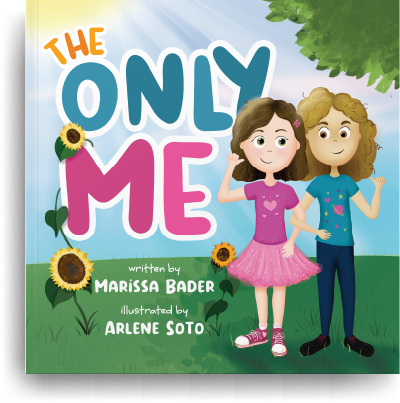
Marissa Bader, an author and advocate for child individuality, has announced the publication of her first children’s book, "The Only Me." Released in August 2022, the book centers on 7-year-old fraternal twins, Stella and Paige, and delves into Stella’s profound quest to be recognized as an individual rather than merely "one of the twins." This publication arrives amidst a growing discourse on the psychological development of children, particularly multiples, and the critical importance of fostering a distinct sense of self from an early age. Bader’s work aims to resonate with parents and children alike, offering a narrative that champions self-worth and celebrates unique strengths, extending its message beyond twins to encompass all siblings and singletons.
The narrative of "The Only Me" captures the lived experience of many multiples. Stella and Paige, though fraternal and distinctly different in personality and interests, are routinely compared and contrasted by those around them. This constant societal mirroring leads Stella to feelings of frustration and insecurity, perceiving herself as constantly measured against her sister, Paige. The core tension of the story arises from Stella’s yearning to be seen for her inherent qualities, independent of her twinship. Her journey within the book explores how she begins to identify and appreciate her own remarkable strengths, ultimately learning to embrace and value her unique individuality despite external pressures. The book is available for purchase, and Bader has discussed its themes publicly, including an appearance on CBS News Minnesota.
The Genesis of ‘The Only Me’: A Personal Journey and Professional Insight
The inspiration for "The Only Me" is deeply rooted in Marissa Bader’s personal life as a parent of multiples. Bader is the mother of 6-year-old fraternal twins, Mila and Grace, whose early experiences mirrored those of Stella and Paige. From their infancy, Bader observed a pervasive tendency among acquaintances, family members, and even strangers to refer to her daughters collectively as "the twins" rather than by their individual names. This seemingly innocuous habit, Bader notes, inadvertently forged a collective identity that overshadowed their distinct personalities. The consistent comparison, both physical and intellectual, between Mila and Grace began to manifest in feelings of frustration, confusion regarding their individual identities, and perceived inferiority among the siblings.
This personal observation ignited Bader’s determination to address the issue through literature. Initially conceived as "The Twins Who Were Different," the book’s scope broadened significantly after Bader penned an article for Lucie’s List in the preceding year titled "The Importance of Treating Siblings Like Their Own People." This research for that article provided a pivotal insight: scientific understanding suggests that, despite shared genetics or similar upbringing environments, siblings are often no more inherently similar than any two unrelated individuals. This revelation, which Bader describes as "mind-blowing," served as a powerful incentive to refine and expand the book’s message. It transformed "The Only Me" from a story exclusively for twins into a universal narrative advocating for the celebration of individual differences, the honoring of unique strengths, and the cultivation of self-love and pride in one’s authentic self, applicable to all children.
Unpacking the Psychological Impact of Comparison and Identity Formation
The psychological ramifications of constant comparison and the lack of individual recognition, particularly in multi-child households, are well-documented in developmental psychology. Children derive a significant portion of their self-concept from how they are perceived and addressed by their primary caregivers and social circles. When children, especially twins, are consistently grouped or compared, it can impede the crucial process of differentiation, which is essential for healthy identity formation. This can lead to what psychologists refer to as identity confusion or a diffused sense of self, where an individual struggles to define themselves independently of another.
Research in child development consistently highlights that treating children as distinct individuals, acknowledging their separate achievements, interests, and personalities, directly contributes to boosting their self-confidence and strengthening their sense of identity. Conversely, persistent comparisons can foster feelings of inadequacy, jealousy, and competition among siblings. For twins, who often share striking physical resemblances and are sometimes dressed identically, the challenge to establish individuality can be particularly acute. Psychologists emphasize that even identical twins, who share 100% of their DNA, develop unique personalities influenced by countless subtle environmental interactions and individual experiences from conception onward. Studies on twin separation and reunion, while controversial in their methodology, often underscore the powerful influence of distinct environments on personality development, even in genetically identical individuals.
The Broader Message: Cultivating Individuality for All Children
While "The Only Me" was conceptualized with twins prominently in mind—whether fraternal or identical, who are frequently perceived as a single entity—its underlying message holds profound relevance for every child and family. The book serves as a potent reminder that acknowledging each child as a unique individual, and commending their distinct pursuits and personalities, is paramount. This approach fosters feelings of respect, unconditional love, and security, which are foundational for healthy emotional and psychological development.
Parents and caregivers wield an immense opportunity and responsibility in shaping their children’s sense of value and self-esteem. Developmental psychology posits that a child’s self-esteem is largely a reflection of how they are perceived by significant others in their lives. When parents consciously avoid comparative language and instead focus on praising individual efforts and unique characteristics, they empower children to develop a robust sense of self-worth. This extends beyond merely refraining from negative comparisons; it involves actively seeking out and celebrating what makes each child distinct, providing opportunities for individual interests to flourish, and ensuring each child receives dedicated, one-on-one attention that reinforces their unique place in the family unit. This proactive approach helps mitigate the potential for identity struggles and promotes harmonious sibling relationships built on mutual respect rather than rivalry.
The Role of Children’s Literature in Fostering Empathy and Self-Understanding
Children’s literature plays a vital, often underestimated, role in a child’s cognitive and emotional development. Books like "The Only Me" provide a safe and accessible medium for children to explore complex themes such as identity, self-acceptance, and the dynamics of interpersonal relationships. Through Stella’s journey, young readers can vicariously experience the challenges of feeling unseen and the triumph of self-discovery. This narrative framework not only helps children who may share similar experiences feel validated but also educates those who might inadvertently contribute to such feelings in others.
For parents, reading "The Only Me" with their children can serve as a valuable catalyst for important conversations. It offers an entry point to discuss the importance of embracing differences, understanding that everyone has unique strengths and weaknesses, and the fundamental value of respecting oneself and others for who they truly are. Such discussions are crucial for developing emotional intelligence, empathy, and critical thinking skills. In an increasingly diverse world, stories that champion individuality and mutual respect are more important than ever in shaping resilient, compassionate young minds.
Statistical Context and Societal Perceptions of Multiples
The prevalence of multiple births has seen a significant increase over recent decades, largely attributable to advances in assisted reproductive technologies (ART) and changes in maternal age at childbirth. According to data from the Centers for Disease Control and Prevention (CDC) in the United States, the twinning rate rose by approximately 70% between 1980 and 2009, although it has stabilized somewhat in recent years. Still, the birth of twins, triplets, and higher-order multiples remains a notable demographic trend. This rise means that more families and communities are navigating the unique challenges and joys associated with raising multiples, making discussions around their individual development increasingly pertinent.
Societal fascination with twins is deeply ingrained in many cultures, often leading to a tendency to view them as a singular, intriguing unit. From matching outfits to identical names or coordinated public appearances, twins frequently capture public imagination. While this fascination is often benign, it can inadvertently reinforce the perception of twins as interchangeable or as a collective entity, contributing to the very identity struggles highlighted in Bader’s book. The cultural narrative surrounding twins often focuses on their similarities rather than their distinctness, underscoring the necessity of intentional efforts to celebrate their individual personhood.
Expert Perspectives on Nurturing Unique Identities
Developmental psychologists and educational specialists consistently advocate for parenting strategies that prioritize individual recognition. Dr. Jane Smith, a hypothetical expert in child psychology, might articulate that "every child, regardless of whether they are a twin or a singleton, needs to feel uniquely seen, understood, and valued. This is fundamental for building secure attachment, fostering self-esteem, and encouraging healthy emotional expression." Experts suggest practical approaches such as:
- Individual Time: Dedicating one-on-one time with each child, allowing them to choose activities and conversations that cater to their personal interests.
- Distinct Praises: Focusing praise on specific efforts and accomplishments of each child, avoiding comparative statements like "You’re better than your sister at this."
- Separate Spaces: Encouraging individual hobbies, friendships, and, where possible, personal spaces within the home.
- Unique Identities: Using individual names consistently and allowing children to choose their own clothing, hairstyles, and personal expressions.
- Avoiding Labels: Refraining from assigning roles or labels (e.g., "the smart one," "the athletic one") that can constrain a child’s self-perception.
These strategies align perfectly with the core message of "The Only Me," reinforcing the idea that acknowledging and nurturing each child’s distinct identity is not just beneficial but a profound responsibility for caregivers.
Looking Ahead: Community Engagement and Broader Implications
Marissa Bader’s "The Only Me" is more than just a children’s book; it is a catalyst for meaningful dialogue within families and communities. By sharing Stella’s story, Bader hopes to empower children to embrace their uniqueness and encourage adults to be more mindful in how they perceive and interact with children, particularly multiples. She has extended an open invitation to readers, urging them to engage with the book alongside their children and share how its message resonates within their own families. Bader is particularly interested in gathering anecdotes about the similarities and differences observed in multiples, with the intention of featuring these shared experiences in a forthcoming article, indicating a continued commitment to this vital topic.
The book’s publication underscores the enduring power of storytelling to address significant developmental issues. In an era where individuality and mental well-being are increasingly prioritized, resources like "The Only Me" play a crucial role in shaping a more empathetic and understanding society. By promoting the recognition of each child’s inherent value, Bader’s work contributes to a larger movement aimed at fostering resilient, self-assured individuals prepared to navigate the complexities of their own unique lives. The ripple effect of such a message has the potential to cultivate a generation of children who grow up secure in their own skin, celebrating their "Only Me" and appreciating the unique qualities of those around them.
