


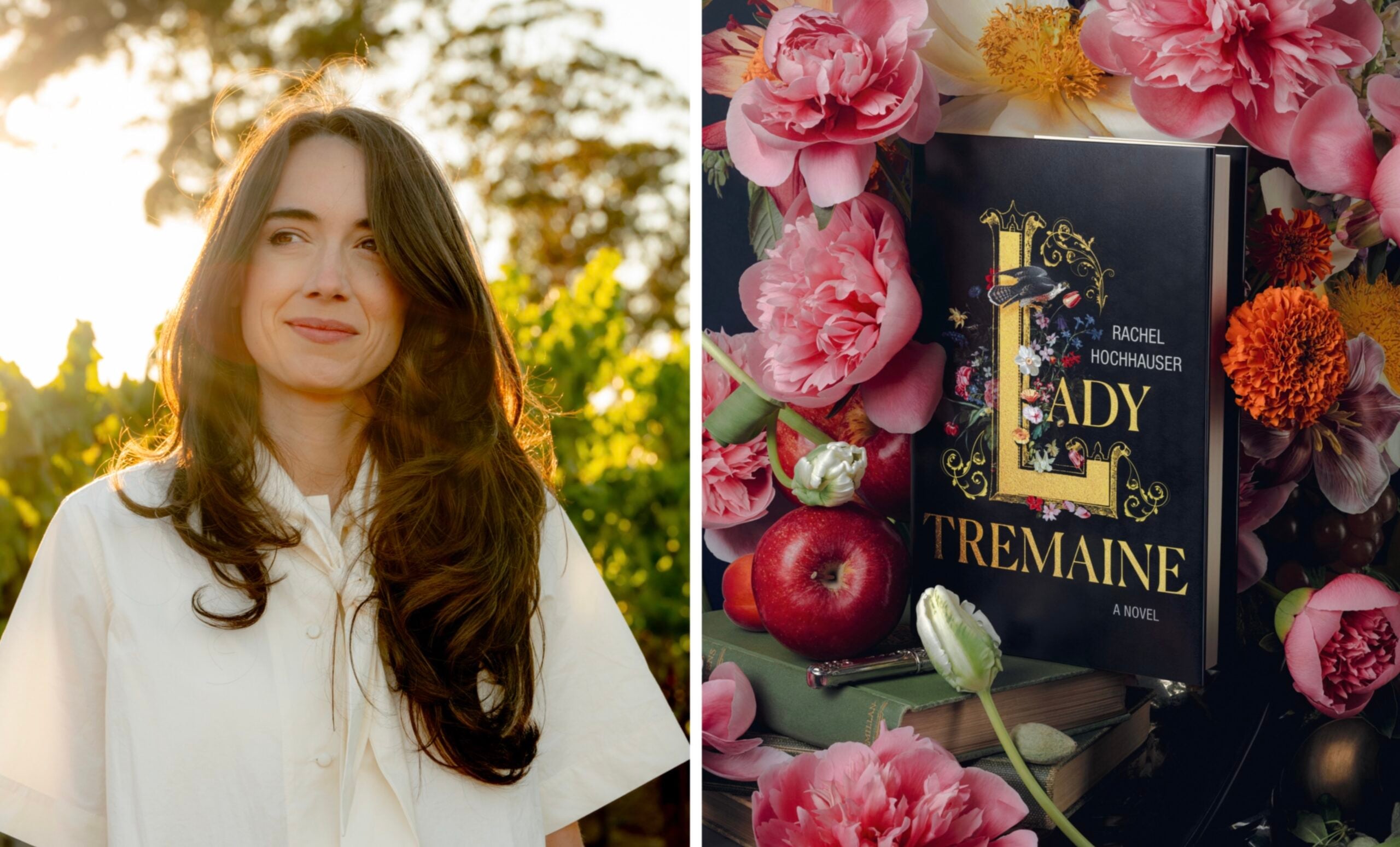
The publication of Rachel Hochhauser’s debut novel, Lady Tremaine, has sparked a significant conversation within the literary community, signaling a paradigm shift in how classic antagonistic archetypes are interpreted in the modern era. Released in early 2026, the novel offers a comprehensive reimagining of the Cinderella fairy tale, shifting the focus from the titular heroine to her traditionally vilified stepmother. This literary pivot arrives at a time when "villain origin stories" have become a dominant force in popular culture, yet Hochhauser’s approach eschews the fantastical in favor of a gritty, grounded exploration of 18th-century gender politics, maternal desperation, and the brutal realities of socio-economic instability.
The novel’s ascent into the cultural zeitgeist was accelerated by its selection for Reese’s Book Club, an endorsement that historically correlates with significant commercial success and high-profile cinematic adaptations. Literary analysts suggest that Lady Tremaine is poised to become one of the most influential titles of 2026, not merely for its subversion of a beloved fable, but for its unflinching portrayal of the lengths to which a woman must go to secure her family’s future in a society that offers no safety net for widows.
The Narrative Pivot: From Villainy to Pragmatism
In the traditional Perrault and Grimm iterations of Cinderella, Lady Tremaine is depicted as a woman motivated by vanity and malice, whose primary goal is to suppress her stepdaughter’s beauty and virtue. Hochhauser’s novel dismantles this two-dimensional portrait, introducing a protagonist who is twice-widowed and drowning in the debts of her late husbands. The "wicked" stepmother is reimagined as a middle-aged survivor who pulled herself out of teenage poverty, only to find herself back on the precipice of ruin.
The plot follows Lady Tremaine as she navigates the daily labor of maintaining a crumbling estate—literally hunting rabbits to provide meals and attempting to repair a leaking roof—while simultaneously managing the "marriage market" for her two biological daughters. In this context, her treatment of Cinderella (portrayed as an ungrateful and perhaps detached stepdaughter) is framed not as mindless cruelty, but as the result of extreme psychological and financial pressure. By centering the narrative on the stepmother’s labor, Hochhauser highlights the invisibility of domestic management and the precariousness of female existence in a patriarchal structure.
The Biographical Catalyst: A 2023 Medical Crisis
The genesis of the novel is rooted in a profound personal crisis experienced by the author. In 2023, Rachel Hochhauser’s life was upended when her husband was diagnosed with a severe neurological condition requiring emergency brain surgery. During this period, characterized by chronic vertigo, rapid weight loss, and the grueling demands of the hospital environment, Hochhauser found herself serving as the sole caregiver for her husband and their toddler while maintaining full-time employment.
It was during a moment of exhaustion in a hospital waiting room that Hochhauser encountered a cartoon image of Cinderella’s stepmother on her phone. While the image was intended to represent a caricature of evil, Hochhauser viewed it through the lens of her own current reality. She recognized the look of a woman who was "doing what she needed to do to take care of her family." This moment of identification served as the primary inspiration for the novel, leading Hochhauser to explore the concept of the "villain" as a woman burdened by the weight of survival that the rest of the world refuses to acknowledge.
Historical Foundations and Artistic Research
While Lady Tremaine functions as a dialogue with Western European folklore, Hochhauser opted for an atmospheric rather than strictly chronological setting. To ground the story in a sense of lived reality, the author conducted extensive research into the 18th century, focusing on the domestic lives of women. Her research included the study of period-specific diaries, etiquette manuals, and falconry guides—the latter being essential as the protagonist utilizes a falcon for hunting to sustain her household.
The influence of historical female figures extends to the book’s visual identity. The cover art features floral arrangements sourced from the paintings of Clara Peeters, one of the few recognized female artists of the Dutch Golden Age. By selecting Peeters’ work, Hochhauser and her publisher, St. Martin’s Press, aimed to honor a woman who succeeded in a male-dominated field, mirroring the protagonist’s struggle for agency. This attention to detail has been praised by critics for providing a "cinematic" quality that evokes the textures of the village market, the isolation of the grassy fields, and the claustrophobia of a decaying manor.
Socio-Economic Context: The Reality of the 18th-Century Matriarch
To fully appreciate the enrichment Hochhauser provides to the story, one must consider the historical context of widowhood. In the 1700s, women were often subject to the laws of coverture, where their legal existence was subsumed by their husbands. A widow without a male heir or a significant inheritance faced immediate social and physical peril.
In Lady Tremaine, the urgency to marry off her daughters is not born of social climbing, but of the terrifying prospect of homelessness. The "marriage market" is depicted as a high-stakes financial transaction where the commodity is the daughter’s future security. This framing allows the reader to view the stepsisters—traditionally depicted as "ugly" or "clumsy"—as young women who are also victims of a system that judges them solely on their utility to potential suitors.
The "Reese Effect" and Market Implications
The selection of Lady Tremaine by Reese Witherspoon’s book club is a milestone that carries substantial economic weight. Industry data indicates that books selected by Witherspoon often see a 10x to 20x increase in sales compared to titles of similar genres. Furthermore, these selections frequently serve as a pipeline for film and television production through Witherspoon’s media company, Hello Sunshine.
The publishing industry views Lady Tremaine as a flagship for a new wave of "feminist reclamations" of classic literature. Unlike previous retellings that might focus on the romantic aspects of the fairy tale, Hochhauser’s work aligns with a growing demand for "domestic noir" and historical fiction that addresses the complexities of motherhood. The novel’s success suggests that audiences are increasingly interested in narratives that challenge the "perfect mother" trope, opting instead for stories that acknowledge maternal anger, ambition, and pragmatism.

Comparative Analysis: Redefining the Archetypal Villain
Lady Tremaine joins a prestigious lineage of literary works that humanize misunderstood antagonists. Much like Gregory Maguire’s Wicked did for the Wicked Witch of the West, or Madeline Miller’s Circe did for the Greek enchantress, Hochhauser’s work demands that the reader question the reliability of the original narrator.
In the case of Cinderella, the original narrator is often perceived as the "victimized child." By shifting the perspective to the "burdened adult," the novel highlights the generational gap in perception. What the child views as "cruelty" (being made to work, being denied a ball), the adult views as "preparation" or "necessity." This thematic depth has resonated particularly with parent readers, who recognize the impossible choices that come with protecting children in a hostile environment.
Thematic Resolution: The Scariest Thing in the Woods
A central theme of the novel is the evolution of parenting styles. As Lady Tremaine navigates the different personalities of her two biological daughters and her stepdaughter, she arrives at the realization that parenting cannot be a uniform application of rules. It is a "violation of expectations," requiring a constant recalibration of one’s approach based on the individual needs of the child.
This theme culminates in the novel’s final message, which Hochhauser has described as a letter to her own daughters. The closing line of the book—"You are the scariest thing in the woods"—serves as a powerful subversion of the traditional fairy tale warning. In the classic "Red Riding Hood" or "Cinderella" archetypes, the woods represent a place of danger where young women are prey. Hochhauser’s conclusion suggests that through resilience, pragmatism, and the reclaiming of one’s own narrative, women can transform from the hunted into the force to be reckoned with.
As Lady Tremaine continues to climb bestseller lists and fuels discussions in book clubs worldwide, it stands as a testament to the enduring power of fairy tales to reflect contemporary anxieties. Rachel Hochhauser has not only given a voice to a silent villain but has also provided a stark, necessary commentary on the enduring struggle for female autonomy and the fierce, often misunderstood nature of maternal love.
