

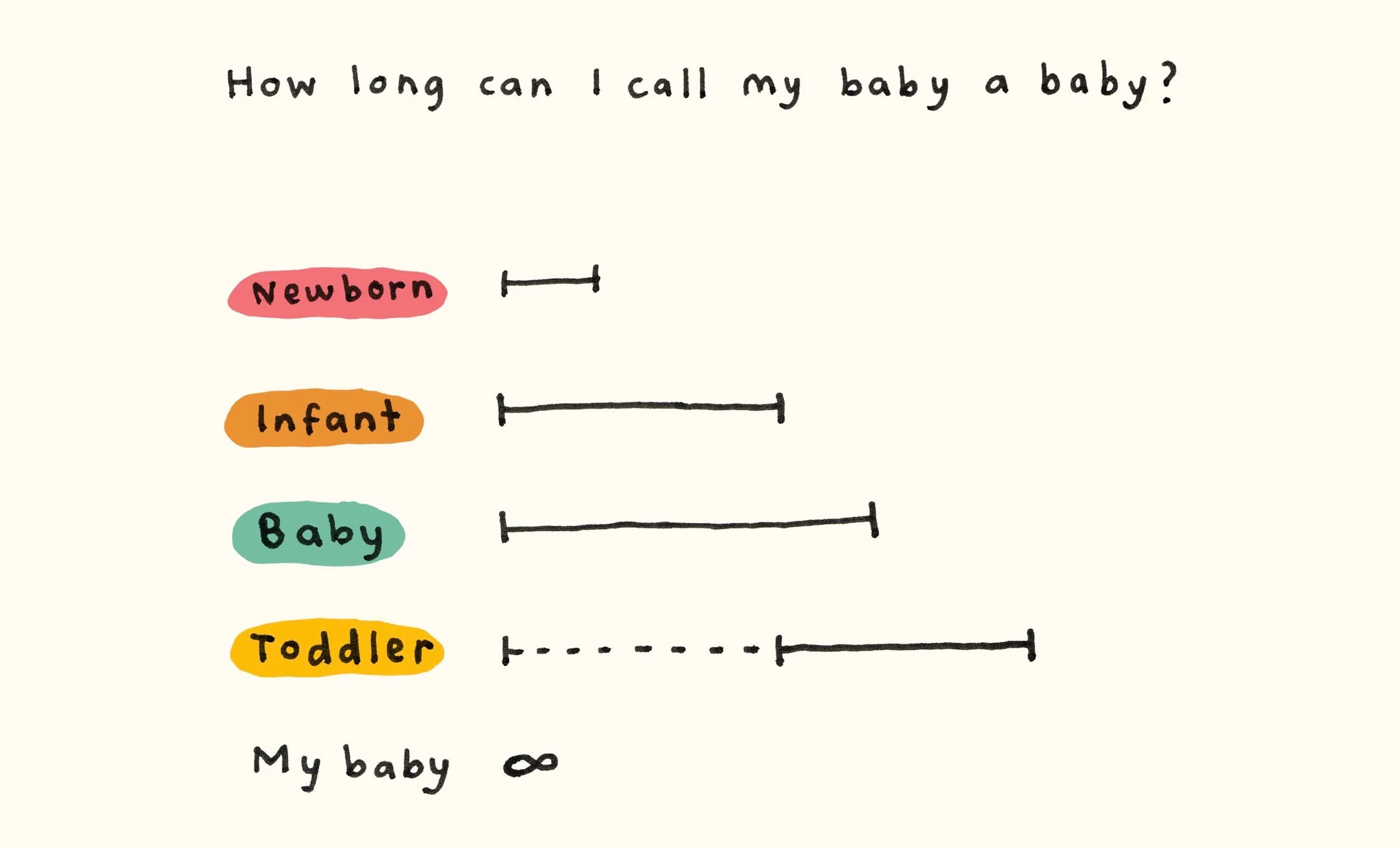
The persistent identification of adult offspring as infants or "babies" by their parents and community members represents a complex intersection of psychological attachment, linguistic habit, and social tradition that spans the entirety of the human lifecycle. Recent sociological observations and personal accounts indicate that the "baby" label often persists well into middle age, serving as a linguistic bridge between a parent’s memory of early caregiving and the reality of their child’s adult autonomy. While frequently viewed as a harmless term of endearment, the phenomenon triggers a wide spectrum of emotional responses, ranging from deep comfort during times of grief to interpersonal friction when boundaries of maturity are perceived to be crossed.
The Persistence of the Infantile Identity in Middle Age
A significant body of anecdotal evidence suggests that the "baby" moniker is most resilient in the youngest members of large families or within tight-knit communities where historical roles are preserved by collective memory. In one documented instance, a 49-year-old man, the youngest of seven children born shortly after his father’s death, found his identity as "the baby" fully resurrected during his mother’s funeral. Despite his age and physical appearance, lifelong neighbors and family friends utilized the label to contextualize their long-standing relationship with him, highlighting a phenomenon where the community’s "first memory" of an individual supersedes their current professional or social standing.
This communal reinforcement of the "baby" identity is often tied to the social status of the parents. In the aforementioned case, the father’s role as one of only two doctors in a small town created a heightened level of public visibility for the family. Consequently, the youngest child became a symbol of the family’s continuity and the community’s shared history. Sociologists suggest that such labeling functions as a form of "social anchoring," allowing community members to maintain a sense of stability and connection to the past by treating adult members as the children they once knew.
The Chronology of Parental Labeling: From Infancy to the Ninth Decade
The evolution of parental endearments typically follows a distinct chronological path, though the transition points vary significantly between families. In early childhood, the transition often begins around the second birthday, a period where many children begin to assert their independence and reject the "baby" label in favor of "big boy" or "big girl" status. However, linguistic data shows that parents often develop "extension codes" to bypass these early rejections. For example, some parents utilize terms like "Long Baby" for ten-year-olds or "Newborn" for fourteen-year-olds, creating private linguistic spaces where the infantile connection can be maintained without public embarrassment for the child.
As children move into their 20s and 30s, the use of "kiddo" often replaces "baby" as a more age-appropriate but still diminutive term. This period is frequently marked by the first significant boundary negotiations. Reports indicate that it is common for 30-year-olds to formally request that parents cease using terms like "kiddo," a request that parents often find emotionally difficult to process. This tension highlights the "maternal brain" or "parental brain" phenomenon, where the internal image of the child remains static even as the physical person ages.
By the time the offspring reach their 40s and 50s, the "baby" label often undergoes a sentimental resurgence, particularly during major life crises. Evidence shows that adult children as old as 51 frequently revert to seeking maternal or paternal comfort during periods of high stress, such as the illness of a pet or a personal health crisis. In these moments, the parental response—treating the 50-year-old as a "baby"—serves a functional psychological purpose, providing a safe harbor of unconditional care that adult-to-adult relationships may not always offer.
Psychological Foundations and Attachment Theory
The psychological underpinnings of this phenomenon are deeply rooted in attachment theory, originally developed by John Bowlby and Mary Ainsworth. The parental drive to view an offspring as a "baby" is an extension of the primary caregiving bond established in the first months of life. For the parent, the child represents a permanent object of care; for the child, the parent remains the primary source of security.
Linguistic experts refer to these endearments as "hypocorisms"—pet names that signal intimacy and a shared history. In a journalistic context, these terms act as "socio-linguistic markers" of the family unit’s internal hierarchy. However, the psychological impact is not always positive. When a mother-in-law refers to her adult son as "baby" in front of his spouse, it can be perceived as "infantilization," a process that can undermine the adult child’s authority and autonomy within their own nuclear family.
Furthermore, the influence of children’s literature cannot be understated. Robert Munsch’s 1986 book Love You Forever, which features a mother crawling into her adult son’s room to rock him while he sleeps, has become a cultural touchstone for this sentiment. While some modern readers find the imagery "creepy" or intrusive, it remains a primary text for understanding the Western parental ideal of eternal caregiving. The book’s refrain—"As long as I’m living, my baby you’ll be"—encapsulates the ideological basis for the lifelong "baby" label.
Supporting Data: Generational Shifts and Boundary Setting
While many adult children find comfort in being called "baby" by an elderly parent—with 40-year-olds reporting a sense of "lighting up" when an 80-year-old grandmother uses the term—there is a growing movement toward "respectful parenting" that emphasizes the child’s perspective. Modern parenting discourse increasingly advocates for respecting the views of tweens and teens who find diminutive labels patronizing.
Data gathered from family interactions suggests several key perspectives on boundary setting:
- The Private vs. Public Divide: Many parents and children reach a compromise where "baby" talk is reserved for private home environments, while more mature language is used in public or professional settings.
- The Developmental Transition: Some parents actively transition from "my baby" to "my buddy" or "my best friend" to reflect the shifting power dynamics of the relationship.
- The Canine Proxy: A significant number of parents report shifting their "baby" endearments to family dogs once their human children reach an age where they find the labels offensive. Terms like "dog-baby" or referring to an aging 13-year-old dog as a "puppy" allow for the expression of the caregiving impulse without social friction.
Broader Implications: The Burden of the "Child" Role
The persistence of the "parent-child" dynamic into late adulthood carries significant implications for elder care and mental health. In many cases, the "baby" of the family is expected to maintain a certain level of emotional vulnerability or dependence, which can become a burden as parents age.
There are documented instances where the emotional bond becomes asymmetrical. Some adult children report that their elderly parents use the "eternal child" narrative to guilt-trip them or to offload their own emotional distress, such as discussing suicidal ideation or chronic pain in ways that exceed the child’s capacity to help. In these scenarios, the "baby" label serves not as a term of endearment, but as a chain that prevents the adult child from establishing necessary emotional boundaries.
Conversely, the "baby" identity can facilitate "intergenerational caregiving." When a new mother is struggling with her own infant, she often finds that her own mother focuses on her needs rather than the newborn’s, under the logic of "You’re my baby." This "nesting" of care—where the grandmother cares for the mother so the mother can care for the infant—is a vital social support structure that relies on the grandmother still viewing her adult daughter as a child in need of protection.
Conclusion: A Universal Duality
The phenomenon of the "middle-aged baby" reveals a fundamental duality in human relationships. Humans possess the unique capacity to hold two versions of a person in their minds simultaneously: the competent, aging adult and the vulnerable, dependent infant. As long as the generational cycle continues, the linguistic and emotional tension between "growing up" and "staying a baby" will remain a central theme of the family experience.
Ultimately, the impact of these labels depends on the health of the underlying relationship. When rooted in mutual respect and a recognition of the child’s adult achievements, the term "baby" can be a powerful symbol of lifelong security. However, when used to stifle growth or maintain control, it remains a point of contention. As one 47-year-old adult child summarized, "I’ll always be my mother’s baby, but I’m glad I don’t need her to cut up my grapes anymore." This sentiment captures the balance of modern adulthood: the desire for the comfort of the past without the limitations of the role.
