

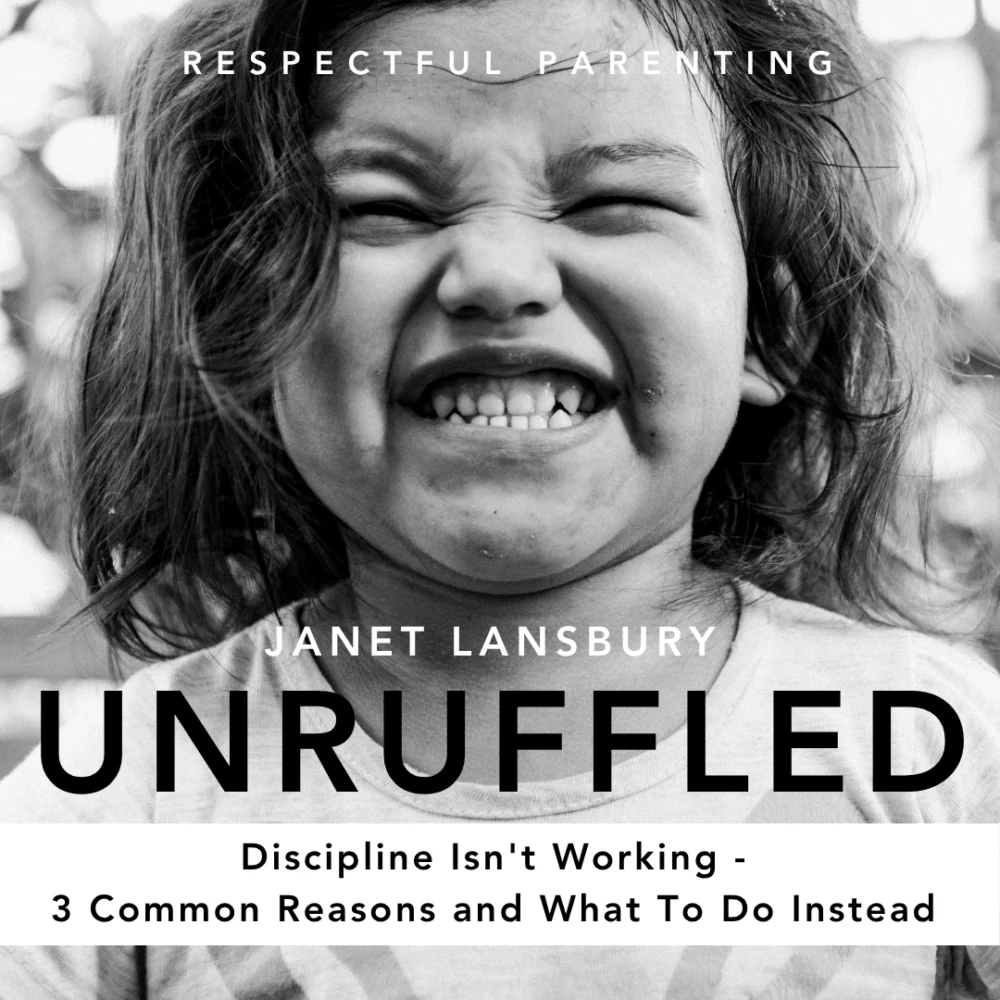
The persistent challenges in guiding children’s behavior, even when parents employ empathetic and patient approaches, often leave caregivers questioning their effectiveness. This common dilemma, where well-intentioned discipline strategies appear to fall short, is explored by child-rearing expert Janet Lansbury in her latest insights, "Discipline Isn’t Working: 3 Common Reasons and What To Do Instead." Lansbury delves into three prevalent pitfalls that can undermine disciplinary efforts, offering a nuanced perspective on fostering a more secure and connected parent-child relationship. Her analysis, rooted in years of observation and practice, aims to simplify parental approaches and enhance children’s sense of safety and validation.
The Evolving Landscape of Childhood Discipline
The discourse surrounding childhood discipline has undergone a significant transformation since the early 2000s. Historically, particularly in parent-to-parent online forums, there was a prevalent undercurrent of shame associated with a child’s difficult behaviors, such as prolonged crying or meltdowns. These instances were often interpreted as direct indictments of parental competence, whether in breastfeeding, carrying a child, or providing adequate connection. This era fostered an environment where parents felt pressured to "fix" their child’s distress, fearing it reflected their own shortcomings.
However, a notable shift has occurred, largely driven by increased awareness and acceptance of the importance of children’s emotional lives. The prevailing sentiment today emphasizes acknowledging and allowing children to express their feelings. While this evolution is overwhelmingly positive, Lansbury suggests that the pendulum may have swung too far, leading to a potential overemphasis on managing emotions that can obscure a parent’s role and create undue pressure. This heightened focus, while well-intentioned, can sometimes lead to a perception that every emotional expression is a monumental crisis requiring extensive intervention, potentially losing sight of the natural ebb and flow of childhood emotions.
This contemporary approach contrasts sharply with older, more dismissive methods, often encapsulated by phrases like "You get what you get and you don’t throw a fit." While such directives may appear to offer immediate behavioral control, Lansbury argues they can hinder the development of long-term trust and emotional resilience in children. The goal, she posits, is to cultivate a relationship where children feel comfortable confiding without fear of judgment, a foundation that is undermined by an approach focused solely on controlling outward behavior.
Reason 1: Reacting to Symptoms, Not Underlying Causes
One of the most common reasons disciplinary efforts falter is the tendency to address the outward manifestation of a child’s behavior rather than the deeper emotional currents driving it. Children, particularly when experiencing significant stress or dysregulation, often exhibit behaviors that appear unreasonable or even manipulative. However, Lansbury emphasizes that these actions are frequently rooted in feelings of being overwhelmed and out of control.
A poignant example shared by Lansbury involves a parent grappling with a four-year-old daughter experiencing intense behavioral challenges following a series of significant life events: the death of a beloved family dog and the hospitalization of her adored grandparents who lived with the family. Compounding this stress was the unexpected arrival of a new, nine-month-old dog. The child’s behavior escalated to constant yelling, defiance, aggression towards her baby sibling and the new dog, and severe bedtime struggles. This outburst occurred despite the child being a "model citizen" at preschool, indicating that the stress was manifesting primarily within the home environment.
The parent, feeling overwhelmed and witnessing their child’s "out of control" state, expressed feelings of failure and confusion. Lansbury’s response highlights a critical distinction: the child’s behavior, while distressing, is not a reflection of poor parenting but rather an expected response to overwhelming circumstances. The aggressive actions – biting, hitting, screaming – are not calculated manipulations but expressions of a child struggling to process grief, anxiety, and a disrupted sense of security.
Lansbury’s advice to the parent underscores the importance of shifting focus from the "symptoms" of the behavior to the underlying emotional distress. This involves recognizing that the child is experiencing a profound sense of dysregulation. Instead of reacting with frustration or punishment, the recommended approach is to provide a safe container for these overwhelming emotions. This might include physically protecting vulnerable individuals (like the baby and the dog) from the child’s out-of-control behavior while allowing the child to express her distress, even through yelling. The underlying principle is to acknowledge the child’s inner turmoil without condoning harmful actions, thereby helping her to feel seen and supported through the difficult period.
This approach aligns with research in child development, which indicates that children’s behavior is intrinsically linked to their emotional state. Studies from organizations like the American Academy of Pediatrics consistently highlight the impact of stress and trauma on a child’s developing brain and their ability to self-regulate. When children experience significant upheaval, their amygdala (the brain’s fear center) can become highly active, leading to fight-or-flight responses that manifest as aggression, withdrawal, or defiance. Effective discipline, therefore, requires understanding these neurological and emotional underpinnings rather than solely focusing on the observable behavior.
Reason 2: Saying No Without Providing an Alternative Outlet
A second significant reason why discipline may prove ineffective is the practice of simply saying "no" to undesirable behaviors without offering children alternative avenues to express the underlying feelings. While setting boundaries is crucial, it can inadvertently send the message that certain feelings or desires are unacceptable. Children, especially when young, often lack the sophisticated language to articulate their complex emotions, and their behaviors become their primary mode of communication.
Lansbury points out that when parents exclusively focus on preventing the behavior ("You can’t do that") without acknowledging the impulse or the feeling behind it, children can internalize that their impulses are wrong or that they are inherently bad for having them. This can lead to a buildup of unexpressed emotions, which may then surface in different, sometimes more intense, ways later on.
The key to addressing this lies in a subtle but vital shift: acknowledging the child’s desire or impulse while firmly upholding the boundary. For instance, when a child attempts to do something unsafe or inappropriate, a parent can state, "I can’t let you do that," and follow it with a simple observation that validates the child’s internal experience, such as, "You really want to keep doing that," or "You’re having a hard time stopping yourself." This brief acknowledgment, even without explicitly naming the emotion, can have a calming effect. It communicates to the child that their parent sees their struggle, that their impulses are understood, and that the boundary is firm but not judgmental.
This approach is supported by concepts in emotional intelligence and attachment theory. When parents validate a child’s feelings, even when setting limits, they strengthen the child’s sense of security and trust. This validation doesn’t mean agreeing with the behavior, but rather acknowledging the validity of the child’s internal experience. Research on emotional coaching by Dr. John Gottman suggests that parents who acknowledge and label their children’s emotions, and then help them navigate those feelings, foster greater emotional regulation and stronger parent-child bonds. When parents consistently deny or dismiss the impulse behind a behavior, children may feel unheard and misunderstood, leading to increased acting out or internalized distress.
Reason 3: Parental Responsibility for Alleviating Child’s Discomfort
The third common pitfall identified by Lansbury is the parent’s feeling of responsibility to "make it better" for the child when they experience negative emotions, rather than simply holding the boundary and allowing the child to feel their feelings. This often stems from a place of empathy and love, but can inadvertently undermine the disciplinary process and the child’s development of resilience.
Parents may feel uncomfortable witnessing their child’s distress, sadness, or anger. This discomfort can lead them to question their own decisions or actions, or to try to placate the child to alleviate the perceived suffering. This can manifest as second-guessing boundaries, softening limits, or over-explaining reasons for a decision, all in an effort to reduce the child’s negative emotional response.
Lansbury uses an example of a parent who, after setting a boundary with her six-year-old son regarding a cardboard sword, felt compelled to engage in extensive negotiation and validation when he became upset and refused to leave for his grandparents’ house. Despite acknowledging his feelings and exploring alternatives for the sword, the child remained resistant for an extended period. Lansbury suggests that while the parent’s intentions were compassionate, the prolonged engagement and perceived "delicacy" around the boundary might have inadvertently reinforced the child’s resistance.
In such scenarios, Lansbury advocates for a more direct, yet still compassionate, approach. This involves maintaining the boundary with confidence and simplicity, while simultaneously welcoming the child’s expression of negative feelings. The message conveyed is: "I see you’re upset, and it’s okay to be upset. We are still going." This allows the child to experience the disappointment or anger associated with a boundary, knowing that their parent is not afraid of their emotions and will not be swayed by them. This, paradoxically, helps the emotions to pass more quickly.
The implication here is that children are more capable of navigating difficult emotions than parents often assume. By allowing children to experience and express these feelings in a safe and bounded environment, parents are actually equipping them with essential life skills. The tendency to shield children from discomfort can inadvertently communicate that these difficult feelings are dangerous or unmanageable, hindering their development of self-regulation and emotional resilience. This aligns with the concept of "scaffolding" in child development, where parents provide support, but gradually withdraw it as the child gains competence. In this context, the "support" is allowing the child to feel, while the "competence" is their ability to move through those feelings.
Broader Implications for Parenting and Child Development
The insights offered by Janet Lansbury provide a valuable framework for parents navigating the complexities of child-rearing. By identifying these three common reasons why discipline may not be working, she offers a path toward more effective and relationally attuned parenting. The overarching theme is a call for parents to trust their children’s innate capacity to manage their emotions and to approach discipline not as a means of control, but as an opportunity to foster security, understanding, and resilience.
The analysis suggests that a significant part of effective parenting involves recognizing that challenging behaviors are often signals of underlying distress. By responding to these signals with empathy and a firm, yet kind, presence, parents can help children navigate difficult emotions without becoming overwhelmed. This approach not only addresses immediate behavioral issues but also contributes to the long-term emotional well-being and secure attachment of the child.
Ultimately, Lansbury’s work encourages a recalibration of parental expectations and strategies. It moves away from a focus on punitive measures or the immediate cessation of negative behavior, towards a model that prioritizes emotional attunement, clear boundaries, and a deep belief in the child’s inherent ability to cope and grow. This nuanced perspective can empower parents to feel more confident and less overwhelmed in their daily interactions, fostering stronger, more harmonious relationships with their children. The "Unruffled" podcast and associated resources, including Lansbury’s book "No Bad Kids," offer further guidance for parents seeking to implement these principles in their own homes.
