

Zarina Ayyub’s journey from a young, unsupported mother grappling with societal and cultural pressures to a dedicated breastfeeding advocate and doula stands as a powerful testament to resilience and the enduring human spirit. Her personal narrative, deeply intertwined with the evolving landscape of maternity care and cultural integration in the United Kingdom, illuminates the profound challenges faced by many women, particularly those from ethnic minority backgrounds, in pursuing breastfeeding. Born in Birmingham to Pakistani immigrant parents, Zarina’s experiences, starting with the birth of her first child at the age of 20, reveal systemic gaps in support and the powerful influence of familial traditions, ultimately galvanizing her lifelong commitment to empowering other mothers.
Early Life and Generational Challenges
Zarina’s mother, a pioneer herself, arrived in England in the late 1960s, part of an early wave of Pakistani immigrants establishing new lives in the UK. This period marked a significant demographic shift, as communities from the Indian subcontinent settled in British cities, bringing with them rich cultural traditions and facing the challenge of adapting to a new society. Zarina’s mother was among the first in her community to have children born in Britain, navigating a new country and a new healthcare system without the established networks that would later emerge. This isolation was compounded by living with in-laws who, like many of their generation, did not encourage breastfeeding. Traditional Pakistani households often involved extended family living under one roof, with complex social dynamics and unspoken rules, which could make personal choices, particularly those related to intimate acts like breastfeeding, subject to communal scrutiny.
Her mother’s own attempts to breastfeed Zarina’s older brother were fraught with difficulty and trauma. In the hospital, she was given formula and medication to suppress her milk production – a practice common in British hospitals during that era, reflecting a medicalized approach to childbirth that often overlooked maternal instincts and traditional knowledge. During the mid-20th century, there was a global surge in formula feeding, heavily promoted by commercial interests and often endorsed by medical institutions, leading to a decline in breastfeeding rates across many Western countries, including the UK. This experience left a lasting scar on Zarina’s mother, leading her to actively discourage her daughter from breastfeeding, fearing she would endure similar pain and disappointment.
Culturally, misconceptions surrounding colostrum were prevalent, particularly in some South Asian traditions. Zarina’s mother recounted how, in India, colostrum – the vital "first milk" rich in antibodies and nutrients – was often considered "dirty" or unsuitable for newborns. Instead, newborns were sometimes given concoctions of cooled boiled water with fennel and other seeds, believed to aid in clearing meconium. This belief system, often passed down through generations, combined with a lack of education on the scientific benefits of colostrum, created a significant barrier to early and exclusive breastfeeding for many women in the community. The cultural emphasis on modesty (purdah), the expectation for women to quickly resume household duties, and the communal living arrangements typical of immigrant families further complicated the ability of new mothers to breastfeed comfortably and consistently. Data from Public Health England (now UKHSA) has consistently shown lower breastfeeding initiation and continuation rates among some South Asian communities in the UK compared to the general population, pointing to the ongoing impact of these cultural and systemic factors.
The Initial Ordeal: A Mother’s Isolation in the Hospital
Zarina’s own entry into motherhood was marked by a profound sense of vulnerability and isolation. At 20, she found herself in labour just before her own birthday, eventually giving birth to her first baby on November 3rd. The hospital environment, far from offering nurturing support, inadvertently intensified her struggles. Her tiny daughter, weighing only 4 lbs 13 oz due to placental insufficiency, was immediately separated from her mother and placed in a special nursery, fed formula by tube. This practice of routine mother-baby separation and formula supplementation was common in many hospitals prior to the widespread adoption of initiatives like the Baby-Friendly Hospital Initiative (BFHI), which promotes practices known to support breastfeeding, such as immediate skin-to-skin contact and keeping mothers and babies together.
Zarina was left alone in a room, bereft of guidance or choices. There was no explanation about colostrum, no instruction on hand expression, and no encouragement for early skin-to-skin contact, practices now recognized as crucial for initiating successful breastfeeding and maternal-infant bonding. This period of separation and lack of information left Zarina feeling scared, even to hold her own child. Her mother’s advice to "not ask questions" and trust the medical professionals echoed her own past experiences, inadvertently perpetuating a cycle of disempowerment and a culture of deference to medical authority. The memories of her baby being taken away and her own feelings of helplessness remain vivid and painful even decades later, underscoring the long-term emotional impact of such early experiences.
When her daughter was finally brought to her on day three, Zarina was severely engorged, her breasts "big and hard, and felt heavy like bricks." Despite her mother’s urging to take milk-drying pills, an instinctual drive compelled Zarina to resist. However, with her baby too small to latch effectively and her own body in distress, she was met with a midwife’s forceful intervention, an experience Zarina describes as "really horrible" and one that left her "crying my eyes out." This incident underscores the urgent need for gentle, informed, and empowering support for new mothers, especially those facing physical and emotional challenges in the early postpartum period, rather than aggressive or traumatic interventions.
Navigating Cultural Expectations and Societal Norms at Home
Returning home on day five or six, Zarina faced a new set of challenges that mirrored, and in some ways amplified, the cultural and systemic barriers her mother had encountered. Her nipples were "sore, cracked, and bleeding," and the initial nights were filled with distress for both mother and baby. Her husband, accustomed to London’s more accessible retail landscape, struggled to find suitable breastfeeding aids in Birmingham, ultimately procuring an ineffective hand pump and an oversized dummy in a desperate attempt to soothe their crying baby. This snapshot illustrates the profound lack of readily available, appropriate support and resources for breastfeeding families in communities outside major metropolitan areas at the time, particularly given the limited opening hours of shops in Birmingham during that period.
The subsequent move to London, into their own flat after Zarina’s mother went abroad, offered a semblance of independence, yet cultural expectations continued to loom large. Living with her husband’s extended Pakistani family – including an aunt, uncle, and grandparents – meant a constant stream of visitors and a home that often served as a temporary haven for newly arrived relatives. This created an environment where privacy was scarce, and the demands of cooking and cleaning were paramount. Zarina felt "embarrassed to breastfeed outside," leading to social isolation and making it difficult to find quiet moments for feeding. This highlights a common issue for breastfeeding mothers from cultures where public feeding or even feeding in front of family members can be considered immodest.
The pervasive cultural emphasis on a "spotless house" and active contribution to family life often superseded the perceived "laziness" of sitting down to breastfeed. Even her mother-in-law, who had breastfed all her own sons, failed to understand Zarina’s commitment, comparing her unfavourably to another daughter-in-law who prioritized housework over breastfeeding. This highlights a critical tension between traditional expectations of womanhood (domesticity, subservience) and the biological imperative of infant feeding and bonding. Furthermore, her husband, influenced by the sight of larger, formula-fed babies within the community, also pressured her to supplement with "bottle milk," believing her naturally smaller babies were "too skinny." This external pressure, coupled with her own lack of knowledge about responsive feeding (she attempted a rigid three-hour schedule based on her mother’s formula feeding routine), made her early breastfeeding journey an arduous battle, often characterized by exhaustion and emotional strain.
A Turning Point: The Power of Information and La Leche League
The turning point in Zarina’s journey arrived with her third child. By this time, her household had expanded further to include her husband’s mother and two brothers, intensifying the pressures. Despite the overwhelming environment, an innate conviction, a "something inside me that just knew what to do," pushed her to seek knowledge. Her discovery of The Womanly Art of Breastfeeding, borrowed from the library, proved to be a transformative experience. Over nine months, she devoured its contents, absorbing vital information that countered the myths and misinformation she had encountered. Learning that "colostrum is not dirty" and that "if you lose your milk, you can relactate" armed her with the confidence and facts she desperately needed. This pivotal moment illustrates the profound impact that accessible, evidence-based information can have on empowering individuals to reclaim agency over their health and parenting choices.
This newfound knowledge empowered her to challenge existing norms and advocate for her own choices. "No one was going to mess with me!" she declared, reflecting a profound shift from passive acceptance to active self-advocacy. She successfully breastfed her third child for two years, despite continuous critical comments from her extended family. This period marked her transition from a struggling mother to an informed and determined champion of breastfeeding, demonstrating remarkable resilience in the face of persistent societal and familial opposition.
Her connection with La Leche League (LLL) further solidified her resolve. When she developed mastitis a few weeks after her third baby’s birth, she reached out to an LLL Leader and attended a group meeting in Wimbledon. While she was the only woman in traditional shalwar kameez, initially feeling "awkward and embarrassed" to feed in a longer top, the experience, though brief, planted a seed. La Leche League, a global non-profit dedicated to providing mother-to-mother breastfeeding support and information since 1956, offered a safe space and evidence-based guidance, directly contrasting with the cultural and institutional barriers Zarina had faced throughout her earlier experiences.
The Evolution into Advocacy: Peer Supporter and Doula
Even from the birth of her first child, Zarina had harboured a quiet aspiration to become a breastfeeding peer supporter. Her natural inclination to help was evident when, just four weeks after becoming a mother herself, she assisted her husband’s aunt with engorged breasts, finding solidarity in their shared desire to breastfeed. She also supported her younger sister through her breastfeeding journeys, gradually normalising the practice for her own mother, who eventually became a staunch supporter of Zarina’s last two children. This demonstrates the ripple effect of individual courage and the power of positive role models within families.
It wasn’t until after the birth of her fifth child, however, that Zarina formally embarked on her advocacy path. This birth, though better, presented new challenges, as her baby was born prematurely at 35 weeks and suffered from severe reflux. After receiving what she describes as "really poor" advice from a breastfeeding counsellor, she sought help at a local breastfeeding café. There, she discovered an advertisement for La Leche League’s 12-week peer supporter training course, run by the NHS in her area. This moment felt divinely ordained: "thank God I came today!" she recalls. This rigorous training, often involving modules on lactation physiology, common breastfeeding challenges, communication skills, and ethical considerations, equipped her with the skills and confidence to provide proper, evidence-based support to other mothers. Her graduation, symbolized by a knitted pink breast, marked a significant milestone in her life’s purpose, transitioning her from an individual survivor to a community leader.
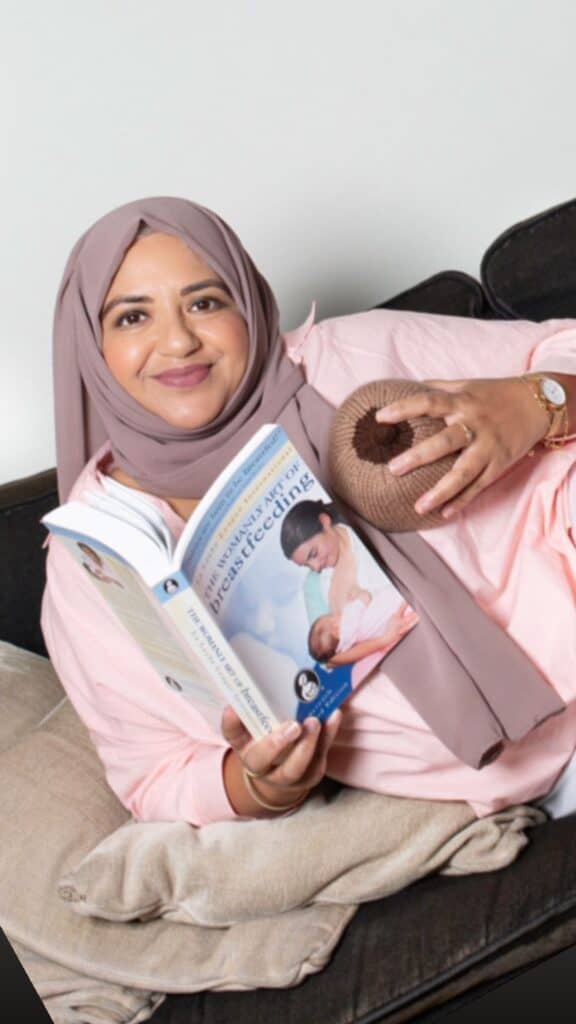
For two to three years, Zarina served as a peer supporter, notably as the only Muslim peer supporter at her group. She recognized the crucial need for representation, observing that "we very rarely saw any Asian women at the group we ran." This underscores a persistent disparity in access to and comfort with mainstream breastfeeding support services for ethnic minority women. While cultural barriers like modesty and language can play a role, Zarina notes that "it’s easier to relate to people who look like you, even when there isn’t a language barrier." This highlights the importance of cultural competence and diversity within healthcare and support services to ensure equitable access and effective engagement. Her ability to connect with diverse mothers, many of whom wished they could "take me home with them," illustrates the deep impact of empathetic, culturally sensitive support.
Today, Zarina works as a doula, extending her support to mothers during birth and the postnatal period. Her journey reflects a broader understanding of the holistic needs of new families, moving beyond just breastfeeding to encompass emotional, physical, and informational support throughout the perinatal period. She actively contributes to initiatives aimed at supporting Asian and other ethnic minority families, such as The Raham Project in Peterborough and the charity BLISS, focusing on neonatal intensive care units and premature babies. Her participation in these projects, sharing her often painful birth stories, illustrates her ongoing commitment to systemic change and improved maternal care for all, particularly for vulnerable populations facing compounded challenges.
Broader Impact and Legacy
Zarina Ayyub’s legacy extends far beyond her individual support work. Her five children, now aged between 18 and 34, are a testament to her pioneering spirit. Her eldest daughter, a mother of three under four, has embraced breastfeeding wholeheartedly, nursing her first for two years, tandem feeding her first two, and continuing with her youngest at eight months. This dramatic shift from Zarina’s own struggle to her daughter’s confident, extended breastfeeding journey speaks volumes about the power of intergenerational influence and the breaking of cultural taboos. Even her daughter’s husband, initially uncomfortable with public breastfeeding, has become a supportive partner, reflecting a profound evolution within their extended family. This demonstrates how sustained advocacy and lived experience can gradually dismantle ingrained prejudices and foster greater acceptance.
This transformation in her own household is perhaps Zarina’s most significant achievement. "Our household is probably a very unusual Pakistani household," she notes, where open conversations about breastfeeding, periods, and women’s health are now normalized. Her consistent advocacy has influenced her children’s spouses and friends, fostering an environment where critical health choices are discussed openly and without shame. The aspiration of her other daughters to explore home births, a significant departure from traditional practices in their community, further underscores the profound impact of Zarina’s trailblazing journey in challenging established norms and promoting informed choice.
Despite the progress, significant challenges remain within the South Asian community regarding breastfeeding. Zarina emphasizes that "there is still a lot of shame surrounding breastfeeding in the Asian community. Many families are still quite prudish." While acknowledging that it is easier now than in her early motherhood, she notes that South Asian women are still underrepresented in breastfeeding support groups. The cultural discomfort with lifting tops in public, even among women, is often misconstrued as religious shame, when in fact, "the Muslim faith teaches that the baby has a right to be breastfeed for however long they wish." This distinction is crucial, as it highlights the need for culturally competent support that can address specific cultural norms without misinterpreting religious tenets. Accurate information and respectful dialogue are key to dispelling myths and fostering an environment of acceptance.
By building relationships of trust and understanding, breastfeeding supporters can effectively dismantle these fears and normalize breastfeeding within diverse communities. Zarina’s story is a powerful reminder that breastfeeding is not merely a biological act but a complex interplay of personal choice, cultural norms, institutional support, and community acceptance. Her unwavering dedication to making it "the very natural and normal way of life that it surely is" continues to inspire and empower countless mothers, shaping a more supportive future for generations to come.
Breastfeeding Matters LLLGB Podcast
In January 2025, Zarina Ayyub further shared her insights with volunteer breastfeeding counsellors Maria Yasnova and Sarah Fletcher on the Breastfeeding Matters LLLGB Podcast. Their discussion explored the critical need for creating safe and supportive environments for new mothers from the very outset, drawing parallels with the ancient tradition of the "first 40 days" or the "fourth trimester," a practice observed by many cultures globally. This concept emphasizes a period of intense rest, recovery, and bonding for the new mother and baby, with community support enabling her to focus solely on nurturing her infant. This underscores the ongoing relevance of Zarina’s experiences and advocacy in promoting holistic, culturally sensitive postnatal care, recognizing that optimal infant feeding outcomes are intrinsically linked to the mother’s overall well-being and the support system around her. The podcast, available on Apple and Spotify, serves as an invaluable resource, disseminating vital information and personal narratives that continue to drive positive change in maternal and infant health.
