

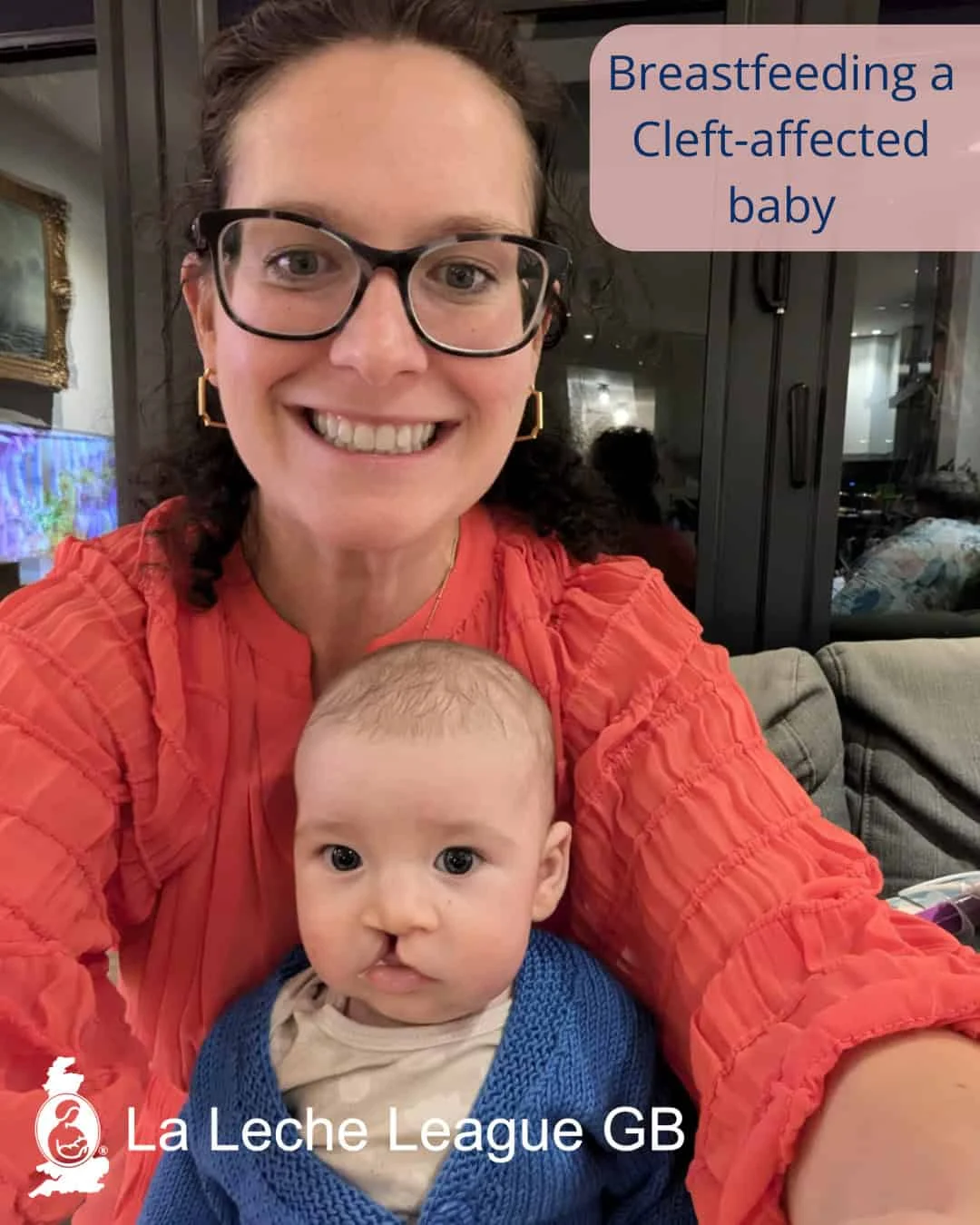
The journey of Sarah Muir-Little and her son, Russell, offers a compelling testament to maternal determination and the evolving landscape of specialized infant care. Faced with an antenatal diagnosis of cleft lip and palate, a condition often presented as a barrier to breastfeeding, Muir-Little embarked on a pioneering path, meticulously researching and innovating to establish a unique and successful breastfeeding relationship with her son. Her experience underscores the critical need for individualized medical support and challenges conventional perceptions surrounding feeding methods for infants with complex needs.
Understanding Cleft Lip and Palate: A Medical Overview
Cleft lip and palate are among the most common congenital birth differences, affecting approximately 1 in every 700 babies globally. This condition occurs when the structures forming the upper lip or roof of the mouth (palate) do not fully fuse during early fetal development. The severity can vary, ranging from a minor notch in the lip to a complete separation extending into the nose and soft palate.
Medically, a cleft lip primarily affects appearance and can present minor feeding challenges, often allowing for breastfeeding with some adaptations. However, a cleft palate poses a more significant hurdle for infants attempting to breastfeed directly from the breast. The integrity of the palate is crucial for creating the necessary suction pressure to extract milk. Without a complete palate, infants cannot form this vacuum, rendering direct breastfeeding in its conventional form impossible until surgical repair. The Cleft Lip and Palate Association (CLAPA) in the UK, alongside international bodies, provides extensive resources and support for families navigating these diagnoses, emphasizing comprehensive care that includes surgical interventions, speech therapy, and psychological support. Typically, infants with cleft palate undergo a series of operations, with lip repair often occurring around three months of age and palate repair between six and twelve months, followed by potential further surgeries in childhood.
The importance of breast milk for infants, particularly those with medical vulnerabilities, is well-documented. Breast milk provides crucial antibodies, enzymes, and growth factors that bolster an infant’s immune system, reduce the risk of infections, and promote optimal development. For babies undergoing multiple surgeries, these benefits are amplified, aiding recovery and protecting against common childhood illnesses. Furthermore, the act of breastfeeding fosters a unique emotional bond between mother and child, contributing to maternal well-being and infant security.
The Antenatal Diagnosis: A Pivotal Moment
For Sarah Muir-Little, the news of her son’s condition arrived amidst an already stressful period. Six weeks prior to her 20-week scan, her father-in-law had been admitted to intensive care, leaving the family emotionally drained and unable to fully embrace the excitement of pregnancy. The 20-week scan, initially a moment of joy confirming they were expecting a boy, quickly turned into a profound challenge. The sonographer’s unexpected question, "Have you heard of a cleft lip?", marked the beginning of a complex journey.
A midwife then delivered the initial, stark medical advice: Russell’s cleft lip and palate meant breastfeeding would not be possible. This statement, while reflecting standard medical understanding of the physical impediments of a cleft palate, profoundly impacted Muir-Little. Having recently weaned her toddler, she had envisioned a seamless breastfeeding experience with her new baby. The perceived loss of this experience triggered a significant emotional response, described as a "grief" for what she felt was a fundamental aspect of her identity as a mother.
However, a subsequent consultation with a specialist nurse offered a glimmer of hope, clarifying that while traditional direct breastfeeding might be unlikely due to the potential palate involvement, "some sort of breastfeeding journey" could still be possible. This nuanced perspective, acknowledging the physical limitations while validating the mother’s desire, became the catalyst for Muir-Little’s proactive approach. The uncertainty surrounding the palate’s exact involvement until birth, and the confirmation of multiple surgeries ahead, solidified her resolve to explore every avenue for providing breast milk.
Pioneering a Path: Research and Innovative Solutions
Driven by her determination, Muir-Little immersed herself in research, scouring the websites of CLAPA, La Leche League, and other specialized resources. Her objective was clear: to find examples of successful breastfeeding, or breast milk feeding, after palate surgery. While finding such accounts was challenging, the limited information available provided crucial insights: maintaining a robust milk supply was paramount, and alternative methods for delivering breast milk would be necessary.
Muir-Little focused on two key areas. Firstly, maintaining her milk supply. Having successfully breastfed her toddler, albeit with some difficulties in pumping, she was confident in her ability to produce sufficient milk. She reflected on past challenges with pumping, where she often resorted to hand expression to build a modest freezer stash, and resolved to improve her pumping knowledge and technique for Russell. This proactive approach to lactation management was critical, as a consistent supply would be the foundation of any feeding plan.
Secondly, she investigated methods for delivering milk to a baby who could not generate suction. Nursing supplementers emerged as a primary option. These systems typically involve a bottle containing expressed milk connected to a thin tube, which is then positioned at the breast to deliver milk as the baby latches. Muir-Little acquired two commercially available supplementer systems in the UK. She found that one, gravity-fed, delivered milk too slowly, while the other, a squeezable bottle, was awkward to manage, especially when attempting the recommended "dancer hold." The dancer hold, where the index finger and thumb form a "U" shape to support the baby’s chin, is often suggested for infants with low muscle tone or prematurity, but Muir-Little found it impractical to execute while also managing the supplementer.
Undeterred by the limitations of commercial products, Muir-Little began to innovate. Upon Russell’s arrival, they started feeding him expressed colostrum via a syringe, simultaneously using a finger in his mouth to encourage sucking reflexes. This period allowed her milk supply to establish. An unexpected discovery proved pivotal: some incorrectly ordered syringes serendipitously fit the supplementer tube perfectly. With the help of the midwife team, larger syringes with screw-on caps were sourced from the labor ward. Muir-Little, demonstrating remarkable ingenuity, drilled holes in the caps to create a snug fit for the supplementer tube, crafting a custom-feeding system. She meticulously adhered to safety guidelines, ensuring caps were removed for direct syringe feeding to prevent choking hazards, and observing Russell closely to manage feeding speed.
The challenge then shifted to integrating this custom supplementer system with direct feeding at the breast. Traditional advice suggested either inserting the tube after latching or taping it to the breast before the baby latched. Both presented difficulties: Russell’s fragile latch made the former impossible, and taping the tube away from the nipple resulted in a long, unwieldy tube. Muir-Little experimented with taping the tube very close to the nipple, necessitating a tape that could withstand moisture. This trial-and-error period, marked by frustration and milk loss, eventually yielded a workable solution, albeit one that sometimes compromised the latch. Despite concerns voiced by some healthcare professionals regarding the potential for aspiration, Muir-Little’s resolve remained unshaken, confident in her ability to deliver milk safely and effectively.
The Early Weeks: Trials, Triumphs, and Support Systems
The initial weeks post-birth were a crucible of learning and adaptation for Sarah and Russell. The "dancer hold" continued to be a source of stress, leading to repeated attempts at latching and distress for both mother and baby. Observing that Russell calmed and fed readily from the non-taped breast via direct hand expression, Muir-Little knew his hunger was genuine; the issue was the mechanics of the supplementer-assisted latch.

Consulting with a specialist at Great Ormond Street Children’s Hospital, they made a critical decision: to prioritize a relaxed feeding environment and stick with the cradle hold, a position Muir-Little was familiar with from feeding her toddler. While this sometimes resulted in more milk loss from the side of Russell’s mouth due to the cleft, the familiarity and comfort it offered outweighed the minor spillage. Rather than focusing on complex techniques like plugging the cleft with the breast or keeping the cleft side up, the emphasis was on achieving a calm feed with a deep latch. These early weeks were characterized by wet clothing from lost milk, fiddly adjustments, and moments of frustration, yet Muir-Little consistently felt the effort was worthwhile.
Over time, mother and son developed a symbiotic rhythm. Muir-Little learned to deliver milk through the syringe in sync with Russell’s pauses, adjusting the flow to prevent him from becoming overwhelmed or requiring excessive sucking effort. She also learned to manage syringe refills without upsetting him, either by putting him down or changing his position so he didn’t anticipate continuous milk flow.
The emotional validation from friends proved significant. One friend, initially questioning the extensive effort, understood Muir-Little’s commitment upon witnessing a feed, remarking, "I got it: I was already breastfeeding." Another friend, observing them from across a restaurant, commented, "Oh, so the worries about Russ not being able to breastfeed didn’t come to fruition!" These moments of affirmation deeply resonated with Muir-Little, reinforcing the legitimacy of her unique journey.
However, not all external feedback was positive. A pediatrician expressed concerns, advocating for the use of specialized cleft bottles, which they described as "safe and effective," implying that Muir-Little’s adapted method might not be. These comments, particularly from healthcare professionals, were hurtful and required considerable resilience to overcome. Muir-Little’s conviction in her approach was sustained by Russell’s consistent weight gain and his apparent enjoyment of feeding at the breast. While she acknowledged the necessity of the supplementer, her profound satisfaction stemmed from the fact that they were breastfeeding to the best of their ability, reaping all its benefits—a powerful testament to the importance of patient-centered care and respecting parental intuition within medical frameworks.
Evolving Techniques and Overcoming Hurdles
As Russell grew, their feeding dynamic continued to evolve. Around ten weeks old, he began to express discomfort with the tape near his mouth. This prompted Muir-Little to gradually move the tape further from the nipple, eventually eliminating it entirely. This required a higher degree of coordination but became manageable as both mother and baby grew more accustomed to the process.
Throughout their journey, there were moments that felt like setbacks, where Russell would become upset or refuse to feed. Muir-Little learned to differentiate between issues related to his cleft and common infant behaviors. Often, the challenges were universal to all babies, such as distractibility around three months of age, which could lead to feeding refusals if the environment was too stimulating. This understanding allowed her to address his needs holistically, remembering that he was "a baby first, and has a cleft second."
Post-Surgery: A New Chapter in Breastfeeding
Russell underwent surgery to reconstruct his lip and hard palate just before his first birthday. The immediate post-operative period presented new challenges. Following the morphine, Russell initially preferred bottle feeding for several days. However, once he resumed feeding from the supplementer, he rejected bottles, perhaps associating them with the discomfort of recovery. This phase, requiring Muir-Little to express milk and manage all feeds, was physically and emotionally exhausting.
The unwavering support of her husband was crucial throughout this period, encompassing bottle-washing, night feeds while Muir-Little pumped, and providing constant reassurance. Their journey was a collaborative effort, navigating complex medical and personal hurdles as a cohesive team. Muir-Little consistently believed that every day they continued with the supplementer was a bonus for Russell’s health and their bond, emphasizing that any progress was superior to not having tried at all.
Then, a significant breakthrough occurred. Four weeks after his palate surgery, and despite advice to avoid suction for a month, Muir-Little noticed Russell attempting to suck for the first time. The very next day, he discovered how to use a straw, and almost immediately afterward, began sucking and swallowing independently at the breast.
From this pivotal moment, progress was gradual but steady. The supplementer, which had been an indispensable tool for 15 months, was used less and less as Russell developed the strength and coordination to extract more milk himself. This phased reduction culminated in Muir-Little being able to stop daily pumping, a monumental achievement after more than a year of dedicated effort.
Russell’s latch, initially unconventional, proved effective and ensured his contentment. Today, he continues to breastfeed once or twice a day. This outcome, initially deemed improbable by medical professionals, stands as a testament to Muir-Little’s perseverance and innovative spirit. Her journey with Russell illustrates that with determination, adaptation, and appropriate support, even the most challenging circumstances can yield unexpected and profoundly rewarding outcomes in infant feeding.
Implications and Future Outlook
Sarah Muir-Little’s story resonates far beyond her family, offering significant implications for healthcare practice and parental empowerment. Her experience highlights the potential for innovative, patient-led solutions in specialized medical care, particularly when standard protocols may not fully address individual needs or parental desires. It underscores the importance of a flexible approach from healthcare providers, encouraging collaboration with parents to find feeding methods that work for their unique circumstances, rather than strictly adhering to generalized recommendations.
This narrative also champions the role of organizations like La Leche League and CLAPA, which provide vital information, support networks, and alternative perspectives for parents facing complex feeding challenges. Their resources often bridge gaps where mainstream medical advice may be limited or overly prescriptive.
Ultimately, Russell’s breastfeeding journey is a powerful affirmation of the profound bond between mother and child, demonstrating that even in the face of significant medical obstacles, a mother’s commitment to nurturing her child can lead to extraordinary achievements. It serves as an inspiration for other parents of cleft-affected babies, offering hope and validating their desire to pursue individualized feeding paths, proving that with resilience and creativity, the seemingly impossible can indeed become possible.
