

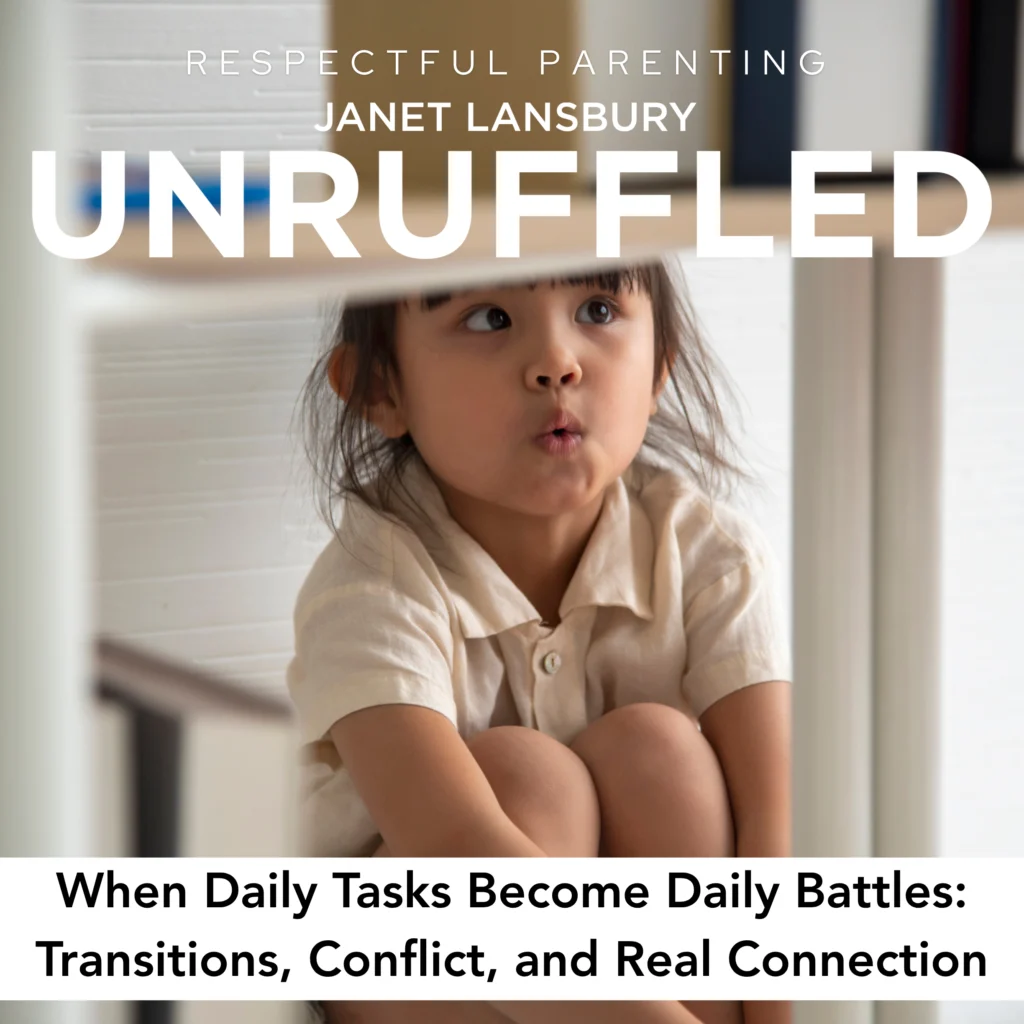
A poignant inquiry into the often-fraught nature of everyday routines for families has surfaced, highlighting the profound challenges parents face when seemingly simple tasks transform into protracted conflicts with their young children. The situation, brought to light by an anonymous parent’s heartfelt plea to renowned parenting educator Janet Lansbury, underscores a widespread struggle: the persistent resistance of a five-year-old to essential self-care routines such as dressing, hair grooming, bathing, and dental hygiene. This pattern, escalating from a minor inconvenience to an hour-long ordeal, leaves both parent and child exhausted, with tasks frequently left incomplete.
The parent, a single mother navigating a demanding work schedule and the complexities of co-parenting, has exhausted a repertoire of conventional strategies. Timers, countdowns, reward charts, playful games, and even punitive measures have been employed without yielding lasting positive outcomes. Her observation that "what starts as a simple transition can turn into an hour-long battle, with both of us ending up overwhelmed and the task often still unfinished" encapsulates the frustration and desperation many parents experience in similar circumstances. This essay aims to delve into the underlying dynamics of these daily battles, offering a perspective grounded in expert analysis that reframes these conflicts not as mere behavioral issues, but as opportunities for deeper connection and understanding.
The Parent’s Dilemma: Seeking Connection Amidst Conflict
The parent’s detailed account, shared with Janet Lansbury, reveals a deep commitment to fostering a secure and connected relationship with her daughter. She articulates a desire to move beyond a purely behavior-focused approach, influenced by her own upbringing where "struggles were often approached through a behavior-focused lens." Her aspiration is to provide her daughter with an "encouraging and compassionate" inner voice, a stark contrast to the emotional suppression she experienced.
However, the recurring struggles around daily transitions have created a paradoxical situation. Despite her best efforts to apply principles of "less pressure, more connection, acceptance, and leadership," she finds herself questioning whether her focus on connection is inadvertently perpetuating a cycle of resistance. This uncertainty prompts a critical question: "How do we know when a child needs more support moving through discomfort versus when a parent needs to hold a firmer boundary?" She also ponders the possibility of becoming "stuck in a pattern that isn’t helping our child grow" by overemphasizing respect and connection.
This parent’s introspection highlights a common quandary for modern parents who are actively seeking to break away from outdated disciplinary models and cultivate more authentic, empathetic relationships with their children. Her willingness to question her own methods and seek guidance from experts like Lansbury demonstrates a profound dedication to her daughter’s well-being and their relational bond.
Expert Insight: Reframing Transitions and Conflict
Janet Lansbury, a respected voice in early childhood education, offers a nuanced perspective on these daily battles. She begins by acknowledging the parent’s exceptional thoughtfulness and insight, noting that "you already have everything else you need." Lansbury’s approach consistently emphasizes understanding the underlying needs and emotions driving a child’s behavior, rather than solely focusing on the behavior itself.
Lansbury posits that the resistance encountered during transitions is not necessarily a reflection of defiance, but rather a manifestation of a child’s internal developmental processes and external environmental factors. For young children, navigating the inherent shifts in daily routines is a constant, often overwhelming, experience. This is amplified by significant life changes, such as parental separation or divorce. The parent’s mention of inconsistent co-parenting arrangements and the impending transition to first grade are significant contextual factors that contribute to a child’s potential stress and need for emotional processing.
Lansbury critically examines the effectiveness of common parental strategies like timers, countdowns, and reward charts. She argues that these "outside fixes" can inadvertently create a barrier to genuine, person-to-person connection. Instead of addressing the child’s underlying feelings of overwhelm or resistance, these methods attempt to bypass or manipulate the emotional experience. This can lead to a dynamic where the parent feels like they are performing, rather than authentically relating to their child.
The Core of the Conflict: Unmet Emotional Needs
According to Lansbury’s analysis, a child’s resistance to tasks like getting dressed or brushing teeth is often a proxy for deeper feelings related to managing transitions. The child is not necessarily expressing a profound dislike for the specific activity, but rather signaling a need for support in navigating the emotional turbulence associated with change. The child might be thinking, "I need to be a mess with transitions. This is where it’s coming out. Can you gather me through these overwhelmed feelings? Can you stay confident in the face of my overwhelmed feelings?"
Lansbury emphasizes that the parent’s role is not to eliminate the child’s discomfort, but to provide a secure container for it. This involves acknowledging and validating the child’s feelings, even when they are inconvenient or challenging. The parent’s own emotional regulation and confidence are paramount in these moments. When a parent can remain calm and present, acknowledging the difficulty of the situation without resorting to external controls, they offer the child a powerful model for coping with adversity.
The Illusion of Connection vs. Real Connection
The parent’s definition of connection—"feeling confident in my role while being on the same team as my daughter. I want to communicate in a way that respects her, shows that her voice matters, and teaches her that she deserves respect so we can move through life with confidence"—is both aspirational and deeply insightful. However, Lansbury suggests that a subtle misunderstanding of "connection" can lead to patterns that are not ultimately beneficial.
Lansbury differentiates between a superficial notion of connection, where conflict is avoided or smoothed over with games and rewards, and a more profound connection that embraces the full spectrum of human emotion, including conflict and discomfort. She argues that true connection is not the absence of struggle, but the ability to navigate those struggles together, with honesty, respect, and unwavering support.
The parent’s earlier attempts, such as saying, "I see you don’t want to get dressed right now. Let me help you," while well-intentioned, can sometimes fall into the trap of trying to "fix" the child’s feelings rather than allowing them to be expressed. Lansbury suggests that a more impactful approach involves acknowledging the inherent difficulty of the task and the child’s feelings about it, without necessarily trying to immediately resolve the resistance. Phrases like, "Ugh, this is life, right? We have to do these things and it’s a big old drag. Cry about it with me and let me help you pick up the pieces here," offer a more direct acknowledgment of the child’s experience.
The Role of Boundaries and Leadership
Lansbury addresses the parent’s question about balancing support for discomfort with firmer boundaries. She clarifies that for tasks like self-care routines, "holding a firm boundary" does not mean forcing compliance. Instead, it means being "firm in that we’re going to do this, but we’re not going to force it." This involves a delicate dance of partnership, where the parent leads with unwavering confidence, acknowledging the child’s resistance while gently guiding them through the necessary steps.
This leadership is not about control, but about providing a stable presence that can contain the child’s emotional overflow. When parents embrace their role as leaders, they empower their children to express their feelings without fear of judgment or repercipication. This allows the child to process their emotions, which in turn reduces the intensity and duration of the resistance over time.
Broader Implications and Data Points
The challenges faced by this parent are not isolated. Data from organizations like the Centers for Disease Control and Prevention (CDC) consistently highlight the prevalence of behavioral challenges in young children. For instance, studies indicate that a significant percentage of preschool-aged children exhibit oppositional behaviors, with transitions being a common trigger. The parent’s situation is representative of a larger trend where parents are increasingly seeking evidence-based, connection-oriented approaches to child-rearing.
The parent’s mention of the impending transition to first grade is also significant. First grade represents a major developmental leap, involving new social dynamics, academic demands, and increased independence. Children who are already experiencing significant transition-related anxieties may find this new phase particularly challenging. A stable and supportive home environment, where transitions are handled with understanding and empathy, can significantly ease this adjustment.
Furthermore, the parent’s reflection on her own upbringing and the "behavior-focused lens" of her generation resonates with broader societal shifts in parenting philosophies. The rise of attachment theory and the emphasis on emotional intelligence have led many parents to re-evaluate traditional disciplinary methods, seeking to foster more nurturing and respectful parent-child relationships. This shift, however, can also create a period of uncertainty as parents navigate new approaches and question long-held beliefs.
Moving Forward: Embracing Messy Connection
Lansbury’s advice to the parent is to embrace "messy, messy connection." This means accepting that true connection often involves navigating difficult emotions and situations. It requires parents to let go of the illusion of perfect harmony and instead focus on being present, honest, and supportive.
The implications for the parent and child are profound. By shifting from a problem-solving mindset to an acceptance-oriented one, the parent can reduce her own stress and model healthy emotional coping for her daughter. The daughter, in turn, will learn that her feelings are valid and that her mother is a safe haven, capable of navigating challenges with her. This can lead to increased confidence and resilience in the child, as well as a stronger, more authentic bond between mother and daughter.
The parent’s journey, as described in her exchange with Lansbury, exemplifies the ongoing evolution of parenting. It underscores the fact that while external strategies may offer temporary fixes, it is the internal shift in perspective—the willingness to embrace vulnerability, to lead with confidence through discomfort, and to truly connect with a child’s emotional landscape—that fosters lasting growth and strengthens the parent-child relationship. The battles over daily tasks, when met with this approach, can indeed transform into profound opportunities for real connection.
