

Zarina Ayyub, a dedicated doula and steadfast advocate, has spent decades challenging deeply entrenched cultural norms and systemic barriers to champion breastfeeding and comprehensive maternal support, particularly within the South Asian community in the UK. Her personal journey, marked by profound struggles across five pregnancies, has transformed into a powerful mission to empower other mothers, offering a beacon of hope and practical guidance where it is often most needed. Ayyub’s pioneering efforts underscore the critical need for culturally sensitive healthcare and community support systems that truly resonate with diverse populations.
A Challenging Start: Early Motherhood and Systemic Gaps
Ayyub’s own path into motherhood, beginning at the tender age of 20, mirrored a period when robust breastfeeding support was largely absent in British healthcare. Her first child, born on November 3rd, after a labour commencing the night before her own birthday, arrived into a world unprepared to nurture her instincts as a young mother. Her mother, a first-generation Pakistani immigrant to England in the late 1960s, had herself endured a traumatic breastfeeding experience. In an era when hospitals routinely provided formula and milk-drying pills, and cultural pressures from her in-laws actively discouraged breastfeeding, Ayyub’s mother was left with enduring pain and a deep-seated belief that breastfeeding was a source of suffering. This intergenerational narrative significantly shaped Ayyub’s initial understanding, with her mother repeatedly cautioning her against breastfeeding, fearing a repetition of her own anguish. The historical context of the 1960s and 70s saw a significant decline in breastfeeding rates in the UK, influenced by aggressive formula marketing, lack of evidence-based information, and hospital practices that often separated mothers from their newborns, hindering the establishment of early breastfeeding.
Ayyub’s hospital experience with her first baby starkly illustrated these systemic deficiencies. Her tiny daughter, weighing only 4 lbs 13 oz due to placental complications, was immediately taken to a special nursery and fed formula via a tube. Ayyub, isolated in her room, received no information or support regarding colostrum or hand expression—vital practices for a premature or low-birth-weight infant. "No one in the hospital explained anything to me or gave me any choices," she recalls, highlighting a widespread lack of patient education and autonomy at the time. This isolation, coupled with her mother’s admonitions to "trust them," left her feeling helpless and even fearful of holding her own child. These early memories, marked by pain and a sense of disempowerment, persist vividly to this day, underscoring the long-term psychological impact of inadequate postnatal care.
Upon her daughter’s eventual return on day three, Ayyub was severely engorged. Despite her mother’s insistence that she request milk-drying pills, Ayyub felt an innate drive to breastfeed. The struggle was immense: her small baby found it difficult to latch onto her large, hard breasts. A distressing encounter with a midwife, who "grasped my breast and forced my baby onto me," resulted in tears and further validated her mother’s fears of pain and suffering. The initial days at home in Birmingham were equally challenging. With nipples sore, cracked, and bleeding, and a husband unfamiliar with the lack of late-night retail in the city, the couple desperately sought solutions for their crying baby, eventually resorting to an ill-fitting dummy and a non-functional hand pump. This period vividly illustrates the profound isolation and lack of practical, immediate support new parents faced, particularly those without established support networks or adequate preparation.
Navigating Cultural Expectations and Societal Pressure
After two weeks at her mother’s home, Ayyub and her husband moved to their own flat in London, after her mother went abroad. However, this newfound independence did not alleviate the external pressures. They lived within an extended family network, and their home became a temporary haven for newly arrived relatives from abroad, a common practice in many South Asian households. This meant constant guests, demanding Ayyub’s time for cooking and cleaning, leaving little room for responsive breastfeeding. The cultural emphasis on a spotless home and visible productivity often overshadowed the invisible, demanding work of nurturing a newborn. "Having a spotless house and contributing to the family seemed to be the highest priority in our community," Ayyub observes, highlighting the clash between traditional expectations and modern parenting needs.
Even her mother-in-law, who had breastfed all her sons, struggled to comprehend Ayyub’s commitment. Ayyub’s dedication to breastfeeding was seen as a departure from the norm, with comparisons drawn to another daughter-in-law who prioritized housework over breastfeeding. This perspective framed breastfeeding as an act of "laziness" rather than essential maternal care. Furthermore, Ayyub faced pressure from her husband, influenced by cultural perceptions that equated plump babies with health and good feeding. Her naturally smaller babies were unfavourably compared to other "huge" children in the family, leading to calls for "bottle milk" to "feed them up." This societal pressure, where formula was often seen as a superior or more effective way to nourish an infant, added another layer of complexity to Ayyub’s already challenging journey. At this time, Ayyub was also attempting to follow a rigid three-hour feeding schedule, a practice common with formula feeding, rather than the responsive, on-demand feeding essential for establishing a healthy breastfeeding relationship. This lack of knowledge about responsive feeding further complicated her efforts, creating unnecessary stress and hindering her body’s natural milk supply regulation.
The Turning Point: Empowerment Through Knowledge
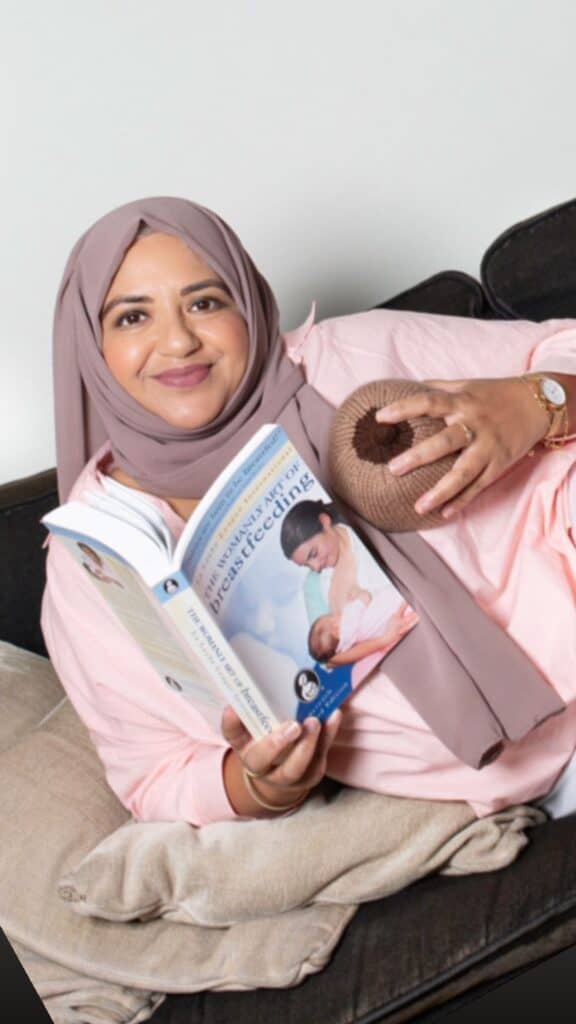
A significant shift occurred with the arrival of Ayyub’s third child. By this point, her household had expanded to include her mother-in-law and two brothers-in-law, intensifying the communal living situation. Despite the added pressures, something within Ayyub solidified her resolve. "There was something inside me that just knew what to do," she reflects. This inner conviction was powerfully reinforced when she discovered "The Womanly Art of Breastfeeding" at her local library. For nine months, she devoured its contents, transforming her understanding of lactation, debunking myths like colostrum being "dirty," and learning about concepts such as relactation. This newfound knowledge became her armour. "I felt that now I had all this information, no one was going to mess with me!" she asserts. Empowered, she breastfed her third child for two years, weathering a barrage of critical comments from her extended family.
This period was not without its physical challenges. When her third baby was a few weeks old, Ayyub developed mastitis. Seeking help, she contacted a La Leche League (LLL) Leader and attended a local group in Wimbledon. This experience, while helpful for her physical ailment, highlighted the cultural isolation she still felt. As the only woman wearing a shalwar kameez, she felt awkward and embarrassed, finding it tricky to feed in her traditional attire. This discomfort, a common barrier for many South Asian women, prevented her from returning to a breastfeeding group for years, underscoring the critical need for inclusive and culturally sensitive spaces.
From Personal Struggle to Professional Advocacy: A Doula’s Journey
Even during her early motherhood, Ayyub harboured an aspiration to support other mothers. Just four weeks after her first child was born, she found herself assisting her sister-in-law with engorged breasts, who, like Ayyub, had returned to a household full of non-breastfeeding relatives. This informal peer support continued with her younger sister, who successfully breastfed all her children with Ayyub’s encouragement. Gradually, even her own mother, witnessing the healthy, thriving babies, began to normalize and embrace breastfeeding, becoming a supportive presence during Ayyub’s later pregnancies.
Ayyub finally realized her dream of becoming a breastfeeding peer supporter after the birth of her fifth child. This child, born prematurely at 35 weeks with severe reflux, presented new breastfeeding challenges, for which Ayyub initially received poor advice from a breastfeeding counsellor. However, a visit to a local breastfeeding café years later proved serendipitous. There, she discovered an advertisement for La Leche League’s 12-week peer supporter training course, run by the NHS. "Thank God I came today!" she recalls thinking, feeling an immediate determination to provide mothers with accurate and empathetic support. Her graduation from the course, marked by a knitted pink breast, symbolized her official entry into advocacy. She later acquired brown knitted breasts from a stranger on a train, but the original holds special significance as a testament to her journey.
As a peer supporter for two to three years, Ayyub was often the sole Muslim representative, a crucial role given the underrepresentation of Asian women in breastfeeding support groups. She observed that shared cultural identity fostered trust, even without a language barrier. Her empathetic approach meant many mothers she helped wished they could "take me home with them!" Her dedication eventually led her to her current role as a doula, where she provides comprehensive support during both birth and the postnatal period. This transition, made easier as her children have grown, allows her to apply her vast experience to a wider audience.
Broader Impact and Systemic Change
Ayyub’s advocacy extends beyond individual support. She is actively involved in initiatives aimed at improving maternal care for ethnic minority families. Last year, The Raham Project in Peterborough invited her to collaborate with them and the charity BLISS on a project focused on neonatal intensive care units (NICUs) and premature babies. Her participation involved sharing her deeply personal birth stories, a process that, while painful, contributes invaluable insights into the experiences of mothers navigating complex medical environments. This collaboration highlights the growing recognition of lived experience in shaping healthcare policies and practices.
The implications of Ayyub’s work are far-reaching. Her efforts have fostered a significant generational shift within her own family. Her eldest daughter, now 34, has three children under four, breastfed her first for two years, tandem fed the first two, and continues to breastfeed her youngest at eight months. This stands in stark contrast to Ayyub’s own early experiences, demonstrating a powerful legacy of empowerment. Her daughter’s husband, initially uncomfortable with breastfeeding, has become a strong supporter, further illustrating the transformative power of open dialogue and informed choice. This influence has extended to her daughter’s sister-in-law, who has also successfully breastfed. Moreover, Ayyub’s continuous advocacy for open discussions about maternal health, including breastfeeding and menstruation, has normalized these topics within her family, influencing her children’s spouses and friends. Her daughters are now exploring options like home births, a revolutionary concept within their community, signifying a profound cultural evolution.
Addressing Cultural Barriers and Future Directions
Despite progress, significant challenges remain in the South Asian community regarding breastfeeding. "There is still a lot of shame surrounding breastfeeding in the Asian community. Many families are still quite prudish," Ayyub notes. This prudishness, often misattributed to religious strictures, is primarily cultural. The Muslim faith, in fact, champions breastfeeding, recognizing a baby’s right to be breastfed, often for up to two years. However, cultural modesty and a lack of privacy in extended family homes create barriers to accessing support. Many South Asian women still feel uncomfortable exposing themselves in a room full of people, even other women, making traditional support groups inaccessible.
This cultural barrier is reflected in broader UK health statistics. While overall breastfeeding initiation rates have shown some improvements, disparities persist across ethnic groups. Data from Public Health England and various NHS reports consistently indicate lower breastfeeding rates among certain ethnic minority groups, including South Asian women, compared to the white British population. Factors contributing to this include language barriers, lack of culturally appropriate information, differing cultural perceptions of health and feeding, and limited access to peer support from individuals with shared cultural backgrounds. A study published in the British Medical Journal highlighted that women from South Asian backgrounds often face unique challenges, including strong family influence, traditional beliefs conflicting with modern healthcare advice, and a sense of isolation when support services are not tailored to their needs.
Ayyub’s work directly addresses these disparities. By building relationships of trust and demonstrating the normalcy and benefits of breastfeeding, supporters can dismantle these fears and misconceptions. Her call to action is clear: "Let’s all work together to make it the very natural and normal way of life that it surely is." This requires a multi-faceted approach involving healthcare providers, community organizations, and individual advocates. The NHS and organizations like LLL, BLISS, and The Raham Project are increasingly recognizing the importance of culturally competent care, recruiting diverse staff, and developing tailored resources. For instance, initiatives to provide multilingual resources and to host women-only or culturally specific support groups are vital steps forward.
Zarina Ayyub’s journey, from a young, unsupported mother to a seasoned doula and passionate advocate, exemplifies resilience and the power of individual agency in driving systemic change. Her story, shared on the "Breastfeeding Matters LLLGB Podcast" in January 2025, where she discussed the ancient tradition of the "fourth trimester" and the need for a supportive environment for new mothers, continues to inspire. As her children, now aged 34, 33, 30, 23, and 18, navigate their own lives, Ayyub’s legacy of open dialogue, informed choice, and unwavering support for mothers continues to ripple outwards, slowly but surely transforming cultural landscapes and ensuring that future generations of mothers receive the compassionate, evidence-based care they deserve. Her trailblazing efforts illuminate a path toward a future where every mother, regardless of her background, feels empowered and supported in her unique parenting journey.
