

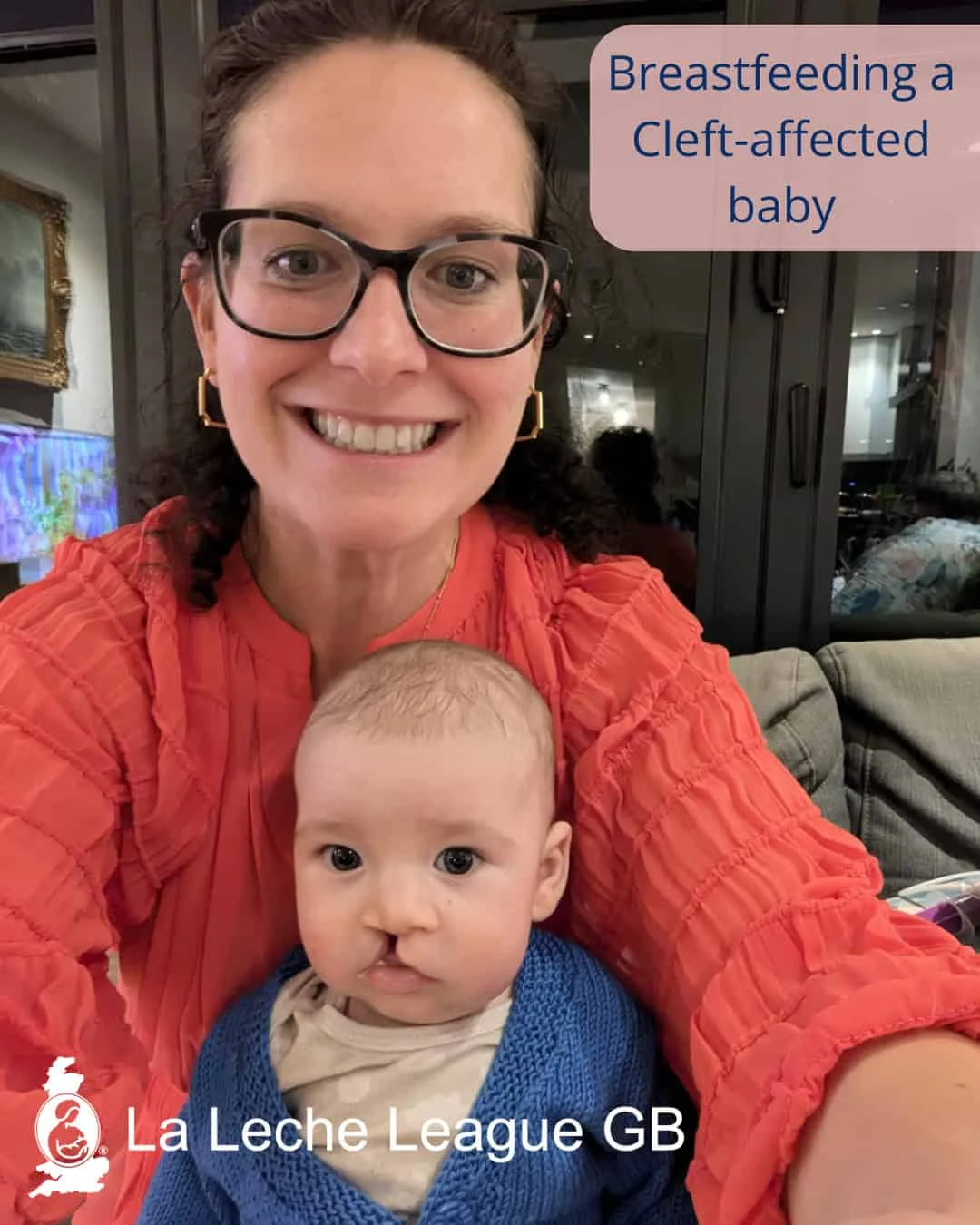
The story of Russell and his mother, Sarah Muir-Little, stands as a testament to parental determination and the profound bond forged through breastfeeding, even in the face of significant medical challenges. Born with a cleft lip and palate, Russell’s journey to receiving breast milk directly from his mother was initially deemed impossible by some medical professionals, yet through perseverance, innovative adaptation, and unwavering commitment, his parents navigated a path that ultimately defied conventional expectations. This narrative highlights the critical role of informed advocacy, the emotional complexities of such diagnoses, and the evolving understanding of feeding options for infants with craniofacial anomalies.
Antenatal Diagnosis and Initial Medical Advice
The journey for Russell’s parents began amidst a period of personal strain, with a family member in intensive care, overshadowing the initial excitement of pregnancy. At the 20-week anatomy scan, what initially seemed like a routine check-up took an unexpected turn. After confirming the baby’s gender, the sonographer delivered the news with a question: "Have you heard of a cleft lip?" This query led to the diagnosis of a cleft lip and palate, a congenital condition where the structures forming the upper lip or roof of the mouth do not fully join during fetal development. Affecting approximately 1 in 700 babies globally, cleft conditions present a range of challenges, particularly concerning feeding.
Following the diagnosis, a midwife informed the expectant parents that their baby’s cleft lip and palate would likely prevent breastfeeding. This pronouncement, delivered at a vulnerable time, was profoundly distressing for Sarah. Having recently weaned her toddler, she had envisioned a similar breastfeeding experience for her new baby and experienced a deep sense of grief at the perceived loss. This initial advice, while common, underscored a prevailing assumption that breastfeeding is incompatible with certain severe cleft presentations. While many babies with only a cleft lip can breastfeed with adaptations, a cleft palate often prevents the creation of the necessary suction pressure to extract milk from the breast, necessitating surgical repair before direct feeding can occur.
The medical team further clarified that Russell would require two significant operations in his first year – one to repair the lip and another for the palate – with potential for additional surgeries later in childhood. This prospect, coupled with the initial feeding prognosis, presented a daunting future for the family.
Challenging the Conventional Wisdom: Research and Preparation
Despite the initial disheartening advice, a specialist nurse offered a glimmer of hope, suggesting that a breastfeeding journey, albeit an unconventional one, might still be possible. This encouragement spurred Sarah to embark on extensive research, delving into resources from organizations such as the Cleft Lip and Palate Association (CLAPA) and La Leche League (LLL). Her objective was to find examples of successful breastfeeding experiences following palate surgery, hoping to bridge the gap until Russell’s surgical repairs.
The search yielded disappointingly few direct examples, reflecting the rarity of such outcomes and the pervasive challenges. However, the existing accounts indicated two crucial factors for success: maintaining a sufficient milk supply and developing an effective method to deliver milk to the baby at the breast without natural suction. Sarah, confident in her ability to maintain milk supply given her previous experience with her toddler, focused on the latter. Her prior experience, which included months of expressing milk by hand and with a pump, albeit with initial difficulties, had equipped her with the knowledge and determination to build and maintain her supply.
The challenge then shifted to milk delivery. Traditional methods for cleft-affected infants often involve specialized bottles or nursing supplementer systems. Sarah explored two main types of nursing supplementers available in the UK, both designed with a thin tube to deliver milk while the baby is latched. One was gravity-fed, offering a slow flow, while the other utilized a squeezable bottle for faster delivery. Neither felt intuitive or practical for sustained use, especially when combined with recommended holds like the "dancer hold," which supports a baby’s head and jaw. This hold, while beneficial for babies with low muscle tone or prematurity, proved cumbersome when attempting to manage a supplementer simultaneously.
Russell’s Arrival and Innovative Adaptations
Baby Russell’s birth marked the beginning of their practical feeding challenges. Initially, he was fed expressed colostrum via a syringe, with a finger simultaneously placed in his mouth to encourage the sucking reflex. The plan was to transition to feeding at the breast with a supplementer once Sarah’s milk supply increased.
A critical turning point came through an unexpected coincidence. Some incorrectly ordered syringes, while unsuitable for direct feeding, perfectly fitted the supplementer tube. Building on this discovery, the midwife team provided larger syringes from the labour ward. With ingenuity, Sarah modified the screw-on caps of these larger syringes by drilling snug holes for the supplementer tube. This makeshift system provided a more controlled and adaptable method for delivering milk than the commercially available supplementer bottles, demonstrating the critical role of parental innovation when standard solutions fall short.
The standard advice for supplementer use involves either feeding the tube into the baby’s mouth after latching or taping it to the breast before latching. Both options presented difficulties for Russell, whose fragile latch due to the lack of suction made the former impractical. The latter, involving a long, flapping tube, proved too fiddly for a newborn’s small mouth. After much experimentation, often resulting in distress for both mother and baby, Sarah found a way to tape the tube very close to the nipple. This placement facilitated easier tube insertion but often compromised the latch, leading to milk loss. This period was characterized by frustration and a renewed reliance on her determination. Despite concerns from some professionals about potential aspiration, Sarah persisted, convinced she was developing a workable system.

Navigating Early Feeds: Positioning and Perseverance
The early weeks were particularly challenging, marked by difficulties with positioning and repeated attempts to achieve a stable latch. Sarah initially struggled with the dancer hold, finding it stressful for both her and Russell. Observing that Russell calmed and fed well when directly expressed milk was offered on the non-taped breast, she confirmed his hunger and sought to refine their method.
Following consultation with a specialist at Great Ormond Street Children’s Hospital, the parents decided to stick with the cradle hold, a position Sarah was already comfortable with from feeding her toddler. While this position initially resulted in more milk loss around Russell’s mouth, the priority was to ensure calm and relaxed feeds, which was paramount for both their well-being. Rather than focusing on specific techniques like plugging the cleft with the breast or keeping the cleft side up to minimize milk loss, their emphasis remained on achieving a deep, comfortable latch within the familiar cradle position. This pragmatic approach, though messy and sometimes frustrating, proved invaluable in those initial weeks.
Over time, their feeding dynamic evolved. Sarah learned to pace the milk delivery via the syringe, pausing when Russell did, ensuring a flow that was neither too slow (requiring excessive sucking effort) nor too fast (overwhelming him). She also learned to manage syringe refills without upsetting Russell by either setting him down or repositioning him.
The emotional impact of their unique breastfeeding journey was profound. Friends who initially questioned the effort involved later understood its significance upon witnessing their feeds, affirming that Sarah "was already breastfeeding." Such affirmations, alongside comments recognizing their success, brought immense joy. However, not all reactions were positive. A paediatrician’s comment that their method wasn’t "recommended" and implied it wasn’t "safe and effective" was particularly hurtful. These remarks from healthcare professionals, despite Russell thriving and gaining weight, required immense resilience from Sarah. She remained convinced that their approach was right for Russell, cherishing the benefits of breastfeeding despite the reliance on a supplementer.
Evolution of Feeding and Surgical Milestones
As Russell grew, his feeding needs and tolerances changed. Around ten weeks old, the tape near the nipple became bothersome, prompting a shift to taping the tube further away, and eventually, no tape at all. This required greater coordination but became manageable as both mother and baby learned their routine. There were inevitable setbacks – moments of upset or refusal to feed – but Sarah learned to differentiate between issues specific to his cleft and common baby behaviours, recognizing that Russell was "a baby first, and has a cleft second." Distraction, a common challenge for infants around three months, became another hurdle to overcome.
The ultimate goal for direct breastfeeding remained contingent on Russell’s palate surgery. Just before his first birthday, Russell underwent surgery to reconstruct his lip and hard palate. The immediate aftermath was challenging; once the morphine wore off, Russell initially refused the supplementer, only accepting bottles. This regression, perhaps associating bottles with the difficult post-operative days, eventually reversed as he rejected bottles and returned to the supplementer. While expressing milk and managing feeds remained exhausting, particularly with the added support of her husband for bottle washing and night feeds, their collective determination never wavered. Every feed with the supplementer was viewed as a bonus for Russell’s health and their bond, validating their sustained efforts.
The Breakthrough: Post-Surgery Success and Broader Implications
The turning point for direct breastfeeding arrived four weeks after Russell’s palate surgery. While the surgeon advised avoiding suction for a month, Sarah immediately felt Russell attempting to suck for the first time. This nascent ability blossomed, and soon after, he discovered how to use a straw, a developmental milestone that surprisingly heralded his ability to suck and swallow directly at the breast.
From this pivotal moment, progress was gradual but steady. The reliance on the supplementer diminished, as Russell learned to extract more milk independently. After 15 months of daily pumping, a demanding routine for any mother, Sarah was finally able to stop. While Russell’s latch initially wasn’t typical, it was effective and comfortable for him. He now breastfeeds once or twice a day, a profound achievement that was once deemed an impossibility.
Russell’s breastfeeding journey carries significant implications for parents, healthcare providers, and support organizations. It underscores the importance of:
- Individualized Care: Emphasizing that standard medical recommendations, while well-intentioned, may not always be the only or best path for every family. A flexible approach that considers parental goals and baby’s unique needs is crucial.
- Parental Advocacy and Empowerment: Sarah’s story exemplifies how parental determination and proactive research can lead to innovative solutions and challenge established norms. Empowering parents with comprehensive information and support to explore diverse feeding options is vital.
- The Role of Support Networks: Organizations like CLAPA and La Leche League provide invaluable resources, connecting families and offering peer support, which can be critical when navigating complex medical challenges.
- Redefining "Breastfeeding Success": This narrative broadens the definition of breastfeeding, acknowledging that direct feeding at the breast, even with adaptations like supplementers, can provide immense benefits for both baby and parent, including nutritional, immunological, and emotional bonding aspects.
Sarah Muir-Little’s experience with Russell is a powerful narrative of resilience, innovation, and love. It stands as an inspiring example that with adequate support, determination, and a willingness to adapt, what might initially seem impossible can, in fact, become a deeply fulfilling reality. Their journey serves as a beacon of hope and a call for more flexible, empathetic, and evidence-informed approaches to infant feeding in the context of complex medical conditions.
