

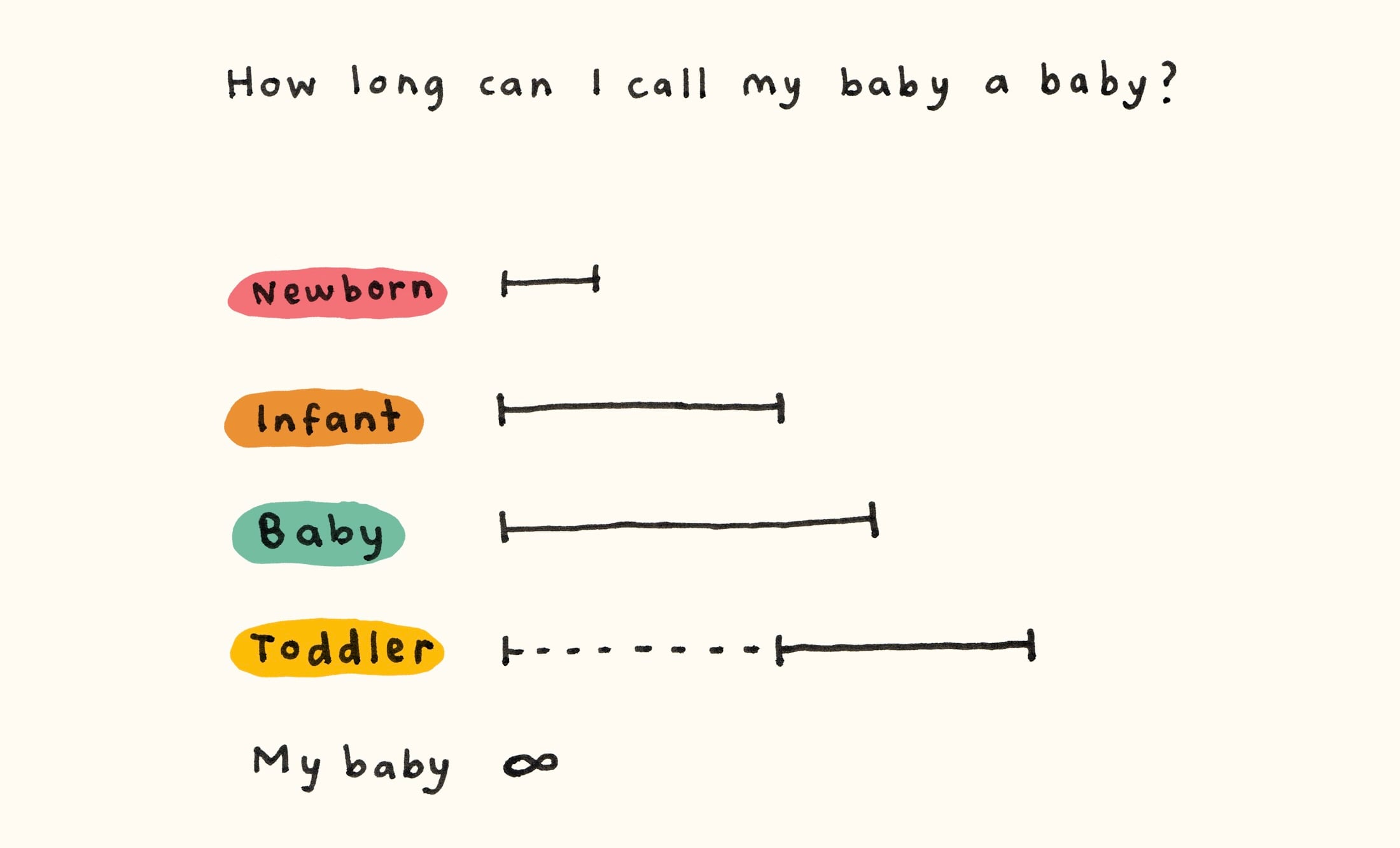
The recent passing of a matriarch in a small community has brought renewed attention to a persistent sociological phenomenon: the lifelong application of infantile endearments to adult offspring and the complex emotional architecture that supports these bonds. Observations from the funeral of a 49-year-old man’s mother, where the grieving son was consistently referred to as "the baby" by a community that had known him since birth, serve as a poignant case study in how familial roles often remain static despite the passage of decades. This phenomenon, while deeply rooted in individual psychology, reflects broader cultural patterns regarding attachment, autonomy, and the enduring nature of the parental lens.
The Lifelong Label: A Case Study in Small-Town Dynamics
In a recent gathering that underscored the intersection of community memory and familial identity, the youngest of seven children—now a 49-year-old professional—found himself addressed by his childhood moniker, "the baby," by nearly every attendee. The setting, a small town where his late father had served as one of only two physicians, provided a unique environment where the collective memory of the community reinforced a specific identity formed in 1977. Despite his age and physical maturation, the man was greeted with anecdotes of being held as an infant, effectively collapsing nearly half a century of time into a single evening of shared reminiscence.
Sociologists note that such occurrences are more than mere nostalgia; they represent the "maternal lens," a psychological framework in which a parent—and by extension, a close-knit community—continues to view an individual through the prism of their earliest vulnerability. For the adult child, this can elicit a dual response: a sense of profound being-loved and a simultaneous, often humorous, confrontation with their own aging. In this instance, the 49-year-old’s partner observed that the community’s insistence on his status as "the baby" served as a living tribute to his mother’s lifelong devotion, highlighting a social contract where the youngest child remains a symbol of the family’s beginning, even at its end.
The Psychological Architecture of Parental Endearment
The use of terms such as "baby," "kiddo," or "my little girl" for adults is a subject of significant interest in developmental psychology. Experts suggest that these endearments are linguistic markers of "attachment security." According to attachment theory, the bond formed in infancy creates an internal working model for all future relationships. When a parent calls a 30-year-old "baby," they are often unconsciously accessing the "limbic resonance" of early caregiving—a state of deep emotional connection that bypasses the rational recognition of the child’s adult status.
Data suggests that these labels often serve as a "shorthand" for unconditional support. In one recorded instance, a 51-year-old man, facing the emotional distress of his dog’s terminal illness, immediately regressed to a state of emotional vulnerability when communicating with his mother. Despite his own status as a middle-aged adult, the maternal response was one of instinctual caretaking, reinforcing the concept that the role of "parent" is never fully retired, but rather evolves to meet the adult child’s intermittent needs for emotional sanctuary.
A Chronology of the "Baby" Identity
The trajectory of the "baby" label typically follows a distinct chronological path, often marked by points of friction and reclamation:
- The Infancy and Toddler Phase (Ages 0-5): The label is literal. However, as children reach the age of three or four, they often begin to assert autonomy. It is common for preschoolers to sternly correct parents, asserting, "I am a big girl/boy," as they attempt to differentiate themselves from the helplessness of infancy.
- The Adolescent Negotiation (Ages 12-19): During this period, the use of "baby" often moves to private spheres. Parents may continue the nomenclature at home while respecting the teenager’s need for adult status in public. This stage is critical for developing "negotiated identity," where the child allows the parent to maintain the endearment as a gesture of affection rather than a description of capability.
- The Emerging Adult Phase (Ages 20-35): This is often where the most significant friction occurs. As young adults strive for professional and personal credibility, being called "kiddo" or "baby" can feel like an undermining of their hard-won autonomy. A recent survey of familial dynamics highlighted a 30-year-old man who requested his mother cease calling him "kiddo," a request she found emotionally difficult to process, as it signaled a final severing of the "childhood" era.
- The Mature Reclamation (Ages 40+): As adult children age and their parents enter their 70s, 80s, or 90s, the endearment is often reclaimed as a cherished link to the past. Many adults in their 40s report a sense of warmth when a 90-year-old parent calls them "baby," recognizing it as a testament to the longevity of the parent’s care.
Boundaries and the Conflict of Autonomy
While many find comfort in lifelong endearments, the practice is not without its critics. Some family therapists argue that persistent "infantilization" can be a symptom of enmeshment—a psychological state where boundaries between family members are blurred, and individual autonomy is discouraged.
This conflict is most visible in the "in-law" dynamic. Observations from several spouses indicate that hearing a mother-in-law refer to a grown husband as "her baby" can be perceived as an intrusion on the marital unit. In these contexts, the term may be viewed as a refusal to acknowledge the husband’s primary role as a partner and head of a new household. "Don’t infantilize your sons," one critic noted, reflecting a sentiment that the "baby" label can sometimes be used as a tool for emotional control rather than a expression of pure affection.
Furthermore, the impact of these labels on the adult child’s self-perception can vary. For those who feel their parents are controlling or patronizing, the term "little girl" or "little child" can be a source of resentment. Conversely, for those with a healthy, balanced adult relationship with their parents, the term is often viewed as a "legacy title"—a badge of honor representing a lifetime of being prioritized.
Crisis and the Reversion to "Baby" Status
The power of the "baby" identity is perhaps most visible during times of crisis or transition. Medical professionals and hospice workers frequently witness adult children reverting to their childhood roles when faced with the illness or death of a parent.
In a poignant example of this, a woman recounted her father’s final days in hospice. At age 60, facing terminal cancer, the father’s last words to his son-in-law were, "Please take care of my baby," referring to his 30-year-old, married daughter who had lived independently for years. This underscores the reality that, in the parental mind, the child’s safety remains the paramount concern until the moment of death.
Similarly, many new mothers report that when they bring their own infants home, their mothers focus their care not on the grandchild, but on the daughter. "You’re my baby," one mother told her daughter during the postpartum period, reinforcing the idea that the birth of a new generation does not displace the previous one in the hierarchy of maternal concern.
Cultural and Literary Anchors
The concept of the perpetual baby is deeply embedded in Western culture, perhaps most famously encapsulated in Robert Munsch’s 1986 classic, Love You Forever. The book, which depicts a mother rocking her son at various stages of his life—including adulthood—and eventually the son rocking his elderly mother, serves as a cultural touchstone for this sentiment. While some modern readers find the imagery "creepy" or intrusive, its enduring popularity (with over 30 million copies sold) suggests a deep, universal resonance with the idea that the parent-child bond is immune to the effects of time.
This sentiment is also reflected in popular music, such as Mariah Carey’s "Always Be My Baby" or Blake Shelton’s "The Baby," which celebrate the idea that no matter how much one achieves or ages, they remain a "baby" in the eyes of those who loved them first.
Broader Implications and Sociological Conclusion
The persistence of the "baby" label is a testament to the unique nature of the parental bond—a relationship that is, by definition, asymmetrical at its start and must navigate a complex path toward symmetry. Whether viewed as a heartwarming expression of eternal love or a hurdle to be cleared in the pursuit of adulthood, the label "baby" remains one of the most powerful linguistic tools in the human experience.
As the population ages and multi-generational households become more common, the negotiation of these identities will continue to be a central theme in familial sociology. The 49-year-old "baby" at the funeral and the 30-year-old "kiddo" seeking autonomy are both participating in a timeless ritual of defining one’s place in the lineage. Ultimately, the ability of a parent to see both the "long baby" (the adult) and the "original baby" (the infant) simultaneously is a cognitive feat of love that remains one of the defining characteristics of the human family structure.